Celebration: An Anthology to Commemorate the 50th Anniversary of the Silliman University National Writers Workshop Sands and Coral, 2011-2013
Silliman University, 2013
Sometimes I feel this conviction that all the troubles we’ve been having right now may really be the product of a conservative, even patriarchal, backlash because people of this ilk are becoming increasingly irrelevant in a world that has irrevocably changed for them. Brazil’s Bolsonaro, for example, dragging his heels on the Amazon fire because he does not believe in climate change. Or macho “Christians” who cannot see a world beyond their old-fashioned ideas of gender. But history is a chronicle of change, including the flailings of those who refuse these changes — and perish in irrelevance. We must remember one of the greatest insights about history from Martin Luther King Jr.: “The arc of the moral universe is long, but it bends towards justice.” Let’s fight on and make their irrelevance permanent.
11:24 AM |
J. Neil C. Garcia Talks About Gay Reality in the Philippines
FromTeam Magazine'sthird issue, themed on "Celebrations."
1. What would you say are the milestones of the LGBT community during your generation?
I’d have to say the primary milestone is the formation of the LGBT identity itself. Gay and lesbian cultures used to exist separately in the country, but since the 1990s, we’ve seen this strategic and coalitional identity take shape, conditioned as it has been both by local and global forces: feminism, HVI /AIDS discourse, the equal rights movement, and the “transgender moment” -- a historical period characterized not only by the globalization and increasing “crystallization” of this signifier, but also by the fact that cultures all around the world are remembering and recuperating their own transgender traditions. In Asia we see this happening in India and Nepal, which have recently instituted “third gender” categories in their legal documents. In our case, we also have our own “babaylanic” tradition of institutionalized gender-crossing to recover, legally honor, and contemporize (hopefully this will happen soon).
An offshoot of Filipino LGBT discourse would, of course, be all the political accomplishments of the last two decades: elected LGBT officials in local governments; the formation of the first LGBT political party (Ang Ladlad); the decades-long anti-discrimination lobby in several sessions of the national congress; and the municipal and provincial antidiscrimination ordinances that have already been passed (or are about to be passed), all across the country. Finally, let’s not forget the past two decades’ harvest of outstanding and memorable LGBT cultural productions—books, theatrical performances, marches, pageants, magazines, TV shows, and of course the slew of LGBT-themed digital films coming from a very dynamic stream of the Philippine new cinema movement.
2. How was the scene during your time? How is it different from now?
The pink economy was just picking up, and in the 1990s Malate was still pretty much the gay -- and the “cool” or bohemian -- place to be. It had all these fashionable and stylish bars and restaurants that were downright gay or at least identifiably gay-friendly. In Quezon City there was Cine Café, which doubled as a sexual and a social space, where gay films, plays, and pageants regularly took place—on the first floor, anyway (on the second floor was a blue room showing, well, blue films; and by the time you ascended to the third floor you found yourself immersed in delicious darkness—a reversal of the religious spatial order of things). There were also all those traditional gay bars -- with macho dancers and/or “floorshows,” the kind that you would see being cinematically (and miserablistically) recreated in the films of Brocka, Bernal, et al. I remember there was still a significant cruising scene to be found inside movie houses, public parks, department stores and/or malls—a carryover from the previous decade.
The Ladlad series came out during this time, and also the ground-breaking books by Tony Perez, Nicolas Pichay, Danton Remoto, etc. I had also just begun my academic work on Philippine gay culture, drawing from the studies of older scholars like Jose Javier Reyes, Michael L. Tan, and Martin Manalansan (who has since become the foremost researcher on the Filipino-American “queer diaspora”). Now and then, PETA and other theater companies would be staging gay plays. Every so often, on national television there would be an episode or two devoted to the story of a bakla (or tomboy) in any of the popular drama series -- a foil to the outrageous and uproariously funny gay character (exemplified most memorably by Roderick Paulate), who was a staple figure in comedy films and TV shows. The massage parlor scene started taking off during this time as well (although, as far as I know, there were only a handful of them). There were also two or three bathhouses. I suppose that some of these “trends” have persisted -- or even intensified -- over the past twenty years, but clearly the most significant shift has been the “mass migration” of the gay sexual scene away from actual toward virtual spaces—doubtless the result of information technology, and the employment opportunities it has made possible.
In other words, hookups are mostly negotiated online now. And with so many young LGBTs working in the BPO sector, the preferred meeting places -- and schedules -- have also understandably changed. The personal “diversification” that the LGBT signifier signalizes has also produced alternative concepts of fellowship and “belongingness” -- in clear evidence during any of the pride activities that are held in different parts of the country at different times of the year (June and December, the two months that the annual national LGBT pride march has taken place; and for a couple of years now, September, which is when the University of the Philippines Babaylan, the country’s first LGBT student organization, holds its weeklong “pride week”).
3. I know you as one of the editors of Ladlad, which I secretly read as a not-yet-out kid and became my entry point to understanding more about what it means to be gay. Do you think the book was revolutionary for its time? Why?
It obviously was (look at what has happened to you and others who surreptitiously—and voraciously—read and relished these books in their youth!). Kidding aside, allow me to quote myself (in my introduction to its fourth volume, The Best of Ladlad):
Two decades after the publication of the first Ladlad: An Anthology of Philippine Gay Writing, we offer this “Best of” edition, comprised of a selection of what my co-editor Danton Remoto and I consider the most accomplished and enduring pieces -- poems, stories, essays, and plays -- from the spanking three-volume literary harvest of the last 20 years… It’s interesting and immensely elating to revisit these works, and to read them from the privileged optic of the present that they doubtless made possible, at least in part: a present in which the “brand” Ladlad has recently become an accredited political party, gay independent cinema has seen an unprecedented efflorescence, alternative “homosexual” representations have proliferated on television and the new media, and a viable Lesbian-Gay- Bisexual-Transgender movement has veritably taken root in the Philippines… The Best of Ladlad… is both document and witness, and possibly also a source of rare and eloquent courage: bruised and disabused, delirious and enthused, Filipino LGBTs have made it this far. The rest of the luminous journey beckons.
And so, to be brief, yes: modesty aside, Ladlad has (I believe) been entirely instrumental in inaugurating a legitimate cultural space within which LGBT creativity -- in the literary as well as in all the other arts—could (and did) happen in our country. Ladlad definitely opened so many doors.
4. You mentioned during the Philippine Literary Festival about the need for this generation to involve itself in political issues. Care to expound? By that, do you say that your generation was more political than today's generation?
First of all, allow me to clarify that I said that in response to your panel’s own very political-sounding subtitle -- “finding a post-acceptance voice in a pre-acceptance Philippines” -- and to what I perceived was the “lack of fit” between this strongly worded agenda and the desire the panelists were all variously expressing, as they explained their painstaking efforts to produce Team magazine: to “normalize” the discussion of gay life in the country, by shifting it away from stereotypical images and ideas to more “relatable” things. At once, I thought: to reach this stage (of acceptance or “normality”), shouldn’t certain steps need to be taken -- the first of which being conceptual and/or critical: Just what exactly are these stereotypes anyway, and how might they be countered? If you may recall, in my ensuing comment I pleaded for a distinction to be made between stereotypes and the real individuals they superficially resemble but cannot remotely embody (precisely because stereotypes are simplistic and “flattened” images, that no real person actually ever coincides with). And I also suggested -- if I remember it right -- that the thing to do would be not to pick a fight or demonize members in our own precarious and embattled community, but simply to allow more and more LGBT self-representations—more and more LGBT stories—to circulate and disperse not only among our ranks but also in the larger culture. (I remember also making a plea for recognizing “contact zones” between or across our lives -- especially in regard to what were possibly our common experiences of “sissy childhoods”). It was at this point that I cheered the panel on, for while it may not be the first Filipino gay magazine (L magazine or even rice just now comes to mind), Team is certainly an entirely laudable project, carried out by a bunch of cute butchy and pamhinta (sometimes, borta) gay Pinoys, that deserves the full support of the Filipino LGBT community.
5. A friend told me that Grindr has somewhat fueled the demise of cruising and the gay club scene. What's your take on that? (And if you have experiences relevant to this, please share.)
I think I answered this already (see question no. 2). Social media and hookup apps have I believe globally redefined the idea of gay or even LGBT spaces. Jonathan Ong’s very interesting piece about Tacloban’s “afam invasion” in the wake of super-typhoon Yolanda makes a very clear point about the power of new media to create provisional gay “linkages,” even under the most adverse of conditions. Basically, this study looked at how local gay men, enabled by the popular app Grindr, took advantage of the wave of “gay humanitarian globality” that washed over post-disaster Tacloban in 2013 (as one respondent so pithily put it: “overnight… my Grindr became the United Nations!”). Nonetheless, as suggested by this study, we might need to qualify that the sexual “democratization” that information technology has effected in our society is still and all class-specific, in the main. As far as the Tacloban case is concerned, for instance, we need to realize that whatever libidinally “welcome” effects Grindr may have generated in the lives of certain gay locals, this certainly can’t remotely compare to and/or outweigh the tremendous psychological trauma and material difficulty this disaster has wrought on the lives of Tacloban’s citizens in toto -- including (if not especially) the lower-class and feminine-identified bakla… About your other “stealthy” (because parenthetical) request to reveal any personal “kiss-and-tell” moments in this regard: sorry, I’m not in the least exhibitionistic (at least, not in that way). Besides, I think oversharing is tacky.
6. How different is it to be gay then and to be gay now? What has changed? What hasn't changed (apart from the obvious "liking the same sex" thing!) What do you think has the previous generation given this current generation?
Information technology has basically transformed human societies all across the globe, especially in regard to identities and relationships, which are functions, to a certain extent, of connectivity. Young Filipino LGBTs now have access to LGBT-friendly audiovisual and textual materials that the teens of my generation didn’t. Thus, there should be more reasons for young LGBTs now to feel a sense of kinship or belonging to local, national, or even global communities of fellow LGBTs (on the other hand, we need to recognize the fact that this abundance of imagery and information can and does create a sense of confusion and alienation as well, ushering in it its own set of cultural “problems”). The libidinal economy has also of course become more accessible to them as well—a fact that has most certainly transformed sexual desires as well as behaviors (pornography, especially gay or lesbian, during my youth was generally rare and inaccessible). Perhaps it’s at this point that I can bring up the most urgent issue of the HIV epidemic that is currently facing us, especially the younger members of urban-based MSM communities.
Allow me to quote a germane passage from my The Best of Ladlad introduction, once more:
[O]urs is also a present that is imperiled by all sorts of challenges and threats, including the ever-rearing head of intolerance and fundamentalist abomination, and the deepening AIDS crisis that many of us were fearfully anticipating back in the 1990s, but which finally came to roost only in the last five years. Needless to say, in recent days, the rates of reported seroconversions among Filipino “men who have sex with men” have been inexorably climbing, especially among the 20s and 30s urban male sectors, which are arguably the most economically productive but also the least “aware” (and therefore most vulnerable) demographic groups in the country today. Understandably enough, from its first to third volumes, Ladlad didn’t quite directly register HIV/AIDS awareness in any of its texts, either: looking back, there was simply no urgent reason to, given the relatively small number of reported cases and an even smaller number of Filipino gay men coming down with the infection, from the 1990s to the early 2000s (as compared to, for example, male heterosexual Overseas Filipino Workers, who got tagged by local epidemiologists as a “high risk group” early on). It would take individual efforts by Filipino gay writers (some of whom are HIV positive, or “Pozzie Pinoys,” themselves) over the next few years to produce the Philippines’s own version of “AIDS literature,” which can only be formally and epistemologically different from what existed in the West when the then-lethal epidemic was in full swing. As we know, AIDS is now a chronically manageable illness, and being diagnosed with it no longer amounts to receiving a death sentence; thus, writing about it no longer carries the same kind of ontological weight that it did, back in the 80s and 90s. While AIDS was not specifically treated by the pieces in the Ladlad volumes (except for one or two poems, perhaps), the afflictions of the homosexual and bakla signifier extensively were, as well as the various ways their authors have sought to assuage or even “heal” them.
And so, yes, this medical “emergency” is probably one clear and compelling difference between the realities of “then” and “now.” And as I wrote in my introduction to this book (published by Anvil last year), the hope is that LGBT literature -- and creativity, in general -- can once again be summoned to help our community (especially its more vulnerable members) understand the complexity of this problem, and imagine the solutions to it.
7. and 8. What do you think is worth emulating from the previous generation? What do you think is worth celebrating about this generation?
The younger generations of Filipino LGBTs have of course their own problems and issues to confront, and I know they have their own copious reserves of talents and aspirations from which to draw the necessary vision and strength to grapple and resolve these. They are more comfortably “interconnected” with one another; they are literate in the new media, and can wield their languages and instruments with comfort and ease. They are newly brave, courageous, and oh-so-beautiful… We, the more “senior” members of the community, are of course standing side-by-side the young, and are happily cheering them on (in other words, to my mind we have no special virtues that are worth emulating; during our time we responded in earnest to the call for activism, given our own difficult circumstances; I know the young will, as well).
9. Same-sex marriage is gaining ground all over the world. Do you think it's going to happen in the Philippines in the next 5, 10 years? Why?
Probably not, and not only because getting the Church to reverse its position in this regard is going to be a herculean task. In the logic of things, marriage equality can only be operationalized after marriage has been rationalized as an institution. This is a step that our government has refused to take by keeping divorce illegal. Of course the simple truth is that without divorce, marriage is plainly an irrational -- and possibly inhumane -- concept. In this country, we’ve all seen the terrible mess of failed (but insoluble) heterosexual marriages; and the question is, do we really want LGBTs to suffer this, as well? On the other hand, getting a national antidiscrimination law passed appears to be a more logical first step, as well (as certain American LGBTs, newly and happily married—and also newly and unhappily unhired—are discovering, to their dismay). I think focusing our energies on this legislative agenda makes easier political sense. Around a dozen city and provincial ordinances that penalize discrimination against LGBTs are already in place, and this is obviously a great milestone that we should celebrate. But we really do need to push to make antidiscrimination a national policy, in the next session of congress.
10. What steps can we do to make the Philippines a better place for LGBTs like us? What are we doing right, and what are we doing wrong?
I think I’ve already answered this -- implicitly and explicitly -- in the foregoing. But just to paraphrase: We need cultural, social, and political activism, obviously. We need more Filipino LGBTs to care enough about their rights so that they will be willing to come out in the open to secure them. We need activism and “coalition-building” not only within our communities, but also across the divides of Philippine society. We need to cultivate a sense of identity and community that is keenly aware of the challenges confronting us on the local, national, and global fronts. Within our country alone, we need to identify and relate across classes, regions, religions, languages, cultures, generations, educational backgrounds, gender self-presentations, erotic preferences, etc. We need to complicate our understanding of gender and sexuality—seeing how historically specific and cultural constructed they are, on one hand; and appreciating the beauty of the human complexity that they betoken, on the other. And finally, central to all of these, we need more LGBT self-representations and stories, as well as more venues (like Team magazine) for these vital texts to appear in.
J. Neil C. Garcia finished his BA Journalism (magna cum laude) in the University of Santo Tomas in 1990. He is currently teaching creative writing and comparative literature at the University of the Philippines, Diliman, where he also serves as an associate for poetry in the Institute of Creative Writing. He is the author of numerous poetry collections and works in literary and cultural criticism, including Our Lady of the Carnival (1996), The Sorrows of Water (2000), Kaluluwa (2001), Philippine Gay Culture: The Last Thirty Years (1996), Slip/pages: Essays in Philippine Gay Criticism (1998), Performing the Self: Occasional Prose (2003), The Garden of Wordlessness (2005), and Misterios and Other Poems ( 2005) His latest critical work, Postcolonialism and Filipino Poetics: Essays and Critiques, is a revised version of his Ph.D. dissertation in English Studies: Creative Writing, which he completed in 2003. He is currently working on a full-length book, a postcolonial survey and analysis of Philippine poetry in English. [Panitikan]
I still remember this from childhood in the 1980s. We were made to eat pospas and nutribun in school, and I still remember that phrase "The Hungry Children of Negros" being banded around as a campaign to feed children in both the Oriental and Occidental sides.
From John Silva [whose photo this is]: "I was in Negros last week. Thirty years ago I was there just a day after the Marcos overthrow. I was with Oxfam, a relief and development agency and I was to review the malnutrition situation in Negros. Months prior, there were many accounts of the tens of thousands of starving children and our Oxfam reps there urged us to do a feeding program with UNICEF. I drove past the provincial hospital where I first saw hundreds of malnourished children on mats on the floors tended by their mothers, and later, we were in the country through cane fields and small towns remembering the skeletal children being weighed and assessed by our medical team. There were over 100,000 children in various degree of malnutrition and we started a feeding program for 90,000 of them, hoping to save the worse cases.
"I took this picture of a nine year old girl south of Bacolod who was weighed but the medical team sensed she was not going to make it. She died several days later.
"There is much recalling and writing about the Marcos Regime for this 30th anniversary of People Power and because Bong Bong Marcos is running for political office. I heard then as I hear now that Roberto Benedicto was the Marcos crony who dictated the price of sugar and bled the province dry. And starved its people. I post this picture because aside from all the other nefarious deeds, the Marcos regime was responsible for the slow murder of the children and people of Negros.
"Today I see progress in Negros. And I see many healthy children. As our society progresses and moves on to increased levels of obesity and historical amnesia, this picture should be the grim reminder."
Here we go again—but in all honesty, it’s a constant that has become satisfying for me and many others because every day I live through in every year, I am reminded that this annual thing we do—VDAY—is a necessity. You would think hurtling towards the future would make us more enlightened, more compassionate, and more progressive—but the undying darkness that lurks within humanity ever threatens to hurl us back to the dark ages. Think celebrities, even ordinary folks, misunderstanding the word “feminism.” Think that group of men—they call themselves the Return of Kings—advocating for “legal rape.” Think the continued misogyny that exists in every facet of popular culture. And so, around this time of the year, this column turns to one constant that has been there for so long, I once said that I might as well call this annual space the “vagina’s turn.”
Again, looking back to all my old columns, it strikes me that I have written about VDay every single year since 2001, after having been inspired by the example set by writer/activist Eve Ensler and her groundbreaking play, The Vagina Monologues, which was first staged at the Luce to much controversy in 2001. This also means that, together with Bing Valbuena, I have been part of the movement for fourteen years now, skipping that one year—2002—when things were just coming together, and which led to that big jump in 2003 when Bing started the campaign in Dumaguete.
And because this has always been her baby, I will cede space to Bing.
She writes: “Today marks the 14th year of VDAY in Dumaguete, and the fourth year of One Billion Rising campaign. As advocates for change and for humanity, it has been an outrageously dramatic and challenging roller coaster ride. Along with the rewards of knowing how many big our community of co-advocates have grown and how we have in many ways changed people’s better perspectives of the world, we have been hurtfully stumped by conservatives, traditionalists and radicals questioning the validity of our cause because to them our art-theater and dance, are only pseudo-strategies for change.
“Through the years, I have witnessed how theatre has gathered people together, gave them opportunities to tell their stories and empowered them. I have seen how dancing is a strong force in allowing individuals to learn that their bodies are beautiful venues of healing and power.
“As an educator, I have always believed that there is no other powerful tool for social change but education, and education as not only in the classroom but outside of it too. Despite criticisms we will continue to educate our youth holistically through the art because it has been found to significantly impact individuals and communities. Part of the core of what VDAY is about is to be here for everyone, inclusive of all. We continue to embrace all especially those who do not believe in what we do.
“For many years, we have donated to the international VDAY committee that gave birth to the City of Joy in Congo, a school for girls. In Dumaguete, VDAY has birthed Duyan, a theatre group that primarily does playback theater performances. VDAY Dumaguete has also supported various organizations thrusted toward the development of humanity especially the protection of women and children.
“This year, as we emphasize again our campaign for the end of violence against women and children, we also emphasize our call for climate justice. Our beneficiary for this year is Gugma Gaia. Gugma Gaia’s mission is to contribute to the deeper respect and love for planet Earth—for harmony and sustainability—by undertaking holistic approaches that encourage proactive environmental actions and sustainable practices. It is providing programs for children to inculcate a sense of responsibility to care for the planet; and also integrate intergenerational collaboration between generations.
“Its first activity was a workshop among adolescent survivors of Typhoon Haiyan in Palo, Leyte where they were taught creative art as part of healing, and meditation practices to help them embrace and transform emotions that are helpful for survival and living, and develop inner strength. Gugma Gaia’s second activity was a series of lectures and workshop on art and body movement among students of Silliman University. It was to celebrate peace in the month of September at Liptong Woodland.
“We envision for more individuals and communities with core values of love and peace. We invite you to enjoin us to advocate for a better future.”
For director Maru Rodriguez, this year’s production brings together a cast of the most extraordinary people—students, teachers, artists, doctors, office workers, first timers and veteran performers. "All of whom," she says, "have their own personal funny, heartwarming, and heartbreaking stories. All of whom are the strongest women I know." They embody the stories of real women -- and helping them do that is one of VDAY's staunchest male supporters, co-director Earnest Hope Tinambacan, who explains his involvement as something crucial to his sense of being: "I have been an advocate for gender equality and the promotion of sustainable masculinity even prior to directing The Vagina Monologues, and this is because I believe that violence against women and children is not just a woman’s issue but a human rights issue in general.
Being part of Youth Advocates Through Theatre Arts or YATTA and working with GWAVE has strengthened my belief that men and all people of all genders and sexual orientations must stand together and fight for gender justice and sexual expression. I feel completely honored to have been entrusted with this responsibility of co-directing this show. Although yes, it could be held to be true that no man in this planet could be perfect in this directing position basically because he doesn’t have a vagina, but as an artist among many I—we—can allow ourselves to probe into our own worlds and into our own brokenness. Out of this creative process of allowing myself to also feel vulnerable and to feel the brokenness of each of the characters, I know that in the end it has made me a real person who will continue to stand firmly beside all women and girls who are rising, demanding an end to violence. Directing TVM has given me the chance to be immersed in the many emotions and experiences of women: the sorrow of their struggles, their anger, and as well as their fears. I also experienced the celebration of their triumphs and have stood with them in their fight. To quote Rob Ukon, 'Certainly, Eve Ensler’s play is about women’s lives. But it’s also about men waking up to women’s reality.'”
The 2016 performance of Eve Ensler’s The Vagina Monologues unfolds tonight, February 14, at 7:00 PM at the Claire Isabel McGill Luce Auditorium in Silliman University. This year's cast includes Johanna Adanza, Shamah Bulangis, Nierru Cabilao, Sharon Dadang-Rafols, Elle Divine, Queenie Maria Guibao, Lo Leeta, John R. Lumapay, Alice Mae Mamhot-Arbon, Paula Miraflor, Jo Hannah Naranjo, Trazarra Joy Orden, Sheila Pabalate, Onna Rhea Quizo, Maru Rodriguez, Karla Karina Rosales, Zakiyah Sidri, Virginia Stack, Michele Joan Valbuena, Lee Verdoguillo, and Frances Hope Yap. Ms. Rodriguez directs, with Earnest Hope Tinambacan co-directing. Tickets are available at P175 at the Department of Psychology. You may call Brylle Tumarong at 09154145808. Happy Love Day to everyone!
In the beginning—this was sometime in 2009—we just wanted to know if we could defy the odds and put up a National Arts Month celebration in Dumaguete. It hadn’t been done before, and the logistics of putting together a month’s worth of events dedicated to all of the arts was formidable. Plus we were working from a budget of zero pesos. But when Dessa Quesada-Palm—Dumaguete’s transplanted resident theater maven and tireless cultural worker—gathered a group of local artists and culture advocates that year, she—and Glynda Descuatan pushed what was possible, essentially urging us to go for the equivalent of that great grade school staple of “Let’s put on a show!”
The plan was to gather, as much as possible, all cultural groups mushrooming in their secret corners all over the province, and put them together during one week of intense celebration of the arts—from dance to music, from literature to the visual arts. Thus was Kisaw 2009 born—a “pasundayag sa bulan sa sining.”
We settled on a tagline: “Mag-mugna ta!” Mugna, after all, seemed the right word to describe the endeavor. It is the Cebuano word, after all, for “create,” but the word has also taken this street lingo connotation of friends gathering together to create something, anything in the spirit of fun, and in the light of communal effort. “Mag-mugna ta!” sounded like a spirited battle-cry, with the benefit of a smile and a wink.
People asked us: why exactly put on a show? Because February was National Arts Month—and it was becoming too strange to note that, no matter how much we hype Dumaguete City as the “Cultural Center of the South,” the city—and in a larger context, the province of Negros Oriental—had yet to undertake something as culturally all-encompassing as this particular celebration.
The rest of the country—particularly in stronger cultural centers such as Manila, Cebu, Davao, and Baguio—has been celebrating it for almost every year of the past decade, courtesy of the provisions of Proclamation No. 683, which has declared February of every year as National Arts Month. It is an official recognition of the role of the arts in reflecting, affirming, critiquing, and shaping our society—and, Dessa tells us, “it is a time when artists can take claim on public spaces, to engage with each other and with its communities, to create.”
Because art is truly a human right—something that only the most pedestrian cannot understand. And art truly has a function to fulfill as a beacon for the development in any community, something I have already explored in previous columns.
Alas, after 2010, we took a rest, for some reason or other. It took a while to revive the spirit, but in 2016, we’re back, and we’re still doing an exploration of art in public spaces, using the parks, the tempurahan, the boulevard, the kampanaryo, and the streets as venues for the arts to engage with the people.
It’s a more streamlined set of events, covering two days—February 26 and 27—although satellite events, such as the various Tayadas sa Plaza helmed by various schools around town, dot the rest of the month. For Balak, Balitaw, ug Uban Pa sa Tempurahan, slated on February 26, we pay tribute to Dumaguete as a literary capital of the Philippines with an earnest performance of the best of balak and balitaw, the traditional poetic forms of the region. For Huni ug Himig sa Kampanaryo, slated on February 27, local music takes a boost in a spectacular concert of some of the best musical groups and singers of the city. And for Puting Tabil sa Kampanaryo, also on the 27th, cinema—long considered as the favorite entertainment mode of Filipinos—is taken to the more public realm in a rare showcase of the best of local short films.
It promises to be a veritable celebration of our artistic wealth—a good enough return to Kisaw for what is hopefully a truly annual celebration locally. Good enough, even with its marvelous kinks, given that this has always been a thing conceived on the fly, and with almost no budget or institutional sponsorships—only magnificent scruples and a great love for culture by all those who come to participate.
Many moons ago, the good people over at the Belltower Project—led by Hope Tinambacan, the indefatigable front man of the band HOPIA—held a social experiment of sorts at a gig at El Amigo, Dumaguete’s bohemian center of indie music, the visual arts, and everything else that’s crazy. It was to test what Hope would call “our music’s worth.”
He said of the social experiment: “The concept was simple: we tapped some bands and solo acts from the Belltower Project to play. And then we asked for an entrance fee from those who watched the event—but they could give any amount, depende sa ilang gustong i-suporta.
“Inside the venue, we presented good music of course—mostly originals—and many other things we could think of, para modugang ang mga tawo sa ilang contribution.”All throughout the night, he kept reminding the crowd: “If you like the music and the performance, please feel free to drop additional contribution to our coffers.”
After the event, these are the observations he managed to make—“some funny, and some not, things to ponder on,” he said:
First, there was the matter of amount they managed to collect. “Naay mga mihulog ug mga tig-10 centavos, and 5 centavos, and other coins,” Hope said. “Maybe mao na gyud to iyang kwarta, but we still told ourselves to appreciate whatever we got.”
Second, a Caucasian entered the venue, and upon knowing there was an entrance fee, started counting out change—“his tinag-piso,” Hope remembered with a chuckle.
Third, they noticed that about five girls entered, and only one of them paid off for everyone else in their troupe. “Pilay gihatag? Twenty pesos,” Hope said.
Fourth, the Belltower Project people estimated that there were about 70 to 80 people who entered El Amigo that night and enjoyed the performance along with their beer and pulutan. “Ang naabot nga money sa amo is P3,300. Kung imong kwentahon, that’s an average of P41 per person—excuse my math. Although I’m sure that some gave more, while others gave less,” Hope said. “This means that kung imong i-divide ang P3,300 sa seven ka bands and solo acts that night, we can only go for P471 per band. ‘Di na lang nato kwentahon pila ang nagasto sa BTP, kay kapoy na.”
And his final rejoined: “Now, this social experiment may not be valid or reliable enough—but it sure does show something. Let you be the judge.”
What does this say about cultural worth, and what that means in Dumaguete?
I think it’s a very good social experiment, and it makes me think that part of cultural work is really audience development: meaning to say we need to make prospective audiences see the worth of what we do as artists—singers and musicians, writers, designers, theatre people, dancers, visual artists. There is an unfortunate line of thought that what we do as artists is something you cannot trust to put a value on—hence a culture of discounting prevails. When I publish my books, for example, I have friends and acquaintances who do come up to me and ask for a copy of a book for free. As if I am not supposed to make some sort of living from my writing, and as if I can go to an architect and ask him to design my house for free, or to a doctor and ask him to give me medical treatment for free.
Many artist, too—molded for far too long to think of their own artistry as something to take for granted and not prize—all too often do not give value to their own work. Once I asked a Waray poet, whose book I loved, how much his book was, and he insisted: “No, libre lang yan para sa’yo.” I insisted on paying. Once I asked a graphic designer how much she charged for a particular work I was commissioning her to do. “Ikaw,” she said, “Depende lang nimo.” I told her to set up her rates—if she wanted other people to also value her work.
And I used to be the same. Before, when people would ask me to edit their thesis or dissertations, I operated on the level of ulaw, constantly undervaluing the work I did—even though editing itself is a murderous job. It is not a walk in the park, and often it ranges beyond mere grammatical corrections to something approaching a virtual rewrite, because there is just no making sense of the original. It took fictionist and editor Nikki Alfar, a good friend, to set me on a better path to valuing my work, and gave me the idea of structuring rates according to the challenges demanded by the work. “If my clients want only mere grammatical corrections, I only charge this much. If it’s grammatical work plus some changes in syntax, I charge higher. If the work demands total overhauling that a virtual rewriting is demanded—I charge so much more,” she said.
It’s always a challenging task—asking other people to start valuing the cultural work of artists, and many artists do give up—but I think Belltower Project is at the very start of a local revolution. And that revolution, I know for sure, will take a while to eventually flower. And I hope that guys like Hope won’t give up. Because the dividends will come, in time.
To quote Albert Jerome Fontejon Babaylan, front man of the band Finpot: “It’s okay, my friends. Knowing the issues [in indie music in Dumaguete] is winning half the battle. Now we know [what we are facing], and we can then approach the situation accordingly. BTP has done very well uncovering these things for us. BTP did us musicians a favor. Now let’s just keep at it.”
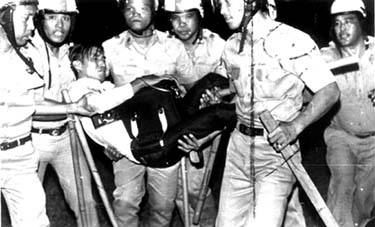
Madaling-araw ng Abril 1974, isa’t kalahating taon pagkaraang ideklara ang batas militar, nireyd ang bahay na inuupahan namin sa Kalookan. Ang bahay na iyon, kalahati ng isang duplex, ay lihim na opisina ng aming “peryodiko,” isang babasahin na buwanan ang labas, may apat hanggang walong pahina, sa simula’y mimyograp pero sa kalaunan ay inimprenta. Naglalathala kami ng balitang hindi inilalabas ng mga regular na diyaryo, halimbawa’y ang mga ambus sa kanayunan, ang hunger strike ni Ninoy Aquino, at ang madugong pag-aalsa ng mga estudyante sa Thailand. Sa pamantayan ng diktadurang naghahari noon, ang ginagawa namin ay ilegal at subersibo.
Tatlo kaming nasa bahay noon. Natutulog ako sa banig sa sala nang gisingin ako ng paulit-ulit na sigaw: “Buksan ninyo ang pinto! Mga awtoridad kami!”
Pagsilip sa bintana, nakita kong napapaligiran kami ng mga armadong lalaking nakasibilyan, nagkakanlong sa likod ng mga dyip at kotseng bukas ang headlights. Mga 20 sila. Napag-alaman ko sa kalaunan na mga miyembro sila ng 5th Constabulary Security Unit, isa sa pinakamabagsik na tagapagpatupad ng batas militar.
Lumabas sa kuwarto ang isa kong kasambahay, at pagkaraan ng ilang minutong bulungan, ipinasiya naming buksan ang pinto. Wala kaming armas kundi makinilya’t bolpen. Baka paulanan kami ng putok kung hindi kami susunod.
Pagbukas na pagbukas ko ng pinto, sumaksak sa tiyan ko ang dulo ng isang riple. May kamay na humawak sa balikat ko, pinaikot ako’t itinulak sa sahig. Sa pagkakadapa ko, tinuntungan ako, sinipa sa tadyang, kinulata sa likod at batok.
Matapos mahalughog ang buong bahay, ipinasok ako, nakaposas, sa loob ng banyo. Ang humila sa akin doon ay isang tenyente na kalaunan ay naging koronel, gobernador, at kongresista. Tinanong niya kung may tunnel sa ilalim ng kubeta.
Nabobohan yata ako sa tanong. Hindi ko napigilan ang matawa—saglit lang, halos walang tunog. Biglang tumama ang kamao niya sa dibdib ko. Maskulado ang tenyete, tipong Incredible Hulk, at ako naman noon ay may timbang lamang na 111 libra, tipong Palito. Bumalandra ako sa dingding ng banyo.
Mataas na ang araw nang dalhin kami sa Kampo Crame, sa himpilan ng 5th CSU. Pagkaraan ng kaunting paperwork, dinala ako sa likod ng opisina, sa lugar na tinutulugan ng mga konstable. Doon, ginawa akong punching bag ng mga opisyal at sundalo.
Sa dibdib at tiyan nila ako pinagsusuntok, hindi sa mukha, para walang ebidensiya ng tortyur. Nakaupo ako sa gilid ng isang tarima. Bumibira ang mga interogador tuwing magtatanong, at bumibira kung hindi gusto ang sagot ko. May ilang konstableng napadaan lang, papunta sa locker, at nakikiambos sa gulpihan, binabatukan ako o kinakarate.
Nang magsawa na sila sa kasusuntok, pinaiskuwat ako, nakaderetso ang dalawang kamay sa harapan. Habang nasa ganito akong posisyon, ang mga lulod ko ay pinapalo ng hawakan ng walis-tambo. Mahina lang ang palo, parang walang puwersa, pero sa katagalan ay namaga ang mga lulod ko.
Naranasan ko rin ang tinatawag nilang San Juanico Bridge o higa sa hangin. Nakapatong ang ulo ko sa gilid ng isang tarima, ang mga paa ko sa gilid ng isang pang tarima. Deretso ang mga kamay ko sa aking tagiliran, at deretso ang katawan kong nakabitin sa pagitan ng dalawang tarima.
Mahirap manatili sa ganyang posisyon. Tiyak na hihilahin kang pababa ng gravity at ng bigat ng sariling katawan. Pero bago lumundo at kusang bumagsak ang katawan ko, sinikaran na ako sa tiyan.
Dalawang beses akong pinahiga sa hangin. Sa pangatlong beses, hindi na ako bumangon mula sa sementong sahig. “Patayin n’yo na lang ako,” sabi ko. Noon natigil ang tortyur sa araw na iyon.
Sa maniwala kayo’t sa hindi, nagkaroon pa kami ng lunch break. Hindi ko na maalala kung ano ang inihaing ulam na lumalangoy sa sabaw—baka sinibak na talong. Kahit walang kalasa-lasa, naubos ko. Nakakagutom ang tortyur.
Nagbabaka-sakali ako, nang magpatuloy ang gulpi, na ang lahat ng kinain ko’y isusuka ko sa mukha ng mga tomotortyur sa akin. Sa kasamaang-palad, hindi iyon nangyari.
Ang ikinuwento ko rito’y pahirap sa unang araw lamang. Bahagi ito ng aking salaysay na iniharap sa class suit sa Hawaii—isa sa halos 10,000 testimonya mula sa mga naging biktima ng paglabag sa mga karapatang-tao noong panahon ng rehimeng militar.
Wala akong intensiyon na sagutin ang ipinadalang form para sa mga hinihimok na sumali sa class suit. Pero ilang araw bago dumating ang deadline na itinakda ng korte sa Hawaii, kinausap ako nang masinsinan ni Thelma Arceo—ina ng isang Atenistang pinatay ng militar sa Panay. Hindi pera ang habol natin, sabi niya. Ang importante’y mapatunayan sa hukom na may 10,000 nga ang nabiktima ng rehimeng Marcos.
Ngayon, may bali-balitang baka bago magpasko ay tumanggap ang bawat biktima ng danyos na hindi bababa sa kalahating milyong piso. Hindi ako umaasa diyan, pero kung nariyan na ay hindi ko tatanggihan. Marami akong utang na binabayaran.
Gayunman, hindi komo’t handa akong tanggapin ang pabuya ay inaabsuwelto ko na ang nasirang diktador na naging dahilan para ko matikman ang karinyo brutal ng romansa militar. Ano siya, sinusuwerte?
9:47 PM |
The Denial of Feminism is a Hideous Thing
“My response to the ‘I am not a feminist’ Internet phenomenon… First of all, it’s clear you don’t know what feminism is. But I’m not going to explain it to you. You can Google it. To quote an old friend, ‘I’m not the feminist babysitter.’ ¶ But here is what I think you should know. ¶ You’re insulting every woman who was forcibly restrained in a jail cell with a feeding tube down her throat for your right to vote, less than 100 years ago. ¶ You’re degrading every woman who has accessed a rape crisis center, which wouldn’t exist without the feminist movement. ¶ You’re undermining every woman who fought to make marital rape a crime. (It was legal until 1993). ¶ You’re spitting on the legacy of every woman who fought for women to be allowed to own property (1848). For the abolition of slavery and the rise of the labor union. ¶ For the right to divorce. ¶ For women to be allowed to have access to birth control (Comstock laws). ¶ For middle and upper class women to be allowed to work outside the home (poor women have always worked outside the home). ¶ To make domestic violence a crime in the U.S. (It is very much legal in many parts of the world). ¶ To make workplace sexual harassment a crime. ¶ In short, you know not what you speak of. You reap the rewards of these women’s sacrifices every day of your life. When you grin with your cutesy sign about how you’re not a feminist, you ignorantly spit on the sacred struggle of the past 200 years. You bite the hand that has fed you freedom, safety, and a voice. ¶ In short, kiss my ass, you ignorant little jerks.”
The first time I met Ray Villanueva, he was part of a singing group of brothers performing at the Luce Auditorium. This was many years ago, most details have been forgotten, and I didn’t really know him. The second time I met him, it was at Gabby’s Bistro and he was with his lovely American wife Amy. They were a vision on bicycles, and upon inquiry, I was told that they were in Dumaguete City “to try to give something back to the country.” One learns to instantly adore people with such dreams. It is such a rarity, especially for a country with rabid immigration dreams.
I wouldn’t remember anything about the singing past until last Christmas when, around the sumptuous holiday banquet prepared by our host Arlene Delloso-Uypitching, Ray played the piano “for his supper”—a superb rendition of “Claire de Lune”—and we were quickly told by Moses Atega of his musical past. “Now I remember you,” I told him. The answer I got was a sheepish smile.
But this article is not about his singing, nor his piano-playing, nor his sheepish smile. This will be about Mr. Villanueva as an architect, and his vision for building, with a thrust for community and sustainability. Let’s call it “developmental architecture.”
“My calling to architecture started while I was in George Washington University,” he told me. “I was taking up pre-med studies then. And one of the general education requirements was an art class. I have always loved drawing, but did not have the opportunity to take a drawing class before. I fell in love with it. From then on, I decided that being creative would be a part of my life.”
That decision led him to the University of Maryland to pursue architecture. While in the program, he was exposed to a Beaux Arts-rooted program and learned from distinguished professors—and soon he graduated with the second highest GPA in class. Ray would soon continue on to the University of Washington in Seattle, to focus on sustainable architecture. For his degree, he presented a thesis he titled “Architecture for People Who Need It”—which provided the blueprint for how he wanted his architecture to be about: as a model for sustainable development in developing nations.
Among his works that best define that aesthetics are Yakama Design-Build at the University of Washington and the Neighborcare Health Rainier Beach Medical and Dental Clinic.
And now, he’s here in Dumaguete as part of Foundation University’s architecture program. What does he hope to achieve with his work in the coming years?
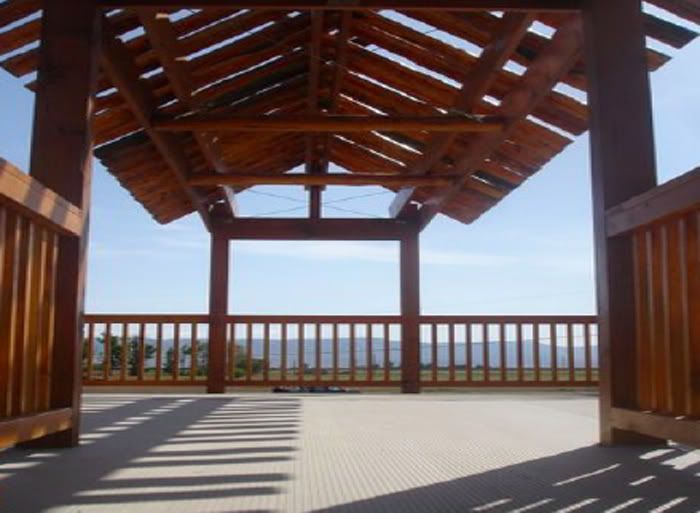
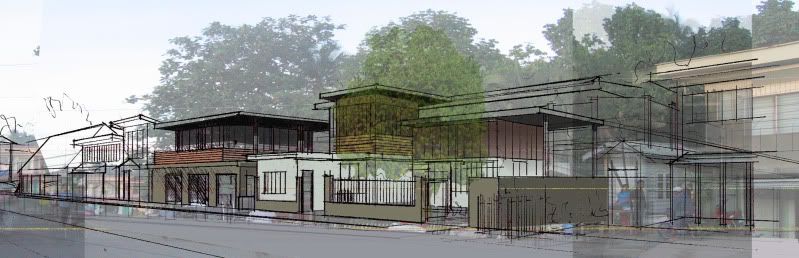
“In the short term, starting with the current school year at Foundation, I am trying to help establish the first Design+Build Program in the Philippines called Estudio Damgo,” he said. “This is similar to the program I participated in at the University of Washington where the students will be responsible for the design and construction of a structure in the local community. The project will involve community-based design in the form of a series of open forum community meetings and students will be in charge of everything—from design, construction drawings, and materials research, to the actual swinging of hammers, pouring of concrete, and installing fixtures.”
Estudio Damgo, according to Rey, will be a “learn-by-doing” program that will provide lessons that will last well beyond the classroom and will increase the students’ marketability post-graduation. “In the process,” Ray continued, “the local community gains a structure that showcases cultural relevance and innovation, while serving as an example that design and Architecture can make a positive impact by creating places everybody can enjoy.”
Somehow, all this is part of a dynamic life plan. “I am excited at the chance to work with the students and faculty to cultivate new ideas in architecture,” Ray muses. “And also to discover more about my heritage, and to pass on my experiences in design-build, construction, and community service. I feel that I have the potential to make a positive impact in local Filipino communities.”
Truly, Ray may have been born in Wheeling, West Virginia, to parents Dr. Romulo and Kathy Villanueva. His heart, however, has always been connected to his place of roots—Dumaguete. (His father is an Outstanding Sillimanian Awardee recognized for his medical mission work in the Philippines and abroad.) “My parents are my biggest influence,” Ray said, “Despite my upbringing in the U.S., they were clear about exposing my brothers and I to Filipino culture. Being in Dumaguete and the Philippines for the past months, I’ve discovered so much about my parents and myself. I am much more Filipino than I thought I was.”
For Ray, one of the greatest lessons his parents have imparted to him and his brothers was the “responsibility to give back.” Which is why he has come back to the Philippines, with Amy. “The importance of service—to the environment, to one another, to country—has always been a part of my life,” he said. “Service has led me to unique experiences like volunteering in National Parks, helping in medical missions in the Philippines and Peru, and reaching out to victims of natural disasters like Hurricane Katrina. The lessons I’ve learned from these volunteer opportunities formed central ideas of my graduate school thesis project based in Mindanao, and led me to work for Miller Hayashi Architects in Seattle to experience community involvement in design. This was ultimately the reason why my wife and I decided to quit our jobs in the U.S. and come to the Philippines.”
That’s one man going against the flow. Here’s to Ray, and may there be more people like him, especially from among us.
The year that was—2011—has been a strange year. “I’m ambivalent about it,” my good friend Arlene Delloso-Uypitching tells me in a quiet note that tries to register all things in the recent past. I think back as well—and I know that I have been very happy, and I have been very sad. A seeming endlessness of both. Do we talk of the same gradient of things in the world?
And so this December ends, and the old year with it. In the waning days, when we have the strength for it, we also begin to catalogue the lives we’ve lived the past 365 days. The chill in the air is battery for remembrances and for this emotional accounting. As the bed weather—the exquisite remnant of a big storm—drags on, we find ourselves hanging on to the comforts of our beds, the only palpable joy within arm’s reach. We let the Christmas songs we play wash over us, each one underlining with a certain thoroughness what we feel. Happy. Sad. Ambivalent.
(I have taken to listening to Michael Buble’s cover of “All I Want for Christmas is You” from his Christmas album. It veers a long distance away from the manic cheer of Mariah Carey’s version of the song, and carries with it a strange mix of melancholy and hopefulness. I listen to the song in repeat mode, ten thousand times a day. I don’t know what that says about me.)
The brighter side of the year brims with good things. In that sense, it is one year I am not exactly ready to say goodbye to. And yet in the light of the disasters that have dimmed considerably the Christmas festivities, especially in my city of Dumaguete, it is also one that seems best ended, as soon as possible, if only for us to take in the phantom promise of new beginnings.
Everyone needs new beginnings. While the New Year will always be a kind of arbitrary marker—a fiction really to convince ourselves we can control and mark time and the dramatic arcs of our lives—it has become a kind of deeply-ingrained cultural convenience for blank slates. Fresh starts. Fervent resolutions. I think I have come to appreciate this very human wish to start over. The cynics among us call the effort “useless hogwash.” I can’t blame them, given human frailty and the crazy world we live in. But one learns to pity these dried up souls. Because if one has lost hope in our individual capacity to change for the better, what else is there except the abyss?
Sendong has been a sobering experience, if in retrospect. I slept through it, given the marathon of pre-Christmas parties that came before it. While I slept, the city was drowning. The riverbanks and once placid creeks were gorging up a voracious hunger of muddy water and trash. When I woke up that Saturday afternoon, post-storm, it was to an atmosphere of unbearable quiet I could not give a name to. The city was at such a stand still, and when I went out of my apartment in Tubod (which had miraculously escaped from the instant madness of a lake that swelled only a few meters away), the sun was already faintly shining in the sky.
But there was a taste of mustiness and destruction in the ether. I didn’t know it then, of course. I thought it was only a storm giving way slowly to the inevitable sunshine and the humidity that comes after. The water had subsided. I remembered feeling irritated over the closed shops and the tricycles that never materialized. When friends from afar began texting, “How are you in Dumaguete?” with concern laced all over, I innocently replied, “I’m in the mall. But I heard there was a big flood.” I would soon feel guilt, of course, when the horror stories began trickling in. How a colleague almost drowned in her own kitchen. How another colleague’s elderly mother struggled to get up to her roof as the water levels rose. How my mother’s male help had his house demolished by the mad gush of water. How a pregnant waitress we knew in our old watering hole was carried off to her death.
We became subtly schizophrenic about things. How to properly register horror and sadness, while not exactly canceling Christmas? The cheers were muted, and though we still celebrated, it was with a somber underlining to things. And so it was that we dressed to the nines—as planned—to the Sunday party with good friends, something concocted by Mariekhan Edding, Au Tabara, and Anna Katrina Espino. And so it was that we met on Monday with high school classmates as we celebrated both a house blessing and the holidays over at Niña and Eugene Kho’s. And so it was that we went to the festive and traditional Christmas party by my Wednesday reading group, and partook of ham and turkey and pecan pie, a reading of both Dr. Seuss’ How the Grinch Stole Christmas and the last chapter of Charles Dickens’ A Christmas Carol, and singing of Christmas carols till near midnight at President Ben and Gladys Malayang’s. And so it was that we spent our Christmas Eve dinner at Don and Arlene Uypitching’s for their annual holiday feast in Valencia, which was breathtaking as usual. And so it was that we spent the early hours of Christmas morning with mother over the remains of lechon, which had lovingly devoured by family.
And so it was, too, that we began helping mobilize relief efforts—which never seemed enough—for those who could not celebrate because of Sendong. And for this, we have many people to be thankful for: the people at Silliman Church, Greg and Bernie Morales, Jojo Antonio, Jacqueline Veloso-Antonio, Angeline Dy, Babes Utzurrum, among many others. There were many people who rose to the occasion and bought or gathered donations of water, food, clothing (especially underwear), toys, medicine, and distributed them to badly-hit areas all over Negros Oriental. There was also a massive injection of help from Gang Badoy and RockEd Philippines, to whom we give an infinity of thanks. It is enough to restore one’s faith in humanity.
In the final analysis, I guess ambivalence is good. Being both happy and sad, both. They underscore so thoroughly the gravity of the other—and I guess that’s the kind of lesson best learned for the New Year: to embrace all happiness, to weather all sadness, to accept that both are the very fulcrums of our fullest lives.
And for the holiday season, we owe it to ourselves to turn to each other and give great cheer above the bleakness that surrounds us, and to also extend comfort where it’s most needed. I have been blessed to find friends who are capable of doing this precarious balance. Thanks to all of you, and if only because one has friends like you one can truly say one’s year has been blessed.
Here’s to 2012 then, and God bless us all.
Those badly hit by Sendong in Dumaguete need medicine, food, clothing, and water. If you want to extend help and donate to RockEd Dumaguete’s Sendong relief efforts, please email us at ian.casocot@gmail.com. Or call 09166652214.
[Photos courtesy of Hersley Ven Casero and Natasha Irish Reambonanza.]
11:12 PM |
Two Poems for Fr. Rudy Romano on the 24th Year of His Disapperance
The Bells Count in Our Blood By Merlie Alunan
Every night at 8:00 we shall ring the bells for Father Romano, and we shall continue to do so until he is found. — The Redemptorist Community Dumaguete City September 1985
Every night just as we settle To coffee or a mug of cold beer, They ring the bells— A crisp quick flurry first, then Decorous as in a knell, ten counts. Into the darkness newly fallen The cadence calls for a brother lost.
At home as we try to wash off With music and a little loving The grime of markets from our souls— The day’s trading of truth for bread, Masks of honor, guises of peace— The clear sounds infusing the air Deny us the salve of forgetting.
We know for what they lost him, Why expedient tyrants required His name effaced, his bones hidden. As we bend over the heads of children Fighting sleep, not quite done with play, The bells vibrating remind us how Our fears conspires to seal his doom.
We could say to the ringers: Your bells won’t bring him back, But just supposing that it could, What would you have? A body maimed, perhaps, beyond belief— Toes and fingers gone, teeth missing, Tongue cut off, memory hacked witless.
The nights in our town Are flavored with the dread The bells salt down measured From their tall dark tower. It falls upon our raw minds wanting sleep. Shall we stop them? Though we smart We know they keep us from decay.
Shared in this keening, A rhythm beating all night long In our veins, truth is truth still Though unworded. The bells Count in our blood the heart of all We must restore. Tomorrow, we vow, Tomorrow, tomorrow, tomorrow.
Twenty Four By Anthony L. Kintanar
The street has its usual noises, The hustle and bustle, The ebb and flow Of traffic and people. No signs of the scuffle And what was taken here, No fallen motorbike. No arguments beyond the commonplace Ones between vendor and police, Driver and passenger. The bells have gone silent After twenty four years. But I remember. I remember you, Rudy, And how you tried to show That salvation lies not in the bread And submission given Before the pulpit but is shaped In lives lived in struggle and dignity Amidst tyranny And convenient resignation. I remember. And my children will remember.
Fr. Rudy Romano [was abducted and disappeared in Tisa, Labangon, Cebu City] on 11 July 1985. It has been [24] years now since people last saw him, but he continues to live in the memories of the people who have been a part of his life -- the example he taught and left behind is still remembered. Fr. Rudy was one of those who strongly fought against Marcos’ dictatorial regime in the Philippines. He fought it by never giving up his quest for justice and peace, and by serving the poor. He also shared conscience towards genuine freedom, especially among the Cebuanos in Central Philippines and the Warays in Eastern Visayas, where he grew up. On the website featuring the Directory of the Professed Members of the Cebu Redemptorist Province (Visayas-Mindanao, Southern Philippines), Fr. Rudy’s name is at the very bottom of the page. His status: Alive but Missing. (By Maria Lourdes Alfaro–Alorro from the Asian Federation Against Involuntary Disappearances website)


 1:15 AM |
Fight On
1:15 AM |
Fight On