Celebration: An Anthology to Commemorate the 50th Anniversary of the Silliman University National Writers Workshop Sands and Coral, 2011-2013
Silliman University, 2013
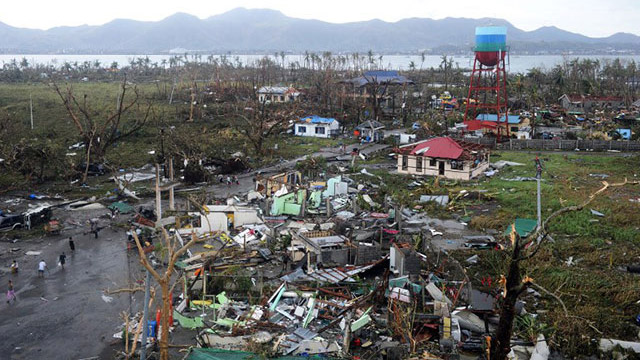
I caught the premiere of the play Usa Ka Isla at the Luce Auditorium tonight. It's a Kasing Sining production, which is under the guidance of the great Lutgardo Luza Labad and the artistic direction of Jerrey David Aguilar, and tackles the travails and the aftermath of Typhoon Odette in Bohol, when it came and ravaged Central Visayas in December 2021. The story, in glorious Binisaya, is a chorus of voices from ordinary people as they prepare to face the incoming typhoon, not knowing the devastation that would eventually happen, and then showing the hardship and resilience of these people in the wake of the tragedy — questioning God, questioning authority, questioning fate, questioning the very idea of “resilience.” They have two more shows slated for Saturday. Here I am with Gardy, and with the cast and crew! For tickets, go to the Silliman University Culture and Arts Council website.
I was six when I saw my first big fire. It was 1981, we lived in an old building—a rickety wooden affair that had plenty of rooms for several tenants and creaked during rainy days—which was owned by someone we called Tiya Tansing, and the house just happened to be located right near the corner of Calle Sta. Rosa and Calle Real, a stone’s throw away from the tianggue.
The tianggue in the old days was two or three blocks worth of stalls—mostly wooden and makeshift—constituting a grand maze of no discernable design, although I remember there was a movie theater there somewhere, where we saw the latest Snooky Serna and Maricel Soriano teeny bopper films from Regal. I can’t remember the name of the theater, but I can recall the heady topsy-turviness of the place, and the inescapable smell of vegetable rot and fish entrails.
One night in 1981, while Dumaguete slept, the whole tianggue burned down, a grand conflagration that was so immense, it felt like the apocalypse. That we lived nearby pushed us to panic, and I remember my family trying to evacuate what possessions we had—the dining table, boxes of clothes, assorted items marking lives suddenly seeming so fragile—from our apartment in Tiya Tansing’s house and right onto the street, which was swarming with onlookers who were in equal measure frightened and excited. I remember the rain of embers from the night sky—dots of firelight that looked like fireflies, but here and there were creating new fires in nearby houses.
That scene remains indelible in my memory. In 2006, when I wrote my short story “A Strange Map of Time,” which is included in my book Heartbreak and Magic, I memorialized all of that in this passage, where the hero confronts a similar fire to get to a mystical gate: “[H]e opened his eyes to a strange night, a fiery brightness everywhere in Dumaguet he could not shake away like a bad dream. The world crawled into his consciousness. His senses took time to recover, and only little by little did he make out the details of things: the smell was of acrid burning; the feel was of far-off heat licking the sensitive hair on his arms and face; the noise was of shouts in crescendo, the wailing of alarm constant in the air.
“It was the year of the Big Fire. The sight disconcerted him: a huge city block was in flames, the fire ravenously licking wood and toppling cement walls. There seemed to be an endlessness to the devastation, with fire spreading everywhere. It seemed like the end of the world. From everywhere, strange and old-looking earthbound trucks, painted red, buzzed about in fashion, sending gushes of hosed water into the air, into the heart of the flame, onto the surfaces of buildings opposite.
“The young man who used to be Sawi stood up and walked towards the fire and the gathering throng. Around him, people panicked, grabbing hold of so many things—a very thin old man was carrying a refrigerator, an old woman had six toddlers in her arms, two boys were rushing towards the crowd with a huge aparador between them—all of them running around to somewhere and nowhere. He saw that there was also a growing crowd—hundreds—that also descended to watch, in a clinch of awe and horror, the conflagration.”
I write this about fires and the grim fascination over them because only last Wednesday, Times Mercantile along Dr. V. Locsin Street burned down. Again.
Photo by Sho Tuazon
This is the second time this has happened to this local grocery store, arguably a Dumaguete business icon, something all locals know to go to for the best priced liquor and the like. With Fortune Mart also gone, only Ricky’s remain of the Dumaguete of old. In 2000, Times’ old front along Perdices Street burned down along with the old Ricky’s, a fire that claimed two lives and reshaped how Dumagueteños did their after-hours grocery shopping.
But fires have an interesting history in Dumaguete, a terrible but decisive shaper of its landscape. The local church historian Fr. Roman Sagun has an interesting article about local conflagrations, and in “Fire and the Changing Cityscape of Dumaguete City,” he writes: “In 1990, a massive fire leveled down commercial establishments and residences along Real and Cervantes Streets. It affected two adjacent blocks that were mainly occupied by 34 families and eight commercial establishments. The fire started at 3:00 A.M and was contained two hours after. There were no casualties … but all 34 families were left homeless. The fire rapidly blazed all that was found within the adjacent blocks since most of the houses were made of nipa. Witnesses said that two fire trucks arrived early but one of the hoses snapped, [which] was because the valve was opened too soon before an additional link could be installed. [There was also looting, as] people pretended to help but … stole from the victims and commercial establishments [instead].”
The 1990 fire started at what was then VJR Kitchenette, which was located behind the old Rhine Marketing, and it quickly engulfed the surrounding commercial establishments including Tat’s or Goldy Theater, Dove Theater, Glecel’s Kitchenette, Luzonians Restaurant, Lamp Lighter, Badon Repair Shop, City Barbershop, GM Furniture, Anchor’s Tailoring, Tan’s Rechargeable Shop, and Vesin’s Store.
Fr. Sagun also wrote of the 1992 fire that damaged the Gold Label Grocery Store along Locsin and Ma. Cristina Streets caused by faulty electrical wiring. In 1994, the New Bian Yek Commercial Building along Real Street also caught fire, and while the concrete structure remained, the shops in the interior were decimated. In 1996, the Philippine National Police headquarters went up in flames.
The 1990s was a decade of fires in Dumaguete. Most of these fires occurred downtown, and usually happened in the early hours of morning—and while all these are devastating, there is no denying that fires have been instrumental in shaping the landscape of the downtown area.
In the 2000 fire that consumed the first Times Mercantile and Ricky’s Bakery and Grocery Store, the whole episode began around 5 A.M., and in its wake caused 10 million pesos worth of property damage, and the lives of two sisters, Natalie and Ivy Acuña. Fr. Sagun writes of that terrible night: “According to the only survivor, Ronnie Baldoza, a working baker from Ricky’s, the hotdog freezer had a short circuit and caught fire. The two sisters, together with [Ronnie], tried to [contain] the fire with a fire extinguisher,” but the highly flammable materials that were stocked around the store fueled the flames too quickly, and Ronnie managed to escape, but the sisters had passed out from smoke inhalation.”
The new fire, which originated from the clothing store beside Times, lasted five hours long, according to reports by Raffy Cabristante for GMA News. Many of the boarding houses within the block were not spared, although most of the commercial frontages nearby are still intact because of their high firewalls. In retrospect, that now-gone old building housing Times Mercantile had indeed seen better times—but it was a grand wooden one of a style that used to grace the streets of Dumaguete, some of which still remain and are in perfect need for restoration.
What will rise from the ashes of that building? The landscape of Dumaguete changes some more.
As I write this, Thursday is edging close to sunset, and by all accounts, it is a beautiful day. In the café I am in, students are poring over their books and the baristas are busy making a pyramid approximating a Christmas tree, which they assemble from the plastic tumblers they use for frappes, each cup containing an ornamental ball with its glistening sheen set off by the incessant twinkling of Christmas lights. The place itself is bustling with bodies energized by the taste and smell of expensive coffee, and outside, life continues. The pedicabs, the pedestrians stream on.
And yet my friend Ginny writes with some trepidation in her Facebook timeline: “It feels very much like the calm before the storm,” and it very well may be. I know this deceptive calmness—it is a devilish silence I do not trust. All I know is, this week began quite fine—and then for some reason that defies explaining, it “unraveled”—like there was an invisible static in the air quickly surrounding us, a suffocating warning of dire days. Ron tells me over chat that it must be a kind of premonition—“They don’t call it being ‘under the weather’ for nothing,” he writes. Still I tell him: “I feel fine—physically. I don’t feel sick. But everything else feels off.” Does anyone else get that feeling? I can be very sensitive to these things. What I don’t tell Ron is that the sensation felt familiar—it was the same “off-ness” I felt when the earthquake of three years ago came, the one that devastated Bohol, the one that created panic in Cebu, the one that sent hapless Dumagueteños running to the foothills of Valencia thinking that a tsunami was coming and the world was coming to an end.
And so the day goes, all of us pinging this and that in the comfortable blanket of Facebook. Offline, the city bustles on.
Behind me, the sea beyond Dumaguete’s Rizal Boulevard has the look of pristine bluish sameness, the waves rippling gently under the glare of the afternoon sun, while kilometers away, farther farther east, Ruby barrels straight towards us from the Pacific with the ferocity of a super typhoon. That’s what the meteorologists tell us. We have seen the projection maps. We have read the warnings from media people about having to be on standby, “to be vigilant,” while others still decry the need to filter out misinformation, to tap down the fear-mongering. The proper agencies are on guard, we are told. The emergency contact numbers have been posted, the evacuation plans in place. And all we can do now is to wait out the next few hours, to endure what remains of the deceptive calmness, or to do our last-minute shopping for provisions—the candles, the batteries, the bottles of water, the loaves of bread.
All we can acknowledge is that we do not know what future holds in the coming days. That is one of only two certainties, the other one being the memories of recent painful devastations—last year’s Yolanda and the ruin in its wake. We know for sure how super typhoons wreck havoc. We muse painfully that we have not yet erased the brokenness of that devastation and that we have not yet fully recovered from it—“we are still rebuilding, for God’s sake!” we say—and yet here we are once more contemplating another climate emergency.
How prepared are we? Perhaps as much as we can prepare for the regularity of disasters, given all our recent history of flooding and typhoons from Ondoy to Pablo to Sendong to Yolanda. Many of us have since gone on to try to make our world environmentally-invested. We have fought our battles—because problems still continue to rear their ugly heads despite everything—and sometimes we win, and sometimes we lose. But often I think: can we really do anything about climate change anymore? The extremities in weather are only going to get worse, and perhaps all our efforts to turn back the clock are in vain. The climate deniers hold sway still, governments and businesses continue to turn a blind eye to the causes, and the rest are still living in the fog of ignorance. I remember last August, I was buying some ukay-ukay for a concert we were going to stage at the Luce, and I found myself at the cashier where a customer before me was complaining about the fact that the clothes she was buying were being wrapped in newspaper sheets.
“Don’t you have a plastic bag?” she complained.
The attendant said, “We’re not allowed to use plastic bags per city ordinance.”
“But Lee Plaza is still using plastic bags.”
“Well, we paid a huge fine once when we continued to use plastic bags.”
“Why are you not allowed to use plastic bags?”
“I have no idea. I hate having to wrap things in newspapers, too.”
And I realized these people were the ordinary majority. The message is not getting to them. We are all doomed. And perhaps we all deserve to be.
When you read this piece on Sunday morning—if Sunday comes at all—you will have already known what Friday and Saturday were like, and what the projected rainfall and wind speed turned out to be. Perhaps the storm veered away—let’s hope this was the case—and there was nothing.
But perhaps it was the nightmare you thought it could become, and the memory of the gale howling down the deserted city streets is still fresh, and you can still recall your house creaking and quivering uncertainly against the ballast of debris and the wind-swept uprootings of relics from the vanished normalcy.
On the other hand, perhaps you are also thanking some divinity for having been spared the worst. You always wake up in the aftermath of these devastations thanking the fates that you have lived through the bad, and thanking even the higher powers for how the worst of the storm have missed the city where you live in by pure accident of geography or by the pure whim of a typhoon’s trajectory. Know that it is wrong to do even the slightest sort of thanksgiving: there are other people in other places who are living through the nightmares you have been miraculously spared from. Did your divinity play dice with the storm? What do you thank for really? Silence is the only appropriate response.
So perhaps you are now turning on the television or the radio or the Internet, and are beholding the full horror of what has happened during the weekend—a mounting flow of information in graphic news clips and sound bites and social media links. The statistics and the pictures do not lie, and perhaps you are now left to ponder once more the incessant questions about the fleeting nature of life and the helplessness you feel in the glare of natural monstrosities.
How do you deal? How do you escape the glare of deaths and destruction everywhere and still remain human?
Earthquakes, typhoons. You always wake up in the aftermath of these devastations thanking the fates you have lived through the bad, and thanking even the higher fates for how the worst had missed the city where you live by pure accident of geography. Yet somehow it feels wrong to do even the slightest sort of thanksgiving: there are other people and other places who are living through the nightmares you have miraculously been spared from. So what do you thank for, really? Suddenly, to give thanks seem to have become an exercise in selfishness. Silence seems to be the most appropriate response. There will be no talk about the slightest inconveniences of having no electricity, for example. Better that than full-on devastation. So you turn on the television or the radio or the Internet instead, and the full horror of what has happened in the past 24 hours mounts for you in such graphic news clips and sound bites and social media links. The statistics and the pictures do not lie, and you are left to ponder once more the incessant questions about fleeting life, and the helplessness you feel in the glare of natural monstrosities. How do you deal? How do you help? How do you escape the glare of deaths and destruction everywhere and still remain human?
[Photo by Noel Celis/AFP. Read the Rappler article here.]
“’Begin at the beginning,’ the King said, very gravely, ‘and go on till you come to the end: then stop.’” ~ LEWIS CARROLL, Alice’s Adventures in Wonderland
If you are reading this on a Sunday morning, hot coffee on hand, the birds chirping outside your window on what is hopefully a gloriously chilly December day, that will mean only one thing: the world never ended, the days go on in an unapocalyptic torpor, and we were wrong about what the Mayans were trying to say with their calendar.
If this is the case, consider me happy: we get to live, and life must always be celebrated. Which does not deny also the tiny fact of disappointment. The hype of 2012 has been with us for much too long, and if only for morbid reasons, a lot of us were quite eager to get a first-row view of universal cataclysm. We thought: it would be extremely painful—we die!—but what a show that would be. (Some of us have Hollywood disaster movies in our brains.)
For personal reasons only I understand, I’ve been more than excited all throughout the year to see December 21st come to light. Perhaps it is the sense of a fictionist imagining a fantasy playing out: the world ending in a bang and a blaze of light, grander and more terrible than any novel can ever describe. It is also the sense of a man coming to selfish terms with the increasing ravages of the middle years: I believe I have lived a fantastic life—I have lived and I have loved fabulously—and for this, I am more than ready to accept an end that has been, in a way, “foreseen.” I like the romance of the inevitable. And lastly, it is the sense of a record-keeper with a bucket list, pegging a certain finish to all things undone, and keeping score as a way to measure life.
In a final note, I must say I remain unsuccessful in that last consideration. More than a year ago, I had sat down one night with a good friend, in Qyosko, and both of us started contemplating the mortal predictions of the Mayans. We were drinking coffee, eating arroz balao, listening to the music of Adele, and trying to determine in uncertain terms the vagaries of life and love, given the business of heartbreaks and all sorts of foolish things.
“Do you really think the world will end in December 21 next year?” Anna Espino asked me—she of the rational debater’s mind.
“It is not that I believe that it will happen,” I slowly replied, balancing out rationality and my romantic need to believe in magic and foolish things. “Nobody can know for sure, and for all we know the world will end any time, any day now, and not necessarily on 21 December 2012. Or perhaps the world will last forever until our sun burns out. But I do like that the tail end of 2012 beckons to me like a deadline. So I will believe in December 21 only in that consideration: as a finish line of sorts by which I can measure out the efforts of my days, my life. The thing is, not all of us know how to live. We dole out a semblance of living and comfort ourselves with the illusion that someday our dreams will come true without exactly doing anything about it. We are tied down by the comforts of our uneventful, unrealized existences. So I might as well use this ‘end of the world’ nonsense to start living the life I want before it’s too late.”
Or something of that sort.
I believe my rhetoric on paper sounds so much grander than the speech I must have stammered out that night in Qyosko. But the spirit of the conversation remains the same. And from what I remember, Anna had nodded her agreement, and off we went to our corners of the table in Qyosko—if round tables had corners—trying to come up with a list of ten “doable” things we must promise to accomplish before 21 December 2012. By “doable” we meant something that could, with some certainty, be accomplished given the context of our lives and our fervent wishes. No items listing down “flying to the moon,” for example, or “marrying Joseph Gordon-Levitt.” The list was meant for fulfillment, an end to the common nightmares of pipe dreams.
I’ve since lost my bucket list—I’m not sure if that itself is a sign—but I remember most of the things I wrote down that night the way our hearts keep the etchings of things it refuses to forget: to learn to drive a car, to publish a book of stories and finish my novel, to spend vacation time in Bukidnon and Batanes, to finally finish my MA, to travel to Europe or Argentina, to go back to Sagada to give thanksgiving to the spirits who carried me at the most crucial time in my life, to build a house, to spend more time with Mother. And this, I remember most: to tell the person that I love that I love him without regrets, hopes, or recrimination.
I have not been entirely successful with many of the things on that list. Travel has eluded me because of responsibilities suddenly thrust on me. Life, as the cliché goes, happened. And I don’t have my own house yet, nor a car—forever deluding myself in the belief that I was born a pedestrian. But I have two books of stories out, and I have an MA diploma. For these, I am indeed grateful. Life has a way of making us thankful for things we have somehow accomplished, barring the noisy reminders of those we have yet to claim. But in the final analysis, I can’t consider the list as a definition for my life: fulfillment has its own language undictated by stupid lists. And I believe I have lived truly, even if I have missed out on some markers of accomplishments.
It will be Christmas soon—and I do hope there will be Christmas. But the last thing on that list winks at me with the perversion of a thing wanting fulfillment.
And so, to you whom I love, by the grace of a world ending, I’ll take this chance to tell you what you must have always known anyway: “I love you.” And that’s it. Just three words, and nothing more—those words contain universes anyway.
That, and merry Christmas and a happy new year, if there will be a new year, to one and all.
It was late Monday and Signal No. 2 had just been declared over most of southern Negros Oriental, and elsewhere. But what made it scarier than usual was the perfect ordinariness of the day. There was no rain, there was no wind. The sun was up, though—at the time the knowledge of Pablo first came to me like the inevitability of a flying fist—it was about to set, and dreaded Tuesday was suddenly looming around the corner.
And yet we were deep in “disaster prep” mode in Dumaguete, Monday night. I was earnestly thinking of the supplies (candles, batteries...) and the groceries I needed to buy before the storm hit. I was thinking of the relief efforts we needed to coordinate with Rock Ed Dumaguete—if the worst occurred and Sendong happened again. Pablo was supposedly three times more furious than the last storm that ravaged my part of the world.
Monday felt like the dread of knowing there is a bogeyman lurking right behind a dark corner, and yet you nevertheless feel yourself moving forward, knowing full well you are about to face a monster. It all seemed inescapable, inevitable.
By Monday night, the dogs stopped barking. It was so quiet outside, it was almost creepy. But the night air felt unbearably muggy, which was enough to make you doubt whether a storm was indeed coming. Monday night, I found myself in Qyosko, a 24-hour diner, which became a respite of house music and air-conditioning. My skin was feeling the storm coming.
Tuesday afternoon, the storm crept up on Dumaguete—a sudden fury that seemed surprising, even with all our preparations considered. For some reason, this storm was making me think of the typhoon that ravages Palawan in the beginning of Dean Francis Alfar’s novel Salamanca—when not even the fictional storm’s fury could sway the novel’s hero Gaudencio from writing with such obsession for the beautiful Jacinta. And yet, novelistic comparisons aside, I knew there was no romanticizing the rain that preceded the eye of Pablo’s storm.
Ensconced in the relative comfort of The Bean, I waited out the rain. I was in the café to do my social media updates for the typhoon, releasing relevant information in behalf of Rock Ed Dumaguete. For some reason, I also couldn’t bring myself to go my wifi-less home, to the safety of the familiar. (As Warlito quipped to me that Monday: “Home is where the wifi is.”) I felt drawn to downtown, even when one by one the establishments in the stretch along Perdices Street were closing down for the afternoon’s expected onslaught—save for the fastfood chains. Soon, the café where I was in was about to close, too. “We’re closing at 4 PM,” a busgirl intoned. And so those of us inside slowly picked up our things, and made preparations to transfer to nearby McDonald’s Café. In the knowledge of the impending blackout, I hoped there was electricity somewhere else so I could keep up with the updates for Pablo. I wished then that I could just curl up in bed and read a book or watch a movie and romanticize the rain—but not while there were families out there devastated over their houses being pulled apart by the floods. In Twitter, I chastised a good friend for a tasteless Pablo joke. He apologized, and deleted the tweet. The impending storm was doing something to our heads.
“Whoa. The wind is strong. This is crazy. And I’m stuck inside a McDonald’s Café,” I tweeted when the worst finally hit around 5 PM, Tuesday. Outside, the wind howled like madness itself, and you could hear the bangs and scrapings of flying debris. I posted again: “Whoa. The frontage of Ever Mall is coming down like peeled onion skin...” And it was. It looked scary, this building right across the street from McDonald’s looking like it was being shredded by invisible hands.
It seemed like an eternity, being inside McDonald’s while the storm raged. But soon, a few hours later, I was safely back in my apartment. I had texted the family driver in a kind of panic to pick me up from McDonald’s—there were no more tricycles to be had, and I thought myself foolish for not having gone home when I could have.
On the way home, Dumaguete was all of darkness itself. The lights were out. They had closed down Hibbard Avenue because of the fallen trees. Rizal Boulevard was also closed because of the surging waves. The road had become a part of the sea. The glass windows of Bo’s Café had reportedly fallen in, and the trees along that stretch were falling one by one. The streets of the city were littered with flying debris and broken things.
And the wind. I’d never heard the wind howl with such high frequency before. I thought this sound only existed in movies. I thought the sight I’d see on the road only existed in movies: families from the shanties along the shoreline staggering together in the rain towards the Capitol Area, where relief workers were on standby. While we drove, I saw a crying child being carried by his father on his shoulders as sirens of emergency vehicles blazed by. It felt like a scene from War of the Worlds. I thought: “This storm is serious. There is no romanticizing this rain.”
At home, finally, I waited out the rain. There is something strange in the unfolding of a disaster: interspersed in those scary moments are episodes of utter boredom. But the juice of my laptop and my iPod was out, and my phone was running low as well. So this is what I did while waiting out the storm in the middle of a blackout: Fruit Ninja in the iPad, which was also running low. Then, also bored with that, I cleaned the apartment. While the storm raged outside, I thought: “Amazing what one can do fast without the distraction of Facebook and Twitter.”
And then, around 10 PM, a pervasive quiet. I slept. Kuya Moe’s text came around 3 AM, announcing he was walking around Silliman Farm, beholding the devastation. I, too, decided to get up. Outside, after the storm, the stars were out. They shone with such fierce brilliance. And the dark streets were bathed in an eerie moonshine. The outlines of the city at 4:30 AM looked ravaged.
And just like that, soon it was a sun-kissed Wednesday. It was golden. From my sleepless corner of my office in Silliman University, where I began the painful process of charging all my dead gadgets, I thought I liked the way the soft morning light glistened off the fallen green leaves that blanketed everything else. Even in devastation, a terrible kind of beauty.
Later, in the rolling blackouts that followed, I thought I’d check in some hotel for the night as power was still out in Dumaguete. But the rest of the city apparently had the same idea. All hotels in the city were booked. Except the new Essentia, which couldn’t check in anybody because they lacked generators. I thought: “They missed out on a rare goldmine. And all those wasted rooms!” I sighed.
Soon the city was a mob of electricity-hungry population. The endless search for juice for our gadgets felt exceedingly strange. I was back in another cafe, together with everybody else in the city, looking for space among the busy demands for an outlet. In the blackout that Wednesday night, Dumaguete was a dark ocean with scattered bright islands of generator havens of cafes and restaurants. They were all packed, like the hotels everywhere else.
And I thought: What kind of society have we become where our lives simply can’t unfold anymore without our fully-charged gizmos?
I have to post this article, "We Were a Nation of Citizen Journalists That Night," written by Pam Pastor for the Philippine Daily Inquirer's YOU Section. It's about RockEd's Gang Badoy, one of the bestest people I know, simply because she radiates a fine sense of advocacy in whatever she does. (And I love the way we just keep bumping into each other. "Oh, andito ka pala sa Dumaguete?" I told her a few months ago when we bumped in Hayahay after last seeing her in Cubao X. She laughed, and then we got to talk a little bit...)
Here's an excerpt from Pam's article:
[T]he night “Ondoy” struck, the Rock Ed founder set aside her grief and did what she does best – try to make a difference.
“I tried driving out to Eastwood to pick up the core group of Rock Ed volunteers who were there early for our Girl Code event. We drove around for over two hours trying to get to Eastwood from Ortigas Center. We never got to them. Finally, at around 3:30 p.m., I decided to go back home and go online.”
Gang soon realized that so many Twitter and Facebook users were posting useful information about the typhoon. But she knew a lot of people had already lost electric power and most likely no longer had access to the Internet. They had only their mobile phones which gave them access only to FM stations and not AM radio.
Gang felt she had to do something. “I said, I’ll go on air!”
But Gang isn’t a DJ on Jam 88.3. She hosts Rock Ed Radio, a two-hour talk show Wednesday nights.
She walked to the studio in Ortigas Center to get hold of the station manager. “But he lived in an affected area and was managing things at home. So I just barged into the dark empty studio.”
She told the guard, the only one around, “You must help me stop the auto-broadcast and I need to go on air. He was very hesitant because he didn’t know me and wasn’t sure if I knew how to operate the board. He was right, I didn’t. But I insisted and said, ‘Malaking tulong ang may radyo na nagbobroadcast ng info, bumabaha na sa labas, parang malaki ’to, sir.’ We stared at each other for a time, with me determined to go on air even if I had to force my way through the board buttons.”
Let’s take a little break from our excursion—historically and sociologically—on the Dumaguete night life. It would not have been right if I had devoted this space to something so utterly banal in the context of our suddenly grief-stricken lives. I just cannot bring myself to write further about the topic for now. Not now. Not when too many people—many of them our friends and families—suffer from the rash onset and then the sad and deadly aftermath of Ondoy’s wrath.
But then again, I must also wonder: what else can I say or write? No words can equal the depths of their sufferings or the heights of our sympathies. No words from those of us who are miles removed from the epicenter of woe, mere bystanders to the tragedy, can even attempt to console the ones who were there. I beheld only the horrors from across the divide, through my TV and computer screens. To attempt to say anything runs the risk of sounding out empty words. We can only offer prayers and the generosity of our donations. But to experience the horror and live to talk about it?
“The water was waist deep in Anonas,” my best friend Mark Fabillar told me over chat in Facebook. He had just gotten out of work, and soon found himself battling the increasing levels of water. It was a taste of the Metro he was not prepared for. He had just transplanted himself in Manila after years of relative safety in Dumaguete—he had never seen flood waters that high. “Can you imagine the garbage, the feces, the slicks of oil that were gurgling all around me?” he said. He told me to imagine the smell. He told me to imagine the sheer horror of having to go against the current.
And that was all I could do: imagine.
And to think Mark was one of the luckier ones. He managed to get home in Quezon City safely, where the house he shares with film director Jay Altarejos was blessedly perched on higher grounds. In Marikina and in nearby Rizal province, and in many other places around the Metro, others were not so lucky. The deluge claimed lives and upended the eternal divide between the social classes. As of this writing, the casualties number now above the 200 mark—but the rest of the affected ones, the ones who have been uprooted from their homes, nay, their lives, number in the high thousands.
And, as often the case with things like this, we turn inwards and ask ourselves whatever led to these things happening. The writer/artist Elbert Or emailed me today, and this is what he partly wrote:
But no one is telling me what I really want to know: Why did this happen? How can this be avoided? Is that even possible? What does this mean for all of us? What happens next? Beyond the short term relief and rescue efforts, what can we do next?
He's asking us to participate in a book project for relief efforts towards the Ondoy tragedy, with contributions answering some of those questions.
One, after Fernando Poe, Jr. died on Dec. 14, 2004, they did an inventory of his things. In one bodega, they found cartons of relief goods that were meant to be delivered to Infanta, Quezon. Infanta had been buried in mudslides a couple of weeks before his death and, along with many others, FPJ had bestirred himself to help.
With one difference: While all the other relief-givers were busy putting their names on their donations—or as in the case of many public officials, putting their names on other people’s donations—FPJ was not. His people would swear later he would not hear of it. He gave strict orders for the relief goods to be unmarked and just sent where needed. It altered my view of the man completely and made me vow to make amends to his family for some of the things I had said about him.
That is class. Which makes me furious today about the politicians who want to exploit the misfortune of others for their ends. Or indeed their continuing travail, many of them having lost everything in one of the worst disasters ever to hit this metropolis. It’s a sentiment I know is shared by many, even those who were not directly ravaged by the floods, as I’ve seen in news reports and blogs.
Heading the pack is Willie Revillame who was busy announcing that “kami nga ni Senator Villar” have been tireless in delivering relief goods to the needy. You’d think the guy would have learned a thing or two from being crucified after he vituperated about Cory’s coffin being shown on his show, consequently disrupting his and his audience’s fun. Clearly his chastisement hasn’t chastened him enough. Or he’s just fundamentally tasteless he cannot see that the last thing the victims want is to be treated like contestants, or supplicants, of “Wowowee” waiting upon his generosity.
Thankfully the tack is likely to backfire. People are in a foul mood and are not likely to remember Revillame—or his principal—with fondness come election time.
The last thing we need is to see politics mix with relief. “When you want to shoot, shoot,” as Eli Wallach said in “The Good, the Bad and the Ugly,” finishing off the guy who was threatening him with all sorts of mayhem. Same principle here: When you want to give, give, don’t advertise. All you’ll get back is mayhem in the minds of the beneficiaries.
Two, on Tuesday government’s disaster council gave a briefing. They were three days late. The time to have done that was Saturday at the height of the rains. The time to have appeared in public to calm down a metropolis in the grip of panic was last Saturday. The time to have gone to the aid of people who had every reason to panic (some of them were huddling on the roofs of their houses, along with their children and their aged, pounded by unceasing rain) was last Saturday. The time to have unleashed the full resources of government, which should have been there because government has—or should have—billions of pesos in calamity and emergency funds, was last Saturday.
In fact the monumental thing that happened last Saturday was the complete absence of government. The only government there was were the media, notably ABS-CBN and GMA-7. You can forgive both for advertising their wares, or relief efforts, under the extenuating circumstances. They were the government. They were the central authority apprising the public of the situation. They were the central authority coming to the aid of the victims. They were the central authority running the country.
The Internet is full of reports that the emergency fund is depleted, having gone to fund Arroyo and company’s not-very-emergency trips abroad. I’ll leave that for when it’s confirmed. But the breakdown of government is staggering. Arroyo should thank God, or whatever entity she worships, we have elections—the same elections she tried to monkey with earlier with Charter change. Without that she would probably not last this week, given an incensed citizenry, given an aroused citizenry, given a citizenry that will no longer brook abuse. This is as angry as I’ve seen residents of Metro Manila in a long time.
Three, indeed to this hour, what government we have is courtesy of the private sector where voluntarism has sprung like wildflowers. That is the bright spot in all this, the light amid the darkness, the blazing sun after the storm. Truly the Filipino rises to his finest self during trying times, the more trying the times, the finer the rising. Or it is in times of disaster that the Filipino ceases to be a disaster, thinking of others first before self.
It’s especially heartening to see the kids go en masse on relief mode. Many of the kids in my neighborhood have done so, teeners who normally while away the holidays playing basketball, flipping rollerblades, and drinking beer in the stores. They’ve enrolled themselves to help without thought of pay, without thought of recompense, without thought of reward. Just the thought of doing something nice for a change, just the thought of doing something to make things better.
It rekindles memories of the July-August floods of 1972, when students also went in droves to places in Greater Manila no longer traversable by land, or indeed outside the metropolis where they were greeted by a greater ravaging. But then there was activism to fuel, or goad, or flagellate the youth to idealism. Well, there was also the prospect of meeting a cool chick or a cool cat while on your best form. Today, there’s just spontaneous goodwill to do the trick. And the prospect of meeting a cool chick or a cool cat while on your best form. The kids come home happy, comparing the welts and bruises on their arms from lifting crates while drinking beer in the stores.
Makes you wonder what on earth you need government for.
From the Philippine Daily Inquirer 30 September 2009
All I wanted to do on Saturday morning was to go to my doctor. After getting off the MRT station in Kamuning (about 10 am) I waded through ankle-deep floodwaters to accompany my wife to the TV station where she works. The rest of the day was already clear in my head: Go to the doctor, finish my business there by around lunchtime (there are usually quite a number of patients, and I wasn’t expecting to finish earlier than that), pick up my wife and we go home for some needed time with the kids.
I thought nothing of it when the doctor’s nurse texted me to say that the doctor’s clinic was already flooded. The clinic is in the low-lying Kamias area. Fine, I told myself, I’ll just go to Hi-Top and buy a bottle of wine and ingredients for dinner. My daughter had requested that I cook for dinner.
After Hi-Top, I proceeded to the TV station where my wife works. I was walking the whole time because of the rain. I felt no danger despite the rain. The rain wasn’t that strong by the time I left Hi-Top. Then I reached the corner of Panay Avenue and Sergeant Esguerra. Holy shit. The floodwaters were neck-deep in Esguerra!
I turned left on Panay, planning to take the train at the Quezon Avenue MRT then disembark at Kamuning station, so I could just walk towards the TV station. I reached Hen Lin (a Chinese fastfood) which is right under the MRT station. I was surprised to see that Edsa was flooded. The area in front of the McDonald’s outlet was waist-deep in flood.
There was a guy—he was soaked from head-to-foot—who was warning people getting off the Quezon Avenue MRT station. He was telling everyone who could hear him:
“O, wag na kayo dyan sa Esguerra. Hanggang leeg doon. Dito sa may Edsa hanggang baywang. Mamili na lang kayo kung saan niyo gustong magpakamatay.”
[Don’t go to Esguerra. The water there is neck-deep. Over there at Edsa it’s waist-deep. You guys choose which side you prefer. You choose where you want to kill yourself.]
The guy was trying to be funny. I went up the MRT station, boarded the train and got off at Kamuning. When I reached the TV station, my wife texted me that she won’t be going home. All TV news staff were required to stay because of widespread flooding.
I called the kids at home. Thank God there wasn’t too much rain in Cavite. Finally, I saw what was happening in Marikina and Rizal on the TV set at the visitor’s area. Shit. I won’t be able to go home. Then I also learned that the way to Cavite was impassable.
After talking to my 9-year-old daughter some more and assessing that Cavite would likely not be affected by the typhoon, I made up my mind to wait for my wife. I didn’t think it would be a good idea to let her go home alone, with floodwaters rising in Quezon City.
People were coming to the TV station. Every single one was asking for help. They had loved ones trapped inside their house by floodwaters. There were loved ones already on rooftops. The floods were rising too fast in some areas. And so began my long day: filled with the weeping of women, worries about friends trapped in rooftops, worries about my kids (what if the typhoon turns and hits Cavite?), and a feeling of utter helplessness.
My wife worked till about midnight. We tried to get to Cavite but even before we reached the tollgate of the expressway leading to Bacoor, huge trucks were already turning back. We were in a cab. I decided not to risk whatever was ahead. There could have been floods, an accident, etc.
My daughter kept calling my mobile phone. She was crying. When were we going to get home? After getting assured that there was no flooding in Cavite, that our kids were not in danger of any flood, I told my wife we should just wait for morning. We turned back and stayed in a hotel—the hotel lobby to be exact. All the rooms were booked. It was already 2am. We couldn’t sleep. We simply waited till the sun was up.
When I finally got home today, the first thing I did was gather wife and kids for prayers. We prayed out of gratitude. We were all safe. Then we prayed for all those who were still trapped, who were still struggling to stay alive amid floodwaters. I was crying.
I find myself unable to sleep after being awake since 6 am yesterday morning. I’m still keyed up. My wife’s asleep, finally, after getting a massage. I want to sleep but each time I manage to doze off, I jerk awake at the slightest noise. So I’ll just write.
I can’t get the sound of weeping mothers out of my head. That’s how I spent the night while stranded in Quezon City. All these mothers kept talking about their kids. One mother, Lina, could not help but cry for her kids, who were trapped in the third storey of a neighbor’s house for out eight hours already by the time she spoke to me. Her husband was also trapped by floodwaters—he could not leave his office in Quezon City.
Here are some things I learned from the experience. I can write them down in the comfort of home with my wife and kids safely with me. I actually feel guilty that I’m in this situation. I feel guilty that I’m not out there on a rubber boat saving people.
So I’ll write some more and go to bed. After I get some sleep, I might have a saner perspective.
Our families are not prepared for climate change. Typhoon Ondoy was true to its name, which means “little boy”—it wasn’t a supertyphoon. And yet, we all failed in so many fronts.
In our own home, we don’t have an emergency kit. The flashlight is no longer where I always put it. Furthermore, I’m not aware of any evacuation plan in our community. Who do we call? Where do we evacuate when waters start rising? I have no idea. It’s the sort of ignorance that kills.
One friend of mine lost her possessions in the floods. Her husband and kids are safe. She had the quick and sensible thinking to have her family evacuate shortly after the water began seeping into their house and after the power was cut off. They left everything and booked themselves in a hotel. “I lost everything,” she told me over her mobile phone. I told her that the most important things in her life were saved.
Our government—both the national government and the LGUs--is not prepared for climate change. If people are safe now—relatively, for some, because it’s again starting to rain and many are still trapped on rooftops, awaiting rescue—it’s because of prayer. So many people were—are still—praying. It’s seems the prayers were heard because we all got a respite from the rain.
Filipinos have a saying, “Nasa Diyos ang awa, nasa tao ang gawa” (God dispenses mercy but man has to do the work). God has already dispensed his mercy. Will we do our part?
There’s no excuse for the lack of rubber boats, for example. We have floods every year. But every year, we are unprepared. The two rubber boats that began rescuing people in Marikina were a relief to know about, but why only two?
Philippine National Red Cross Chairman Dick Gordon tried to transport several more rubber boats but these had to come all the way from Olongapo. And with the traffic jams at the expressways, they could not get to Metro Manila in time.
The headquarters of the National Disaster Coordinating Council and the headquarters of the Armed Forces of the Philippines are both in Quezon City. And yet, for nearly 12 hours, Quezon City residents trapped in floods could not be rescued. The AFP, if I remember correctly, usually has the biggest slice of the national budget every year. But where were the choppers? Where were the rubber boats? Clearly something is very wrong.
Then we recall how General Carlos Garcia, former AFP comptroller, was caught (by US authorities, not by Philippine authorities) trying to bring in millions of pesos in cash to the US. It does not inspire faith in the military leadership.
We also recall a lot of things that are disquieting: government resources being used to secure a questionable telecoms deal with a Chinese firm; millions of pesos spent on Presidential dinners abroad; millions of pesos in campaign contributions unaccounted for; millions of pesos spent on a California mansion; billions of pesos spent on foreign trips; and a cancelled plan to buy a new Presidential jet.
How do you explain all that to kids trapped on their rooftop for nearly 24 hours—soaking wet, hungry, crying for their mothers and going insane with fear?
How do you explain the fact that the government can spend millions upon millions on so many other projects, but could only produce two rubber boats to rescue scores of residents trapped in a flooded Marikina village? How do you explain the President’s lobster and steak dinners to Rizal residents neck-deep in muddy floodwaters?
Every year, we get floods and typhoons. Every year, we give money to the AFP and the NDCC. And all that the Marikina residents get are two rubber boats?
And wasn’t Marikina always being trumpeted as some sort of “First World City in a Third World Country”? Clean and green Marikina. Disciplined Marikina, a jewel of law and order in the chaos of the Mega Manila.
The Marikina River floods every year. Every year. But when it really mattered, the City Government of Marikina did not have enough emergency equipment, did not have enough rubber boats. Or if it did, it did not have the capacity to deploy these resources in time. It seemed to have no plan for the evacuation of residents at Provident Village before floodwaters could reach it.
And former Marikina mayor Bayani Fernando wants to run the rest of the country the way he did Marikina—or at least, that’s the impression we get. We could be wrong.
To be fair, none of us expected something like Typhoon Ondoy. But the lack of rubber boats, the seeming lack of coordinated response, the empty promises made over the media—these are simply not acceptable. These do not inspire our confidence in government once the next super typhoon hits.
I mentioned Marikina only as an example. I’m not blaming Fernando or his wife (the present Marikina mayor). I’m just stating how things appear. The real story about the slow rescue, etc. might unfold in the next few days.
What happened to Marikina can happen anywhere. The local governments of Bulacan, Pasig and Rizal fared no better. Are our local governments prepared for climate change? Are they prepared for typhoons like Ondoy, or much stronger ones? Your guess is as good as mine.
What would have happened if Ondoy didn’t leave the country in the hours following the massive flooding? What if it was a super typhoon that decided to stay for a few days?
The answer is so obvious that we’re scared to state it: Death and Chaos. So many people, so many children will die. Our loved ones will die. We will die.
The next few days, weeks and months will tell us whether the government cares to prevent this, or whether it wants to use climate change as a kind of population control.
The government’s priorities have been clear in the way it spends its money and allocates its resources. For example, the AFP budget keeps growing. But what about the budget for the national weather agency PAGASA (Philippine Atmospheric Geophysical and Astronomical Service Administration)? There were reports a few years back that the budget was actually slashed.
During a report on GMA-7 news last night, PAGASA OIC Nathaniel Cruz said that there was a piece of equipment that could help the agency estimate a typhoon’s potential amount of rainfall (very useful in the case of Ondoy, which poured a month’s worth of rainfall in about five hours)—a Doppler radar. Does PAGASA have this equipment?
No. The national weather agency, the only one that could warn us if we should evacuate because a typhoon will bring a deluge, does not have a Doppler radar. But it’s on its way, clarifies Cruz.
PAGASA, in Filipino, also means “Hope”. Based on how the government seems to prioritize PAGASA, the weather agency, do we have reason to hope?
It was drummed into my head a long time ago that when we use the term “government” in a democracy, we should really refer to ourselves. After all, in a democracy, governance must be by, of and for the people.
So it’s either we’re not really a democracy (because we always stand back and just let a bunch of evil yoyos run things for us) or we’re all just not getting this governance thing right. We’re not governing things the way we should.
It’s raining again. I hope we get our acts together soon.
***
As I write this I am flanked by weeping women. One is from San Mateo, Rizal. Two others are from Novaliches, Quezon City. We’re all stranded in Quezon City.
They are weeping for their children. Their kids are trapped on the roofs of neighbors’ houses. These houses are three storeys high but the floodwaters have reached the second floors. The updates they get from their trapped relatives don’t give them much comfort. Their relatives have been trapped for hours. No food. No water. No electricity. The rains have not stopped. And the darkness is upon us.
How will their young kids make it through the night? Through the cold, the rain, through their hunger? And the most disquieting question of all:
Where are the rescuers?
My wife and I are fortunate that our village isn’t flooded. But we’re so far from our house in Cavite. We’re hoping the storm abates and doesn’t put our own kids and others in the same danger faced by other children, other families.
One of the women with me is the wife of a soldier. She tells me she already went to the headquarters of the Armed Forces of the Philippines. She's angry. In gist this is what she told me:
“Nagpunta na ako doon, pero parang wala silang mga puso. Ang tagal na nang nasa bubong ng mga tao sa amin. Ang lakas ng agos ng tubig. Bakit wala man lang nagdadala ng pagkain sa mga nasa bubong?
“Parang walang puso ang mga namumuno dito sa atin. Ang tagal na wala pa ring rescue. Ang daming chopper, ang daming rubber boat sa AFP. Bakit parang di man lang sila makapagpadala doon sa mga lugar na may baha?
“Grabe na ang agos ng tubig doon sa amin. May mga inanod na raw na gamit at mga tao. Bukas, kung dumating man ang mga rescuer, magbibilang na sila ng mga patay doon. Magdala na rin sila ng kabaong.
(I went to the headquarters but it’s like they have no hearts. People in our village have been on the rooftops for hours. They’re surrounded by water. The currents are strong. Why has no one has brought food to them?
It’s like our leaders have no hearts. It’s been hours with no rescue for the victims. The AFP has so many choppers, so many rubber boats. Why has it been hours and these have not been deployed to the flooded areas?
The currents in our village are very strong. Appliances and possessions have been washed away, and even some people have been taken by the currents. Tomorrow, when the rescuers come—if they come—they will count the bodies. They should also bring coffins.)
As I write this, I’m getting the first unconfirmed reports that rubber boats are being sent into the flooded areas. I’m praying that as many people as possible, especially children, are rescued.
The Secretary of National Defense wants to run for President. The Chairman of the Philippine National Red Cross wants to run for President. The Chairman of the Metro Manila Development Authority wants to run for President. Is it reasonable for us to judge their potential capacity as President based on how they performed their duties on this disastrous day?
And is it right for us ask: ‘Was there anything they and other officials could have done to help the victims?’
For example, was there enough foresight and forward planning on their part to ensure a quick response system, enough emergency supplies, enough rescue boats, etc.? in anticipation of a really powerful storm hitting Metro Manila and its surroundings?
All the women I spoke to had this complaint: Rescue and relief on the part of local and national government were too slow—their kids and relatives have been stranded for hours on rooftops, with floodwaters still rising. It’s already nightfall and there’s still no rescue in sight.
Metro Manila and its surrounding areas have been fortunate in the past few years to have been spared from catastrophic floods. Not anymore, it seems. If this is all the result of climate change, what are the oil companies doing to reduce the carbon emissions that are making the weather so dangerous to us? And are our political leaders exercising enough political will to make sure the oil companies do what they should to lessen the effects of climate change?
I praying that the woman’s angry prediction doesn’t come true. I understand the sentiments welling up within her, as she sits here helpless, wondering if she’ll see her family and relatives alive again after tonight.


 9:35 PM |
Nibisita Ko sa “Usa Ka Isla”
9:35 PM |
Nibisita Ko sa “Usa Ka Isla”



 Here's an excerpt from Pam's article:


