Thursday, December 23, 2010
 3:21 PM |
You Die for Your Art
3:21 PM |
You Die for Your Art
If there is a thread we can pounce on with the body of work of filmmaker Darren Aronofsky, it may be this: you die, or at least suffer, for your art or your ideal. That was immediately apparent when I first saw
π [
Pi, 1998] years and years ago.
Pi was about an obsessive number theorist named Max Cohen (Sean Gullette) who struggles to understand the string of numbers hidden in the Torah and with a mysterious 216-digit number his computer not-so-randomly spat out one day. Later on, we see Max's cinematic cousins in Ellen Burstyn's Sara Goldfarb who struggles to fit into an old red dress with the use of amphetamines in
Requiem for a Dream [2000], Hugh Jackman's Tommy who struggles to find a cure for his wife's brain tumor in
The Fountain [2006], and Mickey Rourke's Robin Ramzinski who struggles with an ailing heart to win one last match in
The Wrestler [2008].
Now, in the terrific and terrifying
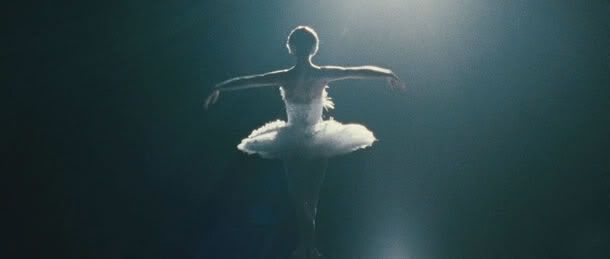
Black Swan [2010], Aronofsky unveils his new obsessive in Natalie Portman's Nina Sayer, a ballet dancer known for perfect technique but not for raw uninhibition needed to truly achieve riveting dance. She begins to lose her mind, in a living nightmare reminiscent of Roman Polanski's
Repulsion [1965], as she struggles to lose her straight-laced constraints to truly become the titular ballet role. Her perfection -- dull and unseductive -- slowly cracks.
Mr. Aronofsky knows. He knows the terrible beauty and the exacting nature of artistry or the search for that perfection or ideal. In his previous films, however, one does not get a close-enough cinematic depiction of the need -- or the hunger -- to achieve that artistic ideal. In
Black Swan, he finally does. Take note of that transformation scene when Nina finally breathes in her terrible achievement: she glows and menaces and walks around the backstage like a predator in ecstasy. I recognized that walk, that breathing, that deadly seduction set in the eyes. I told myself, that's it -- that's the familiar high we get when we are in the very depths of the artistic zone. Mr. Aronofsky perfectly renders it. Which is why I love this film. It is not subtle, and does not aim to be -- and so one should not fault it for being the visceral assault that it is. It perfectly captures that throbbing sensuality of having to surrender, little by little, all that we are in the service of our art. And if we have to die for it, we do so with the comfort of knowing we have created something immortal in the process, the applause we get becoming a mere trifle in the exquisite bloodletting it requires.
Labels: dance, film
[0] This is Where You Bite the Sandwich
11:35 AM |
You Are Not Who You Are

This is the
other Facebook movie, the perfect bookend to David Fincher's
The Social Network [2010], the slow-burning but incredibly delicious film that has become this year's uncanny mirror of the zeitgeist. (Most of us do live on Facebook now, right?) But while Fincher's film is an intelligent myth-making re-imagination of Facebook's troubled start-up, ostensibly recreating the days of Mark Zuckerberg's life as he deals with the assorted drama of Facebook's creation, Henry Joost and Ariel Shulman's
Catfish [2010] depicts the real-life repercussions of our online interactions. The documentary follows Nev, Mr. Schulman's brother. Nev is a New York photographer who covers the dance world, and one day he receives a painting of one of his dance photographs by a girl named Abby from a little Michigan town. A friendship takes root and soon comes to involve Abby's family -- a mother named Angela, a father named Vince, a brother, Abby's friends, and finally, a beautiful half-sister named Megan, a veterinarian who models, paints, sings, and plays the piano. Online romance ensues. And then soon after, already smitten like a boy in a long-distance love affair, Nev starts discovering that some things ... just don't add up.
The film does start off as a kind of Facebook thriller (complemented by much use of YouTube, Gmail, GoogleMaps, iPhones, Google Earth, and the assorted online applications that have come to define our daily lives). But it ends with such quiet
and devastating drama about alienation and hope, artistic manipulation, the allure of storytelling, and the slippery boundaries of identity that we use to navigate the unguarded highways of the Internet. This reminds me of a post that I blogged (with a subsequent shorter 140-character version in Twitter) a few days ago : "Sometimes when I look at my own Facebook posts and pictures and videos and stuff, I cannot help but feel a little envy for the life that this online persona, this electronic version of me, seems to have. And of course I feel weird feeling that." It's weird because the Ian Rosales Casocot online, in Facebook and elsewhere, is indeed "me" -- and those are my thoughts, my photos, my videos, my life. And yet, I am also aware that in many ways, what I am "creating" online is a persona a little removed from me -- it's the concentration of the best of who I am, the face I want to present to the world, having edited out the humdrum minutes where I just stare off into space, waiting for something to happen. It is from this acknowledgment of how we live our present-day reality that the film manages to appeal to me.
This is happening. And then there is also the film's quiet conclusion, its statement about artists. It broke my heart, and angered me a bit -- but I also found a capacity for empathy. And when we finally get to the part about the catfish of the title, everything else that comes before it makes so much sense.
But of course the film did not make sense for a lot of people who came to screenings of
Catfish and expected a twisty thriller in the vein of M. Night Shyamalan. Reading ordinary moviegoers' comments online about the film (or its trailer) is another reason why I have a certain urge to puke over the notion of "the wisdom of the masses," the same mass of herd-thinking people whose idea of enlightenment is the dumbing explosions of
Transformers and the saccharine inanities of
Twilight. The following comment, from somebody named jocybum* in YouTube, is typical of the many online posts that have been coming out: "I just watched this last night, I was so unbelievably bored and disappointed by what happens after driving to the barn scene. It was so predictable. Plus the fact that they called it a documentary and some people believe this is lolworthy" [unedited].
I look at that, and I feel pity. They don't get it. Most people will not get this movie, and it's sad. It reminds me of what the film critic Roger Ebert once wrote about similar people in his review of Stanley Kubrick’s
2001: A Space Odyssey [1968]: “Man is a curious animal. He is uneasy in the face of great experiences, and if he is forced to experience something profound, he starts immediately to cheapen it, to bring it down to his own level.”
* A quick look at jocybum's YouTube profile shows that he or she is 21, from the United Kingdom, and likes the following videos: "Father Christmas Fucked My Pussy (Christmas Pussy Song)," "He Bite Me in My Vagina," and "Fart Trek: The Next Flatulation." I rest my case.Labels: facebook, film, issues, web and tech
[1] This is Where You Bite the Sandwich
Tuesday, December 21, 2010
10:45 AM |
Winona Forever
 GQ
GQ's Alex Pappademas goes into speculative mode in his great profile on Winona Ryder, answering this question:
What if the actress never got arrested for shoplifting and never took those pills?Imagine a parallel universe where there is not this Winona-shaped hole in recent cool-movie history. She'd have been one of the Dylans in Todd Haynes's I'm Not There, for sure. Maybe the object of Jim Carrey's amnesia in Eternal Sunshine of the Spotless Mind. She could have been a Tenenbaum.* Maybe even a Cullen.
* Yes, Wes Anderson shot The Royal Tenenbaums before her arrest. But let's say, in this parallel universe, Winona doesn't drop out of Godfather III, which creates a butterfly-effect ripple across the space-time continuum: Sofia Coppola doesn't replace her, which means Sofia Coppola's performance isn't eviscerated by the press, which means she continues to act instead of pursuing a career behind the camera, and the adaptation of Jeffrey Eugenides's novel The Virgin Suicides falls to a fresh-off-Rushmore Wes Anderson, delaying Tenenbaums by two years. Winona plays Margot, obviously. During the film's opening weekend, syndicated radio personality Glenn Beck is mauled by a tiger.
Funny. (Especially the last sentence.)
Read more
here.
I miss Winona Ryder. That girl had subtlety. Take note of her May Welland in Martin Scorsese's
The Age of Innocence: so sweet and caring ... and manipulative. Please bring her back, Hollywood.
Labels: celebrity, film, magazines
[1] This is Where You Bite the Sandwich
Monday, December 20, 2010
2:05 AM |
It's All About Sex
What do we ultimately get after watching Eric Amadio’s
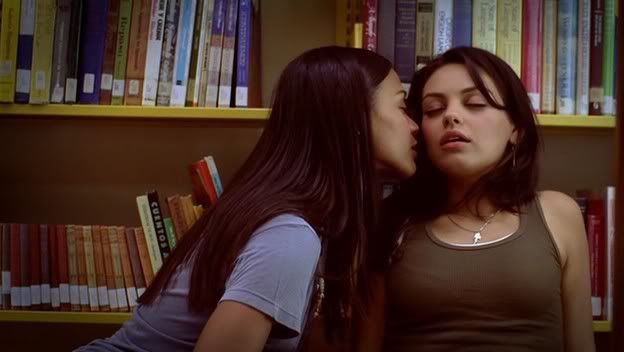
After Sex [2007]? Nothing, except the creeping feeling that we just lost a huge chunk of our time. This pretentious film about twosomes of all kinds having assorted intimate conversations after coupling is really just a string of vignettes that have no organic whole except that they try to explore issues of sex and sexuality and their permutations — a gay couple talk about roles and role-playing, a straight couple talk about the vagaries of loving, a Latino lady killer frets about having bedded a call girl, et cetera — but not much is new here. The insights are not insights but cliches, and almost all of the vignettes are delivered in such hokey ways by actors (save for the wonderful Zoe Saldana as a lesbian in love with her feelings-phobic roommate) who are straining way beyond their depths here. This is a cheesy and ineffectual film for people who think they can gain wisdom from reading the text on a milk carton.
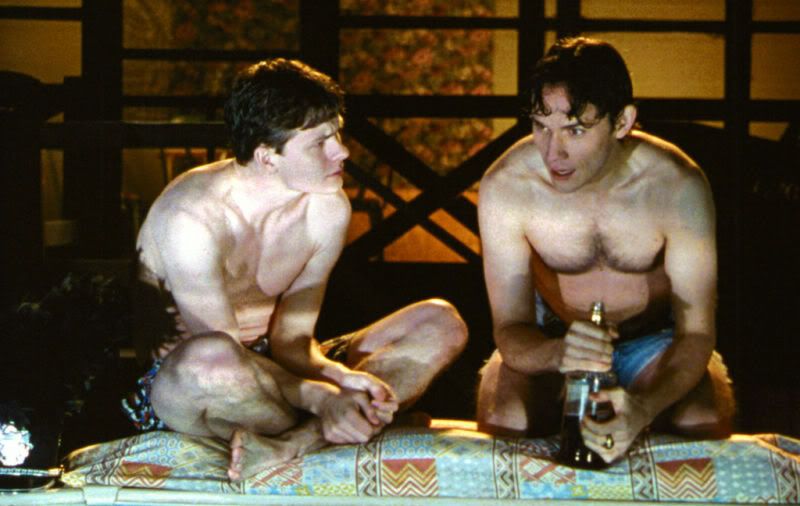
Tom Donaghy’s
The Story of a Bad Boy [1999] is a quirky — idiosyncratic? — story of a 17-year old high school boy in the closet who goes through the tumultuous cycles of life in senior year while juggling all sorts of extra-curricular activities, well-meaning but hopelessly clueless parents, and a developing crush on a student teacher. Played mostly in comic broad strokes, it nevertheless manages to convey the seriously funny and seriously mind-boggling roller coaster ride that is being 17. Every single scene here is done in hyperbole, but by God, I recognized the undercurrents. It certainly brought me back. This is a strange way of doing a film with the issues it tries to flesh out, but it works in some strange way. Even the puzzling end seems appropriate — although I don’t know what it is all about. But why fuss about that making absolutely no sense? I’ve been 17. It didn’t make sense either.
Labels: film, queer
[0] This is Where You Bite the Sandwich
Sunday, December 19, 2010
7:25 PM |
Life in Dissociative Mode
Sometimes when I look at my own Facebook posts and pictures and videos and stuff, I cannot help but feel a little envy for the life that this online persona, this electronic version of me, seems to have. And of course I feel weird feeling that.Labels: facebook, life, web and tech
[0] This is Where You Bite the Sandwich
4:15 PM |
Through the Rabbit Hole Into Wonderland at the Foot of Pundaquit
I decided to spend a week in Manila right after arriving from the United States, not just to fulfill some last obligations for the U.S. Embassy but also to visit some friends, and to prepare myself for the eventual arrival home in Dumaguete City. The essayists Rica Bolipata-Santos decided to take me, along with writers Francesca Kwe-Lacaba and Kris Lanot Lacaba, for a weekend in Casa San Miguel in Zambales, at the foot of Mt. Pundaquit.
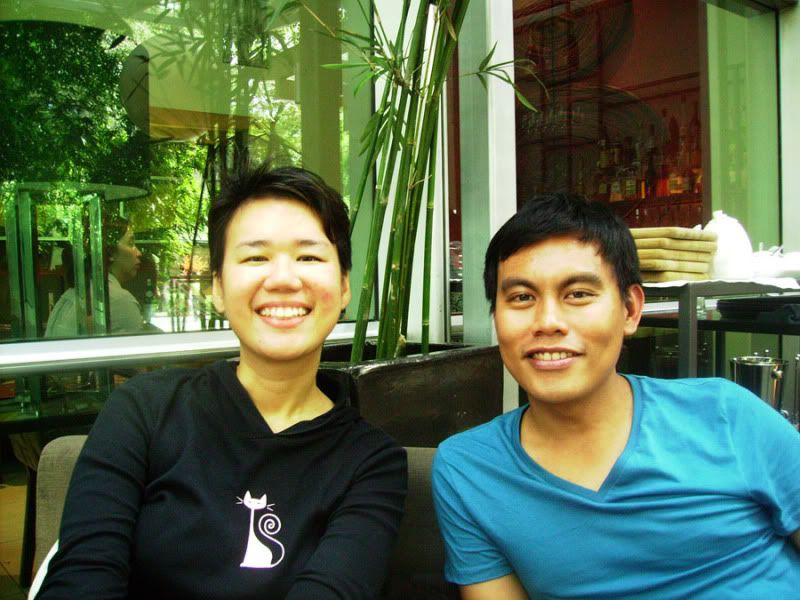
With horror writer Yvette Tan at M Cafe in Greenbelt.
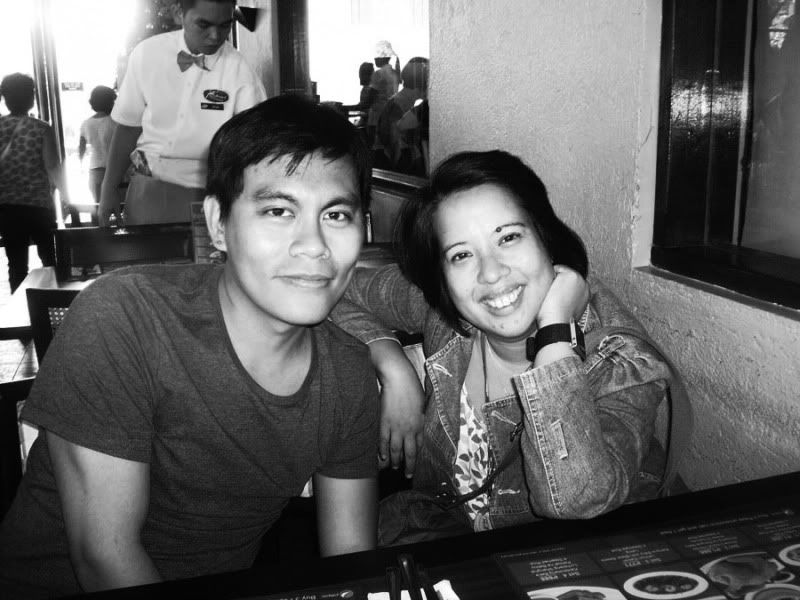
With essayist Rica Bolipata-Santos in Subic for lunch, on our way to Casa San Miguel in Zambales.
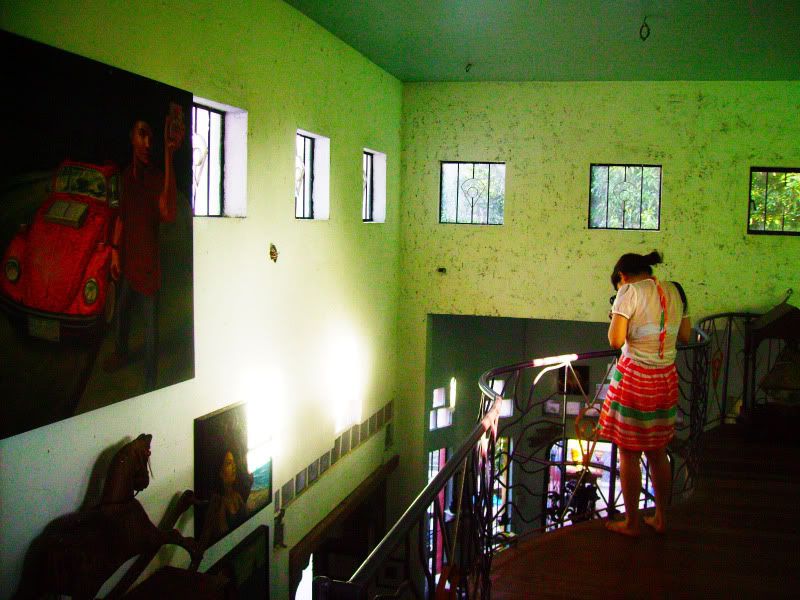
The fiction writer Francesca Kwe-Lacaba taking in the visual overload of Plet Bolipata-Borlongan and Emong Borlongan's house and studio in Casa San Miguel in Zambales.
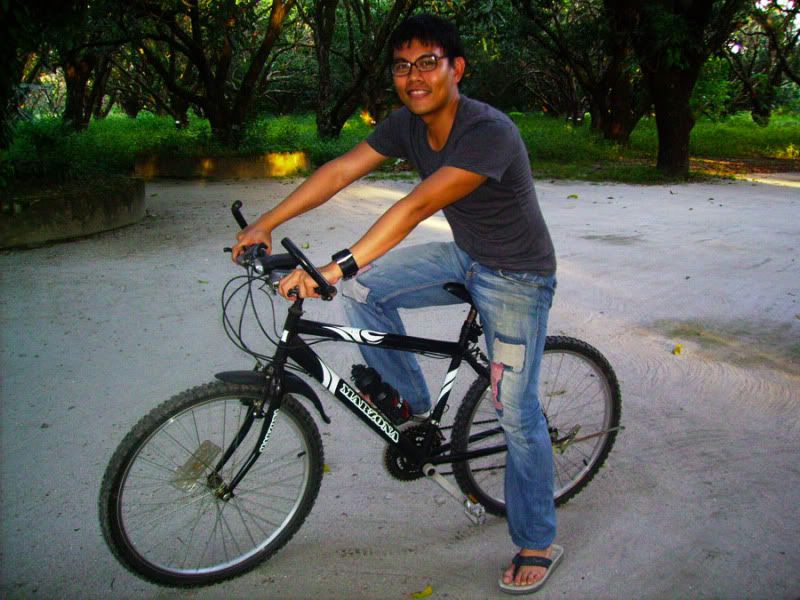
I rediscovered childhood biking around Casa San Miguel.
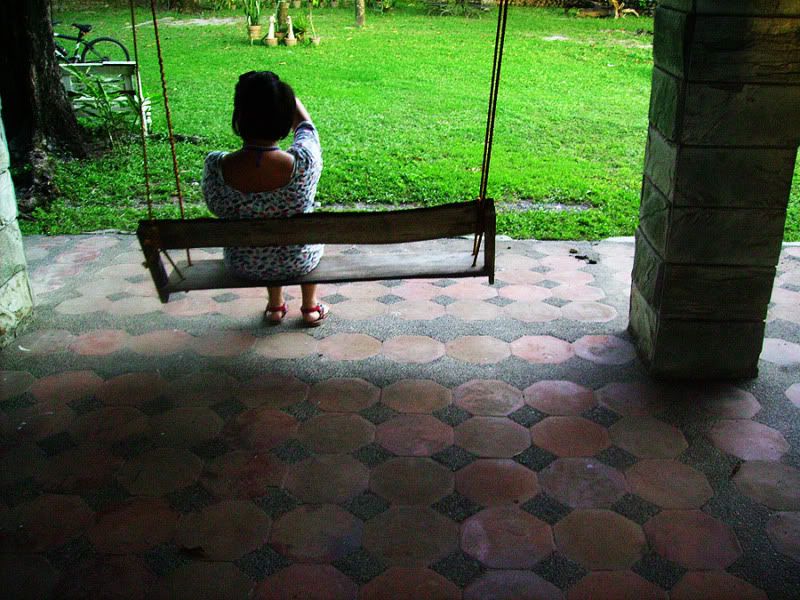
Rica Bolipata-Santos in contemplative mood in her house in Zambales.
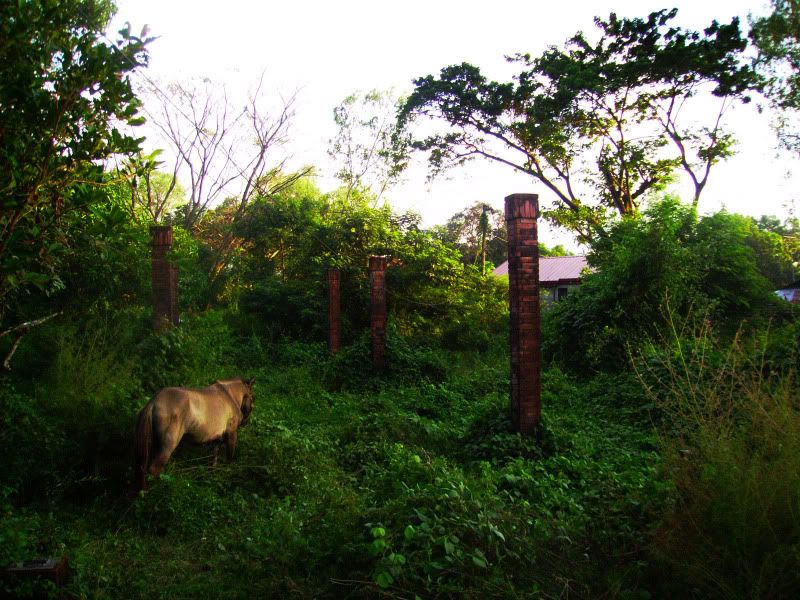
Around Casa San Miguel...
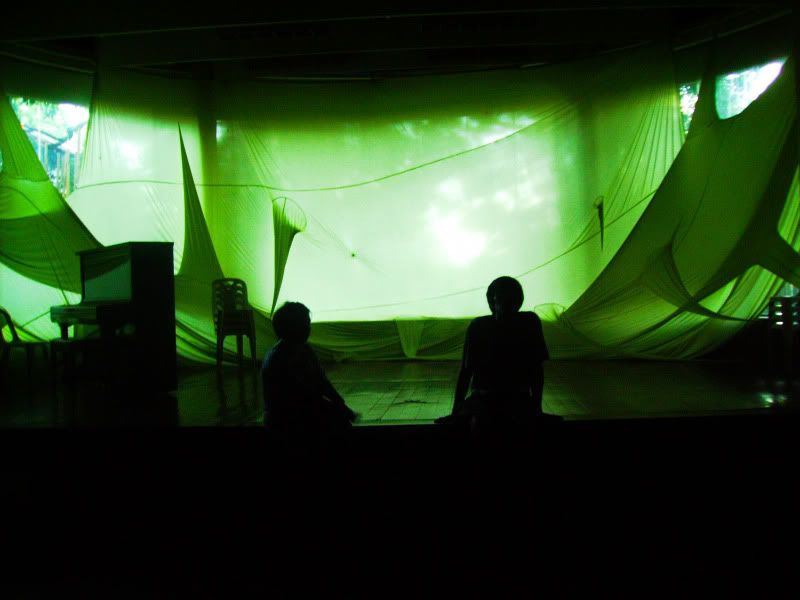
Rica and poet Kris Lanot Lacaba in the green shadows of the stage in Casa San Miguel.

Kris and Kit celebrated their first wedding anniversary with us in Casa San Miguel...
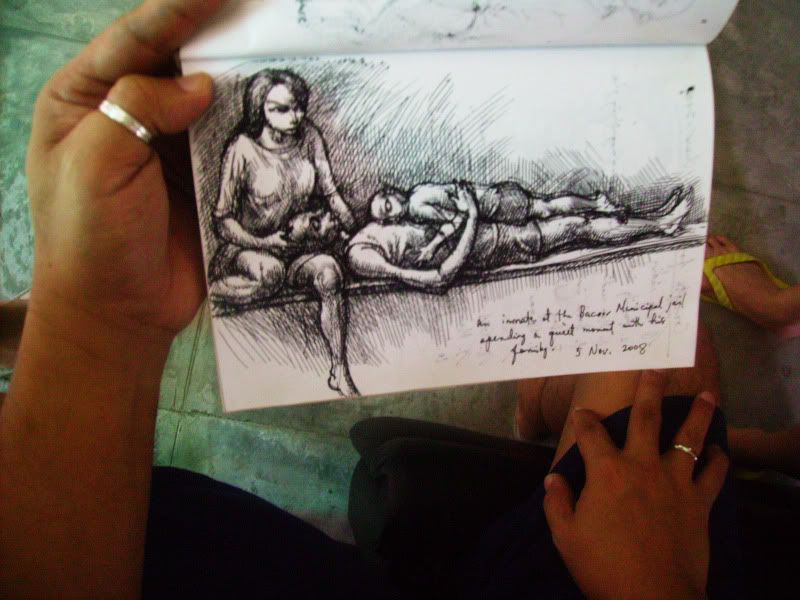
Emong Borlongan shows us his sketch notebook...
Spending a lazy weekend with friends and writing can be a beautiful thing. One truly needs this once in a while.
Labels: art and culture, friends, photography, travel, writers
[0] This is Where You Bite the Sandwich
Wednesday, December 15, 2010
11:18 PM |
One Afternoon in Cafe Antonio
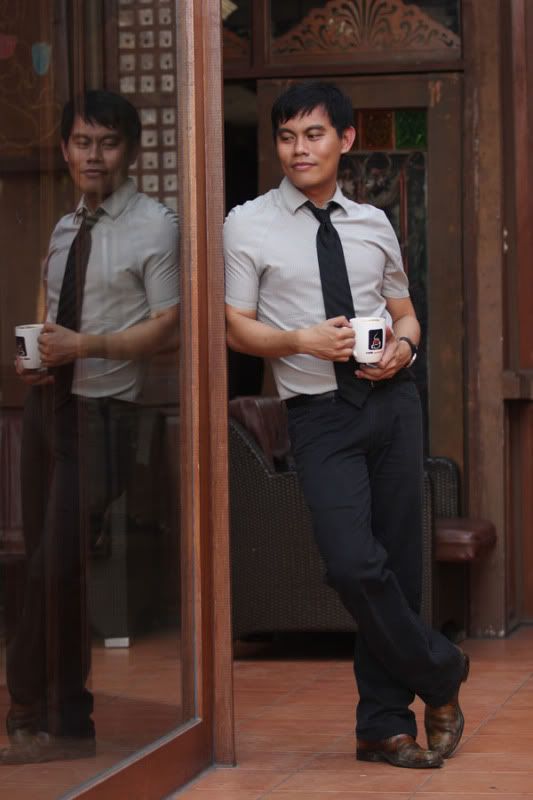
This is a hopeful attempt to update some really dated cached pictures of myself in Google Images. My name is Ian Rosales Casocot, and this is me in Cafe Antonio, in Dumaguete City, December 2010. Photo by the brilliant visual artist Hersley Ven Casero.
Labels: dumaguete, life, photography
[0] This is Where You Bite the Sandwich
10:22 AM |
Here's to Memorable Fictional Characters
I never usually respond to Facebook meme lists like this: "Fifteen ____ in Fifteen Minutes." (Fill in the blanks. Your favorite films, music, books, et cetera in the tight span of fifteen minutes.) I find this endeavor to be a perfect waste of time and energy, and I know I will not be so truthful anyway -- how do I know
for sure the films or books or music that define my life and put them down without much thinking in fifteen minutes? I always agonize even when I'm asked casually what my favorite film or book is. And yet, how come I responded so willingly to Anna's call this morning for fifteen memorable fictional characters in fifteen minutes? Perhaps because at that very moment, I was thinking of the boy Charlie from Steve Chbosky's "The Perks of Being a Wallflower," and marveled at how precocious and sensitive he was, how I felt for him -- how he seemed real even on the page. And so, the one below became my list. And I couldn't stop at fifteen. I had to go for an even thirty. Memorable fictional characters in films, television shows, books, comics, plays, and songs that have stayed with me, for some reason or other...
Holden Caulfield in J.D. Salinger's "The Catcher in the Rye"
Craig in Craig Thompson's "Blankets"
Philip Benjamin in David Leavitt's "The Lost Language of Cranes"
Giovanni in James Baldwin's "Giovanni's Room"
Elliot in Steven Spielberg's "E.T. The Extra-Terrestrial"
Charlie in Stephen Chbosky's "The Perks of Being a Wallflower"
Zach in Jonah Markowitz's "Shelter"
Doña Lupe in Nick Joaquin's "The Summer Solstice"
Setsuko in Isao Takahata's "Grave of the Fireflies"
Tom Ripley in Anthony Minghella's film of Patricia Highsmith's "The Talented Mr. Ripley"
Junior in Lino Brocka's "Tinimbang Ka Ngunit Kulang"
Steve Dunne in Cameron Crowe's "Singles"
Ariel in Ron Clements and John Musker's "The Little Mermaid"
Prof. Grady Tripp in Curtis Hanson's film of Michael Chabon's "Wonder Boys"
Tintin in Georges Rémi's "The Adventures of Tintin, Boy Reporter"
Antonio in Joselito Altarejos's "Ang Lihim ni Antonio"
Dorothy Boyd in Cameron Crowe's "Jerry Maguire"
Jacinta Cordova in Dean Francis Alfar's "Salamanca"
Justin Taylor in Ron Cowen and Daniel Lipman's "Queer as Folk"
Melchior Gabor in Duncan Sheik and Steven Sater's "Spring Awakening"
Regina George in Mark Waters's "Mean Girls"
Carrie Bradshaw in HBO's adaptation of Candace Bushnell's "Sex and the City"
John Keating in Peter Weir's "Dead Poets Society"
Ading in Manuel Arguilla's "Midsummer"
Kiki in Hayao Miyazaki's "Kiki's Delivery Service"
Jude in The Beatles' "Hey, Jude"
Grace Coddington in R.J. Cutler's "The September Issue"
Will Truman in David Kohan and Max Mutchnick's "Will & Grace"
Eva Peron in Andrew Lloyd Webber and Tim Rice's "Evita"
Francesca Johnson in Clint Eastwood's film of Robert James Waller's "The Bridges of Madison County"
Labels: books, comics, fiction, film, memes, music, television, theater
[0] This is Where You Bite the Sandwich
Tuesday, December 14, 2010
6:00 AM |
With Movies This Bad, I Might as Well Go Straight
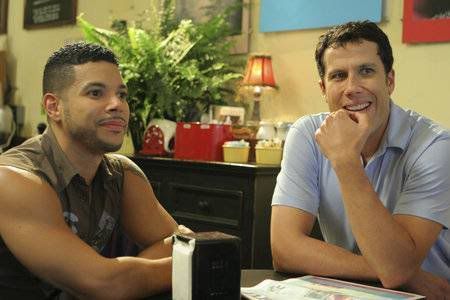
If you have been wondering, you might as well know by now that I’ve been watching all these queer films for research on an article about gay films that I am writing — and for the most part, I’ve enjoyed the assignment, having discovered obscure (and mostly foreign) gems along the way, films that never got into my cinematic radar before. (And for obvious reasons.) But lately, there has been this string of real time-wasters. Stewart Wade’s
Coffee Date [2006]. Lawrence Ferber’s
Birthday Time [2000]. Rob Williams’
Long Term Relationship [2006]. Jeff London’s
And Then Came Summer [2000]. Bad, bad, bad movies. Such inept filmmaking, they don’t even deserve the cringe they induce.
Labels: film, queer
[2] This is Where You Bite the Sandwich
4:41 AM |
Solidarity in Literature Without Borders
By Simeon Dumdum Jr.
I had planned to write the keynote speech last week and for the purpose made sure to clear my table of business. But when I was about to begin writing, the clerk reminded me of a decision to be promulgated in a day or two—a murder case inherited from another judge. This meant going over the transcript of stenographic notes and piecing the story together from the narration of witnesses. The trouble was, there were missing transcripts and the stenographer who made them was equally missing.
Clearly, as between the murder case and the keynote speech, the former had the precedence. And so I set aside everything else and riffled through the finger-smudged pages of the case record. I hoped to finish the decision before the PEN Conference. Because I did not hear the case myself and there were gaps in the evidence, I took the cue from Sherlock Holmes and used the Science of Deduction, and left the rest to God.
I convicted the accused. To my great surprise, he rejoiced when he heard the verdict and thanked the court for it.
This illustrates the common fate of writers who hold day jobs. Often their writing is pre-empted by work and events. One morning last week, as I entered the courthouse, I saw a little girl, not yet seven. She wore a smart, green dress and held a bright-yellow parasol. She stood beside her mother and peered from the crepuscular interior of the hall of justice at the people who were arriving. I knew who she was waiting for—her father, a detention prisoner, who was coming to court that morning for the hearing of his case. It was an occasion for her and her mother to link up with him.
When I saw the girl, I asked myself—did it matter to her and the other children waiting for their parents who were accused and detained for this or that crime that I wrote poems and essays, and spent hours trying to perfect every piece? Indeed, does writing—or literature, if you wish—matter at all?
The question has been asked many times before, and as many times answered. In other words, it has naturally evolved into a non-question. Of course, literature matters, or else the literature department of the British Council would not use this as name for its newsletter. But to that little girl in the green dress and with a yellow umbrella nothing matters more than the proximity of her father, and ultimately the handing out of justice that would clear him, for every daughter believes in her father’s innocence. And father and daughter would be together again, and he would be back to work, and she to school and the nights and days would no longer be as anxious and troubled.
Is not that what writing, deep down, seeks, that it should matter? The refinement of the spirit that results from all good, true writing yearns for the peace that thrives in fairness and dignity, which even the haiku presumes in its juxtaposition of images from the natural world.
Last year, someone on Facebook made a call for a hundred poems about Maguindanao to protest the massacre on November 23, 2009, of 58 people, a good number of them journalists. Many responded to the call and in no time the poems exceeded the limit, prompting the coordinator to declare the submissions ended. I was among those who participated with this piece:
Maguindanao
What have I learned about Maguindanao?
It seems a place I’ll never get to know
Except in stories—images that flow
In the imagination, or that plow
It, because they can turn up and endow
The mind with fresh furrows that gape as though
They were a series of wounds a big hoe
Had cut across the hill’s capacious brow.
But what I know of childhood, be it brief,
And love, they have them in Maguindanao,
But it can happen that something robs us
Of these, and life, and what I know of grief,
That something may again be here, that now
Splinters speech into syllables and sobs.
I had no illusions about what the sonnet could do, but I knew that my voice would join the voices of many others and all our voices together would become one and grow in volume and intensity and be impossible to ignore.
I found it significant that overall the poems, though not deficient in their expressions of grief, were not strident, and were irenic, seeking beyond the punishment of the killers the inauguration of a prelapsarian Maguindanao, a land of friendship, fair-dealing and tolerance.
Somehow what the local poets did was in line with what the PEN Charter calls upon its members to do on a global scale: “Members of PEN should at all times use what influence they have in favour of good understanding and mutual respect among nations; they pledge themselves to do their utmost to dispel race, class and national hatreds and to champion the ideal of one humanity living in peace in the world.”
Writing seeks not so much the just word, as justice, and this justice is not merely a justice that punishes but more significantly a justice that restores—both the removal of discrimination and hatred and the healing of wounds caused by them.
Before that healing can come about collectively, it must happen to the writers individually. In himself, the writer must be whole. By all means, he must find healing through and by reason of his writing.
When asked what he thought of a writer who beat up his wife, John Gardner replied that the writer was a better person when he was writing than when he was hitting his spouse. If that writer were to write a romantic novel, I most certainly would not read it—I would not like to risk having mental constipation.
I remember submitting a poem by the late Cebuano writer Temistocles Adlawan to a literary magazine. The poem was a monologue, the monologue of a wife berating her husband. After almost a page-long, verbal abuse, the wife stopped. But the poem did not stop. It continued with a last line, a postscript—the husband floored the wife with a left hook. For some reason, the editor of the magazine, a lady, rejected the poem.
Wholeness is mainly of the heart—the healing is mostly inner, spiritual. But I myself have experienced how writing helped in my physical healing.
Early last year, I was found to have cancer and underwent surgery. After that I had chemotherapy for six months. My wife Gingging, whose presence here I acknowledge, and who never left my side, told me that, before we left his clinic, the doctor advised her to keep me busy during the months of treatment.
I know why the doctor gave her that advice. Thoughts are the enemies of one in my situation then, and, more than the medicine that devastates both the malignant and healthy cells, these thoughts can enervate the patient. They are an invitation either to have faith or despair. I chose to have faith and to pray. The wife must have been wondering what to give me to keep me occupied, as the doctor suggested. But before she could think of anything specific, such as Sudoku, I remembered a project that I began years ago, a collection of poems about birds using different verse forms. I had written about 15 birds so far. Using a reference book I had borrowed and had failed to return before the owner lost his memory, I resumed writing, two birds and two verse forms a day, one in the morning, one in the afternoon. When I reached a hundred birds I decided to stop. I felt I had enough for a collection. But when I checked the bird list, I realized that I had left out 29 species. They seemed to plead with me to include them. I yielded out of pity. When the six-month period of treatment ended, I had completed the project—129 birds and 131 verse forms in all. I gave the collection the title, “If I Write You This Poem, Will You Make It Fly?”
When I reflect on our convention theme, “Solidarity in Literature without Borders,” especially on the phrase “without borders,” I think of birds. For me they exemplify what it means to live without borders.
Of the more than 600 bird species found in the Philippines, about 400 are migratory, such as the egrets, sandpipers, terns, plovers. They generally arrive in the country in September and depart in April.
Sometimes I imagine a poet from the country where these birds come from banding the leg of, say, a Gray Plover, and inserting inside the band a sijo, ghazal, luc-bat or copla de arte mayor, whatever might be the peculiar verse form of that country. And if that plover chooses to winter out on the shores of Talisay in Cebu, where we live, I might replace the sijo with an ambahan or tanaga for the bird to take with it when it flies back in April to its country of origin. The unknown other poet and myself will have established a sort of solidarity between us, and as far as we’re concerned writing knows no borders.
Of course, that solidarity and that borderlessness now take on more sophisticated forms, consistent with advances in technology. But the basic things remain—our commitment as writers to justice and compassion, and the rest of the virtues that advance the causes that dignify and fulfil the human race.
To sum up, writers and birds should not be put inside cages, whether territorial or political. Perhaps we do not know that birds are likewise members of PEN, the reason why they too have quills.
To end this rambling keynote speech, let me read the last poem of the collection, a sestina, which I dedicate to the respected and loved National Artist, Dr. Edith Tiempo, who would have been here giving the keynote speech instead of me if only she had stronger wings:
Sestina
Before I go I’ll mention six rare birds,
And I know there are more that have been blessed
To survive, but now hardly ever soar
To fill our early evenings with their singing,
Many of us would want to see them fly
So much we would throw caution to the winds.
Such as the Philippine Eagle that winds
Cannot scare, though they may send the small birds
Scampering for cover, afraid to fly.
The forest canopy is to it blessed
Ground – it seems it prefers silence to singing,
And often takes its time and space to soar.
It occurs to me that were I to soar
On a hot air balloon despite the winds
Blowing from every direction and singing
In my ears, I might spot among the birds
The Wooly-Necked Stork – that would be a blessed
Day, indeed, for me to launch up and fly.
Some saw the Cebu Flowerpecker fly
From a luxuriant bush that seemed to soar
From a cliff, and like a swaying hand blessed
The rice land then being combed by the winds.
They claimed to have spotted a group of birds
Of the species, sitting in pairs and singing.
Sarus Crane, Spot-billed Pelican – non-singing
Birds, now all but extinct and quick to fly –
And Blue-Backed Parrot – in the book of birds
The one that would rather converse than soar,
But untaught it could only speak the wind’s
Tongue, which souls use in the land of the blessed.
When all is said and done, we need this blessed
Thing, compassion – to hear the rare birds singing
Again, those of them that can, and the winds,
I’m sure, will settle down to let them fly,
And once more find the abandon to soar.
Now, I urge not just the rare but all birds,
As birds did when St. Francis had blessed them,
To soar up singing while forming a Cross,
Then fly off to the four winds praising God.
This is the keynote speech at the Philippine PEN Congress on December 4 and 5, 2010, in Cebu City.The author, whose passion is writing poetry and lyrical essays, is at same time an executive judge in Cebu City.Labels: conferences, issues, philippine literature, writers
[1] This is Where You Bite the Sandwich
Sunday, December 12, 2010
3:43 PM |
Red Letter Day
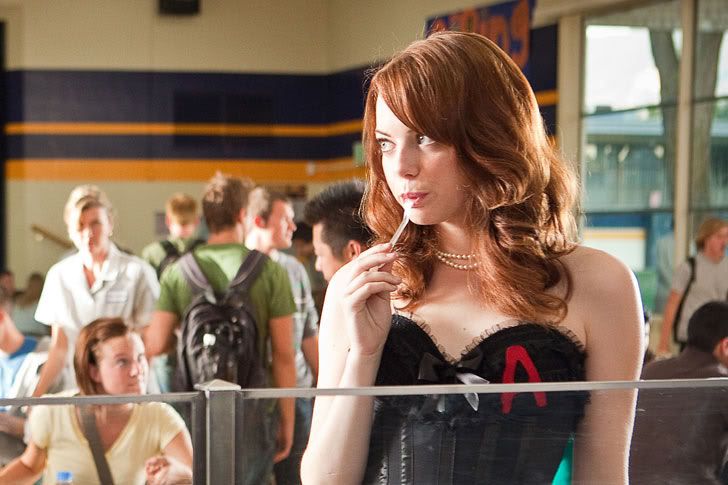
It took me quite a while to see Will Gluck's
Easy A [2010]. It wasn't showing locally before I went to the U.S., and I almost got to see it in Coralville in Iowa but I really had no time to spare for what I knew to be Hollywood junkfood cinema. An interesting one, I must say, but still junk. I enjoyed it, but like most critics, I felt it betrayed the spark of its inspiration by being flatfooted and being unsure about where it was going with its story. Which is sad, because it has Emma Stone -- an actress with so much presence and brightness in her she should already be a star -- as the presumed and highly misunderstood high school slut . Plus it has a stellar supporting cast playing such quirky characters. And it has a certain post-modern referential bent (it knows John Hughes! Cameron Crowe! Nathaniel Hawthorne! Mark Twain!) that makes it endearing. But in the end, all that good stuff just don't add up to a good film. But for a lazy Sunday afternoon waiting out the rain while you watch the paint on your new bookshelves dry, it might be good enough to watch.
Labels: film
[0] This is Where You Bite the Sandwich
1:19 AM |
Vicious Circles
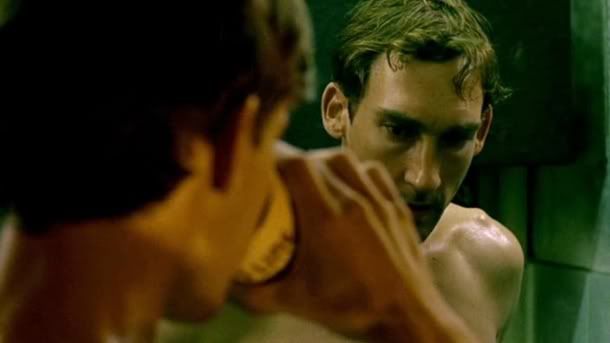
In 2007, the United Kingdom's Channel 4 commissioned a season of appropriate programming to commemorate the 40th anniversary of the British decriminalization of homosexuality. One of the shows that was part of that slate was the TV movie
Clapham Junction, directed and written by Kevin Elyot, which follows the lives of several men and women, most of them gay men, as they intersect each other's lives as they deal with the mundane. And alas, also the not-so-mundane, it turns out: there's gay bashing here, and drugs, and illicit sex, and closeted husbands, and gay marriages, and homophobia, and pedophilia, and murder -- in a sense, a gruesome picture of how ordinary people have the capacity to hurt each other, to cause each other needless misery just because other people are just ... different. The film's treatment of 36 hours in the lives of assorted people (a TV writer, an actress and her moody son, a doctor and his new husband, a waiter, a mailman, among many other) on an extraordinarily hot day in the Clapham district of London reminds me of the character juggle that went on in Robert Altman's
Short Cuts and Paul Haggis'
Crash. It is to Mr. Elyot's credit that he manages to tell a good and absorbing arch of a story composed of so many disparate elements without resorting to the pedantic finger-wagging about issues that would have been the easy way out. I've read some of the reviews of this film, many of them vitriolic in their estimation of this effort as being unoriginal or predictable. I am led to ask this question with such incredulity: were these people watching the same movie that I did? Because this film manages to go beyond the usual in queer cinema -- it shows how, 40 years after the fact of decriminalization, we are still faced with uncommon dangers, perhaps facing more complex troubles in an increasingly complex world. And also because this film said many things with such raw and sad power, and managed to constantly pull the rug from underneath my feet most times I thought I knew what was going to happen. This is such a difficult film to watch, but once you allow the film to wash over you, you are left with a sense of appreciation of what it is trying to do.
Labels: film, issues, queer
[0] This is Where You Bite the Sandwich
Saturday, December 11, 2010
4:47 PM |
The Detour on the Way to Happiness
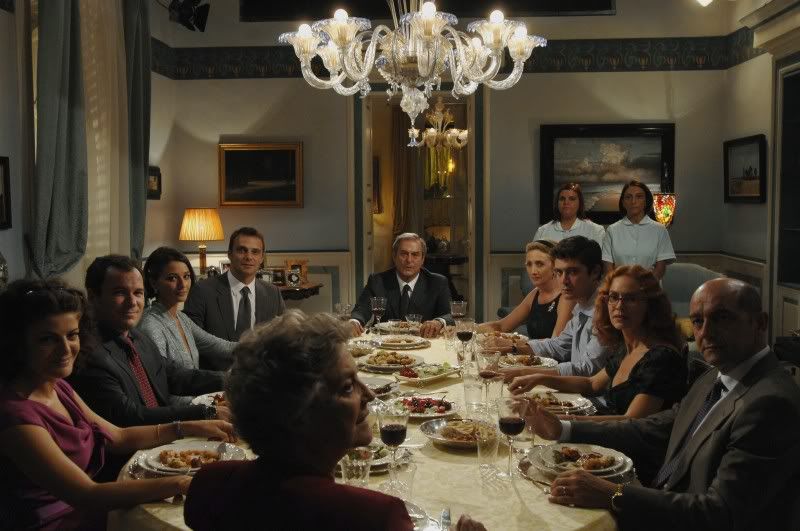
Even when it is in part comic and in part melodramatic -- and does not know whether to be one or the other, a certain bitter truth ultimately emerges from the Italian film
Mine Vaganti [
Loose Cannons, 2010], directed by Ferzan Ozpetek from a screenplay by Ivan Cotroneo. What it has to say is nothing new, but then again, all insights about the human condition have largely been told and retold to death in the wealth of literature that we have and what really gives each one weight is the creative way by which each is told. In this case, we are given the age-old theme about how the pursuit of personal happiness must take precedence over all else, or life will not be worth living. This is bundled into the story of Tomasso, a writer who comes home ready to announce the fact that he is gay, wants to move to the big city for good to live with his lover, and will happily not take part in the family's pasta business -- even at the risk of alienating his family of conservative but quirky individuals. He runs by the plan to his older brother Antonio who has taken charge of the family business, and at the exact moment during family dinner where he plans to make the announcement, something happens that ruins everything he is prepared to do. He soon finds himself retreating to the closet instead, at least where his family is concerned, delaying his dreams of being a novelist to immerse himself, however half-heartedly, into the family business. Over all of these, his wizened grandmother, who has her own secrets to tell, watches from the sidelines and witnesses the struggles of her grandsons with knowing weariness, but she is also all too-ready to seize a particular opportunity she once lost many years before. There are other side stories involving other characters as well, but that's about it. It sounds convoluted -- but this is Italian melodrama with its requisite twists and turns. Suffice it to say that in the end, the loose ends are tied, and everyone gets their happy endings. This is a small film with haphazard ambitions, and given that consideration, it works. This is thanks in large part to a cast that tries to give an old story some gravity: there are individual moments in the film that a certain something gets conveyed with such alarming clarity, without words, just gestures and the slight changes in the movement of the eyes. In the end though, we've been told this story before, and so we end it only affirming what we already know.
Labels: film, queer
[0] This is Where You Bite the Sandwich
Wednesday, December 08, 2010
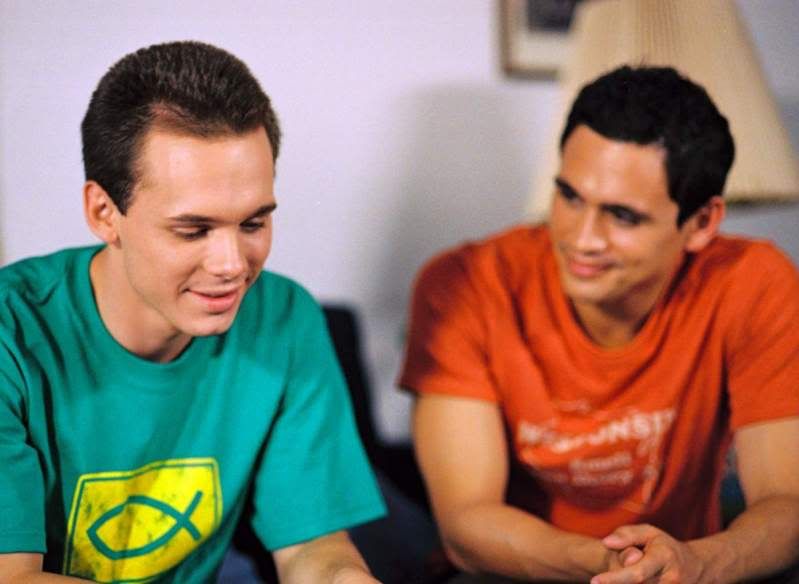
It's not a well-made film, but there's something about the quiet and earnestness of David Lewis's
Rock Haven [2007] that makes it somehow work. Not by much, but you finish it wanting to pat the filmmaker on the back and say, "Nice one, dude." Or something to that effect, which may be a tad patronizing admittedly. But I admire it without liking it very much as a piece of filmmaking. It goes into uncharted territory, after all: this is about a fiercely evangelical boy in a small seaside town who struggles with his newfound sexuality after being introduced to the boy next door. The usual drama ensues, but the film does not exactly lead us to the usual paths in narratives like this, and in fact tries to make complete human beings of all the characters involved, even when the acting often comes off as wooden and caricaturish. Nevertheless. Do I recommend this? Not exactly, but if you have enough time on your hands, this is harmless fluff that feels nice in places, but that's about it.
Labels: film, queer
[0] This is Where You Bite the Sandwich
Tuesday, December 07, 2010
1:40 PM |
Sweet Confection
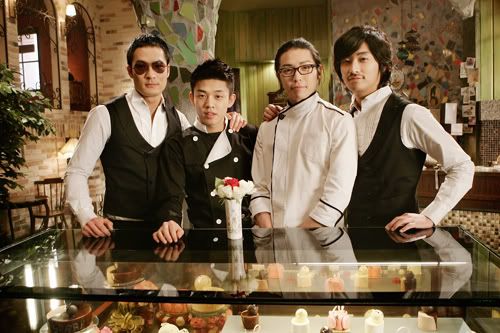
It was quite a relief to stumble onto Kyu-Dong Min's
Antique Bakery [2008], because I was already despairing whether I could find a Korean film that would do some justice to queer characterization in film. This one does not do it -- surprise, surprise -- but what it has saves it from being a total bore. And what does it have? It has an interesting story to tell, and tells it with the come-on of so much great food, all of which are photographed spectacularly you can almost taste them. It also has plenty of charm, so much so that it draws us in into the strange dynamics of four men in an unlikely friendship, all of them connected by the pastry shop they all work for. Based on the popular Japanese manga, it tells us the story of a troubled but easy-going scion of a wealthy family who opens the bakery in question and hires Korea's best pastry chef to work for him. The pastry chef also happens to be a one-time high school classmate who used to have a crush on him, and whose heart he has broken. Into the mix comes an ex-boxer with a sweet tooth and a bumbling bodyguard. Their easy-going camaraderie, their unfolding secrets, and the comic ways with which they deal with each other provide the film's narrative backbone, which is strong enough to withstand the story's strange detour into serial killer procedural territory. Still, even when it does that, the director seems very sure of his material that he is able to juggle so many subplots without faltering, without losing our interest. Perhaps the performances here are what ultimately makes it worthy of viewing: the actors do make their characters believable and emphatic. And who's to decline the invitation of seeing a film with beautiful boys combined with delicious cakes?
Labels: film, queer
[0] This is Where You Bite the Sandwich
9:28 AM |
This Boy Needs a Barber
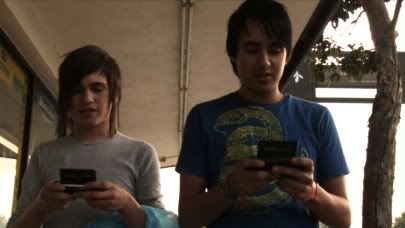
I was not charmed at all by Brian Harris Krinsky's
Dish [2010], a much-praised short film about emo gay kids in a down-and-out Los Angeles neighborhood, dealing with the fact of burgeoning sexuality as they sextext the misadventures of other kids their age. It centers on Israel, a moody 15-year-old with a strange hair fixation who decides to finally lose his virginity after his best friend recounts his latest exploits in bed. What he does (or does not do) in pursuit of that is the film's calculated epiphany, its gamble to make us go oohh-and-ahhh and reflect about such matters as sexuality and technology, the socio-politics of young bodies, the careless nonchalance to stark economic realities that surrounds people of a certain generation. I didn't bite. This film lacks soul. And maybe that's the point, but it did not move me. What can I say, maybe it's the hair.
Labels: film, queer
[0] This is Where You Bite the Sandwich
9:01 AM |
A Season in Heartbreak
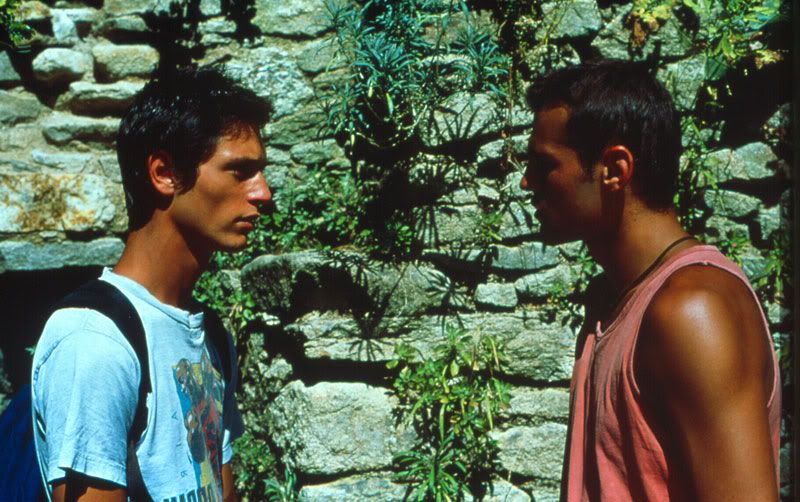
It's not easy to digest the narrative that unspools, like a fraught and fragmented world, in Sébastien Lifshitz's film
Presque Rien [
Come Undone, 2000]. It does not explain much of itself either, and one is left mostly to one's own devices to fill in the blanks that the film generously gives us. Perhaps it's best to note the change in time registers to make sense of the fragmented story: there's the bright summer of discovering passion and then the dull winter of gathering a scattered sense of self -- and between them there is a season of heartbreak set in a hospital where a beautiful 19-year-old languishes in unnamed melancholy. (Why is he here? This is the question we keep asking ourselves till the very end.) That these fragments of time blend into each other in the narrative is an audacious move in Lifshitz's direction, something that precedes the time-bending films of Alejandro González Iñárritu. And if one is patient enough, one gets finally a full story all told in the exact telling of feeling. What the film does give us with a measure of completeness is the summer love affair that blooms and turns to such realistic heat between two teenage boys -- sensitive Mathieu (played by a glorious and subtle Jérémie Elkaïm in a difficult role) and unfocused Cedric (played by Stéphane Rideau) -- in a seaside French town where Mathieu's mother has come to convalesce from a long bout of depression. Then we get snippets of a future reeling from the consequences of that summer. Just snippets, nothing more, and we are left wondering -- what happened? I think this is a story about how, in life, we meet and come to love people, but how we sometimes find that love is never enough. Especially if it's love between people who just belong to two different worlds. We need connection beyond the temporary giddiness of the carnal. I think, in the end, Mathieu finds that, but the movie simply does not give us the luxury of knowing for sure. It challenges us to find out for sure by way of feel. This is the film's weakness, and its strength. I love this film. It is probably one of the most realistic chronicle of falling in love and the devastating aftermath of heartbreak that has ever been set down to celluloid, without the histrionics of the actual heartbreak.
Labels: film, queer
[0] This is Where You Bite the Sandwich
Sunday, December 05, 2010
7:29 PM |
Friends in a Candid Snapshot
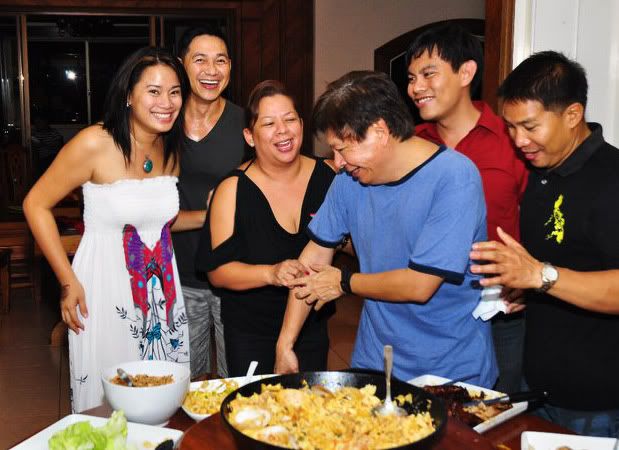
Candid shots of good friends laughing are always the best kind of personal photography. At Antonio's place, Dumaguete, 4 December 2010.
Labels: dumaguete, friends, photography
[0] This is Where You Bite the Sandwich
7:21 PM |
A Love Story in Search of Structure

Kim Jo Kwang Su’s
Chingu Sai? [
Just Friends?, 2009] is a very slight short film that never really finds its proper tone. This despite the absolutely winsome performances of the two leads Yeon Woo-Jin (as Min-soo, a soldier in the Korean military) and Lee Je-Hun (as Seok-yi, Min-soo’s civilian boyfriend). Is it a comedy? Or a drama? Or a musical? What does it really want to say? I think it is disaster brought about by a flawed screenplay more than anything else. Writer Min Yong-Keun does not exactly give the story — about two young gay lovers who are discovered in an intimate clinch by the mother of one of them — an appropriate dramatic structure, and instead subjects us to gay cliches and mind-boggling digressions such as the musical numbers in the beginning, middle, and end of the film. The middle part of the film in particular resorts to a badly-written song when an earnest dialogue would have sufficed. I suspect the filmmakers had trouble in articulating in cinematic terms the specific gay condition that needed illuminating at that moment. This is sad, because it is such a disservice to what would have been a good story. Consider also the tearful confrontation between a soldier’s girlfriend and Seok-yi near the end of the film. She tells him a devastating story: she has found out her lover, also in the military, is gay. Then consider Seok-yi’s reply to that — a puzzling admission that I won’t divulge here that has no place at all in the story. Alas, there are also many other pieces in the film that don’t fit, which eventually exasperates. Is there a Korean movie out there that tackles a gay subject matter with an ounce of sensitivity and subtlety? Because so far, the search has been very disappointing.
Labels: film, queer
[0] This is Where You Bite the Sandwich
Thursday, December 02, 2010
10:54 AM |
Inspiration is Nonsense
“I think inspiration is nonsense, actually. Every so often, I mean like one day in twenty or something, you will have a day when the work seems to just flow out of you and you feel lucky. You feel and are often surprised, and you don’t quite know why it is working like that. And on days like that, it’s easy to believe in a kind of inspiration, but most of the time it’s not like that… I wish there were more of those days, but most of the time it’s a lot slower and more exploratory, and it’s more a process of discovering what you have to do than just simply have it arrive like a flame over your head. So, I do think it’s to do with concentration, not inspiration. It’s to do with paying attention, and I think a great deal of the business of writing is the business of paying attention to your characters, to the world they live in, to the story you have to tell. Just a kind of deep attention, and out of that, if you pay attention properly, the story will tell you what it needs.”
~ Salman Rushdie
Labels: quotes, writers, writing
[0] This is Where You Bite the Sandwich
GO TO OLDER POSTS
GO TO NEWER POSTS