Saturday, August 31, 2013
 2:55 AM |
Kindness Will Always Be Remembered
2:55 AM |
Kindness Will Always Be Remembered
Like how most children know the friends of their fathers and mothers, I didn’t know much about Tito Proc, but I have known of him since childhood—and from my earliest memories of him, he has always struck me as a just man, one of the kindest I would ever know in this life.

I would learn later on that he was a close friend of the family because he had spent some time in the same Agusan del Norte town my father originated from, and from the stories he would tell me, they were fast friends. When my family finally came back to Negros Oriental to settle for good, first in Bayawan and later on in Dumaguete where I was born, Tito Proc—he was Cesing to many—had already become an important academic, and soon a major force in Silliman University. He would eventually serve the school for more than fifty years, the perfect picture of a true and loyal Sillimanian.
He was there in the audience, for some reason, when I had won some kind of contest in grade school, and I remember him taking me aside in one of those old classrooms in West City Elementary School, telling me that he was a good friend of my father’s, and that I should continue doing well with my studies, and that he expected me to matriculate in Silliman by the time I entered high school. He had said these things without a single trace of being patronizing. And from that day forward, I would think of him as a sincere man whose currency were kindness and a quiet kind of encouragement.
It didn’t sink in to me then that he was a man of importance: that he was a holder of Bachelor of Theology and Bachelor of Arts degrees from Silliman University and Central Methodist University, as well as graduate degrees from Union Seminary in New York, from Harvard University, and from San Francisco Seminary; that he was Acting President of Silliman during the first two years of Martial Law; or that he was its longest-serving University Pastor, from 1986 to 1999. I was a kid, and he was just “Tito Proc” to me.
In those days, when my family’s finances were particularly full of challenges, he insisted that everybody in my family should finish college in Silliman University, and wrote endless promisory notes in behalf of my brothers just in time for them to take their midterm or final exams. We were nomads then, making do of rented houses that were the very picture of humble living. We were quite poor, but we all eventually finished college in Silliman University, overcoming much in the process, and proving truly that education elevates the individual. I was luckier because I went through college when the family finally sailed through its darker days—but I’m not sure my elder brothers could have gotten the education they received were it not for good people like Tito Proc. And he was just “Tito Proc” all those years, somebody whose hands I made “mano” every time we’d visit his house in Amigo Subdivision.
When I finally came of age, it was with profound new respect that learned much of the man and his life. There are two stories I’ve come to know and made me admire Tito Proc more. One is of his tumultuous tenure as Acting President of Silliman University at a time when the entire country plunged into the darkness of Ferdinand Marcos’ martial rule. What a leader he must have been to be able to carry well, and with dignity and commanding presence, the concerns of Silliman and its students, faculty, and staff—even as the university got padlocked, and remained so for a stretch of time due to some notoriety as a hotbed of “radicals”—exactly the “scourge of society” Marcos was eager to root out and incarcerate.
Tito Proc negotiated for Silliman’s eventual reopening, while at the same time taking care to see to the needs of the faculty and students the military had picked up for interrogation and what-not. As Joel Tabada—the first Sillimanian faculty to be picked up by the military—once recounted to me, “Classes at the university were ‘suspended’ for the rest of the first semester. Dr. Udarbe became the acting president. But the experience made a man out of him as he faced the Martial Law people concerning the University. He ordered that double-deck beds from the Silliman dormitories be brought over and provided to the Provincial Jail for all the detainees, even if only about a third of the detainees were Sillimanians.”
Another story is something I learned from recent research we’ve done into the history of culture and the arts in Silliman, which we are doing for the Handulantaw coffee table book. (I am editor-in-chief, with the Tao Foundation and the Silliman University Cultural Affairs Committee as publishers.) When Tito Proc became Acting President, he inherited many of the projects that his predecessor, Dr. Cicero Calderon, was hoping to accomplish for the university.
One of these was Calderon’s grand ambition to build a Cultural Center in campus. Zara Marie Dy, writing about the Luce Auditorium for Handulantaw, wrote: “President Calderon recommended that a caretaker president be appointed for Silliman when he stepped down from the presidency. This president ad interim came in the person of Dr. Proceso U. Udarbe, whose term officially started on 1 June 1971. Acting President Udarbe was kept busy inaugurating and implementing the unfinished projects Dr. Calderon left behind. He raced to see the projects push through quickly in view of the inflationary trend of the times.
“One of his very first worries in 1971 was the delay in the construction of the Cultural Center. The funds had been promised back in 1968 by the Henry Luce Foundation of New York but the Cultural Center Planning Committee, composed mainly of the units which had their own interests in the Cultural Center, could not easily agree on space allocations, design and location of the Center, much less on the architect. The School of Music and Fine Arts, the Speech and Theatre Arts Department, the English Department, and Audio-Visual Department comprised the Committee, together with the Campus Planning Committee, chaired by the [dean] of the College of Engineering. This mix made for long meetings and stalemates.
“With financial exigencies weighing heavily against time, Dr. Udarbe decided to come to the helm and reorganize the Cultural Center Planning Committee. He became its chairman and steered it into agreement and action… By 28 August 1972, the groundbreaking ceremony for the Auditorium was held.”
These stories tell us what a strong leader Tito Proc was—a decisive visionary who knew when to act, and how to act.
As I write this, the news of his death has just broken out, right at the tail-end of Silliman University’s 112th Founders Day. May you rest in peace, Dr. Proceso U. Udarbe. Your kindness and your brand of leadership will always be remembered.
Labels: people, silliman
[0] This is Where You Bite the Sandwich
Saturday, August 17, 2013
So we did it again. Last August 12, we showed ten short films of varied appreciative levels—but nonetheless, together, they spoke volumes about how much we are trying to do to create a grassroots community of filmmakers in Dumaguete. Regardless of the challenges, of the risks, of the continuous possibility of being branded by others as “hopeless dreamers” without anywhere to go.

The roster that constituted
Dumaguete Shorts 2: A Festival of Short Films By New Dumaguete Filmmakers included
Ramon del Prado’s
I Am the Superhero from Tuldok Animation,
Melfred Casquite’s
Kalooy Man and
Francis James Kho and Carl Ivan Caballero’s
Asa from Foundation University,
Antonio Dago-oc’s
Josephine from Negros Oriental State University,
Mel Bermas Pal’s
Jeepney,
Jo Simone Vale’s
Ugma na Lang, and
Stephen Abanto’s
Have You Got Time for a Story? from Silliman University,
Razceljan Salvarita’s
Confession from Indie*Go ArtHub Films, and
Theodore Boborol’s
Ang Asawa Kong si Nikulet from Star Cinema ABS-CBN.
We began
Dumaguete Shorts two years ago to answer a challenge posed to us by the Cultural Center of the Philippines, when Teddy Co—the spirit behind
Cinema Rehiyon, the annual festival of films made from the regions—asked me during the Cinemalaya Congress in 2008: “Are there any films being produced in Dumaguete?” And my answer was a sad “No. Not really.” Of course, there were the rare efforts of Jonah Lim, but that was it: there was no such thing as a grassroots effort. Which is why we were in Audio-Visual Theater 1 in Silliman University last Monday night, to answer that question once with a a final and a resounding “Yes.”
Let me be clear, however. A few months ago,
some turk of a critic decried in a Mindanao website that what we are producing in Dumaguete are “failures” of cinema—which just shows how shortsighted he was about the efforts we are trying to do here. I’ve always understood something fundamental about the making of art: to get to the brilliance of the diamond, you have to contend with the cuts you have to make to tease out its luster, its brilliance.
And that’s what we have been doing in
Dumaguete Shorts 2—encouraging local efforts of filmmaking, just to make a start. It is always better to start with something than with nothing. And soon enough, we will have filmmakers who are more daring in their themes, and brilliant in their uses of their language of cinema. Many of the films we have seen are the efforts of students from the universities of Dumaguete—from NORSU, Silliman, and Foundation, each of which has its own short film contests, and last Monday we saw many of the products of those competitions held during the past year, augmented by titles by independent filmmakers. All of these truly make this short film festival a melting pot of our local cinematic efforts.
Labels: dumaguete, film, foundation, indiehub, negros, norsu, silliman, star cinema, tuldok
[0] This is Where You Bite the Sandwich
5:48 PM |
The Birds of Julia, The Flowers of Susan
Last Friday afternoon, we saw the opening of a twin painting exhibit by two members of the otherwise musical Vista family. The exhibit, titled
Birds & Flowers, is exactly that—a show of paintings in acrylic and in watercolor of birds and flowers, the favorite subjects of our two visual artists.
Elizabeth Susan Vista-Suarez has always been known for the music that she makes, be it as director of the Silliman University Campus Choristers in one of its heydays in the 1990s, or as current director of Ating Pamana and the Silliman University Gratitude and Goodwill Ambassadors, or as dean of the College of Performing and Visual Arts.
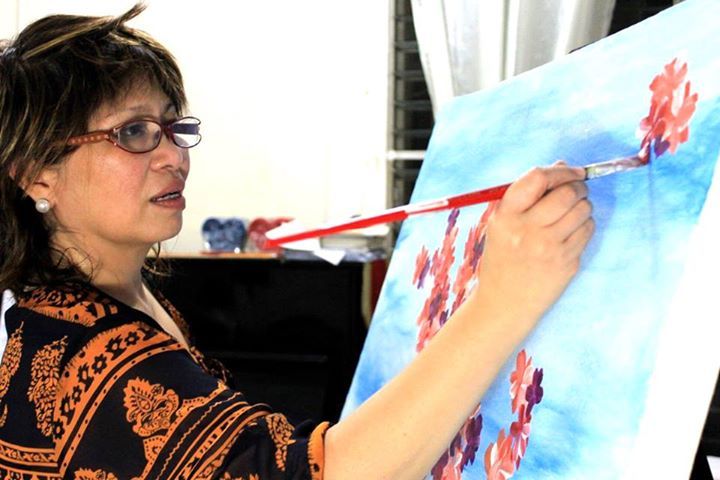
A few years ago, however, she started dabbling in an art form completely different from her usual discipline—painting. But it was also something that has much in resonance with her musical personality: to daub colors, to select texture, to blend light and dark, to compose the visual—all of that is familiar to the best of musicians, if only done in a different terrain. She started painting in oil, and later changed to acrylic when her painting mentor told her the medium was healthier for her.
It was a surprising turn of interest, given that she has had no influences in painting—only that she liked the works of the Impressionists, and has always had a love for the gracefulness of Asian art. But perhaps that proclivity for the visual has already some stirrings in childhood. “In high school, I’ve already been making flowers in that Chinese painting method, which I’d do on stationery, with watercolor. I did it to sell to my aunties,” she says. “But I became more interested in painting when I went a bit blind at the age of forty. I needed to see color again, afraid that I might not be able to see anything at all. But painting has helped me be in my own world, where I can turn my ears off amidst everyone and everything.”
But what is it about flowers that attracts her most as subject for her paintings? “Flowers are the easiest to paint,” she says. “And flowers also symbolize strength and beauty. They are just like women—they’re often abused, and kicked around in a very patriarchal world. I remember the lyrics of this song that goes: ‘Little flowers never worry when the rain begins to blow, and they never cry when the rain begins to pour… Though it’s wet and cold, soon the sun will shine again, and they’ll smile unto the world for their beauty to behold!’”
Her underlying aesthetic philosophy for her paintings is simple enough: it is an expression of a personal joy. “And joy equals no expectation,” she says. “When we do our best, God will do the rest.”
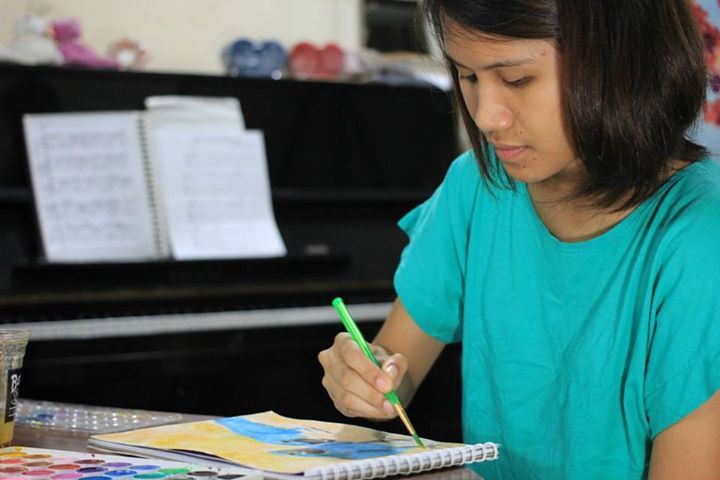
Julia Christine Vista Zamar—Justine to friends, and Tatin for those us who watched grow up in Vista Cottage in Silliman campus—on the other hand, have always known that there was enormous power in the act of taking up the brush and rendering the world through painting.
That realization began to sink into her consciousness when she would watch her mother work on her flower paintings. “My mom has always been my influence,” she says. “She has been painting for some time now, and often when she paints, I’d get to sit around and hang with her and watch her do her painting. In those times, I’d always see that she finds joy in painting. It also calms her—it was more like a stress-buster soothing system for her. And having seen that many times in my life, I thought that maybe some day I’d like to try what she’s doing.”
But there was no definite start for her when it came to finally doing painting. One thing she could remember growing up, however, was borrowing her mother’s fabric paint and doing little doodles on katcha—and give them as gifts to friends. “I didn’t really imagine myself doing a whole painting but when a good friend of mine asked me to join Hersley-Ven Casero’s Collaborative Project, I took it as a challenge to finally paint a whole picture,” she says. “After that, I was starting to explore more about painting, and finding out how interesting and fun it can be. This is an entirely new sense of self-discovery.” She began to use watercolor. It was the medium she was the most comfortable with.
But what is it about birds that has attracted her as subject for her paintings? “Birds are one of the most interesting creatures,” she says. “They are among the smartest animals ever created, even smarter than dogs. But the one thing about birds which I love the most is how symbolic these animals are. They remind me of hope.”
She sees her watercolor paintings as a statement she is making about never limiting oneself. “Sometimes we think that mixing different colors would give a horrible effect on a painting,” she explains, “but when you actually try different things without fear, you’ll realize that something beautiful will come out of it.”
“Still, I don’t really know what’s going to happen in the future with my paintings,” she continues. “But I do hope that somewhere in the future, they’d be hanging on walls in different places of the country. But birds will always be my main subjects, although it would be interesting to try to paint people and use acrylic as medium.”
Labels: art and culture, cultural affairs committee, dumaguete, negros, painting, silliman
[0] This is Where You Bite the Sandwich
Saturday, August 03, 2013
7:38 PM |
Throwing Off the Philistines
“Without culture, and the relative freedom it implies, society, even when perfect, is but a jungle. This is why any authentic creation is a gift to the future.”
~
Albert Camus
To understand the passions of the artist, one needs only to take a look at Dessa Quesada-Palm. Consummate theater actress and tireless community activist—as founder of Youth Advocates Through Theater Arts or YATTA, she uses community theater as instrument to further causes such as gender sensitivity and the environment—she has epitomized for me, and for the longest time, the selflessness of a person who believes in cultural work and its importance in community life.
Since May, we had worked together to fulfill director Amiel Leonardia’s vision for Elsa Martinez Coscolluela’s
In My Father’s House. She played my mother Amanda, and in the course of six weeks devoted to the strictest of rehearsals, I saw firsthand how she worked to get her part right. What she showed me and the rest of the cast was a master class in acting. Part of that revelation was a model for professionalism that went into it, and a dedication that necessitated sweat and sacrifice.
In the end she did command the Luce stage like the strong actress that she was—but we also knew how generous she was in sharing the stage with us amateur actors: how she reminded us of our cues with the slightest of glances that she gave us, the subtlest gestures that she made in our direction, enough for us to be prompted when necessary. And yet, all throughout those intense months of rehearsals, she still managed to go about her work as a cultural worker, giving workshops everywhere in Negros, and teaching her Directing class at the theater department of the College of Performing and Visual Arts in Silliman University…
Earnest Hope Tinambacan, who played my brother Franco, is also the same: he, too, had workshops to do—his bread and butter—aside from the fact that he also had his music to take care of, being the front man and composer for HOPIA, a local band that is increasingly making waves in local music. Two weeks before we had to debut at the Luce Auditorium, he also had to stage a huge concert that blocked off the whole stretch of Silliman Avenue from Rizal Boulevard to Hibbard Avenue, an event he pulled off with other Dumaguete bands—to showcase, of course, the release of their compilation CD, The
Bell Tower Project. In his spare moments, tucked in the wild schedule that was the bane of our existence, he’d squirrel away to memorize his kilometric lines for the play. In the end, he embodied Franco with a finesse that was startling—sending many in the audiences we had to tear up. In the 3 PM matinee of our last day of performances, the high school students who were our audience for that show went en masse to the side entrance of the Luce, demanding to see their “new idol.” The shouts of “Franco! Franco!” was a heartening sound to listen to.
In Dumaguete, you can find many other people exactly like Dessa and Hope—extremely gifted artists with extremely busy schedules, and yet they are still able to do something concrete for the community just for the sake of elevating culture and the arts. There’s Razceljan Salvarita. There’s Hersley Ven Casero and Anna Koosman. There’s Whitney Fleming. There’s Arlene Delloso-Uypitching and Annabelle Lee-Adriano. There’s Virginia Stack and her Valencia troop that would include Larissa Gutch, Jaruvic Rafols, RV Escatron, and Aaron Jalalon. There’s Joseph Basa. There’s Ramon del Prado. There’s Moses Joshua Atega. There’s Leo Mamicpic. There’s Diomar Abrio. There’s Elizabeth Susan Vista-Suarez, and so many more.
But they all know, like I do, that the work of culture is often both frustrating and rewarding. And sometimes, the frustration can start to break our spirits—if only temporarily. Once, while doing an Arts Month event with Dessa a few years ago, I turned to her and with such despair in my voice: “Why do we do this? Cultural work can be such a thankless job.” She turned to me and said, “Because despite everything else, we love what we do—and we cannot help but share it with everybody else.”
She was right. Theater producer Hendrison Go said as much to me last month when he said, “You may say you’re stressed out—but you do this anyway because you know it makes you happy.” He’s also right.
I am particularly happy that I work with kindred spirits in the Cultural Affairs Committee of Silliman University. Under Diomar Abrio’s savvy leadership, and with keen support from our university president, the CAC has worked hard for so many years to put a semblance of structure and balance to the cultural life of the university and the city. The committee turns 51 years old this year, and already it has brought in so many significant cultural milestones to Dumaguete—so much so that we can verily call this city as the real cultural center of Southern Philippines.
But like most things, it has its highs and it has its lows. When we decided to reboot how culture was being done about six years ago, we took in something that was more or less shapeless, and gave it structure. This is how our “cultural seasons” came into being: to give the university a workable cultural calendar, which at the same affirms culture and informs people about the things we are doing in the university. We are still learning how to promote culture and the arts properly, but at least we have made a start.
I always tell my students that they are lucky to be in Silliman because they get this cultural programming during their entire college stay, which will certainly inform their education, and finally the way they will conduct things in the real world. (And under a subsidy, too! Which means they get culture in an affordable way. No other university in the Philippines does this—and so they get the best of culture, locally, nationally, and internationally, for a pittance almost.)
But students being students, they do think this comes under the thankless maneuver of things “required,” which is something they are loathe to do because…I don’t know, it takes time away from their DOTA and their Internet surfing? But many of us persevere anyway. And then I do get many emails from former students, finally thanking me for “forcing” them to watch all those shows when they were younger. I guess the impact of cultural education in their real lives only get manifested much later on. (They say, for example, how many of their co-workers in the Real World are basically culture-deprived, ignorant. “Thank God I went to Silliman,” they’d tell me.)
We’ve been doing well at the CAC, more or less. Things could always be better, of course, but alas most people—even the best and brightest of the city—think culture is something to be largely ignored because it is “unimportant.” It is the least in their hierarchy of “necessary things.” It becomes a constant struggle every year to convince people of the otherwise. Every year, the CAC tries to balance all the arts—literature, music, dance, theater, the visual arts—in our programming, and most of the time, we do get the best for our efforts. And people have indeed been responding more positively to our efforts year after year.
Culture’s a hard job, but somebody’s got to do it.
Labels: art and culture, dumaguete, life, music, silliman, theater
[0] This is Where You Bite the Sandwich
Saturday, July 27, 2013
Faithful readers of the newspapers I write for may have noticed that, save for the rare occasions when I could bring myself up to the task of column-writing, I have not published anything for the longest time since January.
The official reason that I have given my editors is one that seems quite understandable. After many years of churning content for this space week after week without fail, I had claimed “burn out,” which happens to the best of them. “I have nothing more to say,” was my excuse—which is, of course, easily discounted given the many and sundry posts I make in Facebook or Twitter: all those short observations and rants and what-not that betray a life constantly reflecting on one thing or other. I do have a lot of things to say. I just didn’t want to write them down in a column anymore.
Perhaps I got tired of being a cultural critic, especially for something aimed for the permanency of journalism. Anything on newsprint smacks of the heavy responsibility of the legitimacy we attach to print media. (“Big words,” Sarah Geronimo’s Laida Magtalas would have quipped at this.) Social media postings, however, seemed to me more ephemeral yet also more direct, eliciting instant feedback, which is also easily drowned in the constant deluge of information the Internet is capable of making. I think of social media as a kind of “hit-and-run” writing. I reveled in it.
The life of a critic who is also a creative writer and a sometime cultural advocate is an existence etched in schizophrenia: you have two hats to wear, but only one head. Having both hats often confused me. I know it is often quite delicious to dish out as a critic, but always with the knowledge that with such snark, one must also be able to take in, as an artist, what is dished out to you.
But I have always considered myself a fair receiver of bad notices—and God knows I have received many of them, in withering workshops, in less-than-stellar reviews, in apologetic rejection letters, in painful negotiations with an editor over a manuscript. I have always considered these things as necessary wrangling to achieve a semblance of good craftsmanship in my work—and such a perspective has helped me achieve some of the triumphs I’ve had. In 2002, I was told there wasn’t much of me as a young writer—and so I went ahead and penned a story that won me my first Palanca, and edited an anthology that garnered my first nomination in the National Book Awards. In 2008, I was told that my best stories were behind me—and so I went ahead and wrote one that won for me a first place finish in the same contest, and later secured long-list honors in the Man Asian Literary Prize. You cannot please everybody, I’ve learned—but that doesn’t mean what they say becomes the ultimate statement of what you can do. And sometimes people write bad notices because they have an axe to grind: those qualify for the lowest forms of opinions. Being able to distinguish useless snark from helpful negative notices takes time and maturity.
I have been writing criticism since I was a Mass Communication student in Silliman University, starting with a column I named “Cynosure for Attila”—which belied the arrogance typical of one so young. I thought that what I had to say could be sword or wand, depending on my mood, and it was directed to what I considered to be a small world populated by philistines, for which I must have thought of myself as a kind of messiah. (How arrogant I was, and how young.) In the mid-1990s, I wrote a review of a local production of
West Side Story, directed by Evelyn Aldecoa, in
The Weekly Sillimanian. It did a perfect demolition job calculated to hurt—but not a day that had passed since then have I not regretted the poison of those words I penned. It severed a professional relationship, which also had repercussions on so many people that lasted for years. Only very recently were many of those broken bridges healed. In time, Ma’am Evelyn forgave me.
In time. A few short years before she died, she cast me in an unstaged production of
South Pacific, and I also worked with her on the program and marketing of 2010’s
Godspell. In time.
I’ve thought about that episode often—and whenever I’d write a scathing review in this space, I’d think about the matter for a few days, and I eventually ask myself:
What for? To wield words with such bludgeoning effect is power given only to a privileged few. I should have a perfectly good reason for snark. When my columns evolved to spaces that reviewed not only shows and music and film but also food, I realized just how unbearable the responsibility was. Everywhere I went, people expected me to say something—about their show, about their food, whatever—but what if I did not like any of these?
The late film critic Alexis Tioseco grappled with this question once and came to a conclusion, which formed the core of his kind of criticism. He realized he could use his words to champion what he loved—and if he didn’t like something, he wouldn’t write anything at all. His silence was the ultimate arbitration of a work done badly. And I did that for a while, and even championed in my columns the many artists I felt deserved the spotlight, no matter how briefly it shone on them. I wrote about them because I loved their works, and I believed in what they could do.
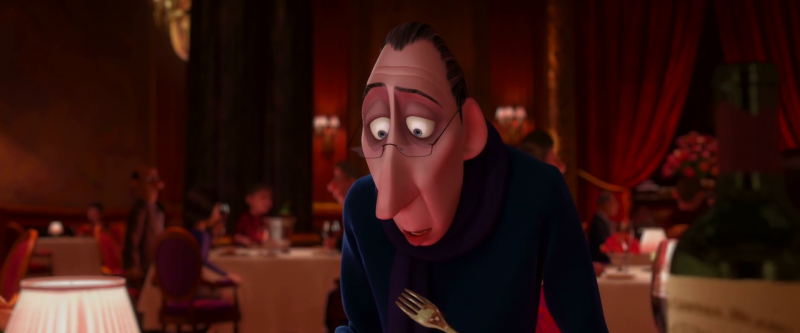
This bit of monologue from food critic Anton Ego in Brad Bird’s brilliant
Ratatouille (2007) is still the best approximation of what criticism is and should be about: “In many ways, the work of a critic is easy. We risk very little, yet enjoy a position over those who offer up their work and their selves to our judgment. We thrive on negative criticism, which is fun to write and to read. But the bitter truth we critics must face, is that in the grand scheme of things, the average piece of junk is probably more meaningful than our criticism designating it so. But there are times when a critic truly risks something, and that is in the discovery and defense of the ‘new.’ The world is often unkind to new talent, new creations. The new needs friends…” That last bit rings true, and I shall strive to always remember this.
I’m going back to regular column-writing, because there are many new things that deserve friendlier pens.
Labels: criticism, life, writing
[0] This is Where You Bite the Sandwich
Sunday, June 02, 2013
12:52 AM |
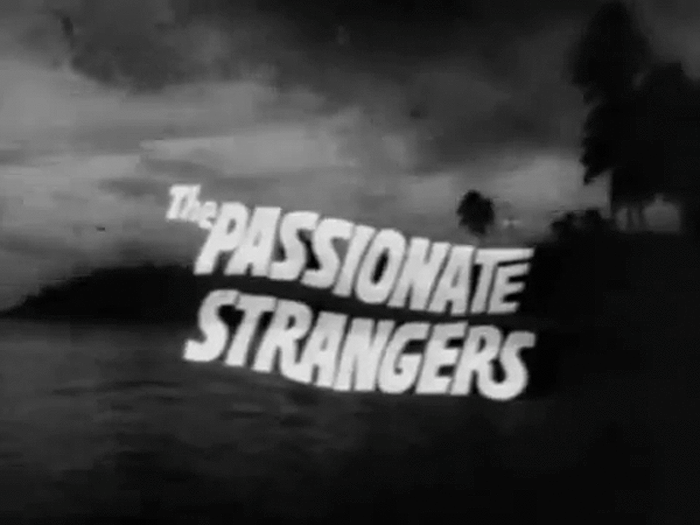
The Passionate Strangers
I've heard of
The Passionate Strangers (1966) since I first began taking an interest in the works of the later director and National Artist for Film Eddie Romero -- and especially after being told that the director of such Filipino classics as
Ganito Kami Noon, Paano Kayo Ngayon and
Aguila was not only from Dumaguete, but was also, like myself, a Sillimanian. To be told that as a young cineaste was quite galvanizing: it suddenly the dream of being a filmmaker myself a possibility, its remoteness once or twice removed. I began to ask: if he was from Dumaguete, had he ever shot a film in Dumaguete? He did, with
Kamakalawa, I was told.
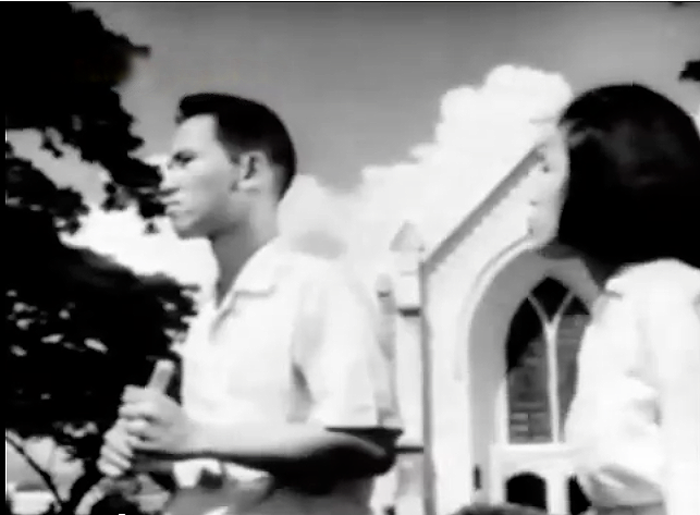

Later on, I also stumbled on the fact that Mr. Romero had shot an even earlier film in the city as well as nearby Bais. That was the film noir
The Passionate Strangers, which starred American actors Michael Parsons and Valora Noland, alongside a Filipino cast that included Celia Rodriguez, Vic Diaz, Butz Aquino, and Mario Montenegro. (Oh, to behold the naughty lines and flirtations between Ms. Rodriguez's femme fatale and Mr. Aquino's straight-arrow public attorney, and to see Mr. Diaz's magnificent star-turn as a snaky politician who who does his dirty maneuverings with such finesse...)

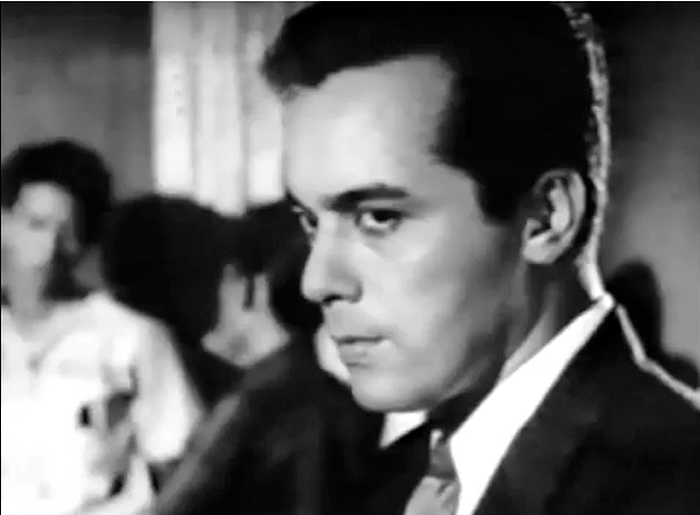




Naturally, I was intrigued. But a viewing copy of the film proved elusive for so long, until now:
somehow one found its way recently to YouTube, and now I can finally say I've seen this early Eddie Romero classic, not exactly in quality form -- but for now, this will do.
And what can I say about it? Only this: the film is one of Mr. Romero's best and deserves restoration effort, if only for the gorgeous photography by Justo Paulino that renders beautifully the peculiarities of Dumaguete in the 1960s. There is also the taut story by Cesar Amigo, Reuben Canoy, and Eddie Romero (Sillimanians all), and the topnotch acting -- mostly in English -- by the cast, who seemed to improve on the iconic performances from Hollywood movies of this kind. (It reminded me of a mishmash of
From Here to Eternity and
Touch of Evil...)
The story goes: an accidental murder of a labor leader has been committed in a town dominated by an American-owned mill, and labor riots follows, ending in a court case that seems to corner the American CEO of that company into a sure guilty verdict. But that makes it sound like a socio-political thriller, which is far from the case. What you really have here is a tense domestic melodrama peopled by characters of such remarkable complexity: the murderer, for example, may be the only man in the film who has any integrity, and the crusading investigator is, in this case, a congressman smelling a political opportunity and is only too willing to admit it. We see thrown into the mix the issues of marital betrayals, the politics of labor negotiations, as well as racism and nationalism in a small town -- but those big ideas almost seem incidental in an involving story about people who are only trying to do what's right, but do it in absolutely wrong ways.
The Passionate Strangers is a masterpiece, and I wish all of Dumaguete could see it in its full glory.
Labels: art and culture, directors, dumaguete, film, negros, silliman
[0] This is Where You Bite the Sandwich
Saturday, June 01, 2013
12:51 AM |
Notes on a Melancholic Night
1.
I just came from the first run-through rehearsals of Elsa Martinez Coscolluela's play
In My Father's House, which is being directed by the great Amiel Leonardia -- a homecoming to Silliman for this theater stalwart. And I'm sad because, for some strange reason, the tail-end of my last scene just felt ...
off. I play Miguel, the stoic, distant, heroic scion of a Dumaguete family torn apart by World War II. Act III Scene 2 demands of my character a certain tiredness from the war, but also a certain gentility, and a certain persuasiveness which I think I got right during last night's rehearsals. That instinct, unfortunately, was lost on me tonight for reasons I can only blame on energy seeping away as the night wore on.
But excuses, excuses. It saddens me only because I am not up to par the way I want myself to be. But it has been such a long time since I've acted on stage, and getting the hang of it -- to convey the truth of your character and his story -- may take a bit more time. It's not like learning to ride a bike again at all. But I'll get there.
2.
There are songs that play for you like autobiography, and you come to love them for the way they seem to know every breath of you. The music of
Spring Awakening is nothing of that sort, but the musical strikes such specific emotional response from me. Just hearing the beginning strains of "The Guilty Ones," for example, sends me back, just like that, to a covered, cushioned space in my head where there are a lot of dark shadows, but also a lot of fugitive light. I have local theater producer Hendrison Go to thank for introducing this musical to me at a time in my life when I was untethered, when I was desperately looking for something to hang on to, when the world I thought I knew was fading away fast. It is a long story, nothing too sad (because I reveled in the mistakes and the misadventures), but I
do know that I was at that time in need of a new anchor, a new lease on a better life, a deep reacquaintance of what I was and what it was that I wanted. What a sweet, tumultuous year 2009 was.
Spring Awakening -- something I listened to nonstop in the first six months of that year -- made it bearable.
3.
I think about Ron sometimes and the whole thing makes me sad. I see him, and he wears his smile and his words like a stranger. It makes me question what was true about us: Was it real those nights when we would be talking about stars till they faded away? Was it real those kilometric text messages, and the equally dramatic quarrels that lasted a year or so? Was it real when I'd take him to the bus terminal for home in Tanjay, almost on a nightly basis, and stay on till the bus went away? Was it real our regular search for things to eat in a city that was small? Was it real when he'd patiently wait in the gym for me while I did my exercises like a soldier? Was it real all that togetherness in the light of the nothingness between us at present? One questions things, and the only thing that seems real is the fading of what once had weight, but has now come to bear the lightness of ghostly feathers.
Labels: art and culture, friends, life, love, music, theater
[0] This is Where You Bite the Sandwich
Tuesday, May 28, 2013
10:17 PM |
Eddie Romero, 1924-2013

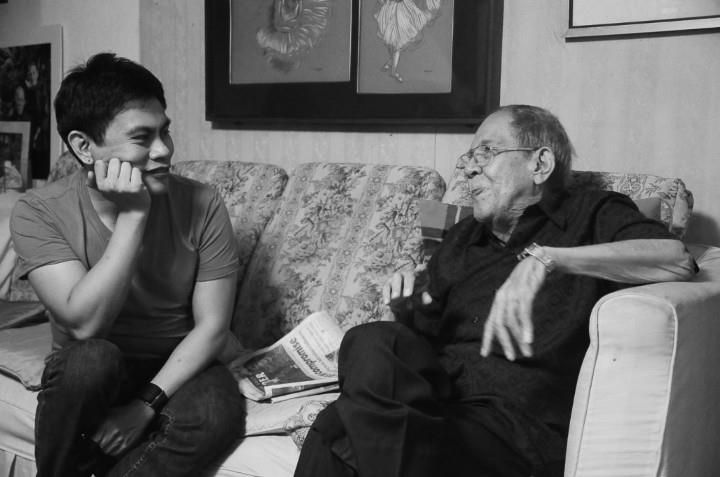
The photo below with National Artist for Film
Eddie S. Romero was taken only last February, and he was such in high spirits when we visited him. His death thus comes as a surprise. How does deal with the passing of a great man who has been a major influence? With disbelief -- and yet also with gratefulness that one has known him in life. When I was in college, Mr. Romero inducted me and the rest of the student officers into Silliman University's only existing film club. That was the first time I met the man, and I was awestruck. But also humbled by his down-to-earth self. We've subsequently named the Silliman University Cultural Affairs Committee's film series after him, to honor his contributions to the world of cinema. He was such a darling man, and such an amazing filmmaker. His film,
Ganito Kami Noon Paano Kayo Ngayon [1976], is the only film I know which had as its theme the very search to define the word "Filipino." And yet he did that without an inch of didacticism. Rest in peace, Manong Eddie. Thank you for all the great films -- even the gloriously pulpy Hollywood ones!
Labels: art and culture, directors, dumaguete, film, life, negros, silliman
[0] This is Where You Bite the Sandwich
7:12 PM |
Daft Punk Orange Latte Tuesday

I have been meaning to do this --
to blog consistently -- but I harbor excuses which teem by the thousands every single day. Foremost of which is that I have been quite busy, and Facebook and Tumblr and Twitter and Pinterest seem to have become the default platforms for the reportage of everyday things. Every new social media network that comes inadvertently chip away one more specific function we used to do under the generous umbrella of "blogging." And so we come to blog intermittently, using it only as an archive of sorts for our longer pieces which would have been too extravagant for the ADHD nature of other social media. And yet, every time I visit this blog, some sort of nostalgia kicks in for those glory days when blogging was
all, whether in Blogger or LiveJournal, and finding and visiting each other's blogs was what composed an online community. I remember we took care to personally encode the html links to every blogger we were following, and took care to make every daily post we make a virtual essay of such concentrated opinion. (We were quite loquacious!) I also remember the early flak: those early dissenters who complained that what we were doing -- blogging -- was not writing but mere hisses in the wild world of online noise. How strange those comments are now. Nevertheless. Here we go again. Let's restart.
Labels: blogging, life, web and tech
[0] This is Where You Bite the Sandwich
Sunday, May 26, 2013
8:33 PM |
Capturing the Green Light
I loved every bright, love-struck, imperfect frame of Baz Luhrmann's adaptation of F. Scott Fitzgerald's
The Great Gatsby.

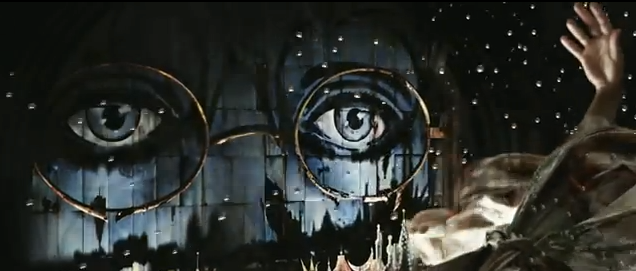
How can I not love it? It's knowing anachronism, its lyrical madness, its joyful brashness is much in keeping with the spirit of the book, a tome I read at least once a year. If he had witnessed this cinematic incarnation of his book, Fitzgerald would have approved. The film, too, fulfills the requirements of the book nerd in me: for one thing, there is the ingenious use of Francis Cugat’s original book cover art—the eyes floating in a sea of ominous blue—which turns up as one of the haunting billboards straddling the Valley of Ashes.
And then there’s that matter of the movie’s last shot: Nick Carraway's finished manuscript with the title, "Gatsby," typewritten across the white page. Then we get his hesitation as Craig Armstrong’s score swells, and then we see his decisive act to append two more words to the title, to finally read: "The Great Gatsby." That struck me as the character's—and the movie's—final assessment of the man. It is a melodramatic flourish invented by Luhrmann, and how I loved it.
The film is already a box-office hit – but, alas, the film is taking some unfortunate (albeit expected) drubbing from critics who think the film does a disservice to the beloved novel. For me, the only reason why many critics think the novel is unfilmmable is because the text is so popular, and so deeply ingrained in the popular consciousness, that it has become a "movie in our heads" -- and no adaptation by
anyone can ever touch the version we have already envisioned. But
as Jessica Zafra puts it, "Whoever complains of [the film's] excesses did not get the book"—and this is from somebody who loves the book with some madness. I've noticed though that two groups of people
do get the film—writers (like Zafra) and scholars.
They love it like I do.
I came away from it devastated by how tragic we can all become in the name of love. We all have Daisies in our lives: those unreachable objects of our affectionate yearnings and desires that when stripped bare ultimately reveal themselves to be empty and shallow—all shining surfaces, but rotten and indifferent to the core. That doesn't matter. The unsullied yearning and the hopefulness, encapsulating the purity of our pursuit, are the only things that matter.
Labels: film, life, love, writing
[0] This is Where You Bite the Sandwich
Wednesday, May 01, 2013
8:44 PM |
Time. It Bends.
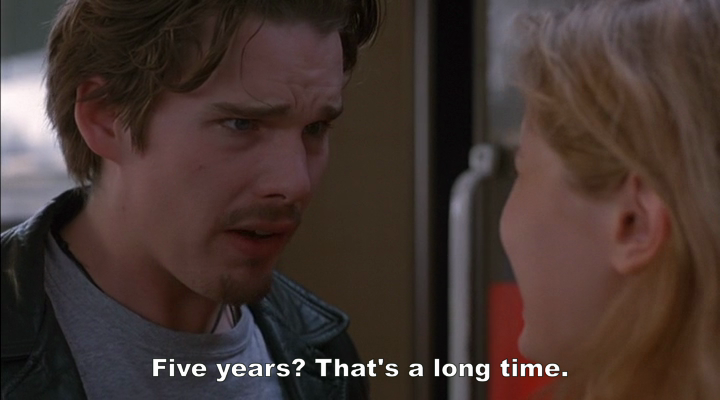
Richard Linklater's
Before Sunrise (1995).
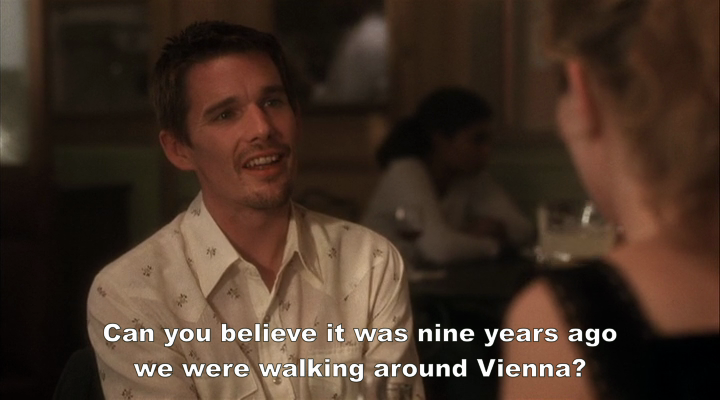
Richard Linklater's
Before Sunset (2004).
Labels: film, life
[0] This is Where You Bite the Sandwich
Friday, April 05, 2013
I have no recollection of discovering the writings of Roger Ebert, but I know I've always been a fan for as long as I can remember. His reviews were ones I always seek out, to sort out my own thoughts about movies, and to have my own sounding board when I want to debate about them. I think he mattered to me -- perhaps even more than Paulene Kael -- because Roger made the movies matter on a very personal level: it wasn't a "sexual" thing, like Kael does it -- what Roger did was to bring humanity to his reviews of the films, and yet he was smart
and accessible at the same time. Everything else about him resonated, too: I loved how he embraced life and its diversity. I loved how he championed "overlooked" films. I loved how he embraced beautiful language and being liberal and intelligent debates and social media. I did now always agree with his film reviews, but he has always been a hero to me. You will be missed, Mr. Ebert. Cinema is not going to be the same without your voice.

Some brilliant tributes from everywhere in the web:
The New York Times : Douglas Martin examines Roger as a movie critic for the common man.
Chicago Sun-Times : Obituary from the paper he worked for all these years.
NPR : Linda Holmes gets right what I feel about Roger Ebert's passing. A strange kind of sadness.
The Atlantic : Spenser Kornhaber on Roger and writing.
The New Yorker : Roger's legacy as a film critic.
Time : Steven S. Duke, a former colleague, reflects on the journalism legend.
Slate : Dana Stevens on Roger the mentor, prolific sharer of links, cooking philosopher, and lover of the movies.
Labels: film, people
[0] This is Where You Bite the Sandwich
Sunday, March 24, 2013
1:47 PM |
Café Midnight
It would not be too hard to believe, sometimes, that if you bleed a Dumagueteño, you would get caffeine.
I am talking of the young sort of Dumagueteño—these creatures who inhabit the new cafes mushrooming everywhere. This increasingly discriminating crowd know their Colombian from their Java quite well, and some of them have elevated the coffee snobbery with breathy mentions of French presses and self-roasted beans, and who can then quietly condescend with a measure of grace this way: “No latte for me, milk ruins coffee”—
I’m talking about you, Greg Morales.

Most of them, of course, are college students—the denizens who best define Dumaguete—who need that extra rush to the brain to get them through the midnight hours grappling with the insane volumes and reams of data needing absorption before the next day’s exams or paper deadlines. They buzz with such academic fervor, these islands of students spread everywhere in the city at night: medical students, and business students, and medical technology students, and education students—all kinds of students—bent over their laptops, dancing the fine line between spreadsheets and papers and temptations of Facebook and Twitter. Their horde wouldn’t be quite noticeable in the sum of things if Dumaguete were a bigger city: but small as the city is, the crowds that buzz in such places as Qyosko’s Café Espresso, The Bean Connection, Café Antonio, Café Mamia, Bo’s Boulevard, Poppy’s, and the absolutely last resort we call Kofficcino are more than noticeable. They create a kind of spectacle. In a city that goes to sleep, they are the only signs of waking life.
I should know this. They are my people.
This crowd, of course, requires only four things: [1] that the wifi is fast, [2] that the coffee is robust and affordable, [3] that the outlets to plug in laptops and pads are scattered aplenty, and [4] that the freedom to stay for as long as they pore over their books are unfettered. The generosity with which most of these local cafés attend to these requirements is astonishing—and I get the feeling they don’t really lose out in the bargain. (I’ve noticed that places that do skimp on wifi because they fear the slow turn-over of customers, for example, are—to use a local term—almost always gilangaw. Most likely this is because the tech savvy who do eat out feel the Scrooge-like pinch of not being able to Instagram their meal. And to quote Willie Revillame:
“You don’t do that to me!”)
You sense among these people an arcane knowledge of some sort of time table: afternoons are best in Poppy’s where the hazelnut mocha is addictive and the natural light is comforting, but the café—so near Silliman—closes way too early. Around 10 p.m. or so, most of them will find their way to Qyosko or The Bean; in these popular places, the thing to do is to brave the crunch and the tight spaces for a share of the wifi and the affordable food—
arroz balao and buttered garlic chicken and an assortment of all-day breakfasts, with a cup of latte to wash it all down.
Bo’s along the Boulevard, when you can afford it, seems perfect for the coffee nomad. I tend to spend hours and hours there, my productivity stoked by its easy ambience, for some reason. It helps that its barista staff are the friendliest in town—and you know their names, too: Allan, Mac, Christian… And sometimes, it is that barista factor that makes a café home. It is the same with The Bean. But what I love the most in The Bean is its devilish concoction in their moist chocolate cupcake. Every night when I am there—and it is often—that round piece of heaven calls to me like a long-lost lover, rebuffed only by the thoughts of having to endure extra minutes at the treadmill. (And yet, often, the cupcake wins.)
The Bean, alas, closes too soon after midnight. And so, for many, the only place to really grind away the night till it turns to morning is the 24-hour haven of Qyosko—where they play the best dance/house music around 2 a.m., for some reason. Around that hour, the midnight crowd surges alongside the ones poring over their books, and the place becomes full of people demanding for their burger steak or their
lomi or their
pochero.
Where do these people come from, and why are they not asleep? is a question I have learned never to answer. But Qyosko has become home to many of us, and so have many of these cafés.
Except for the sad ones.
It’s past midnight now in the McDonald’s along Perdices Street, and I cannot think. They have turned the music up much too loud for some reason I suspect borders on the diabolical.
How else can it be? The sound pounding my ears seems designed for repulsion, perfectly tuned to keep my residency in this establishment to the barest minimum, its welcome extending only as far as lining up at the cashier.
We want your money, the blasting music says,
but please go away soon. I understand the capitalist notion of keeping occupancy flowing, but there are subtle ways of doing it: paint your walls orange, for example. But what you have is indeed sound conspicuously designed not to make you feel welcome—and I resent that. Because I have just ordered my tumbler of perfectly banal iced coffee, and have just settled on one small table planning to read a few essays for Monday’s nonfiction class. But I cannot read. And I cannot think.
I call over one of the busgirls. She ambles towards me like a robot. “Can you please turn down the volume of your music?” I ask.
“Yes, sir,” she says in that tired way that betrays she has heard this request before, and has no intention of ever complying.
True enough, I wait five more minutes—and nothing happens. The infernal racket McDonald’s calls music continues. So I make it win the battle. I give up. I get up, and I go home. I reason away that you do not stay in a place that does not make you feel welcome. The only way anyone can repay such discourtesy is not to give it your business.
Labels: coffee, dumaguete, life
[0] This is Where You Bite the Sandwich
Saturday, March 16, 2013
I will have nothing to do with something where, to get anything in return, you are asked to be an asshole.
Labels: life
[0] This is Where You Bite the Sandwich
Tuesday, March 12, 2013
7:48 PM |
Confessions of Some Reluctance
When I am secretly accused of doing something wicked that I have not done, I am amused. And I think I have enough of an imagination to go ahead and commit it -- expectations demand it. I have already been found wanting, I might as well abandon the scale and leave it reeling.Labels: life
[0] This is Where You Bite the Sandwich
Saturday, March 09, 2013
8:52 PM |
Films From StorySpace
Eleven short films by student filmmakers from Silliman University are slated to make their premieres on 11 March 2013 for
StorySpace: The Fourth 61 Short Film Festival at the Audio-Visual Theater 1 of the Multimedia Center.
The short film festival, which is sponsored by the College of Mass Communication, the Societe des Cinephiles, and the Cultural Affairs Committee, brings together the works by students from various colleges in the university.

In Jo Simone Vale's
Ugma na Lang, six-year-old Clarence has decided to run away. As he steps out of the comforts of his home, he is daunted by what lies beyond the protection of their gate. In the end, it's up to Clarence to discover how far he can indeed run.

In Greena Pesalbon's
Trust, Jonathan and Sarah are newly engaged and totally in love. But there's a bump in their relationship when Sarah goes missing. It is now up to Jonathan to find his lost love ... or is it?

In Tara de Leon's
Temperomine, graduating senior Mark dela Cruz isn't a model student. In fact, he might not be graduating at all. An opportunity he can't refuse presents itself, but will it be really worth it?

In Pamela Lazalita's
Sinking Hearts, Rhea meets Chris in the summer. It is love at first sight for the both of them. Everything seems to be going perfectly but a devastating truth will soon crush their entire relationship.

In Henzonly Alboroto's
Shutterlife, Max lives and breathes pictures. Faced with problems which he feels he can barely take, he seeks the comfort of photography -- but soon discovers that it’s going to take more than pressing buttons to save himself.

In Handen Cadiente's
One Way Out, Krista is dying to escape from two things: her rocky relationship with Michael and her nightmare of a crazy woman who seems to want to kill her. When a car ride goes awry, it is up to Krista to save herself, or die trying.

In Jennis Miranda's
John, the title character is contented with his life. He doesn’t mind that his room is a pathetic excuse for a dumpster, that his aunt seems to never let him have any fun, or that his best friend seems to never run out of things to talk about. Then he meets Leslie.

In Melissa Pal's
Jeepney, Casey goes to work aboard a jeepney thinking it would be another ordinary day. Little does she know that destiny has a few tricks up its sleeves: she has to face the word "closure."

In Raymond Cutillar's
F*ed, Alixander is a graduating student but he has just received an F from a particularly trying teacher. Now he hatches some plans, most of them desperate, to redeem himself, to get a grade, and to finally graduate.

In Nolan Rhey Saraña's
Evelyn, a young man gets his heart broken by his cheating girlfriend. He escapes the city, but soon finds himself attracted to a mournful spirit which has trapped him in a world where only the two of them exist. How does he escape Evelyn's spell?

And finally in Stephen Abanto's
Dagit: Have You Got Time for a Story?, Esteban and Manu meet, and a spark of something electric seems to overwhelm them. Then one of them starts to tell the other a story of epic proportions -- which will decide ultimately what is going to happen.
The event marks another turning point in creating a film community in Dumaguete City. I believe many of the entries of this year’s festival ups the ante in terms of quality and imagination. It is high time that Dumaguete starts becoming known as a film hub in the region. Film from previous editions of the festival, such as Mahogany Rae Bacon’s
Marry Me, Stephen Abanto’s
Café Les Back, and Razceljan Salvarita’s
I Am Patience, have represented Dumaguete City in CinemaRehiyon, the annual festival of regional films.
The jury for this year’s festival includes Maria Cecilia Genove, Annabelle Lee-Adriano, Moses Joshua Atega, Earnest Hope Tinambacan, Sonia SyGaco, Brian Arbas Rimer, Yvette Malahay-Kim, and Marx Itturalde. The winning entries will represent Dumaguete in next year’s CinemaRehiyon.
Admission to the festival is free.
UPDATED:
The following films were adjudged winners of the various categories in StorySpace: The 4th Sixty-One Short Film Festival held last March 11, Monday at 7 PM at the Audio-Visual Theater 1 at the Multimedia Center:
Best Short Film: Ugma na Lang, with director Johannes Simone Vale
Winner of the Special Jury Prize: Jeepney, with director Melissa Pal
Achievement in the Cinematic Arts: Dagit: Have You Got Time for a Story?, with director Stephen Abanto
Audience Choice Award: Ugma na Lang, with director Johannes Simone Vale
Best Director: Melissa Pal for
Jeepney
Best Actor in a Leading Role: [TIE] Steven Joseph Credo in
F*ed and Mardie Gabriel Limbaga Erojo in
Ugma na Lang
Best Actress in a Leading Role: Jhenzee Jardin in
Jeepney
Best Actor in a Supporting Role: Noel Canobas in
F*ed
Best Actress in a Supporting Role: Johannes Simone Vale in
Shutterlife
Best Screenplay: Raymond Vincent Cutillar for
F*ed
Best Editing: Stephen Abanto, Jed James Wasawas, Henzonly Alboroto, and Johannes Simone Vale for
Ugma na Lang
Best Cinematography: Stephen Abanto for
Dagit: Have You Got Time for a Story?
Best Original Musical Score: Kokoi Guinto for
Ugma na Lang
Best Original Song: Finpot for
Shutterlife
Best Sound Design and Editing: Jerry Angelo Catarata for
Ugma na Lang
Best Production Design: Melissa Pal for
Jeepney
Best Costume Design: Miguel Salvania for
Dagit: Have You Got Time for a Story?
Best Make-up Design: Nicole Villanueva for
Dagit: Have You Got Time for a Story?
Best Poster Design: F*ed
Labels: art and culture, dumaguete, film, school, silliman
[0] This is Where You Bite the Sandwich
Tuesday, March 05, 2013
5:19 PM |
Thirteen Fellows Accepted to the 52nd Silliman University National Writers Workshop
The 52nd edition of the Silliman University National Writers Workshop is slated to start on 6 May 2013 at the Rose Lamb Sobrepeña Writers Village in Camp Look-out, Valencia, Negros Oriental.
Thirteen writers from all over the Philippines have been accepted as workshop fellows. They are Corina Marie B. Arenas, Nolin Adrian de Pedro, Patricia Mariya Shishikura, Brylle Bautista Tabora, and Lyde Gerard Villanueva for poetry; Tracey dela Cruz, Sophia Marie Lee, Rhea Politado, and Patricia Verzo for fiction; Jennifer dela Rosa Balboa, Ana Felisa Lorenzo, and Arnie Q. Mejia for creative nonfiction; and Mario Mendez for drama. They will be joined by special Singaporean fellows Christine Leow and Nurul Asyikin from Singapore Management University.
The panel of writers/critics for this year includes Director-in-Residence Susan S. Lara; Dumaguete-based writers Bobby Flores Villasis and César Ruìz Aquino; and guest panelists Dean Francis Alfar, DM Reyes, John Jack Wigley, Jose Y. Dalisay Jr., Ricardo de Ungria, Marjorie Evasco, Alfred Yuson, Gémino H. Abad, and Grace Monte de Ramos. They will be joined by two foreign panelists whose names will be announced later.
The workshop, which traditionally lasts for three weeks, is the oldest creative writing workshop of its kind in Asia. It was founded in 1962 by S.E.A. Write Awardee Ediberto K. Tiempo and National Artist Edith L. Tiempo, and was recently given the Tanging Parangal in the Gawad CCP Para sa Sining by the Cultural Center of the Philippines.
This year, the workshop is co-sponsored by the National Commission for Culture and the Arts, the Embassy of the United States of America in Manila, and the United Board for Christian Higher Education in Asia.
For more information about forthcoming events during the workshop, please email Workshop Coordinator Ian Rosales Casocot at silliman.cwc@gmail.com or call the Department of English and Literature at (035) 422-6002 loc. 520.
Labels: art and culture, dumaguete writers workshop, silliman, writers, writing
[0] This is Where You Bite the Sandwich
Monday, March 04, 2013
1:51 AM |
Ronald McDonald is an Ungracious Host
It’s past midnight in the McDonald’s along Perdices Street, and I cannot think. They have turned the music up much too loud for some reason I suspect borders on the diabolical. How else can it be? The sounds pounding my ears are designed for repulsion, perfectly tuned to keep my residency in this establishment to the barest minimum, its welcome extending only as far as lining up at the cashier.
We want your money, the blasting music says,
but please go away soon. It is indeed sound designed not to make you feel welcome—and I resent that. I have just ordered my tumbler of perfectly banal iced coffee, and have just settled on one table planning to read a few essays for Monday’s nonfiction class. But I cannot read. I cannot think.
I call over one of its busgirls. “Can you please turn down the volume of your music?” I ask.
“Yes, sir,” she says in that tired way that betrays she has heard this request before, and has no intention of ever doing.
True enough, I wait five more minutes—and nothing happens. The infernal racket McDonald’s calls music continues.
So I make it win the battle. I give up. I get up, and I go home.
You do not stay in a place that does not make you feel welcome. The only way anyone can repay such discourtesy is not to give it your
business.
Labels: coffee, dumaguete, food, school
[0] This is Where You Bite the Sandwich
Saturday, March 02, 2013
5:09 PM |
Songs to the Tune of Life
I choose my songs as commentary on my life at present -- one song on a constant loop sometimes going on forever, until every sound and nuance of it get under my skin, to remind me in a subliminal way what must move forward, and what must be undone.Labels: life, love, music
[0] This is Where You Bite the Sandwich
Tuesday, February 26, 2013
6:52 PM |
Heartbreak Part 14
Why do I worry that he cannot love me? Is my life incomplete without his love? Every day I tell myself that such infatuation—because I refuse to believe it is anything else but an infatuation—cannot be the center of me, and I make a good show of going about my days bearing with the weight of adult cares and the haphazard pursuit of the good life—and yet, in my quiet moments, when things go still and all I have left is the shattering intimacy of my own company, my mind searches for meaning that only the heart understands in secret but does not yield readily the answers. I tell myself so many things. I tell myself,
Enough. I tell myself,
You have gone through these before, the tremors of heartbreak you thought you could not survive, but did. I tell myself,
What else can you do for love without bankrupting your sanity? But it all boils down to a heart-wrenching truth I understand only the way the dying stars feel their own dimming: that he cannot love me. How does one bear such awful truth.
Labels: fiction, life, love
[1] This is Where You Bite the Sandwich
GO TO OLDER POSTS
GO TO NEWER POSTS


