Celebration: An Anthology to Commemorate the 50th Anniversary of the Silliman University National Writers Workshop Sands and Coral, 2011-2013
Silliman University, 2013
9:30 AM |
Seeing Richard Brody Typing on an External Keyboard
I’m watching Marshall Curry’s documentary, The New Yorker at 100, and I see film critic Richard Brody working on an external keyboard because his MacAir keyboard has stopped working. I felt this, hahaha.
My essays on the arts in Dumaguete during the pandemic are becoming longer, and longer, and longer. But I don’t really care. This wasn’t my purpose when I stumbled into this series last year, but it has somehow become not just a work of cultural criticism, it has moved on to become a very specific art history: chronicling how artists in a small Philippine city dealt with three years of the pandemic. I know there are some who think, “Too long!” but you know what? Kebs, these essays are not for you. Anyway, I’m done with visual arts [8 essays in all!], done with theatre, done with dance, done with music. Next up: cinema and literary arts, and then an epilogue.
6:06 PM |
White American Academic Calls a Vast Swath of Literature from a Country His Own Country Once Colonized as "Small"
That essay currently circulating around [no links, ewww] rankles because it asserts something about my Silliman writerly education that is untrue, and negates the effort of my mentors.
Can you imagine Timothy Montes, Marjorie Evasco, Merlie Alunan, Leoncio Deriada, Grace Monte de Ramos, Nino de Veyra, Ceres Pioquinto, Elsa Coscolluela, Cesar Aquino, Erlinda Alburo, Anthony Tan, Jaime An Lim, Eva Rose Repollo, and others -- the so-called "Tiempo set" -- being "apolitical, de-historicized, assimilationist, and anti-nationalist"? Like whaaaat? That is not what I was taught. These people went beyond New Criticism, and also argued with each other, especially during workshop [the fun part of SUNWW is the panelists arguing] -- and most of them became pioneers in the cultivation of regional language literature and in the process helped bring about an understanding of local poetics/aesthetics. [They made me start writing and valuing Binisaya literature, for one thing.]
I didn't get taught a monolithic, America-aping idea of literary writing, like we were whores of formalism.
The Tiempos, too, grappled with the issue of language in so many articles, grappled with national issues [you'd know if you actually read their poems and stories], and also fought the Marcos dictatorship in their speeches and writings [EK Tiempo's SEAWrite acceptance speech is a prime example; also Silliman was one of the "notorious five," the last five schools/universities permitted to reopen during Martial Law].
I gather that Doc Ed had very specific views of fiction, for example, but his voice was only one workshop voice, albeit authoritative-sounding and colored in baritone; he is not a synechdoche to understand the fullness of the workshop, and often he was fiercely in loggerheads with Edith over the merits of a poem or story. [In that battleground of ideas, from Aristotle to Derrida, from Marx to Anzaldua, is where I learned literature.]
To quote Alana Narciso's forthcoming essay on the matter: "To claim too that the Tiempos were mere receptacles of English colonial education, mindlessly parroting American standards is to reduce the complex issue of language and the intricate processes of cultural transformations even in post-colonialism into a discourse that is limiting in its simplism."
There's so much more to reveal actually -- especially the assertions about current organizers of the workshop, and our so-called lack of reckoning with our history. WTF. If you only knew...
POSTSCRIPT:
The more I think about it, the more offensive it becomes: a white American academic diagnosing as "small" a vast swath of literature written by writers in a foreign country his own country had colonized. Offensive, and insulting. The empire striking back once more, and making generalizations over a literature he has probably have not read.
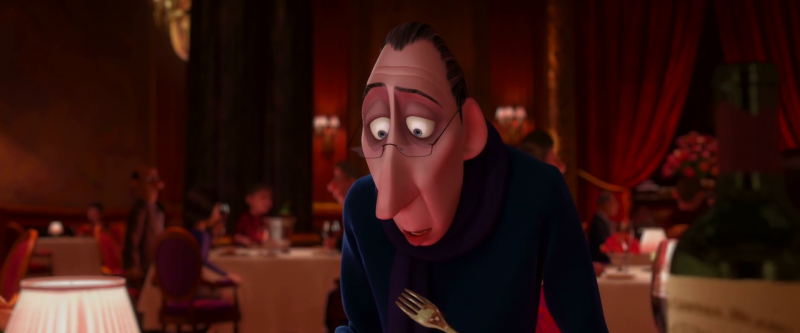
"In many ways, the work of a critic is easy. We risk very little, yet enjoy a position over those who offer up their work and their selves to our judgment. We thrive on negative criticism, which is fun to write and to read. But the bitter truth we critics must face, is that in the grand scheme of things, the average piece of junk is probably more meaningful than our criticism designating it so..."
~ Peter O'Toole as Anton Ego in Brad Bird and Jan Pinkava's Ratatouille (2007)
I am an accidental foodie: I used to write a food column for a local paper and have written extensively about the Dumaguete food scene for national magazines and newspapers -- until I decided to discontinue the enterprise about four years ago. Still, people I know who visit Dumaguete keep asking me about the best places to go to eat, and I've found I no longer quite know the scene. A lot can change in half a decade. So I've decided to try a new approach this year and go about sampling the local food culture once more and document everything online in the course of twelve months. The city has grown and expanded enough in the years since 2011, and a significant part of what's happening food-wise has become unfamiliar to me. Consider this a personal adventure.
There is finally a restaurant in Dumaguete that has become KRI’s equal, at least in its clearly-wrought striving for fantastic ambience and culinary invention, and it is Adamo. (The thing about Dumaguete food is that for the most part almost every restaurant offers mere variants of the same tired dishes, which may be due to the fact that the cycle of kitchen-staff piracy in the city has become a kind of tradition. Enter some of our name restaurants and you could taste, with every bite you take, the inevitable conclusion that a dish you’re eating has not been made by a culinary artist, but by some highly-effective craftsperson. Truly, if I have to see another lackluster chicken cordon bleu on the menu again, I’d…) It is then with such a relief that we welcome Chef Edison Monte de Ramos Manuel to the local food scene. He has transformed what used to be a carwash at the once sleepy corner of Tindalo and Molave Streets in Daro [such an unlikely venue!] into a restaurant whose aesthetic seems to suggest makeshift industrial space with hip minimalism — the grey concrete box of its interiors softened by carefully placed wooden finish here and there. The result is a shabby lived-in feel that works: it is an austerity that invites concentration on the food. And the food truly is a magnificent surprise. The efficient wait staff wasted no time in giving us the restaurant’s idea of breadsticks, a waferish thing that came complete with a tuna/sesame seed dip. And as we marvelled over the one-sheet menu, she informed us — with such a pleasant authority that’s usually absent in many local wait crew — that the chef plans to change the menu every two weeks or so, and that what we have was actually the dinner menu, and there was in fact a separate lunch menu. The prices, much to our pleased surprise, were not eye-gouging, and we were told that the market they’re targeting are students and young professionals, hence a relative affordability to their selections. There were enough of us in the table to enable us to go for a good sampling of the entire menu, and we were asked if we wanted to have our dishes brought to us by courses. (Another delight! Because when was the last time you were ever asked that question in a Dumaguete restaurant? Most have a tendency to give you your appetiser after the main course has been served, and most serve a large party in a piece-meal manner, so that no one ever truly eats together: one eats his dessert while another one is still waiting for his main course to arrive.) For our starters, we ordered the fish and pork (P125), which was basically smoked fish aioli with shredded adobo, cherry tomatoes, pickled onions, and arugula set on sliced French bread; the goat cheese and grilled apple salad (P150), with candied walnuts, salad greens, and caper raisin dressing; and the coconut and prawn pasta (P150) in crème de tête and with gremulata, which was superb. For the main course, we had the pork belly (P180), the tuna belly (P190), and the braised beef (P260) — the last one absolutely perfection, the fullness of the marrow an enticing buttery goodness that instantly reminded everyone that mealtimes with good friends are always a kind of celebration. Good food does that. The desserts — we had blueberries and cream, and a slice of fudge brownie — left a little to be desired, but it was overall a surprisingly elegant meal, and its preparation almost a performance. The kitchen is open, and it is separated from the main dining room only by a sheet of glass that also served as a board for instruction to the kitchen crew over the intricacies of the meals for the day: you could see the chef and his cooks slave over painstakingly over every dish they were concocting for all the diners. It was a fantastic meal, the best we’ve had in Dumaguete for the longest time. We asked what Adamo meant, and apparently it’s Italian for “to fall in love with, to conceive desire for, to desire eagerly.” An appropriate name. I can’t wait to go back. They serve lunch from 11:30 AM to 2:30 PM and close for the rest of the afternoon. They open for dinner at 5:30 PM and close at 9:30 PM. We ordered at 7:30 PM. Order received at 7:45 PM.
3:26 PM |
Food Roundup Dumaguete 2016: Healthy Bar by Chef Twine
I am an accidental foodie: I used to write a food column for a local paper and have written extensively about the Dumaguete food scene for national magazines and newspapers -- until I decided to discontinue the enterprise about four years ago. Still, people I know who visit Dumaguete keep asking me about the best places to go to eat, and I've found I no longer quite know the scene. A lot can change in half a decade. So I've decided to try a new approach this year and go about sampling the local food culture once more and document everything online in the course of twelve months. The city has grown and expanded enough in the years since 2011, and a significant part of what's happening food-wise has become unfamiliar to me. Consider this a personal adventure.
A friend of mine has one rule when it comes to choosing a restaurant, especially in another city: “Never ever go inside an establishment that’s practically empty, especially during the peak hours. There must be a reason why nobody’s there.” There you go: a distrust of empty places as functional food criticism. Sometimes, arriving in a foreign city, I do find myself following my friend’s advise — although one can easily make an argument about why a place could be empty: it could be new, and no one has heard of it yet; it could be too experimental, or too exotic, which is not reason enough to stay away. Most of the time though, that distrust is pure instinct that’s right on the mark. When we entered Healthy Bar by Chef Twine right at the height of lunchtime, the cafe right along Aldecoa Drive seemed spectacularly empty, and the resounding chirp of greeting by its lone waitress — “Good morning!” — almost overplayed its cheer: it smelled of relief, and it made me think, “Are we their first customers of the day?” But we’ve been looking for a good alternative for Lokal Organic Cafe, which had closed so abruptly and has yet to make true its promise to resurrect itself in a better venue. We wanted a healthy option for mealtimes; we wanted vegetables! Our first impression was that Healthy Bar has none of the lovely kitsch of Lokal Organic: it reminds you in fact of a dental clinic — all done in immaculate white and dashes of brown and vegetable green — and all with an agricultural theme. It has posters and cut-outs featuring earnest quotes, some of them Biblical, about the virtues of organic farming. The tables are elegant if a bit uncomfortable, and on every tabletop is a plastic jar with greens sprouting from it, a goldfish swimming about in the clear containers. The menu, when it comes, is a sad-looking plastic binder, the kind you use for bureaucratic purposes — but it is filled with all things this “healthy bar” wants to be known for: they have oat meal flavoured with everything from carrot to chocolate to Oreo (ranging from P65 to P70), they have “on-the-go” salad (P75-79), they have organic coffee (native robusta), they have a wheat grass blend (P110), they have mango wine (P69 per glass/P200 per bottle). We asked for their lunch menu — this was, after all, a cafe that bills itself as having a chef — and we are shown a page in the menu that enumerates all manner of “logs,” from tocilog to tapsilog, but with a healthy twist: each dish is served with deep purple rice. And that’s it. I said, “I had no idea you needed a chef to think up a ‘log’ dish.” We chose the chicsilog (supposedly ginger organic chicken) and vegelog (which turned out to be three slices each of tomato and cucumber), and at P75, the dishes were fair for their price, if ultimately unfulfilling. (The eggs however were done just right.) For drinks, we had lember “infused water” (P60), which was basically flavoured water without the guilt of sugar. The slice of green tea cake (P55) we had for dessert was tiny — but thank God for that, because it was hard and tasted like cardboard. It wasn’t altogether a happy meal — but we gave its signature offering a chance to give us back our good mood. The twinebocker halo-halo (P65), a concoction without sugar or ice and just plain fruit, milk, and herbs, was our salvation, truly a delight — and this saved us from pronouncing this meal a small disaster. So, go for the halo-halo, but don’t expect much from everything else. Ordered at 11:30 AM. Order received at 11:55 AM.
7:30 PM |
Myrna Peña-Reyes on Edith Lopez Tiempo's Iconic Poem + Music and a Reading
Here's Edith Tiempo's "Bonsai":
All that I love
I fold over once
And once again
And keep in a box
Or a slit in a hollow post
Or in my shoe.
All that I love?
Why, yes, but for the moment
And for all time, both.
Something that folds and keeps easy,
Son’s note or Dad’s one gaudy tie,
A roto picture of a queen,
A blue Indian shawl, even
A money bill.
It’s utter sublimation,
A feat, this heart’s control
Moment to moment
To scale all love down
To a cupped hand’s size
Till seashells are broken pieces
From God’s own bright teeth,
And life and love are real
Things you can run and
Breathless hand over
To the merest child.
Here's a reading of the poem by Arlene Delloso...
And here's a bit of music inspired by her work. This is "Bonsai," an art song composed by the College of Performing and Visual Arts' Elman Caguindangan and performed on the piano by Ricardo Cabezas Abapo Jr., based on Mom Edith's most famous poem. [Instrumental only. Lyrics are the lines from the poem itself.] This was commissioned for and first performed in the Pagpupugay: A Tribute to National Artist Edith L. Tiempo held at the Luce Auditorium in Silliman University, a program co-presented by the University of the Philippines' Likhaan Institute of Creative Writing, many years ago.
For poets and writers, all words spring from and lead back to our basic universal concerns: love, life, death. All other matters that engage the heart and mind are variations on these. What impresses us as readers is the individual poet’s skill in presenting his or her personal take on these broad concepts—the particularization, the personalization, the concretizing of the universal, which gives wisdom and pleasure. In “Bonsai” the poet shows us how those huge concepts of love and life can be “scaled down/ To a cupped hand’s size,” making these concepts more comprehensible and, therefore, capable of nurturing us and being nurtured by us. That the quoted lines occur near the middle of the poem is rightly so for they constitute the focus, the center, the heart of the poem. The poet accomplishes her task by employing the compact and rich language of poetry where one word, a single image, can suggest a wealth of associations. The tangible physical objects or images then assume a higher significance, their symbolic or metaphorical interpretation that bring out the poem’s ultimate meaning. In naming common objects from everyday existence that reflect what she “loves,” the poet makes concrete for us those broad abstract concepts, those big sounding general and amorphous words: love and life. The named objects represent various facets of love and life: the private and personal, the public and playful, the artistic and new, the commercial and practical, the past and present. Consider these ordinary objects and the associations they summon up: A son’s note—private and personal, a reaching out to a fellow being, child to mother; unlike a letter, a note is raw, unrehearsed, extemporaneous; a moment’s impulse, emotionally honest. By not specifying what the note says, the poet makes the image richer in possibilities: a useful piece of information, a promise, an expression of thanks, tenderness; perhaps disappointment, hurt, anger—the other faces of love and life. A husband’s one gaudy tie—just one, no more; public, playful, perhaps bad taste or an independent mind challenging tradition; stubbornness, fun-loving silliness, perhaps color blindness—a person’s strengths and weaknesses, his human-ness. A roto picture of a young queen—photos, a record of what was, stir up memories that recreate, bring back to life what used to be; the past contemplated in the present: former triumphs and pleasures; health, beauty, youth in its prime before bodily decrepitude; the stages and the passage of love and life. An Indian shawl—a man-made work of art, the artistic and perhaps new; travel, the fascinating, the beautiful; the foreign and familiar: something to keep one warm as love, indeed, warms. Money bill— Who doesn’t love it?—the commercial and practical without which the world wouldn’t turn; a “necessary evil” that can also be a kindness and a life-saver. These ordinary everyday objects representing love and life, we are told the poet folds over more than once to hide away in secret, safe places. The act of “folding over once and once again” while suggesting the special attention and care paid to them also infers that the poet doesn’t just put them away for good, but takes them out now and then to refresh, perhaps re-evaluate her appreciation of them as representations of “love.” That she hides them in safe places suggests not only their great value but a sense of privacy associated with them, as things we hold and feel deeply about are oftentimes regarded. A box—something purposely constructed, the most common place in different cultures for storing things, universal. The expression “to box” means to encompass, to bring to a required form, to categorize, as the poet classifies and stores in her heart and mind the treasured objects representing specific values to her. A hollow post—is our native Filipino safe box, a sturdy part of our homes; secret, secure but also vulnerable to termites and fire, as love and life are strong and fragile; a hollow section of bamboo brings to mind our Philippine creation myth: the first man and woman, the beginnings of life and love. A shoe—the hidden object is worn intimately next to one’s body, the feet, our body’s support, foundation that enable us to go places: protection, self-sufficiency, independence. These secret hiding places are metaphorically the poet’s heart and mind which are engaged in translating the abstract Universal into its concrete particulars. This act is “a feat,” involving control, skill and endurance. “It’s utter sublimation,” that is, a process that constantly improves or refines till the physical realities become metaphorical significances. The poet’s scaled-down versions of love and life are analogous to bonsai, a deliberately miniaturized, but mature, plant; a dwarf tree that blossoms and fruits; complete in itself although representative of a larger entity, as “…seashells are broken pieces/ From God’s own bright teeth.” Shells record our planet’s life that started in the oceans. Teeth, a most intimate part of one’s body, are an essential aid in sustaining life. To put teeth into means to make something effective, inferring firmness, steadfastness, resoluteness. For in the end, all—broad conceptual concerns or their smaller physical representations, animate or inanimate things—partake of the nature, the divinity of their Creator, the original source of Life who is both Idea and Form. “Bonsai” is Edith L. Tiempo’s Ars Poetica. (Appropriately, Archibald MacLeish’s “Ars Poetica” was the poem Mom Edith used to introduce the Modern Poetry class she taught in 1958, the first class I had under her.) “Bonsai” is an excellent demonstration of the craft of poetry, how with great economy of language and precise choice of imagery such a short piece can suggest a wealth of meanings, suggestion being at the heart of modern poetry. By dipping into the well of our mutual everyday concerns and experience, large and small, for her material, and through her perceptive insights revealed through a consummate poetic skill, Edith L. Tiempo makes “life and love real things” for us, “hands them”—our shared humanity—“breathless” over to us for “the moment and for all time.”
I went to see the love of my life
The one who is not my life
But who turns mysterious meaning-
Less suffering into happy, tiny bits of
Breatheable grace.
I went to see the love of my life
The one who loves me less or
Less than less, or most than most
Of all, but I'll never truly know. Love
Being light or nameless shadow,
Depending on her own pain that only
She can know.
I went to see the love of my life
The one who will leave me out of love
Or love's disappoinment. And who
Will not forever live, or whom I will
Leave never willingly unless she
Leaves first. As summer grass. As
Silence green amongst trees.
I went to see the love of my life
But she isn't here. And I am told,
No matter, no matter. Life goes on
And it does all around me and all
Around her wherever she is.
And the arms holding her now. And
Arms holding me that are my own
Arms inside the cold bus with my
Painful fingers all nerve and bone.
Love and life. My love. My life. Small
Things that want to be everything
And are, the only things, until the last
Word you see:
The race for the 87th Academy Awards has essentially started with all the online punditry abuzz with each new screening -- and as usual, I want to do my annual unflagging attempt to seeing all possible films in contention, even before the official nominations come on January. This blog series aims to chronicle this effort.
There was a time in my young life as a cineaste where I'd scrupulously scan the reviews of the late film critic Roger Ebert to find out whether my opinion over certain films matched his: if it did, I'd flush in the beautiful certainty of having the right filmic taste; if it didn't, I'd wonder what flavour Kool-Aid Ebert drank that made him so wrong in all the awful places. But he was always a fun read. Also enlightening, given how superbly liberal he was about his opinions, and how well-spoken in his argumentation. (I remember the long battle with video gamers, for example.)
Reading him was like learning at the feet of a good professor. He had that teacherly spirit about him, even when he was cranky, even when he called certain movies "sucky." I'm not exactly sure how I first came to reading his reviews. I know for sure that, in the formative years of my movie-going, it was Pauline Kael's eroticised approach to cinema that got me first -- "Reeling" was my first serious book of popular film criticism. But it is Ebert that has stayed with me longer, whose opinion I treasured even when I disagreed with him.
I bought his books, of course -- one of which he dutily autographed for me, calling me a "cinema lover." (That was awesome.) I followed his journey through what he called the "Great Movies." I clicked on his website daily, and was amazed by how prolific he was in his writings and in his advocacies. I marvelled at how he went on to conquer social media, the perfect opposite of the usual cultural dinosaurs who balk at the latest platforms of engagements. He made me ask: How does one write that much? How does one feel so much about many things (politics included) and still be able to take them on with such fierce intelligence, without the bluster of a shallow know-it-all?
And so Life Itself, Steve James' documentary on Ebert which is based on the latter's memoir, seemed tailor-made for me. (And James seemed the perfect choice as helmer of this project produced by Martin Scorsese as well; Ebert, after all, gleefully championed James' documentary Hoop Dreams when it first came out, calling it one of the best films ever made.) And the new film is a good and thorough journey through the life of an idol, which includes his unseen story of having to go through the ravages of cancer. We get the usual revelatory talking heads from friends and colleagues. We get snippets of film criticism (but never quite digs into the impact). We get the unusual foray into Beyond the Valley of the Dolls. We get the story of the fiery rivalry and bromance with Gene Siskel. We get the love for Chicago. We get insights about the arrogance and the old addictions.
But it didn't involve me. The film feels like a paint-by-numbers effort, almost boring in the predictability of presenting its subject. Perhaps there's just so much of Ebert it cannot be contained in a single film, and any attempt to do so will forever will like a mishmash of Greatest Hits tidbits? Perhaps a greater documentary entailed capturing the man in the full power of his influence and physicality -- which makes this film about ten years too late? #RoadToOscar
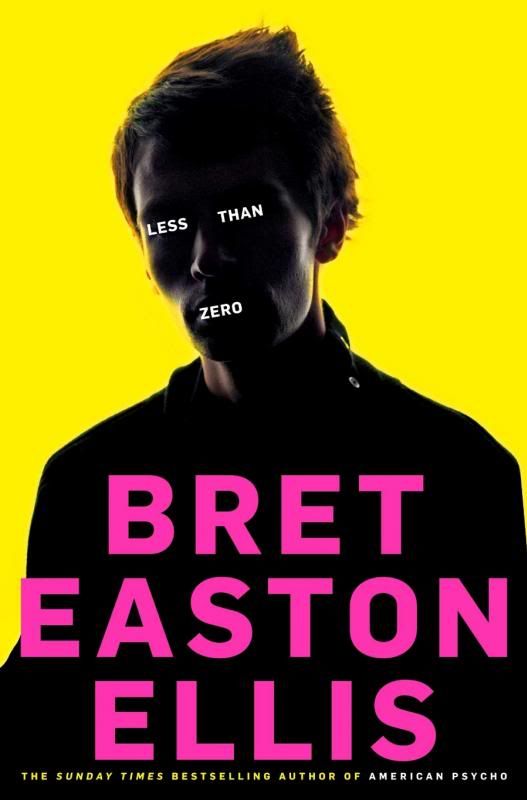
Maybe it’s because I’m reading Jon Savage’s groundbreaking exploration of the formation of the culture of adolescence in Teenage. Or maybe because I just finished watching Sofia Coppola’s The Bling Ring (2012). But sometimes, the art of Terry Richardson, Larry Clark, Harmony Korine, Brett Easton Ellis, and often Steven Meisel (especially in 1995) clumped together — distinctive for their almost salacious eye on teenage white-trashy abandon, which celebrates and condemns it at the same time — frankly scares me. Or at least unsettles me.
Faithful readers of the newspapers I write for may have noticed that, save for the rare occasions when I could bring myself up to the task of column-writing, I have not published anything for the longest time since January.
The official reason that I have given my editors is one that seems quite understandable. After many years of churning content for this space week after week without fail, I had claimed “burn out,” which happens to the best of them. “I have nothing more to say,” was my excuse—which is, of course, easily discounted given the many and sundry posts I make in Facebook or Twitter: all those short observations and rants and what-not that betray a life constantly reflecting on one thing or other. I do have a lot of things to say. I just didn’t want to write them down in a column anymore.
Perhaps I got tired of being a cultural critic, especially for something aimed for the permanency of journalism. Anything on newsprint smacks of the heavy responsibility of the legitimacy we attach to print media. (“Big words,” Sarah Geronimo’s Laida Magtalas would have quipped at this.) Social media postings, however, seemed to me more ephemeral yet also more direct, eliciting instant feedback, which is also easily drowned in the constant deluge of information the Internet is capable of making. I think of social media as a kind of “hit-and-run” writing. I reveled in it.
The life of a critic who is also a creative writer and a sometime cultural advocate is an existence etched in schizophrenia: you have two hats to wear, but only one head. Having both hats often confused me. I know it is often quite delicious to dish out as a critic, but always with the knowledge that with such snark, one must also be able to take in, as an artist, what is dished out to you.
But I have always considered myself a fair receiver of bad notices—and God knows I have received many of them, in withering workshops, in less-than-stellar reviews, in apologetic rejection letters, in painful negotiations with an editor over a manuscript. I have always considered these things as necessary wrangling to achieve a semblance of good craftsmanship in my work—and such a perspective has helped me achieve some of the triumphs I’ve had. In 2002, I was told there wasn’t much of me as a young writer—and so I went ahead and penned a story that won me my first Palanca, and edited an anthology that garnered my first nomination in the National Book Awards. In 2008, I was told that my best stories were behind me—and so I went ahead and wrote one that won for me a first place finish in the same contest, and later secured long-list honors in the Man Asian Literary Prize. You cannot please everybody, I’ve learned—but that doesn’t mean what they say becomes the ultimate statement of what you can do. And sometimes people write bad notices because they have an axe to grind: those qualify for the lowest forms of opinions. Being able to distinguish useless snark from helpful negative notices takes time and maturity.
I have been writing criticism since I was a Mass Communication student in Silliman University, starting with a column I named “Cynosure for Attila”—which belied the arrogance typical of one so young. I thought that what I had to say could be sword or wand, depending on my mood, and it was directed to what I considered to be a small world populated by philistines, for which I must have thought of myself as a kind of messiah. (How arrogant I was, and how young.) In the mid-1990s, I wrote a review of a local production of West Side Story, directed by Evelyn Aldecoa, in The Weekly Sillimanian. It did a perfect demolition job calculated to hurt—but not a day that had passed since then have I not regretted the poison of those words I penned. It severed a professional relationship, which also had repercussions on so many people that lasted for years. Only very recently were many of those broken bridges healed. In time, Ma’am Evelyn forgave me. In time. A few short years before she died, she cast me in an unstaged production of South Pacific, and I also worked with her on the program and marketing of 2010’s Godspell. In time.
I’ve thought about that episode often—and whenever I’d write a scathing review in this space, I’d think about the matter for a few days, and I eventually ask myself: What for? To wield words with such bludgeoning effect is power given only to a privileged few. I should have a perfectly good reason for snark. When my columns evolved to spaces that reviewed not only shows and music and film but also food, I realized just how unbearable the responsibility was. Everywhere I went, people expected me to say something—about their show, about their food, whatever—but what if I did not like any of these?
The late film critic Alexis Tioseco grappled with this question once and came to a conclusion, which formed the core of his kind of criticism. He realized he could use his words to champion what he loved—and if he didn’t like something, he wouldn’t write anything at all. His silence was the ultimate arbitration of a work done badly. And I did that for a while, and even championed in my columns the many artists I felt deserved the spotlight, no matter how briefly it shone on them. I wrote about them because I loved their works, and I believed in what they could do.
This bit of monologue from food critic Anton Ego in Brad Bird’s brilliant Ratatouille (2007) is still the best approximation of what criticism is and should be about: “In many ways, the work of a critic is easy. We risk very little, yet enjoy a position over those who offer up their work and their selves to our judgment. We thrive on negative criticism, which is fun to write and to read. But the bitter truth we critics must face, is that in the grand scheme of things, the average piece of junk is probably more meaningful than our criticism designating it so. But there are times when a critic truly risks something, and that is in the discovery and defense of the ‘new.’ The world is often unkind to new talent, new creations. The new needs friends…” That last bit rings true, and I shall strive to always remember this.
I’m going back to regular column-writing, because there are many new things that deserve friendlier pens.
God help me, but a month or so has passed since I last saw Brillante Mendoza's Kinatay [2009], and yet the memory of that visceral journey through Manila's dark underbelly has stayed with me with a malevolent power I can't exactly define -- it is a prickling under my skin, a kind of labored breathing, a haunted voice that plagues the consciousness. It comes and goes, and when it does descend, it unsettles -- as it must. Last night, near midnight, I was bored and had nothing to do, and so I wandered the empty city streets in search for something, anything. That was how I found myself in a wayside eatery, a place I usually go to only after a full night's drunken debauchery, and always with friends. This time, I was alone, and I was hungry. The bored-looking waitress lazily considered my presence and barely made an effort to conceal an undefined irritation. She asked, "What do you want?" Or to be more exact, she gave me a look, her silence more than enough to convey that query. I said, "One order of tocilog, and a bottle of mineral water."
That instantly brought me back to the last few scenes in Mr. Mendoza's film when the men, straight off their fresh butchery of the prostitute Madonna, find themselves back in the streets of Manila and with such unsettling nonchalance, they go back to the ordinary rhythms of life: it is early morning and they enter a karinderia, quite similar to the one I ventured in last night, and they tell the woman who waits on them, "Isang tocilog..." In the foreground of that scene, a pork dish is being chopped, while the woman intones brightly: "Magandang umaga po, may lechon kawali po kami." The juxtaposition of butchered pig as delicacy and butchered woman, of course, is intended, and is meant to unsettle. Coco Martin, playing the rookie cop whose descent into hell is the story of this film, excuses himself from the murderous group and goes to the lavatory, where he retches.
His night and my night are not necessarily far apart. Of course, the crucial difference comes with the fact that he has participated in a murder and I didn't -- but what's to stop with that glaring difference if I had on my own stumbled on the same sort of evil, and like him, did nothing? His day began as ordinarily as I usually begin mine -- or you with yours. And this is the story of most evils. They are completely ordinary. They come to us not with the warning sound of trumpets or the blaring screech of eerie synthesizers, but in quiet, in insidious entrance. And sometimes when we finally realize we have gone past the invisible portals and evil now requires our participation or our indifference, I bet most of us will become accomplices, willing or not. Film critic Roger Ebert, writing about Claude Lanzmann's Shoah [1985], a 9-hour documentary about the Holocaust, tackled that idea of the ordinariness that often cloaks great evil in our midst:
Some of the strangest passages in the film are the interviews with the officials who were actually responsible for running the camps and making the "Final Solution" work smoothly and efficiently. None of them, at least by their testimony, seem to have witnessed the whole picture. They only participated in a small part of it, doing their little jobs in their little corners; if they are to be believed, they didn't personally kill anybody, they just did small portions of larger tasks, and somehow all of the tasks, when added up and completed, resulted in people dying.
And that is how we participate in evil, when we somehow know what's going on, and yet we excuse ourselves by saying, "I was just doing my job," or "I was just being told what to do." Many ordinary people in Nazi Germany knew what was going on -- and yet did not do anything about it.
There are two clinical studies that explain the possibilities of evil that reside within every human being. One is the now-famous Stanford Prison Experiment of 1971 where one set of participants (the "prison guards") started exercising their sadistic impulses on another set of participants (the "prisoners") without inhibition the moment they were "permitted" to do so by a "higher authority." The other famous attempt is the Milgram Experiment of 1961, where participants perplexingly allowed themselves to "electrocute" an unseen subject to certain fatality -- even when they protest -- as long as a "higher authority" orders them to do so. The men in Kinatay perfectly captured that. Acting on the orders of Kap -- a captain in the police force who is also (not so ironically) a crime kingpin -- they extort from roadside vendors, and they kill. And they do so without protest. It is "just" a job.
I quote Mr. Ebert's appraisal above because it is ironic that he would see a fine film in Lanzmann's effort, and not see the same in Mr. Mendoza's. When Kinatay was shown in Cannes in 2009 (where it won Mr. Mendoza the Best Director prize), Mr. Ebert was one of its most vocal critics, calling it the worst film ever presented in the august festival. He decries its abuse of idée fixe, its murky darkness, its incessant noise -- and then wisely puts up an armor to deflect the coming criticism:
You mark my words. There will be critics who fancy themselves theoreticians, who will defend this unbearable experience, and lecture those plebians like me who missed the whole Idea. I will remain serene while my ignorance is excoriated. I am a human being with relatively reasonable tastes. And in that role, not in the role of film critic, I declare that there may not be ten people in the world who will buy a ticket to this movie and feel the money was well spent.
I am a great fan of Mr. Ebert -- but I found that all-encompassing dismissiveness a little appalling. But I will be one of those critics. The murk? It's the perfect atmosphere for this story about the descent, this long journey, to hell. The incessant noise? That's the ordinary, bone-reaching sounds of the streets of Manila -- alien perhaps to Western ears, but perfectly common to ours. (The ambient sounds, compounded with the sheer tension of Teresa Barrozo's music, is the apt soundtrack this kind of story demands.) Was my money well-spent? I am also a human being with relatively reasonable taste -- and you bet it was. Yes, it is a discomforting film about a wretched story, and its aesthetics, as far as I am concerned, is what the story demands -- because how else to handle such a story? Certainly not with subtlety, something so prized by Western critics; we are beyond subtlety in this regard; what we need is art that is also a slap to our face. And this is certainly a slap. I don't think I can watch this film a second time, but that is a testament of its power. It is already so heavily imprinted in my brain, anyway, so I don't need to.
You see, Mr. Ebert, I watch the film and I see it as a dark but painfully true reflection of my sad country. Ordinary evil like this exists -- persists -- in my midst. The politicians are corrupt. The cops are murderers. The religious men are charlatans. And the common tao knows, and has reached the point of no longer caring.
Last week, for example, a six-year old girl in Cebu was kidnapped -- and later her battered body was found in a dirty sack thrown off a cliff. (What kind of people would do that?) Two years ago, a massacre of journalists exploded in a province called Maguindanao, a barbarity apparently sanctioned by its governor. There are a thousand other similar tales, but I don't want this post to become an encyclopedia of these dark things. The thing to realize is that these atrocities happen so often in my country, Mr. Ebert, that most of us have learned not to be shocked anymore. We have lost that crucial capacity for real outrage, because evil has become so pervasive, it has become ordinary. And most of us have learned to look away, to ignore that these things do happen. These people who have chosen to ignore these things are people one might even call God-fearing, even decent. But what they do not know is that by sheer indifference, by looking away, they participate in evil as well.
What I do know is that we need movies like Kinatay, if only to act as unwanted but needed reminders. When the film was shown in Dumaguete a few months back, the opinions were sharply divided. In the Silliman University Cultural Affairs Committee Facebook page, a certain Cereu Romero commented: "A grues0me,h0rribLE, ridicUL0Us, w0rst m0viE EvER pr0dUcE." (I have retained the original spelling and grammar for a reason.) And there you go. Such ignorant sentiment underlies the importance of films such as this. For these people perhaps, films are to be thought of as "for entertainment only." Which is sad, and largely myopic about the role of art in our lives. But not all films, not all great art, are meant simply to entertain. Sometimes they are meant to unsettle, especially when they show a true and hard reflection of what's happening in the society that surrounds us. What we see will most likely repulse many of us, make us retch the way Coco Martin's character did in the end. But retch all you want. That's an important reaction -- it marks you as human still capable of shock.
But don't look away.
And do acknowledge that these things really happen. Most of all, however you can, do something about them. Don't just look away.
[This is not a review of Kinatay. If you want a great review, read Francis Cruz's take on it in his blog Lessons From the School of Inattention.]
When Patrick Goldstein of the Los Angeles Times was critical of Rob Schnieder's Deuce Bigelow, European Gigolo, Schneider took out a full-page ads in the paper informing Goldstein was not qualified to review it--what prizes had he won? In my review, I wrote: "As chance would have it, I have won the Pulitzer Prize, and so I am qualified. Speaking in my official capacity as a Pulitzer Prize winner, Mr. Schneider, your movie sucks." Set and match.
I find this quite fascinating, given that a review of mine regarding a local photography exhibit has been garnering boiling commentary from some of the subjects of my criticism, and has basically echoed Mr. Schneider's words for Mr. Goldstein. To wit:
Whew and I thought I am the only one who felt violated by this so called "critic!" He has no credentials to speak of to be considered a credible critic period! He does not know an iota of photogrpahy so he should just stick to where he is good at (writting "fiction")!
I take that in stride.
But what credentials must one have to be an "art critic"? Must one be a full-time artist or photographer or writer or a filmmaker or dancer to be allowed to critique a painting, a photograph, a book, a film, or a dance? Mr. Ebert has won the Pulitzer for film criticism -- but has not made a single movie in his life, save for the screenplay of Russ Meyer's Beyond the Valley of the Dolls. Is he not a film critic still?
I have had photography exhibitions in Dumaguete and Cebu, although it is an art form I have chosen not to pursue full time simply because I want to devote myself to writing. I've also written about photography countless times in many publications. I write art reviews for national newspapers (including the Philippine Daily Inquirer) as well as local ones. I am the program coordinator of the Silliman University Cultural Affairs Committee. I have curated many exhibits, including ones for photography. Credentials, anyone?
To quote an artist friend who's currently doing media studies as a Ford scholar in New York (credentials man kaha!):
Those who question critics are so parochial. They think they can be better being alone or in the company of their exclusive group of photographers patting themselves in the back. But a photograph according to Susan Sontag needs an interpreter because it is a trace of a subject framed by an eye and will be seen through another's eyes.
Ah, Susan Sontag. Wait, do they know Susan Sontag? I bet not. (Come to think of it, Sontag has written the best criticism on photography -- the brilliant On Photography -- and she's not even a photographer!)
Artists, of course, must be allowed to whine about bad notices. I'd gripe, too, if somebody finds my fiction incomprehensible. Or downright bad. But the ones who move on to greatness do two things: (1) ignore the criticism and continue to do their own stuff; or (2) make the critique challenge them more, to make their art, for the lack of a better word, "better."
In the summer of 2008, a renowned fictionist critiqued my stories during a workshop, and described the ones I've written after the Palanca-winning "Old Movies" as a "disappointment." I got picqued, naturally, but was ultimately curious about his assessment.
So, learning all that I knew about good fiction, I wrote a short story shortly after that workshop, submitted it to the Palanca -- and won first place. What was ironic was that he was the chair of the board of judges for the short story.
Criticism. Take it, or leave it. But make it make you grow.
12:11 PM |
Being Onion-Skinned, Roger Ebert, and Kinatay in Cannes
I kinda berated myself after incessantly blogging about the hostile reviews of Brillante Mendoza's Serbis in Cannes last year. After a few days of doing that, I thought Mendoza finally didn't deserve the clawing: being in Cannes was honor enough -- and I didn't even see Serbis to merit what I did.
But Roger Ebert, a film critic I hold in such high esteem, now calls Kinatay (Mendoza's latest entry to the Main Competition) the worst film ever screened in Cannes history. Or more precisely: "Here is a film that forces me to apologize to Vincent Gallo for calling The Brown Bunny the worst film in the history of the Cannes Film Festival."
Ouch.
I don't know what to say -- and I won't say anything at all, with the film still sight unseen by me.
What I want to say though is this: some of the Filipino commenters in Ebert's blog post on Kinatay are so embarrassingly dramatic. Histrionic even. Nakakahiya.Read them and weep for our thin-skinned-ness.
9:32 AM |
Summer Reading (and Coeli Barry's The Many Ways of Being Muslim)
I love Sunday Inquirer Magazine's annual roundup of books, which it releases at the start of every summer. It often contains the most honest book reviews this side of the world -- pithy, to-the-point, sometimes brutal -- which is amazing, given the usual observation that in the Philippines, nobody really writes honest-to-goodness books reviews because everybody is a friend of everybody else. (Unless, of course, you are the amazing and fearless Adam David, now a Philippines Free Press book reviewer, who will tear you apart if your lazy work deserves it, friend ba kayo o hinde.)
... but I'd like to highlight one book I kinda helped in its inception: Coeli Barry's The Many Ways of Being Muslim. This was a project that took years to put together. (I still had my Survey of Philippine Literature website when Coeli asked me for help locating Muslim authors.) The short review, by Pennie Azarcon-dela Cruz, goes:
The Many Ways of Being Muslim: Fiction by Muslim Filipinos.Edited by Coeli Barry (Anvil Publishing, Inc.). As this long overdue collection of short stories by Muslim Filipinos shows, there is no simple way to capture the complexity of life as a much maligned minority in one’s country. To the credit of the nine writers who penned these 22 stories over the past 70 years, no chest-thumping or kris-wielding underlines the everyday joys and grief in these engrossing tales. Instead, these tales show how much we have in common and how similar and universal is our font of pain. The boy Rashdi might well be any rash adolescent, intent on crushing a wayward crab to prove ancient superstitions wrong. New engineer Odal blushes with embarrassment and guilt, as would any OFW hailed as the town’s sole hope on his first homecoming. And there’s the first wife who bats down feelings of resentment while eyeing the youthful second wife. At the same time, the stories reflect distinct Muslim sensibilities and we feel for these ordinary folk chafing under the cultural constraints of rido or clan wars, the Mindanao conflict, arranged marriages and outdated traditions. To well-known Muslim writer Ibrahim Jubaira, add Noralyn Mustafa, Elin Guro, Loren Lao, Pearlsha Abubakar, Arifah Jamil, brothers Mehol and Said Sadain, and Calbi Asain.
The roundup also includes other books by Dean Francis Alfar, Edgar Calabia Samar, Ellen Sicat, and others.
Perhaps it pays to take a second look at one of the most divisive films to premiere at the 2008 Cannes Film Festival...
Brillante Mendoza's Serbis gets profiled in The New York Times by Dennis Lim. Excerpt from the article:
While Western audiences have generally not been scandalized by “Serbis,” some have been flustered by its sensory assault. This is a film in which the ambient sounds of traffic and peripheral conversations are not just ever present but almost distractingly loud.
“The sound designer kept saying it was too noisy and we had to turn it down, but I said no,” Mr. Mendoza said, adding that he made no effort to call for quiet on the set. “When journalists from Europe or the States ask me about it, I ask if they’ve ever been to those parts of Asia. That’s what it’s like, and you have to shout, because you can’t hear people. It’s life sound.”
When I watched the film during the Closing Night of the Cinemalaya Film Festival in Dumaguete last September, I knew I was beholding something great. And now, Chris Martinez's 100 just won the KNN Award, which is given to the most popular film from New Currents section of the Pusan International Film Festival.
Here's a review of the film from a doctor/writer friend (actually a former teacher and student of mine) which was published last week in the Arts & Culture column of the Silliman University Cultural Affairs Committee in the weekly MetroPost...
That is what the movie 100 is all about. It’s the story of a young woman’s journey—with her family, friends, her pet, and herself—after she was diagnosed to have terminal illness. The theme is somewhat similar to Tuesdays with Morrie [note: this Repertory Philippines play, directed by Baby Barredo, was staged a month before Cinemalaya in the Claire Isabel McGill Luce Auditorium], a play that tackles facing life as one is facing imminent death. But somehow this movie touched me in a way that the play did not.
It’s not because of the actors. Tuesday’s Bart Guingona and Miguel Faustman are definitely better actors than some cast in the movie. But maybe there is the factor of visual appeal; a play is limited by what can be put or conjured on stage, whereas a movie’s possibilities are almost endless.
Also this: one of my complaints about the play is the didacticism, its preachy tone. There were several instances when scenes called for mini-lectures to the audience on how one should live and what things in life really mattered. The film deftly avoids this tendency to lecture but instead brings the viewers on a tag-along trip as the main character lives her remaining days—that is, to the utmost she dreams of. It made me think: if I were in a similar situation, I, too, would probably do what she did.
I think Mylene Dizon’s physique is just perfect for the role of Joyce. Gaunt and willowy, she is grace and composure all throughout. No melodramas for her, only subtlety and quiet talking. That is the nice thing about movies: when the character needs to whisper, she really can whisper, and the camera will capture it. A whisper on stage has to be just that, a stage whisper.
Another major difference between the plots of Tuesdays with Morrie and 100 is the setting. Tuesdays is very American, while 100 is very Filipino. I almost had goose-bumps thinking, Wow, a Filipino wrote this screenplay. Galing! I think director Chris Martinez’s screenplay was able to capture very accurately how Filipinos respond when a family member is diagnosed with cancer. I have seen those exact same responses—the initial hysteria, the almost frantic search for second and third opinions, the turn to Chinese medicine, then a desperate return to religiosity, then pilgrimage to this and that shrine, then faith healing, then “pray-overs” and the like. I’m glad an oncologist was on board in the making of this movie. It makes me wince when the production people do not bother to check if their medical data is accurate and they end up showing medical bloopers on film. Thankfully, not so for this film.
I also like the spic-and-span look of the movie, so in keeping with Joyce’s personality, which is clearly obsessive compulsive, as depicted by her very neat apartment and the no-nonsense handwriting on her perfectly-lined-up-yellow-Post-Its. This is in contrast with the malignant cells growing maniacally inside her body.
There are two scenes in the movie that stand out in my mind when all the other images have begun to fade. First is when Joyce is drawing, one by one, the curtains in her apartment. Her apartment is painted cream, and the curtains are of the same hue. One scene showed her by one window drawing the curtain, and then she would fade, and then she would be by the next window doing the same thing, and then she would fade. And so on and so forth, until all the windows have had their curtains drawn. Then the next shot shows everything in reverse. She is opening windows this time.
The other scene I remember is the death scene. It is very subtle and suggestive, and very artistically done. Before this particular scene, we see how Joyce’s health is deteriorating fast, and she is feverishly finishing up her list of 100 things to do before the fateful day. Towards the end, most of the shots are focused on things going on around her bed, as those closest to her visit and spend time with her. The next scene shows these same people talking among themselves and doing common everyday things, in the terrace and in the living room of her apartment, all of them bathed in bright sunlight. From the shadows of Joyce’s room, a hint of a figure approaches these people, but the figure doesn’t go near them but only looks upon them one last time—in a gaze that lasts for a long time. The light and shadows are very suggestive. It made me think: Joyce is too weak to stand or walk in this last scene so it couldn’t possibly be her physical body that is there. After the long last look, the figure turns and crosses the front of the screen slowly and deliberately. It was quite eerie for me—that play of light and shadow, and then the sight of the figure crossing. At that point, I was actually closing my eyes, because I’m quite scared when it comes to death scenes. But each time I opened my eyes to see if the scene was finished, the figure was still there, crossing ever so slowly—and so now that scene is embedded forever in my memory.
Here are some of the hundred things Joyce wanted to do before she died—tell her mother about her cancer; resign from her job; choose her coffin and wake music; go on an overnight picnic at the beach; go skinny-dipping; eat daing and kamatis; eat ice cream (lots of it); break up an adulterous relationship; give away her material possessions; cook her favorite foods; find a new human for her cat; go to Hongkong Disneyland; go to Europe; sing karaoke in a Malate bar; drive very, very fast; organize her photo albums; spend time with her brother; visit her old high school; talk to her high school crush; plus eighty more things that make up a life.
One thing I haven’t mentioned is that the movie gave me a very good laugh and a very good cry. It was funny and poignant at the same time. Eugene Domingo (as Joyce’s best friend) and Tessie Tomas (as Joyce’s mother) are more well-known to us as comedians—but here they show serious chops as actors. The added benefit of their casting is that their funny scenes look and sound natural, and invites us to appreciate the laugh-out-loud hilarious scenes.
As for the crying, well, it was only natural for so many reasons. For a well-written script, that made me so glad. More movies like this, and I’ll become a movie fan all over again. When I was a kid, my fervent dream was to become a movie-house owner so I could watch movies all the time.
Kudos to 100 for the superb acting. For laudable indie filmmaking. For fine artistry. For the beautiful Claire Isabel McGill Luce Auditorium, as well. And for the idea of making my own list of 100 things to do…
7:16 PM |
In Dumaguete, Five New Places to Have Great Food
There used to be a time when the search for gastronomic pleasure in Dumaguete City was a one-note affair consisting entirely of simple home-cooking. Or a sit-down dinner with friends who either live secret lives as chefs (Patrick Chua, the city’s most hard-working dentist, easily falls into this category), or nurture unbounded pleasures in small dinner parties and conversation (Arlene Delloso-Uypitching is Dumaguete’s undisputed queen of the dining table, regularly hosting conversation-filled banquets for the city’s power movers and culturati in her so-called “highway house” near Valencia town).
When we want to indulge in rare evenings dining out, what we have are nippy choices from a slim list of restaurants about town that quickly tests the limits of our boredom, and often our patience. Sometimes, this is simply because the variety displayed in their menus is virtually nil, or limited at best. Sometimes, we find that the food is simply pedestrian—nothing to write home about. Sometimes we are simply turned off by the filthiness of their comfort rooms—which is often a good indication of the kind of kitchens these restaurants have.
Not counting the increasing number of fast-food franchises in Dumaguete, the old list of restaurants in the city is mostly a motley crew of the tried and true, and after a while they do exhaust our expectations. There is Rosante, now Don Roberto’s, and there is Mamia’s. Le Chalet and Fhu Garden. La Caviteña and Don Atilano. Coco Amigos and Lab-as. Sans Rival and Persian Palate. There are the cafeteria-style comforts of Howyang, Qyosko, and Sta. Theresa. There’s Jo’s Chicken Inato and the other grilled chicken joints around town. There is the small-scale modesty of Nerisse and Chantilly. There are the assorted hotel dining halls, including Sugba in faraway Santa Monica and the mostly undiscovered The Cellar in Coco Grande Hotel. There is the outdoorsy staple of Gimmick and Habhaban, an amakan-plus-nipa-hut dining style quickly copied by a dozen other lazy restaurateurs around town, who have since seen an unceremonious snubbing by the city’s increasingly discriminating diners no longer fascinated by the starry views and the beer-plus-pulutan ambience of such drecks (including that sad place—the name of which I cannot even remember—near the crossing to St. Paul University).
Some restaurants come and go. Who remembers Blue Oyster in Sibulan? Or Sawadee Ka along Piapi? Or Carmine’s, that short-lived Italian restaurant near Avenida Sta. Catalina? Boston Market, one of the best of the newcomers, has unfortunately gone into hibernation, and a Korean restaurant in the bowels of Twin Arcade disappeared into kimchi hell.
The truth of the matter is, a growing city inevitably comes to witness a change in its gustatory expectations, and Dumaguete is nothing but growing. With Robinson’s Place coming to the scene in the near future, the culture of local dining will see significant changes, hopefully for the better. Along with that comes an increasingly discriminating taste among locals, because with the slew of competition around town, we are no longer hostage to patronizing restaurants whose food, and type of service, is not even worth the effort of a visit. We are also no longer so ignorant as to be unable to tell that a restaurant is playing us for fools, charging us a small fortune for a variety of meat dishes, which, upon close examination, are basically several lumps of the same bland meat distinguished only from each other by the type of sauce bathing it (read: Le Chalet). The smallest things now count: bad ventilation (read: Mamia’s) and filthy comfort rooms (read: Likod sa Payag) come to play to our dining considerations. The waiting staff, too. I used to regularly eat in Nerisse, which has good barbecue I love—until we had a waiter with atrocious body odor. It was not a pleasant experience.
Tickling the palate for the increasingly discriminating (and loquacious) Dumagueteño is never a simple matter to wrestle with: success is not always earned overnight, and the word-of-mouth news of culinary disappointment is quick and easily banded about this small town. One courts the Dumagueteño diner like a patient lover, which is not always easy in a small city where the rents don’t come cheap. But once you get them coming, the rewards are often enormous, and loyalty is all but assured.
Since last year, with the opening of Portal West near Silliman University, a steady stream of dining hot spots have come to vie for our attention. I am often amazed by the variety of restaurants opening left and right. I once had a Manila visitor who once texted me that she wanted to meet up in Traveler’s Lounge. “Where is that?” I texted back. She said it was on the top floor of Portal West. When I got there, I—a local food enthusiast—had to admit I simply had no idea Traveler’s Lounge existed. (Which does not bode well for the publicity abilities of these entrepreneurs. Who do they invite to their openings? Only their friends and relatives?) Its massive floor area and wide spaces amazed me—although the cowboy country interior design threatened to overwhelm to the point of ostentation. The food, however, was a vacant affair, lacking pizazz and imagination.
But that poor quality seems to be the common denominator among the many restaurants opening in Portal West. Blessed with abundant space in an elegant building in an intersection of town that gets the most walk-in customers, these new dining places are often very disappointing. Jumong, a Korean restaurant in the ground floor, has great dishes, but is now inexplicably watering down the quality of their best ones. Their dolsot bibimbap (a heady mix of namul or sautéed and seasoned vegetables, beef, fried egg, and gochujang or chili pepper paste), for example, has gone from scrumptious to spotty. The two times I ate in Miracle Mile, an otherwise beautifully appointed place with great view and a friendly crew, were excruciating: in my last visit, I had to force myself to finish an entirely tasteless dish of lasagna. There’s some pleasure in eating at Living Café, but the Japanese food is not exactly up to par with even the sidewalk stands I used to frequent when I lived in Tokyo.
So, what are the best new restaurants in Dumaguete?
Here they are, in reverse order.
In the top five slot, we have Casablanca along Cervantes Street, right near Sta. Rosa. The restaurant, which is a more-than-makeshift transformation of an old house, specializes in European food, so one gets a lot of schnitzels, assorted pasta, cordon bleu, and the like. I love the food, although there are dishes that border on the edges of bland. A very discriminating Swiss guest I had found the overall taste only so-so, but Casablanca is a definite improvement of the menu in Le Chalet, which remains to be Dumaguete’s main European food joint. And the old Hollywood style of its interiors—casually hinted at by the restaurant’s very name—is precious and charming.
When Carmine’s, that old Italian restaurant along Noblefranca Street, opened a few months back, we had no doubt about where its future laid: while the food was great (the risotto was too die for), the courses arrived at our tables in infuriating spurts—ruining entire dinner parties with guests eating at different times. The last time we ate there, several guests got their orders an hour after the rest had eaten theirs. And the bill that we received was astronomical, beating even some of the best restaurants in Makati. The décor deserves mention. It was the very definition of tacky and cheap: imagine red-checkered tablecloth, fuschia walls, and framed pictures of alpine mountains and assorted European scenes cut out from some miserable calendar. “Six months,” we said, heralding its doom. Our word proved prophetic.
Now, in its stead, and in my top four slot, is a classy new Italian restaurant simply named Italia. The interiors alone are a far cry from the embarrassment of its predecessor, blank maroon walls offset by white lines. On one wall, advertising a good knowledge of spirit, are shelves stocked with their best wines, and on another wall, an abstract painting becomes the room’s focal point. And the food was divine. For antipasti, I had a carpaccio di Resce con verdure marinale—a thin slice of tuna with marinated vegetables that simply melted in my mouth. For the main course, I had bistecca Italia (succulent beef tenderloin sautéed in extra virgin oil, with carrots, potatoes, and herbs), and bistecca di Pepe (grilled tenderloin steak with black pepper). Chef Fabrizzio promises a homemade feel and taste for his original recipes, and his restaurant proves to be Italian dining in a most casual, classy affair.
Sampan Food Haus, near Don Bosco, is the closest Dumagueteños can get to good Hong Kong-type dining—Chinese food with a street flair unseen in our city. The place itself—my top three choice—has no frills. With only five or six tables, the entire “food haus” can easily be mistaken as one of those karinderia types offering the most simplistic of fares, save for one crucial difference: the food in Sampan is great, and very filling. During a casual dinner party with old friends, we were treated to a hot pot dish of two kinds: a seafood set and a meat set, into which a variety of ingredients is tossed to hot perfection, with either a clear or satay soup base: jellyfish, fresh eggs, fresh chopped garlic, sliced fish fillet, shrimps, squid, lobster balls, sea urchin bun, crabmeat, seafood sandwich, mayflower sandwich, chikuwa rolls, Singapore fishballs, gindora tofu, taro fishballs, fried squid cake, sweet corn, pumpkin, tomato, cabbage, mushroom, beef sirloin slices, bacon strips, cheese balls, crab roe bun, and others. The result was a sweaty fullness that sated our appetites.
Along Avenida Sta. Catalina, just two doors away from the popular Café Noriter, we have a little restaurant that goes by the name of Nikki’s Kitchen. It’s a charming place that owes much of its appeal to the whimsy of its design. Its walls are covered with paintings and ink drawings made by its Korean owner, Nikki Kim (a former top model in Seoul), herself. The resulting art works are fluid in style and reminds me of the best New Yorker illustrations—all of which lends to the pastel, bistro-style ground floor an easy charm that soothes. On the second floor, one gets a totally different world altogether: there are curtains and low tables, and antique fixtures that lend to the place an exotic Oriental ambience to the dining experience. The food itself is varied, and is categorized to five main groups: Filipino, Japanese, pan-Asian, European, and Mexican—which means one gets a variety of food cultures, fusion-inspired, from litson kawali to tongkatso yasay, from carne de salsa roa, to tacos de pollo, from beef curry to bulgogi, from curry crepes to bistek Tagalog. The result is a quality that is largely delicious—although I must admit that in trying to encompass all kinds of dishes from all over the world, the menu becomes too crowded and no specialty emerges to make the restaurant a must-go place. Still, despite that, this takes the top two slot in my list.
But for the best food—ever—in Dumaguete, one needs only to go the short distance to the enclave of Bantayan, along Rovira Road, where a stylish new compound by the name of Florentina Homes houses a little restaurant by the name of Gabby’s Bistro. Gabby, of course, is Gabby del Prado, a young chef trained in one of the best culinary schools in the country, who has returned home to Dumaguete to open this intimate restaurant. I love the place, which reminds me of a delightful Swiss chalet made more fanciful by quirky wall art by Gabby and his mother, who happens to be a painter. (They’ve even made their comfort room a piece of caricature art.) Beside the obvious charm, the one reason to go to this restaurant is the food, which goes best with Gossips, their house wine. I would suggest starting with the Adobo a la Gabby, a succulent affair with marinated chicken that is soft to the tongue, its sauce a perfect blend of sourness I have never encountered before with adobo. In fact, it is the sauce for most of the items in the menu that opens doors to our experience with each dish. The chili sauce for the Oriental shrimp skewers, grilled to perfection, brings out a delectable taste. The fish teriyaki has an intensity and a tenderness that I love. The Cajun chicken fingers—beer-battered chicken strips with pomodoro—are delicious. Everything else in the menu—the tuna and olives penne pasta, the grilled pork chop pomodoro…--are delicious.
Which makes me happy to report that there is life yet to Dumaguete cuisine.
I think it has something to do with how interested you are in other people in general. Many of the truly great movies involve a close look at human life and behavior. To appreciate them, you have to be able to step outside yourself and empathize with someone else. That's the opposite of instant gratification. Some of your friends may not have reached that level of maturity. Some never will.
Raves? Where did PEP's Bibsy Carballo get her "raves" for Serbis? Come on, being proud for our country is one thing, but peddling falsehood to save face is quite another. This is why we don't grow -- there's too much patting ourselves and each other on the back, even when unwarranted.
Le film francaise is charting the reception of the films in Cannes. Compare the critical mass on Serbis alongside the other films, and see if it got raves. [Click to enlarge.]
Cahiers Cinema, the most-respected film magazine in the world, considers the film as a kind of "madness," and four major critics gave it the biggest snub of all: a pas du tout, meaning "not at all." That's a rave?


 9:30 AM |
Seeing Richard Brody Typing on an External Keyboard
9:30 AM |
Seeing Richard Brody Typing on an External Keyboard