Celebration: An Anthology to Commemorate the 50th Anniversary of the Silliman University National Writers Workshop Sands and Coral, 2011-2013
Silliman University, 2013
Lately—for the past few years, to be honest—I have sensed a pattern to my TV watching, and it always goes like this: the first season of a show invariably gets me hooked. Maybe it’s the premise that I find intriguing—a man gets into a game of life and death to win a bonanza; a young man finds he has superpowers, and finds himself fighting his father to save the world; a bunch of rich white folk check into an exotic resort not knowing that death for one of them is part of the immersion. Maybe it’s the crispness of the storytelling [hello, Severance or Game of Thrones or Dark], or the world-building is so intricate [hello, The Lord of the Things: The Rings of Power or The Wheel of Time or Dune: Prophecy], or the intrigue of the format is so addicting [hello, RuPaul’s Drag Race or The Traitors US or Survivor] that there’s no way I cannot make myself watch. Maybe it’s the way the characters feel fresh, as though their existence has been meticulously sketched just for me [hello, Dash and Lily]. I can be enthralled by what I find on Netflix, on Disney+, on HBO Max. And I am also a completist, so I consume every episode with the kind of manic energy that can only come from needing—aching—to know what happens next. I can be obsessed with a TV show.
And then the second season rolls around.
Somewhere in the tangle of new characters, shifting allegiances, and increasingly convoluted plot lines, my ADHD-riddled brain begins to short-circuit. Who is this new character again? Why are they suddenly in Westeros? Was this the guy from three episodes ago or someone entirely new? I watch, but I also… don’t. I invariably forget things. I rewind scenes but still miss crucial details. The sharpness of my understanding blurs into the background noise of a world expanding too fast for my neurons to keep up.
So what do I do?
I read recaps. Religiously. I scroll through Vulture like it’s my salvation. I let YouTube videos made by pop culture aficionados to spoon-feed me the details I failed to retain [hello, New Rockstars!]. “Oh, so that’s why Kendall Roy did that,” I mutter to myself. “Oh, so the goats in Yellowjackets are a metaphor.” I have made my peace with this process. It’s a life.
Maybe it’s not just about TV shows. Maybe it’s about how my brain functions in general. The way I navigate the world, consuming fragments of knowledge in non-linear ways, always needing a narrative scaffolding to piece it all together. It’s like being an architect of my own understanding, building with borrowed bricks. But maybe this tendency to need a secondhand interpretation of things I love isn’t about laziness or even incompetence. Maybe it’s something deeper.
Maybe my adult ADHD is a rebellion against a world that refuses to accommodate minds that think in spirals rather than straight lines? Maybe all this neurodivergence is not a curse but a call—to live a creative life, an expressive one. To reject the dull machinations of an artless existence. To understand the world not through memorized facts and formulas, but through emotion, intuition, and an ability to see beauty where others see only the mundane. The inability to sit still or to execute a task so readily, to follow a linear narrative, to adhere to prescribed norms—I don’t think this is a failing. I think it is a refusal to conform to systems that were never designed for people like us in the first place.
My ADHD says: stop stuffing me with useless information. It says: let me live; let me carve out a life that is rich in meaning, in joy, in discovery; let me exist in a way that is fully, beautifully my own.
And maybe that is why I have always clung to art—to film, to books, to music, to TV shows, even with my kind of attention span—because I also like stories that sprawl beyond the confines of syllabi, that resist easy categorization. And yes, maybe I need a roadmap sometimes—a recap, a review, a trusted voice to remind me where we are in the plot—but does that make the journey any less valuable? Or does it simply make it my own?
Perhaps this is why I find comfort in my kind of creative chaos. I do not need to follow a narrative from point A to point B to understand its value. I do not need a perfectly structured essay to tell me that meaning is there, waiting to be unearthed. I am at home in the whirlwind of half-formed thoughts, unfinished projects, and sudden bursts of inspiration that sometimes fade as quickly as they arrive. And that is okay.
Maybe ADHD isn’t a disorder at all. Maybe it’s just an unwillingness to care for the crumbling order of an information age given to fake news and AI-regurgitated narratives. Maybe it’s a refusal to be herded like cattle, an insistence on taking responsibility for the shape of our own lives. Maybe it’s a radical rejection of limitation, of senseless rules. Maybe it is the quiet revolution of those who refuse to be boxed in. Maybe it’s an embrace of something better, something bigger. Maybe it is a way of being that is fluid, dynamic, deeply personal. Maybe it is a different kind of intelligence that does not bow to the rigidity of the world but instead reshapes the world to fit its own rhythms.
The older you get the more horrified you find yourself that many of the cultural milestones you know and that you thought would be forever are completely unrecognizable for younger generations. Sometimes that borders on ageism. I hate it for example when younger people make fun of Madonna today, like she wasn’t a firebrand that completely lit culture for decades and did a lot for the gays. But I take comfort in the fact that there will come a time that future younger people will make fun of Taylor Swift, and totally horrify her fans now. [Confession: Not that I was ever immune to this cultural amnesia when I was younger. When I first heard of the name “Engelbert Humperdinck” in high school, I was like: “The what?” And then laughed so loud. I thought the name so funny. And I actually remember refusing to believe the name was real. I had no idea he was a famous British pop singer in the 1960s. It’s probably just how culture goes. Nothing lasts forever, not even cultural cache.]
The Belltower Project’s debut album was released on 2 March 2013. They are celebrating their tenth anniversary this year! And Dumaguete is grateful to have this community of music artists continue to refine locally produced sound. Dumaguete popular music has forever been changed because of BTP, a unique project that sought to define the Dumaguete sound with its anthology albums gathering the best original music by local singers, instrumentalists, and composers. That it has managed to do that for many years astounds me, this commitment to map out with diligence our contemporary varieties of songs. But what astounds me more is the fact that it fostered a community of musicians, each one helping the other in building audiences, and each one inspiring the other to push the envelope further in developing the Dumaguete soundscape. I have been a fan since Uno. Will be a fan of Dyes and forever. I have all their albums! And I plan to take a nostalgia trip through each song. [You can find all five albums on Spotify!]
This opportunity for obit writing for the Cultural Center of the Philippines is such a humbling task. I’m learning so much about fantastic artists and cultural workers I didn’t even know before. [Like Rey Paz Contreras, who should be a National Artist for Sculpture.] And gaining huge respect for those I know only superficially. [Like the comedian Shalala Reyes.] I’m regularly kicking myself for being ignorant about them before they died. You also sense the struggles they went through just to do their work, often with the paltriest of recognition. Sometimes, in our research, the obits one finds online, if any, are so shallow [mostly consisting of embeds of social media posts by friends] — and one sadly realizes there really is no tradition of comprehensive obituary writing in the country. I’m glad CCP saw fit to devote an entire project to this.
I'm such a huge Steven Yeun fan. When I started to sour on the repetitive banality of The Walking Dead and I was starting to hate-watch it and fast-forwarding most episodes, I told myself I'll stop watching when Glenn dies. I stopped watching one episode before he did.
I really thought I’d be giving up on FX’s Devs after an episode or two drenched in picturesque, overwhelming melancholy—but the TV show has a way of defying my expectations and furthering my curiosity, and so now I’m deeply entrenched into this futuristic world of quantum mechanics and such by the sixth episode. It has an emotional and intellectual resonance HBO’s Westworld wishes it has, but doesn’t. In many ways, I’m amazed at the evolution of Alex Garland, its creator, who I first discovered while I was studying in Tokyo in the mid-90s and I had stumbled upon his novel The Beach, and later The Tesseract. His transition to film has been fascinating, first as a screenwriter [28 Days Later, Sunshine, 28 Weeks Later, Never Let Me Go]—and now as a director. Ex Machina (2014) was a glimpse into his concerns as a cinematic storyteller, and his adaptation of Jeff VanderMeer’s Annihilation (2018) was a sharpening of his sensibilities. I think Devs is the first full blooming of those sensibilities. I don’t know where this show is going, but I’m here for the ride.
I will always feel the pain and dark anger of the likes of Alex Forrest, Angelique Bouchard … and Rebecca Bunch. But dear God, this episode of Crazy Ex-Girlfriend [S03E04] goes dark so deeply, so deliciously. The insanity makes sense.
And I wish that in life there’d be a Josh Groban accosting me in the dark to sing something like:
Life is a gradual series of revelations That occur over a period of time It’s not some carefully crafted story It’s a mess and we’re all gonna die. If you saw a movie that was like real life You’d be like, ‘What the hell was that movie about? It was really all over the place.’ Life doesn’t make narrative sense.
I just completed BBC Culture's comedy list, and I needed a new film-list challenge, so I went to the mothership of film lists, Sight and Sound Magazine's 50 Greatest Films of All Time list, the authoritative once-a-decade listing, which they last held in 2012.
As of September 5: 37 out of 52. Not good.
☑ 1. Vertigo (Alfred Hitchcock, 1958)
☑ 2. Citizen Kane (Orson Welles, 1941)
☑ 3. Tokyo Story (Yasujiro Ozu, 1953)
☑ 4. La Règle du Jeu (Jean Renoir, 1939)
☑ 5. Sunrise: A Song of Two Humans (F.W. Murnau, 1927)
☑ 6. 2001: A Space Odyssey (Stanley Kubrick, 1968)
☑ 7. The Searchers (John Ford, 1956)
☑ 8. Man with a Movie Camera (Dziga Vertov, 1929)
☐ 9. The Passion of Joan of Arc (Carl Dreyer, 1927)
☐ 10. 8½ (Federico Fellini, 1963)
☑ 11. The Battleship Potemkin (Sergei Eisenstein, 1925)
☑ 12. L’Atalante (Jean Vigo, 1934)
☐ 13. Breathless (Jean-Luc Godard, 1960)
☑ 14. Apocalypse Now (Francis Ford Coppola, 1979)
☑ 15. Late Spring (Yasujiro Ozu, 1949)
☐ 16. Au Hasard Balthazar (Robert Bresson, 1966)
☑ 17. Seven Samurai (Akira Kurosawa, 1954)
☐ 17. Persona (Ingmar Bergman, 1966)
☐ 19. Mirror (Andrei Tarkovsky, 1974)
☑ 20. Singin’ in the Rain (Stanley Donen and Gene Kelly, 1951)
☑ 21. L’Avventura (Michelangelo Antonioni, 1960)
☐ 21. Le Mépris (Jean-Luc Godard, 1963)
☑ 21. The Godfather (Francis Ford Coppola, 1972)
☐ 24. Ordet (Carl Dreyer, 1955)
☑ 24. In the Mood for Love (Wong Kar-wai, 2000)
☑ 26. Rashomon (Akira Kurosawa, 1950)
☐ 26. Andrei Rublev (Andrei Tarkovsky, 1966)
☑ 28. Mulholland Dr. (David Lynch, 2001)
☐ 29. Stalker (Andrei Tarkovsky, 1979)
☐ 29. Shoah (Claude Lanzmann, 1985)
☑ 31. The Godfather Part II (Francis Ford Coppola, 1974)
☑ 31. Taxi Driver (Martin Scorsese, 1976)
☑ 33. Bicycle Thieves (Vittoria De Sica, 1948)
☑ 34. The General (Buster Keaton and Clyde Bruckman, 1926)
☑ 35. Metropolis (Fritz Lang, 1927)
☑ 35. Psycho (Alfred Hitchcock, 1960)
☑ 35. Jeanne Dielman, 23 Quai du Commerce 1080 Bruxelles (Chantal Akerman, 1975)
☐ 35. Sátántangó (Béla Tarr, 1994)
☑ 39. The 400 Blows (François Truffaut, 1959)
☐ 39. La Dolce Vita (Federico Fellini, 1960)
☑ 41. Journey to Italy (Roberto Rossellini, 1954)
☑ 42. Pather Panchali (Satyajit Ray, 1955)
☑ 42. Some Like It Hot (Billy Wilder, 1959)
☐ 42. Gertrud (Carl Dreyer, 1964)
☐ 42. Pierrot le Fou (Jean-Luc Godard, 1965)
☑ 42. Play Time (Jacques Tati, 1967)
☑ 42. Close-Up (Abbas Kiarostami, 1990)
☑ 48. The Battle of Algiers (Gillo Pontecorvo, 1966)
☑ 48. Histoire(s) du Cinéma (Jean-Luc Godard, 1998)
☑ 50. City Lights (Charlie Chaplin, 1931)
☑ 50. Ugetsu Monogatari (Kenji Mizoguchi, 1953)
☑ 50. La Jetée (Chris Marker, 1962)
BBC Culture polled 253 film critics from 52 countries to determine the funniest films ever made. Below are the films that made the Top 100 cut [listed from No. 100 to No. 1]. These are the ones I've seen thus far: 101 out of 101. It took a few days to finish them all, but I'm done!
☑ The King of Comedy (Martin Scorsese, 1982) [tie]
☑ The Ladies Man (Jerry Lewis, 1961) [tie]
☑ The Jerk (Carl Reiner, 1979)
☑ The Hangover (Todd Phillips, 2009)
☑ The Music Box (James Parrott, 1932)
☑ Born Yesterday (George Cukor, 1950)
☑ Ghostbusters (Ivan Reitman, 1984)
☑ Rushmore (Wes Anderson, 1998)
☑ South Park: Bigger, Longer & Uncut (Trey Parker, 1999)
☑ The Exterminating Angel (Luis Buñuel, 1962)
☑ What's Up, Doc? (Peter Bogdanovich, 1972)
☑ A New Leaf (Elaine May, 1971)
☑ Daisies (Vera Chytilová, 1966)
☑ Zoolander (Ben Stiller, 2001)
☑ Gentlemen Prefer Blondes (Howard Hawks, 1953)
☑ Kind Hearts and Coronets (Robert Hamer, 1949)
☑ Amarcord (Federico Fellini, 1973)
☑ Waiting for Guffman (Christopher Guest, 1996)
☑ Safety Last! (Fred C. Newmeyer and Sam Taylor, 1923)
☑ Top Secret! (Jim Abrahams, David Zucker, and Jerry Zucker, 1984)
☑ There's Something About Mary (Bobby and Peter Farrelly, 1998)
☑ Office Space (Mike Judge, 1999)
☑ The Dinner Game (Francis Veber, 1998)
☑ The Princess Bride (Rob Reiner, 1987)
☑ Divorce, Italian Style (Pietro Germi, 1961)
☑ Design for Living (Ernst Lubitsch, 1933)
☑ The Palm Beach Story (Preston Sturges, 1942)
☑ Trading Places (John Landis, 1983)
☑ The Nutty Professor (Jerry Lewis, 1963)
☑ The Naked Gun: From the Files of Police Squad! (David Zucker, 1988)
☑ The Royal Tenenbaums (Wes Anderson, 2001)
☑ In the Loop (Armando Iannucci, 2009)
☑ Love and Death (Woody Allen, 1975)
☑ Ninotchka (Ernst Lubitsch, 1939)
☑ Sons of the Desert (William A. Seiter, 1933)
☑ Hot Fuzz (Edgar Wright, 2007)
☑ Caddyshack (Harold Ramis, 1980)
☑ Step Brothers (Adam McKay, 2008)
☑ Arsenic and Old Lace (Frank Capra, 1944)
☑ What We Do in the Shadows (Jemaine Clement and Taika Waititi, 2014)
☑ Team America: World Police (Trey Parker, 2004)
☑ Shaun of the Dead (Edgar Wright, 2004)
☑ Toni Erdmann (Maren Ade, 2016)
☑ Zelig (Woody Allen, 1983)
☑ Mean Girls (Mark Waters, 2004)
☑ Broadcast News (James L. Brooks, 1987)
☑ Best in Show (Christopher Guest, 2000)
☑ Harold and Maude (Hal Ashby, 1971)
☑ The Blues Brothers (John Landis, 1980)
☑ My Man Godfrey (Gregory La Cava, 1936)
☑ Seven Chances (Buster Keaton, 1925)
☑ Women on the Verge of a Nervous Breakdown (Pedro Almodóvar, 1988)
☑ The Discreet Charm of the Bourgeoisie (Luis Buñuel, 1972)
☑ Trouble in Paradise (Ernst Lubitsch, 1932)
☑ Animal House (John Landis, 1978)
☑ Pulp Fiction (Quentin Tarantino, 1994)
☑ Big Deal on Madonna Street (Mario Monicelli, 1958)
☑ Bridesmaids (Paul Feig, 2011)
☑ M*A*S*H (Robert Altman, 1970)
☑ The Awful Truth (Leo McCarey, 1937)
☑ Borat: Cultural Learnings of America for Make Benefit Glorious Nation of Kazakhstan (Larry Charles, 2006)
☑ The Producers (Mel Brooks, 1967)
☑ A Night at the Opera (Sam Wood and Edmund Goulding, 1935)
☑ The Philadelphia Story (George Cukor, 1940)
☑ Sullivan’s Travels (Preston Sturges, 1941)
☑ A Fish Called Wanda (Charles Crichton and John Cleese, 1988)
☑ Singin' in the Rain (Stanley Donen and Gene Kelly, 1952)
☑ Clueless (Amy Heckerling, 1995)
☑ Anchorman: The Legend of Ron Burgundy (Adam McKay, 2004)
☑ Raising Arizona (Joel and Ethan Coen, 1987)
☑ Tootsie (Sydney Pollack, 1982)
☑ Monsieur Hulot's Holiday (Jacques Tati, 1953)
☑ When Harry Met Sally... (Rob Reiner, 1989)
☑ It Happened One Night (Frank Capra, 1934)
☑ The Apartment (Billy Wilder, 1960)
☑ Mon Oncle (Jacques Tati, 1958)
☑ The Gold Rush (Charlie Chaplin, 1925)
☑ Withnail and I (Bruce Robinson, 1987)
☑ The Party (Blake Edwards, 1968)
☑ Young Frankenstein (Mel Brooks, 1974)
☑ City Lights (Charlie Chaplin, 1931)
☑ Blazing Saddles (Mel Brooks, 1974)
☑ The Lady Eve (Preston Sturges, 1941)
☑ Sherlock Jr. (Buster Keaton, 1924)
☑ Bringing Up Baby (Howard Hawks, 1938)
☑ The Great Dictator (Charlie Chaplin, 1940)
☑ Monty Python and the Holy Grail (Terry Gilliam and Terry Jones, 1975)
☑ His Girl Friday (Howard Hawks, 1940)
☑ To Be or Not To Be (Ernst Lubitsch, 1942)
☑ Modern Times (Charlie Chaplin, 1936)
☑ The Big Lebowski (Joel and Ethan Coen, 1998)
☑ The General (Clyde Bruckman and Buster Keaton, 1926)
☑ This Is Spinal Tap (Rob Reiner, 1984)
☑ Playtime (Jacques Tati, 1967)
☑ Airplane! (Jim Abrahams, David Zucker, and Jerry Zucker, 1980)
☑ Life of Brian (Terry Jones, 1979)
☑ Duck Soup (Leo McCarey, 1933)
☑ Groundhog Day (Harold Ramis, 1993)
☑ Annie Hall (Woody Allen, 1977)
☑ Dr. Strangelove or: How I Learned to Stop Worrying and Love the Bomb (Stanley Kubrick, 1964)
☑ Some Like It Hot (Billy Wilder, 1959)
Nostalgia is a powerful thing. Sharing Ricardo Oliveira’s 1997 Year in Music video. Twenty-years ago, this was my musical landscape – and I just realized how pivotal that year was, how fun and radical and out-of-the-box, how much it changed me in retrospect. I was drifting through college belonging to no class in particular (I took my time finishing) since I decided to shift courses, my father died, I went to Japan to study, and I spent the rest of the year traveling across the Philippines and backpacking across Southeast Asia. And look at that range of music!
If you told me twenty years ago that someday I'd find avenues of belated appreciation for Hanson's "MMMBop," I'd have laughed at you. The years teach you how to eat crow.
I have no idea what drove me to do it, but I found myself bingeing on all ten seasons of Friends -- that's ten years worth of shows -- starting about three weeks ago, on and off. Was it needful nostalgia, a longing for my youth in the 90s when things seemed ... simpler? Was it escape from the madness of today? Who the hell knows. But I laughed, and sometimes cringed at the now-dated sexism and body-shaming and homophobia, but mostly had a good time. There's an emotional accessibility to the show that renders it an instant classic, and it has something to do with the generally good writing (except for some horrible misfires like the Rachel/Joey storyline) and cast chemistry. But nostalgia has its limits. At the end of the escape, you have no choice but to turn back to the real world and everything's reality TV sitcom called Enemies. Bummer.
When I was sick, this mashup video of dance clips from a grand array of classic movies edited by Michael Binder, author of A Light Affliction: a History of Film Preservation and Restoration [Amazon], was welcome comfort. The choice of Mark Ronson and Bruno Mars' "Uptown Funk" as the musical thread of the clips is inspired and strangely appropriate. It's even better and apt than the more contemporary version of the mashup. Here you go...
What can I say about Depression Era cats meowing it out to the tune of jazz, gunfire, bootlegging, and speakeasies? Tracy J. Butler's Lackadaisy was a hoot of a read. This volume, which gathers together her initial work for an apparently very popular webcomic, is an immersive read into the sweet shenanigans of the 1920s, this time starring cats. I keep getting fascinated by this era's generosity with its capacity for being reread and reconstituted in pop culture. There's The Great Gatsby, of course, and countless movies. But it reminds me most of all of Alan Parker's Bugsy Malone -- essentially occupying the same thread as Butler's meowy narrative, but this time starring kids. Lackadaisy does not exactly end with a close-knit ending: it comes with a cliffhanger, touting a continuation -- and I wish it had been a standalone volume, promising only more standalone volumes still to come. But it's intriguing enough for a graphic novel, granted a language that may be a little bit too whimsical for comfort. The characters are drawn by Ms. Butler with an eye for clarity and fervent characterisation, and it is easy to fall in love with its hapless heroes, in particular the conflicted Freckles, who has some issues Bruce Banner and Dr. Jekyll can help him with. This book has been in my reading list for almost two years now, and I'm happy I've finally reached its last page. Given that slow-burning read, I wish it had closed with a more determined decisiveness. But, oh well, meow.
6:16 PM |
There is a Conspiracy to Bring Back the 1990s…
… And I don’t mind. That decade was awesome.
Except for the mommy pants,” Zaki quickly reminded me in Facebook.
She had a point there—those silhouette-less testaments in denim to 1990s throwaway leisure wear were ugly as the face of hell, but then again every single decade’s fashion sense is an all-too-easy target for ridicule, with the present occurring as a tenuous benchmark for comparisons in taste. In 1992, for example, I was a junior high school student dressed up in GQ nines, thinking that all the girls in my prom, who were dressed to the hilt according to the fashion of the times, were the absolute embodiment of the tasteful and the divine. We took pictures, of course, to ensure our looks would become lasting memory: we have seen those pictures lately—the bouffant hair recollecting the last excesses of the 1980s, the pastel froufrou dresses, the gangsta suits—and we have appropriately recoiled.
But even then, the 1990s were awesome. Lately, I’ve been having some kind of well-curated nostalgia trip through the pop culture of a decade that had shaped my contemporaries’ younger years—that exquisite, romantic time when we were between sixteen and twenty-one—and I’ve felt some undefined pangs of longing and regret that may in fact be underlined by the idea that in a year or two, those of us who grew up in the 1990s would be turning 40.
(Let this be a pause for us to draw in those bated breaths.)
Lately, I have been revisiting the popular culture that have shaped my young adulthood in the 1990s: Cameron Crowe’s Singles and Ben Stiller’s Reality Bites and Amy Heckerling’s Clueless, or Pearl Jam and Nirvana and Eraserheads, Michael Crichton and Joe Klein and Robert James Waller and John Grisham, or Friends and Dawson’s Creek and My So-Called Life and T.G.I.S. I’ve meant this tour through the landmarks of my youth to be recollection of the headiness of life in the fast edges of being young. What I am finding out is that, these things beheld now, have become a slow-moving acknowledgment that all of that had gone by too fast. Much too fast.
And yet the bigger popular culture that surrounds us now cannot help in doing a project of recollection. Buzzfeed and other online linkbaits have been keen lately about doing listicles that excavate the various artifacts of growing up 90s—that dial-up connection noise, beanie babies, tamagochis, Luke Perry, furbies, Netscape Navigator, Space Jam. I must not be the only one who followed Hannah Horvath in HBO’s Girls to a club rave—memories of Doug Liman’s Go!—and shrieked as she did with Icona Pop’s “I Love It” remix, with its glorious whiplash line, “But I’m a 90s bitch!” The Vulture blog—a relentlessly comprehensive and addictive compendium of everything current in popular culture—has also been relentless in its 90s nostalgia, doing thoroughly absorbing oral histories of Party of Five and My So-Called Life, and correctly pronounced that the 1994-1995 season, which saw the premiere of Friends, was the last best season of American network television history, before it got eaten up by cable and online livestreaming. Meanwhile, in the Philippines, Cartoon Network premiered in 1995 in the ascendant cable industry. The animated madness of that channel, reinforced with Nickolodeon’s Hey, Arnold! and Rugrats, as well as the quirky denizens of MTV’s Liquid Television, changed the way we looked at cartoons forever. It wouldn’t always be Disney—and then Disney itself went on and reinvented animation with Aladdin and Beauty and the Beast, after its success with The Little Mermaid in 1989.
Where did things go?
Where are we going now?
Today, we long for that old headiness in our culture. A few weeks ago, even New York Times lamented: “Are you one of the people mourning the loss of the old-fashioned (as in 1990s) rom-com? Do you feel that romantic comedies haven’t been the same—or haven’t even existed—since the last time Meg Ryan and Tom Hanks made a movie together?”
Now, it would seem, we are in the project of bringing many of the things that remind us of how young we were once. MTV, for example, which in my youth meant real “music television” plus a sprinkling of original programming—Daria, Beavis and Butthead, Æon Flux, The Real World—that aimed so hard to define the zeitgeist, has just announced that it is releasing to the masses the insanity that was Liquid Television. Imagine that.
The cast of Penelope Spheeris’ Little Rascals (1994), too, has decided to do a quirky 20th anniversary reunion by coming together for a photo shoot and recreating the movie poster and many of the scenes that have made the film an unlikely icon for nostalgia. You see the before and after quickly doing the viral rounds in social media, and all it has become is a blurry acquiescence to the truth that time is the master of us all.
And now, courtesy of Esquire Philippines, the band that defined the Filipino youth’s groping for meaning in the 1990s—the Eraserheads—have just released two new songs, “Sabado” and “1995,” bundled in a CD together with the magazine’s September 2014 issue. Which, for me, begged the ultimate question of remembrance: Nasaan ka nung 1995?
I shall try to remember: Ako, isang sophomore sa kolehiyo in 1995—and slowly realizing this: “What the eff am I doing in Physical Therapy?” Pero yun, super-study pa rin, memorizing muscles and nerves (and insertions and origins) for Gross Anatomy and pretending to understand Kinesiology. Minsan iiyak din once I’d hear that terrible midnight station ID na parang organ music of DYEM-FM here in Dumaguete, kasi hating-gabi na pero may limang chapters pang dapat basahin para sa exam sa kinabukasan. Like, ano ba? I just wanted to go to sleep! And I began thinking: gusto ko bang mag-work sa isang ospital forever? Hindi naman siguro, was my answer. So, yun, iyak lang nang iyak. Pero kahit papano, go pa rin ang film education ko, kung may oras. I had just discovered Spanking the Monkey from this videoshop named Good Luck Store na malapit sa palengke. Also Larry Clark’s Kids at Ang Lee’s Eat Drink Man Woman. Also discovered Woody Allen. The radio kept playing Coolio’s “Gangsta’s Paradise” and Shaggy’s “Bombastic,” pero alam ko na mas gusto ko ang “Back for Good” ng Take That, dahil alam mo na. In 1995, di pa rin ako marunong mag-party, at napaka-payat ko pa. Super-payat that I decided I needed to bulk up by eating five cheese de sals bawat araw, every 4 PM, after my last class. At lumabas din yung Pare Ko ni Jose Javier Reyes from Star Cinema, and I fell in love with it. The soundtrack was fantastic, too. At yun, dun ako natotong humanga sa Eraserheads.
That was my 1995.
So what gives with all these nostalgia? There is a scene in Stephen Daldry’s The Hours (2002) between Meryl Streep’s Clarissa and Claire Danes’ Julia Vaughan that underscores for me something that I have been trying to understand and come to terms with recently—like a belated answer or explanation to some of the things I have been asking about time and youth. In this scene, Clarissa is preparing for a dinner party for a great poet friend, and her encounter with him early in the day has left her devastated—but also thoughtful. She has been crying since then, and then her daughter Julia enters, and asks her if she is all right. They retire to the bedroom and then they start to talk...
“... If you say to me, ‘When were you happy...?’” Clarissa asks her.
“Mom...,” Julia intones.
“... Tell me the moment you were happiest...”
“I know ... I know, it was years ago,” Julia says.
“Yeah,” Clarissa says.
“All you’re saying is, you were once young,” Julia finally tells her mother.
And Clarissa Vaughan smiles and laughs. “I remember one morning,” she says, “getting up at dawn, there was such a sense of possibility. You know, that feeling? And I remember thinking to myself, so this is the beginning of happiness. This is where it starts. And of course there will always be more.” Both of them laugh. “Never occurred to me it wasn’t the beginning, it was happiness. It was The Moment. Right then.”
And perhaps this is how I will try to understand nostalgia. Sometimes I wish that when I was much younger someone had taken me by the shoulders, shook me, and told me: “Live every bit of these moments. You are young. When you’re older, these things will define every bit of what you will remember to be happy.”
Then again, when we were younger, did we ever listen? Alas, no. Youth is too preoccupied with what it thinks is the singularity of its angst. “You don’t understand,” we all say. But of course we soon understand that they understood. Because we’ve all been there.
In the meantime, to come to terms we have done or did not do in our beloved youth, we embrace the parade of things coming back from the past, not to haunt us, but to remind us we were happy once. We were young once.
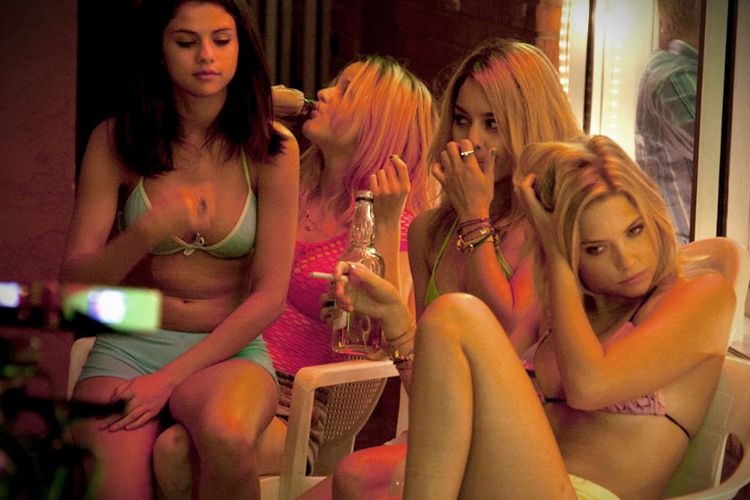
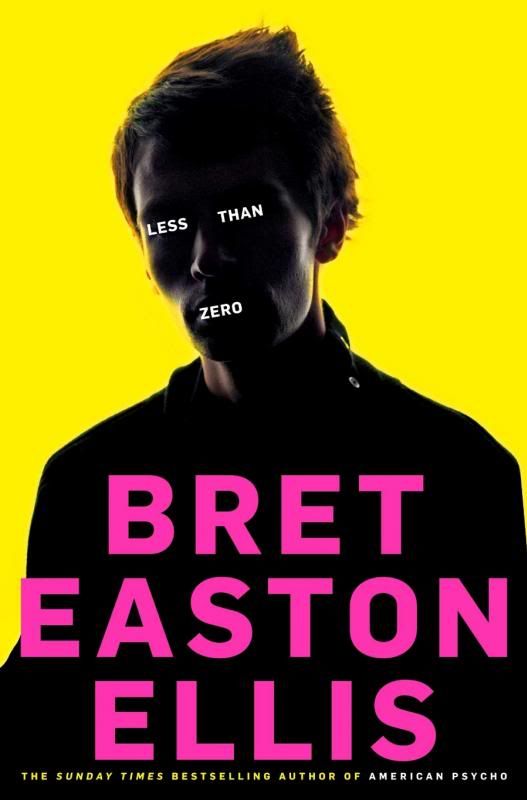
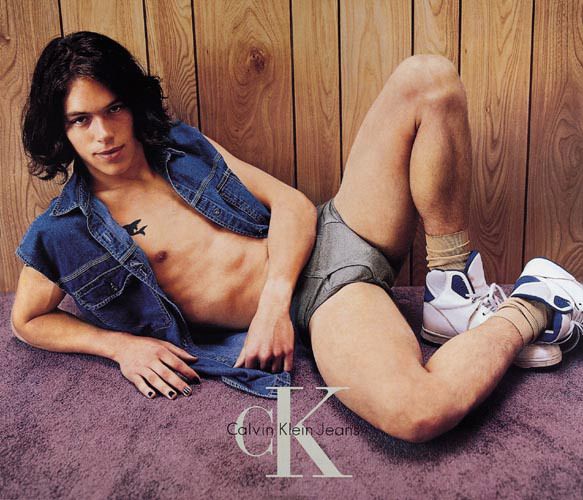
Maybe it’s because I’m reading Jon Savage’s groundbreaking exploration of the formation of the culture of adolescence in Teenage. Or maybe because I just finished watching Sofia Coppola’s The Bling Ring (2012). But sometimes, the art of Terry Richardson, Larry Clark, Harmony Korine, Brett Easton Ellis, and often Steven Meisel (especially in 1995) clumped together — distinctive for their almost salacious eye on teenage white-trashy abandon, which celebrates and condemns it at the same time — frankly scares me. Or at least unsettles me.


 9:00 AM |
Recapping a Life
9:00 AM |
Recapping a Life