Celebration: An Anthology to Commemorate the 50th Anniversary of the Silliman University National Writers Workshop Sands and Coral, 2011-2013
Silliman University, 2013
7:00 AM |
In Dumaguete, The Arts Flourish Part 12: The Reel Life
Curiously enough, the best film of Dumaguete in the pandemic was made just right before the pandemic—and in that regard can be then taken as prophecy. The short film A Wakeful Sennight, made in the last months of 2019 by Andrew Alvarez and Stanley Alcala, asks us to picture the world in disarray: the sun is inexplicably in a standstill, and the world’s population—or at least the segment we see representing it—are tortured by the endless brightness and cannot sleep. When the film begins, we see a man—Mr. Alvarez directing himself—traversing a bucolic neighborhood, looking up at the sky and seeing the sun shining brightly in noontime splendor. He checks his watch—and that’s when we know of the film’s conceit: it is past 8 in the evening, and the sun has not set. There is no ensuing panic, only puzzlement. Our man tries to go to sleep and finds that he can’t. The days pass, and he and everyone else succumb to a zombie-like existence of wanting sleep but are forever deprived of it. The world becomes desolate, and when we see people about in the streets, they are in a stupor. And so it goes, on and on—until sunset eventually comes, and our man has finally gotten his need of night, but has collapsed on the street in much-needed slumber.
It’s a simple film, done without dialogue, and unspooling in its absurdity carried only by its musical motif [a French ballad the filmmakers composed themselves] and the comic work of everyone involved. When the filmmakers collaborated on it in 2019, it was the culmination of years of filmmaking done piecemeal—acting work here, editing work there—until the duo of Alvarez and Alcala, friends since childhood, finally joined forces as a directing/editing/producing tandem. A Wakeful Sennight was the product of that first collaboration—but no one saw it as the prophecy it turned out to be: a showcase of Dumaguete in desolation, its people afflicted by a phenomena bigger than themselves and walking around like trapped rats. It was a “comedy” when it came out in late 2019, and virtually a “documentary” when reviewed in the light of 2020—and it demonstrated one sure thing for both filmmakers: no one really knows how the days will go, so they might as well do film.
But is Dumaguete a filmmaking hub? And did the pandemic affect it?
“Dumaguete is home,” says Mr. Alvarez. “I grew up in Piapi; Stan in Bantayan. Our late grandfathers [Rev. Proceso Udarbe and National Scientist Angel Alcala] were well-known personalities [who helped] put this city on the map.” That familial affinity assured a strong bond since they met in grade school at Silliman, and lasted even with almost divergent paths they took in college and right after. Both alumni of Silliman University, Mr. Alvarez graduated with a degree in public administration but currently works as a content editor for a digital marketing company. Mr. Alcala, meanwhile, studied medical technology and eventually went on to finish medical school at Silliman, and is now a resident physician at a local hospital [and recently got into a training program for pathology in a Cebu hospital].
Their lives are totally different, but the arts always had a strong pull on both of them. “I started out in my creative career as a theater actor and occasional songwriter,” Mr. Alvarez says. “I’ve also joined a number of workshops, [with] the Philippine Educational Theater Association and the Elements Singer-Songwriter Camp.” That is how most people in Dumaguete know him: as a reliable mainstay in many plays and musicals in campus, and as a musician who has recorded and performed with the Belltower Project. On the other hand, most people see Mr. Alcala as someone devoted to his medical studies and career—but what many do not know is that he has dabbled frequently in film simply because of his love for the medium. “My first major foray in the creative scene was in a film that my fraternity/sorority sister asked me to edit,” Mr. Alcala says, thinking back to Tigway, a short film by Maya Jajalla, which won Best Film in the 2015 Silliman Film Open or SFO. [The SFO started as Dumaguete Shorts, an exhibition of locally-made short films in 2007, marking it as the first film festival in Dumaguete, but twice changing its name as its concentration expanded and changed over the years: the 61 Short Film Festival in 2010 and finally the Silliman Film Open in 2014.] “I have no formal training in filmmaking,” Mr. Alcala continues, but jumped at the chance to edit a film anyway—and subsequently won the Best Editing award for Tigway in that year’s SFO.
Mr. Alcala is aware that Dumaguete actually has a heritage of filmmaking—even if nobody knows or acknowledges it anymore. He cites, for example, the National Artist for Cinema Eddie Romero as a major influence, a Dumaguete filmmaker who parlayed his creative writing passions as a high school senior at Silliman into a mentorship with the great Filipino director Gerardo de Leon, eventually cementing his own reputation as a maker of solid Filipino film epics [such as Ganito Kami Noon, Paano Kaayo Ngayon and Aguila] and schlocky Hollywood B-movies [such as The Mad Doctor of Blood Island and Black Mama White Mama].
But there’s also the equally distinguished Dumaguete director and screenwriter Cesar Jalandoni Amigo, who penned the political tragedy The Moises Padilla Story [1961] and won a number of FAMAS Awards for his screenplays. And there’s also the fact that in the 1950s, at the height of the Golden Age of Visayan Cinema, a film company based in Dumaguete named Visayan Films—founded by Don Luis Arnaiz and Don Serafin Teves, whose family owned Park and Main, the two main movie theaters in Dumaguete for many decades—released a “musical extravaganza” titled Dumagsa in 1950, directed by a Cebuano director named Tura Rodriguez, and starring a popular Cebuano starlet named Rosita Fernandez. [Dumagsa was the story of a school teacher who falls in love with a hacendero. It had its premiere in 1950 in Park Theater and was a tremendous success, which led to its second offering, Leon Kilat, about the revolutionary hero hailing from Bacong. This was directed by Sat. A. Villarino. But after Leon Kilat’s release in 1952, the company no longer made any other movie, although other titles that Visayan Films was planning to do included another musical by Tura Rodriguez titled Miss Smiles, a society drama by F. Borromeo titled Karnabal, a musical by M.P. Velez titled Sa Kabukiran, a drama by G.C. Abdula titled Layawan, and an action drama by Mike Calumpang titled Bartender. The two films made are now considered lost films—possibly lost in the fire that engulfed Main Theater in the 1970s.]
But for the most part, except for actual filming done by Mr. Romero in his hometown—for The Passionate Strangers in 1968 and for Kamakalawa in 1981—Dumaguete has not really pursued an active filmmaking scene.
But the beginning of a real film culture—with movies made by locals, using local resources—began as a trickle, starting in that first Dumaguete Shorts exhibition in 2007—and soon there were animated films by Ramon Del Prado and Xteve Abanto, and documentary films by Carmen Del Prado and Anthony Gerard Odtohan, and short live action films by Jonah Lim, Mahogany Rae Bacon, Melissa Bernas Pal, Jo Simone Vale, Raymond Vincent Cutillar, Henzoly Alboroto, Jose Adrian Miraflor, Francis James Kho, and Carl Ivan Caballero, and the genuinely avant-garde curiosities by Razceljan Salvarita and Hersley-Ven Casero. [Mr. Salvarita’s I Am Patience, about a caterpillar making its way through a forest of leaves, was ultimately nominated in the best short film category of the 2013 Urian Awards.]
Mr. Miraflor’s Voldemort Must Die, an action/comedy short about love lost in the vein of Edgar Wright and Quentin Tarantino, won Best Film in the 2012 61 Film Festival—and signaled the start of a production company that he and his friends named DumbFights Productions, which would go on to release a number of short films over the years, including Jake Villegas on a Bridge with the Dancing Dragons, The House The Dead The Ugly, Ang Lansang ni Jake Villegas, and Ang Paghibalag sa Kalibunan—films that would more or less define the “Dumaguete short film” for many seasons in the regional film festival circuit as stories made with a cocky flair, always in the service of comedic action, and with a lot of fantastical elements, and edits, thrown in. [The House The Dead The Ugly, a story about a bunch of killers and gangsters who wind up in a mysterious house where they’re thrown for one violent loop, remains, for me, as their masterpiece.] DumbFights would gather an increasing number of collaborators since that first outing, including Von Colina, who would come to direct [and star] in most of their later films after Mr. Miraflor semi-retired from filmmaking due to health reasons, Alex Gascon [as cinematographer], Jetmore Banot [as actor and director], Louie Villegas [as actor], Mr. Alvarez [as actor], among many others—including Jomar Solania, Paul Benzi Florendo, and Ruel Joseph Tabada, who would also make significant directorial contributions to local film.
In 2021, DumbFights would release You, their take on the pandemic and the casual indifference of people towards impending danger by recasting the health crisis as a zombie apocalypse. That year, it was a finalist at the Lutas Film Festival, which also fielded Mr. Alvarez’s Best Mayo, starring Mr. Banot as a man in desperate search for a jar of mayonnaise to the point of madness, destroying his house in the process, and angering his wife. In a small role as Mayonnaise Girl in an Ad is Ara Mina Amor, also a film director [and occasional actress]. She would also have a film in competition that year at Lutas, a horror-adjacent story titled Masulob-on, a melancholic tone poem in stark black and white about depression and desperation and temptation. But Ms. Amor’s most pandemic-centered film is the comedy short Pisti Pandemic, made in 2022 for Eksena Cinema Quarantine, which follows a naïve young man who has just wisened up to the strictures [and dangers] of the lockdown and finds himself fighting zany battles to stock up on provisions with people panic-buying everything. [The funniest bit is the introduction to his yaya, played by an actor with a considerable beard—depicted to seem like a side-effect to the vaccine.]
A cursory observation would immediately pick up on the fact that these filmmakers constantly work with each other—and especially during the pandemic. In many ways, this collaborative spirit is the lifeblood of current Dumaguete filmmaking. Almost all of the filmmakers, especially those who started doing films in the early years of Lutas and the SFO, cross-pollinate their film productions with each other’s contributions, sometimes with these collaborations spilling into the storylines themselves. [Ms. Amor’s Finals, for example, include a cameo from the fighting gangsters of Miraflor’s The House The Dead The Ugly.] They act in each other films. They do sound design for some, and production design for others. Cinematography and editing are constantly on a round robin. For Mr. Alvarez and Mr. Alcala, this is the norm for current local filmmaking—and the smallness of Dumaguete makes it a necessity. “Dumaguete contributes to the growth of our artists,” Mr. Alvarez says. “I don’t mean this career-wise though, since there isn’t much of an industry here yet. But the city has this appeal that helps clear our thoughts and prepare ourselves to be inspired. The locals foster this [and] celebrate this, and the city itself grows from it.”
“The arts scene in Dumaguete is ever thriving,” Mr. Alcala says. “It’s easy to collaborate with different artists in the creation of cohesive art, and the city has actively endeavored to develop the scene through art exhibits, film contests, and music festivals.”
To which Mr. Alvarez adds: “There’s always something to do to help express ourselves and our backgrounds. And year after year, someone new joins in our circle. Someone young, hungry, and almost always willing to open up and collaborate.”
That openness for collaboration was what drove them to pair up in the first place in 2019. They both wanted to submit a film for Lutas—and then they brought in the Gonzales cousins [Gerick and Dhen Dart] to help out with the music and cinematography, and Renz Torres [who had made the D&D-themed short Primordial Witt] as production manager, and that was it. The collaboration, now known as Potlight Pictures, would go on to produce A Wakeful Sennight in 2019 and Best Mayo in 2021, pausing only in 2020 because of the pandemic lockdown. Their latest production, released in 2022, is Trash-Messiah, a fable about a man who finds a way to get rid of trash via a rip in the time/space continuum on his kitchen table—but to unexpected repercussions. It fits right in with their previous efforts—stories that are “dark, macabre, and odd,” that give one “an unnerving feeling that something is wrong,” where “symmetry and order [exist] amidst the chaos.”
“In developing films,” Mr. Alcala says, “I usually conjure a barebones concept and Andy [Alvarez] fills it up. Occasionally, it’s vice versa. The major challenge in the process is us—our conflicting ideologies—but we’ve never failed to arrive at a compromise, and the product is almost always magical with everything seemingly fitting in place.”
Interestingly enough, they found the pandemic to be a minor hiccup in their film productions. “Shooting during the pandemic wasn’t too foreign to us,” Mr. Alvarez admits. “We already work with a skeletal team. It was just the matter of making sure we were all doing things with health and safety protocols in mind. It helped that Stan’s a doctor as well. It certainly was meaningful to me, at least, that we got to work again on a film even with all the restrictions. I loved getting out of the house with more purpose.” To which Mr. Alcala adds: “If anything, [the pandemic only] added to our process. Limitations [somehow] provoke creativity for us.” Part of that provocation to creativity was the fact that most of the online film festivals they joined during the pandemic’s peak had guidelines requiring them to add themes centering on the pandemic lockdown into their storylines, “so that was definitely a factor we had to consider during pre-productions,” Mr. Alvarez adds.
There were in fact a number of film festivals local filmmakers gravitated to during the pandemic, even if only online, chief among them Foundation University’s Lutas Film Festival, which was established in 2014 and bills itself as “the Negros Oriental film festival,” and has since gone beyond annual screenings to also cater to lectures, workshops, and mentoring sessions on film production, as well as outright grant-giving to help local filmmakers in realizing their film projects.
In September 2020, with the pandemic still raging, Lutas was left with no choice but to modify its programming to host a Facebook screening of “The Best of Lutas,” featuring previous winners of the festival, including the late Mark Lifana’s Bugas [2016], Geraldine Acibron’s Tubod [2017], Mr. Lifana’s Abag [2018], and Mr. Alvarez’s A Wakeful Sennight [2019], and selections from Komedya, including Mr. Colina’s Ang Lansang ni Jake Villegas, Mr. Florendo and Mr. Banot’s Ang Paghibalag sa Kalibunan, Mr. Banot’s Hobo Ramon, and Mr. Florendo’s Karlo. That year’s edition, sponsored by the Film Development Council of the Philippines and the National Commission for Culture and the Arts, also included master classes on screenwriting with [soon-to-be National Artist for Cinema] Ricky Lee, and on “pursuing film in the time of pandemic” with Achinette Villamor [producer of Balangiga: Howling Wilderness and Ruined Heart]. It also included a film pitching competition—from which three winners emerged: Kent Cadungog’s Kuan, Puhon, Daniella Spontak’s Cotton Candy Dreams, and Von Colina’s Three sa Mountain, each of them granted a sum to realize their screenplays. Later that year, in October, Lutas would field Abag, Tubod, and A Wakeful Sennight to be part of the Pista ng Pelikulang Pilipino, together with the Bacolod-based Sine Negrense Film Festival, which fielded Belle Loyola’s Dalit, Kurt Soberano’s Jameson, and Mark Raymund Garcia’s Buding: Ang Babaye nga Naglitaw.
By the following year, in 2021, Lutas participated in the 10th Annual Moviemov Italian Film Festival, and also in Cinema Rehiyon, fielding Mr. Tabada’s Pamilya, Mr. Lifana’s Tagbo, and Kaira Maureen Downard’s Daman as the Negros Oriental representatives. In November, Lutas returned to its competition format, and premiered the winning films of the previous year’s pitch competition, as well as the nine entries to the main competition—out of which emerged a new winner, Ella Louise Salomon’s Ang Bunga sa Tiyan ni Adam, a film about a gender-switched story of a pregnancy. Salomon’s tragicomedy—which features one of the best scenes of swearing in Binisaya ever captured on film—swept most of the awards, including Best Director, Best Screenplay, and Best Cinematography—leaving the Best Editing award to Mr. Alvarez’s Best Mayo. Salomon’s film also led the Negros Oriental roster in the 2022 Cinema Rehiyon, which also included Best Mayo, Cotton Candy Dreams, Kuan Puhon, Masulub-on, and Ramon Del Prado’s Why the World Needs Coral Reefs.
Later in 2022, Lutas finally returned to a physical festival, screening its new slate of competing films at CityMall Cinema Dumaguete. Among the finalists are Emmmanuel Noel T. Navales’ Habwa, Marco Simpao’s Kawat, Carina Simpao’s Taknaan, Fredrick Tan’s Ang Panagdagit sa Dakong Dagat, and Von Colina’s ITI E.T., and fielded a spread of new winners including a special jury prize for Daniella Spontak’s Serial Influencer, Best Cinematography for Chris Jan Vergara’s Makasasala, Best in Editing for Mary Joy Real’s Panganti, Best in Screenplay for Alfonso Adrian Cerna’s Taymsa, and Best Film for Pawlo Lasmarias’ Hatud. The previous year’s pitch winner—Mr. Alvarez’s Trash-Messiah—was also screened, and the new pitch winner announced: Ms. Amor’s forthcoming Sad Bananas. Lasmarias’ Hatud, which follows a young man who walks to school with his younger brother, only for the latter to discover that his older brother is harboring an unpleasant dilemma, would also win Best Director and Best Actor [for Lasmarias himself] at the Nabunturan Independent Film Exhibition in September 2022, and would be invited to several national and international film festivals.
. . .
Into this swirl of local filmmaking enters Edwin Dalisay Jr.—JR to most people who know him. Born and raised in Cubao, Quezon City, he was not exactly a stranger to Dumaguete. He would regularly visit his girlfriend Shyr Keene Aragones over the years, and gradually came to know many of the city’s creatives, if cursorily in the beginning. And whenever people asked about what he did, he would say he was trying to be a filmmaker, which was always the dream.
He recalls: “My parents worked abroad so I was raised by my grandmother and my older brothers. I was always hanging out with my brother, JC, who introduced me to many things, including heavy metal music, music videos—and film. I admired my brother because he was a superb graphic artist. So I chose to study Fine Arts and Design at the UST to become an artist like him. It was during our third year when we had a class in video production, and that became my first exposure to filmmaking. I fell in love with it and became obsessed with telling stories with the camera. Filmmaking became my passion. I would mostly spend my free time watching movies, music videos, and documentaries. I didn’t know where to begin at the time, and it seemed impossible for me to work in the film industry. Making films back then was expensive and we had little or no source for equipment. So after college, I worked as a web designer for a real estate company—a desperate move because it felt like the better recourse than be a bum. But at the back of my mind, I kept telling myself that, whatever it took, I was going to be a filmmaker someday. After working for about three years, I stumbled on a film school in Ortigas called Asia Pacific Film Institute, which wasn’t too expensive. I thought to myself, I can probably find a few sidelines to pay for my film education. I can work in the morning till afternoon and go to school in the evening.” So he quit his job at that time, found a few weird online jobs, and got himself to film school—a brave choice that would mirror a later, pandemic-related decision.
After film school, he found himself working for the U.S. Embassy as their multimedia specialist. The Embassy soon brought him to Siquijor for a documentation project of the Lazi Church. “It was the first time that I’ve heard of Dumaguete and Siquijor, to be honest,” he says. “On our first day, we went straight to Siquijor, so I didn’t think much of Dumaguete. But the moment I stepped foot in Siquijor, I fell in love with it. It was really the first time in my life that I was in a rural province.”
He spent four days in Siquijor, and then spent one night in Dumaguete before flying back to Manila—which was when, like the fates, he decided to go around the city alone, taking pictures with his camera. And then he met Shyr.
“I noticed her in a coffee shop and asked her for suggestions on what to do in and around Dumaguete,” he says. “It was already late in the afternoon, so I didn’t really see much and I didn’t really get to explore the place. But that evening, Shyr invited me to hang out with her friends—and getting to know them was a wonderful experience. Despite the fact that I was a stranger, they were really welcoming and friendly. I had a terrific time getting to know Shyr.”
So he kept returning to Dumaguete, to court Shyr while she showed him “the beauty of the city and how amazing Negros Oriental is.” He fell in love—with Shyr, and with Dumaguete. Slowly, he came to know the city’s artists. First, the musicians—he would watch live gigs in Hayahay and El Amigo. Then, the visual artists—he would meet Jana Jumalon, who would show him around the art scene in the city. Then, the literary artists—he would meet me, and immediately he knew I would ask him the question: “Are you related to Butch Dalisay?” [He doesn’t know.] He would meet more people over the years.
When he would return to Manila after his Dumaguete visits, he would get back to his Embassy job—and to his abiding desire to found his own production company. He called it DWNTWN Films, which he started with his best friend Phish, and his cousin Joel. “We often hung out on the rooftop where I was living and talked about movies, music, and whatever topic came to mind,” he remembers. “That’s all we ever did, hangout and talk about life and our passion for filmmaking. Then, since I had the equipment that I could borrow from work, I would sometimes find side hustles as a freelance camera operator on the weekends.” In 2013, a friend who had a band was in need of someone to shoot a live performance. “He asked us if we were up for it, and of course we were game!” Mr. Dalisay remembers. “That was our first project as a team, the thing that started it all. Even though we really didn’t know what we were doing, we were definitely having fun just experiencing the craft.”
They came up with the name DWNTWN Films, because the place where JR lived was a bit of a rough neighborhood. “When we’d be on the rooftop, we could see establishments in Cubao, including Araneta Coliseum, Gateway Mall, and other high-rise buildings,” he says. “We referred to that part of Cubao as ‘UPTOWN,’ and we would call our neighborhood, ‘DOWNTOWN.’ So that’s why we called ourselves DWNTWN Films. There’s just something about the name that feels so punk rock, so underground. That’s why I fell in love with it and stuck with it.” Their efforts paid off, and soon they were getting regular gigs.
And then the pandemic happened—and with that, a kind of spiritual crisis for Mr. Dalisay. “The pandemic made me realize that life is short and we can lose everything in a snap of a finger,” he remembers. He made a sudden choice that scared even him: “I decided to move to Dumaguete during the pandemic, because I wanted to wake up every day feeling happy.”
For him, Manila was becoming too chaotic and he was missing Shyr too much. The stress of the separation was killing him—and on a lark, he contacted the Dumaguete LGU and told them that he was a Local Stranded Individual [LSI], wondering if that gambit would make them give him a certificate to travel. And it worked!
Still, it was a challenge to make the move, because travel was almost an impossibility at the peak of the pandemic. His airline kept cancelling his flight—“I got cancelled five times!”—and his plan to make the move in April 2020 eventually became a reality only in August. Getting the requirements to travel was also a huge hindrance—with lines to get a doctor’s certificate that lasted six hours. “And because my flight kept getting cancelled, my doctor’s certificates also get expired—so I had to go back and line up again,” he remembers.
And yet, moving to Dumaguete still seemed to Mr. Dalisay to be a no-brainer of a decision—even if it was a considerable gamble: “I had no plans of what the hell I was going to do here as a career, but because I had experience in filmmaking, I was confident enough to just take a leap of faith. I knew that if I moved to Dumaguete City, I’d just figure it out and find clients that will need my service. I told myself that whatever happens, I know that I have enough talent and experience for me to survive. I mean, I was a punk ass kid back then with no money and no idea what I would do in life, but I survived that and put myself in the right path to pursue my passion.”
He remembers reading an article once where he stumbled on a line he could not forget: “It was something like, ‘Remember, after the black plague, came the Renaissance.’ That quote really inspired me, and moving to Dumaguete, hands down, was one of the best decisions I have ever made in my life, seriously.”
And Mr. Dalisay feels that at this juncture of Dumaguete’s growth, the city will still be able to give him so many opportunities to fulfill a lifelong dream of being a filmmaker. “Here, I could write, direct, produce, shoot, edit, color grade, and even talk to clients,” he says. “For a full production, Shyr and I usually just work as a two-man crew. Of course it’s hard work but we’re really enjoying the experience.”
That faith in Dumaguete being able to give back to him has proven fruitful so far. Already, sometimes in collaboration with Paul Benzi Florendo’s Higantez Films, he has made several well-received pandemic-era videos for the Dumaguete City Tourism Office, including Kanus-a Man?, a video chronicling the hopes of local Dumaguetnon during the pandemic and encouraging them to get vaccinated against COVID-19, released in October 2021; Everyday Dumaguete, a video showcasing a Dumaguete slowly opening up, released in April 2022; and Celebrate Life in Dumaguete, a video showcasing the full beauty of the city emerging from the pandemic, released in August 2022. He has done videos for local businesses. And he has done many of the exhibit videos for the new MUGNA Gallery—a project that is close to his heart. One of these is a short documentary on the terra cotta art of Jana Jumalon, one of his first friends in Dumaguete.
“Lately, I’ve been doing short documentaries for artists here in Dumaguete,” he says. “I love projects like these because it’s really inspiring to get to know a person who’s passionate and creative. I believe that’s another appealing aspect of documentary filmmaking: once your subject begins to trust you and open up to you, you develop a strong bond with them.”
Mr. Dalisay dreams of doing narrative films eventually: “I wish to tell heartfelt stories through captivating moving pictures. I want to work with local talent, shoot in the neighborhood, and present stories about Dumaguete. Representing the magic and beauty that this city inspired in me. But, given my limited experience, I want to focus on making short films first. Then in the near future, I will eventually create full-length feature films here.”
Part of that plan is collaborating with Potlight Pictures—for whom he has already lensed Mr. Alvarez’s Trash-Messiah.
Mr. Dalisay moved to Dumaguete for love.
He plans to stay to capture the city fully on film—also for love.
Maayong Adlaw ni San Juan, Dumaguete! All our traditional St. John’s Day festivities have been prohibaaited because of the pandemic, so stay home and be safe! Or if you have to get out, don’t get wet!
10:34 PM |
Against Forgetting: The 7th Philippine International Literary Festival
I'll be in Manila later this week for the 7th Philippine International Literary Festival!
I'll be in the panel on "Workshopping Workshops," together with Renato Vibiesca, Ralph Semino Galan, Mitch Cerda, Michael M. Coroza, Butch Dalisay, and Vim Nadera. The two-day affair will be held on April 28-29 at QCX Museum, Quezon Memorial Circle. (Admission is free for all sessions. However, everyone is encouraged to bring book donations.)
The theme for the PILF this year is "Against Forgetting" -- and according to the good folks over at the National Book Development Board, it "underscores the role of creation as an individual’s attempt at breaking silence, as an act of bravery against seeming futility."
As in previous editions, the festival will feature a plenary session on the theme, a workshop on literary editing, and roundtable discussions on writing, publishing, rights trading, and readership. The PILF is a landmark project of the NBDB that celebrates literature and promotes best publishing practices through discourse on issues of authorship and readership shaping the local book industry. Since its inception in 2010, the festival has become a major gathering and focal point for authors, illustrators, publishers, and literature lovers in the Philippines and beyond.
In a 2013 essay on contemporary trends in abstract art ["The Golden Age of Abstraction: Right Now," ArtNews] Pepe Karmel, an associate professor of art history at New York University, considered the common acknowledgment that the height of abstraction as a major movement in art has already occurred -- between 1912–25 and between 1947–70 -- and what there is to be had in the present is a mere shadow of what came before. In other words, a silver epilogue to a golden era. Karmel, however, begged to differ, and proclaims new ascendancy in abstract art today -- but how exactly to put into the context what's happening now to the newness and the abundance of what had been?
He wrote, and begins with a query: "How do we make sense of all this activity in a type of art that was declared dead 40 years ago? I believe the most useful way to understand abstraction is not in terms of its formal evolution (which does not, in any case, fit the linear models beloved of theoreticians) but in terms of thematic content. The formal qualities of an abstract painting or sculpture are significant not in themselves but as part of the work’s expressive message. Artists work by reviving and transforming archetypes from the unconscious of modern culture. Therefore, the most useful questions to ask about contemporary abstract painting or sculpture are: What themes and forms does it retrieve from the tradition of modern art? How have they been changed? And how has the artist used them to express the social, political, and spiritual experience of our own time?"
All in all, Karmel classifies the tendencies for abstraction as falling into six basic categories, all of which respond to two specific things. Three tendencies respond to nature: cosmologies, landscapes, and anatomies. And another three respond to culture: fabrics, architecture, and signs. What then is the expressive message in Hersley-Ven Casero and Anna Koosman's collaborative series, Parade and Props, now gracing the walls of KRI? And where does it fall in the tradition of abstraction, and has it advanced considerably the art?
Ostensibly, the series -- which constitute both painting and sculpture -- is inspired by the colourful festivals of Dumaguete City, which puts the works squarely in the realm of landscape. To my knowledge, there is only one such festival in Dumaguete -- the Sandurot, an annual orgy of colour and costume held every November set to much dancing and music, and purports to be a celebration of the interweaving influences of Spanish and American cultures in Dumagueteño culture -- but one can also add the Buglasan, the provincial festival of festivals held every October, which is a concentrated amalgam of all the other festivals of the various towns and cities of Negros Oriental. Except for a unique conceit ("scarecrows" for Bayawan's tawo-tawo festival, or "crabs" for Sibulan's yagyag festival) these ritualised merriments don't differ much from each other or from the other festivals found yearlong all over the Philippines; the Sinulog of Cebu has set a definitive template everyone has followed -- percussive beats that hint of tribal air, an array of accoutrements that signal Spanish or American flavours. In my mind, they all become a blur of sameness -- the same dance steps, the same dance beats, the same props and costumes and headgears and manners of make-up.
It is interesting thus to see these festivals through the lens of abstraction, and for Koosman and Casero, festival revelry is suffused in soft pink, at least with the paintings, with splashes of bold colour -- circles of dark orange, shapes in deep brown, dashes of supreme gold -- bursting here and there inviting an easy contrast. In the best reiteration of the series, the shapes and colour come together as if transformed into clouds, or billowy soft textile, that merge and break way. The colours are a rain of emotive expression, and the only means with which to understand all these is to surrender to their billowing grandeur. They reminded me somehow of those floating wispy white curtains that engulf, sensually, Daisy Buchanan the first time Nick Carraway sees her in F. Scott Fitzgerald's The Great Gatsby -- a figure of dreams, or a dreamful figure, whichever permutation you want to have.
Are we supposed to think of our local festivals as being this dreamy, this wistful? But while beautiful to look at, the paintings exhibit a significant remove that I can feel in their iteration of their inspiration. I just don't see it.
At best, they are masterful impressions that remind me of the works of Dan Parry Jones, or Lucian Freud, or Evelyn Hamilton, three artists who have gone through the same phase of colour and command. But contextualizing the paintings of Parades and Props with their inspiration, however, begs the validity of the connection -- but does that really matter? We often take the inspiration for abstract art as unnecessary anchors (I remember Yve-Alain Bois' complaint upon learning that Ellsworth Kelly's Train Landscape, a work of pure abstraction composed of three horizontal bands -- one bright yellow and the rest of two different shades of green -- in fact “referred” to the colours of fields seen from a passing train), and so be it in this case. The inspiration is unnecessary, an unhelpful distraction. I wish I was never told about it. Divorced from that, I can take them for the fluffy teddy bears of paintings that they are. I like them, although they do fall short of their expressive message.
At worst -- and this has to be said -- these paintings are fantastic hotel room art. This is where I take issue, because I have seen what Koosman and Casero can do, especially in their best HA Experiment mode. They can indeed do better -- but nonetheless, the paintings are beautiful enough.
Commentary from W Don Flores:
The small sculptures are much better than the paintings, much more visually surprising, and more dense in meaning than what’s going in the paintings. The way they’re placed just so—framed, if you will—in those niches at the restaurant is interesting because it allows us the opportunity to consider the differences between painting and sculpture and challenge our assumptions about those. They are like sketches of vases, or decorative ceramic pieces, or perhaps little candy-colored idols, little “santos” to pleasure. They make us ask about the materials and processes involved in a way that that paintings don’t. They also allude much more strongly to the backgrounds of the artists involved and proceed to play with that as a kind of conceptual material: architecture vs decoration, painting vs sculpture, 2d vs 3d, that sort of thing. In comparison, the paintings in the show come across as anemic appeals to class rather than to pleasure. Partly, I think this is because the processes involved in their making seem to be completely opaque. One wishes for more information here, more context other than just “inspired by the festivals”. Given that that’s all we have to work with, then their fluffiness seems, to me, an adequate reflection of the source material: vacuous celebration of touristy spectacle designed not so much to express local culture but to stimulate local capital through marketing display. But I was thinking it really wouldn’t be fair or productive to anyone to dismiss the paintings outright (as I’ve done above) without much explanation. So, in the spirit of being helpful, here are some more notes on the paintings: They have a gravity—a sense of up and down—in their formal structure. This is, to my eye, what makes then relate best to “landscape” than any other historical, established, Western painting genre. (An aside: I am altogether against genre-building. This is because it often occludes from us how the real work we make butts up against the real world we live in; it tends to cede our powers of observation, and thus our self-determination, to powers other than ourselves.) So landscapes then—as intimated, too, by the exhibition title. As landscapes, they address the world from which they come (and of which they are also part of) from the point of view of a person upright, perhaps standing—gravity: the expansive sky above, the anchoring ground below—perhaps moving through a throng, or watching the same move by; watching a parade, themselves parading, or caught in a parade... A similar sense of gravity is in Koosman’s balloon paintings (which I’ve only had the chance to view online) and in Casero’s parade photographs (again, I’ve only viewed these online). The latter articulates the same kind of spatial sense that these paintings work with, work from: the sensation that one is inside a something, inside a something with gravity, inside a something that is very much not empty, that threatens somehow to burst apart from a surfeit of pastel lightness. They are not, for example, the kind of address in, say, Casero’s work at the just-ended Bentabols exhibition. There the method in the four small pieces implies not the upright person caught in some kind of on-the-ground-spiraling-to-and-fro-and-upwards spectacle but someone hunched over a flatbed picture plane—as in, perhaps, Man Ray’s Rayographs; assembling a picture, rather than painterly gesturing it, in front of an easel, into fact. If we’re going to be art historical about it: considering the threadbare statement that they come with, the implied ancestor is Monet and Renoir, then, extending through context, Amorsolo’s pastorals and Jose Joya’s abstractions. But these paintings are not Granadean Arabesque and Impression: Sunrise; the place they come from isn’t Normandy, France or Granada, Spain... (Nor do I feel that they wish to be.) To my eye, what really brings them down—that final, wrenching tug of gravity that makes them crash unceremoniously into the ground—is really the signature, the branding. This is where they turn into hotel lobby paintings. The dream-inside-a-parade that they reach towards, that they desire to articulate, immediately dissipates and we are left—despite whatever richness that the collaborative making process held—with objects for sale, hung upon a restaurant wall. Which perhaps, in a roundabout and unintended way, is profound commentary about the parades. Be mindful of history: abstract expresionist painting was (and remains) a big part of America’s Imperialist identity and played (continues to play) a profound part in the colonial exports by which our elite nurtured cultural capital. It seems fitting that they end up as hotel lobby collectibles. Koosman and Casero’s work—particularly their community-inspired/directed partnerships, the interplay of their individual practices and identies, all those rich and rooted things—deserve so much more. (Yes. Art is hard. And beauty is a harsh mistress.)
11:09 AM |
Three Days of Cinema That Will Make You Cringe, Laugh, Think.
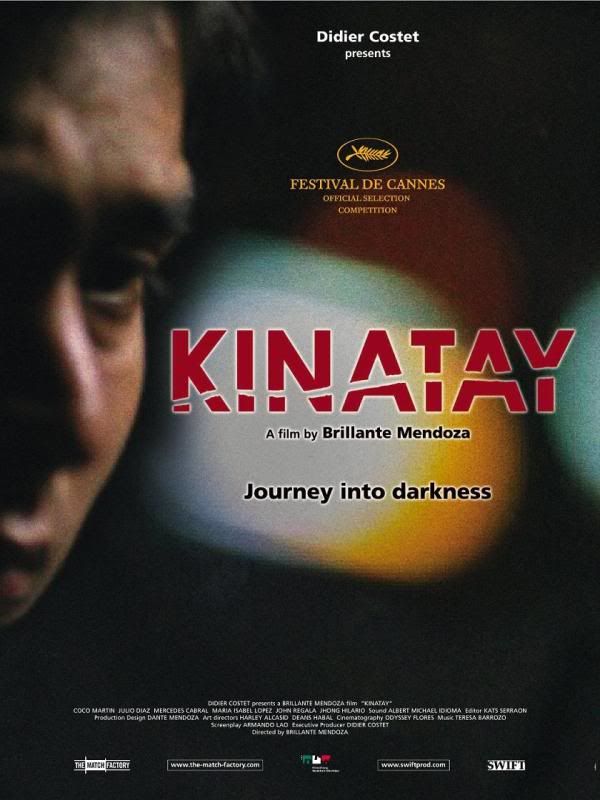
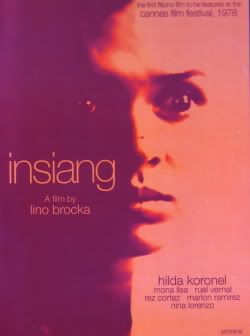
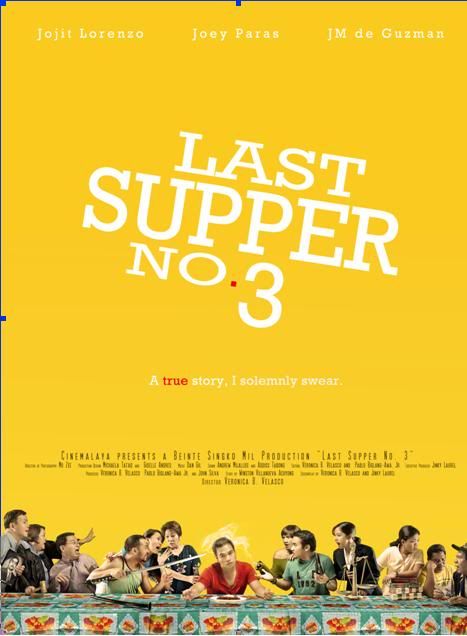
The Silliman University Cultural Affairs Committee, in cooperation with the College of Mass Communication, brings you three days of contemporary Filipino cinema's most dazzling voices in the Active Vista Film Festival, set to begin on September 7. The film festival showcases the controversial Cannes Film Festival award-winner, Brillante Mendoza's Kinatay as the opening film, to be followed by Lino Brocka's classic "immorality tale" Insiang (also a Cannes Film Festival favorite) on September 8, and Veronica Velasco's Last Supper No. 3, the Best Picture winner of the 2009 Cinemalaya Film Festival.
All films, except for Insiang, will have screenings at the Luce Auditorium at 7 PM. The Brocka film will screen at the Audio-Visual Theater 1 of the Multimedia Center at 2 PM of September 8. A program of short films -- ANC and Storyline's omnibus AmBisyon 2010 by such directors as Ditsi Carolino, Emmanuel Dela Cruz, Kiri Dalena, Henry Frejas, Jeffrey Jeturian, Jade Castro, Jim Libiran, Erik Matti, Brillante Mendoza, Ellen Ramos, John Red, Raymond Red, Jerrold Tarog, John Torres, and Paolo Villaluna -- will also be screened.
The Active Vista Film Festival is organized by DAKILA: Philippine Collective for Modern Heroism. It is an avenue to promote a vision of society that respects, upholds and values the dignity, rights and freedom of its people.
The Active Vista Film Festival challenges to define a spectrum in the use of cinema as a powerful tool in shaping the consciousness of a new generation into the importance of knowing and understanding human rights as an integral foundation of responsible citizenship and nation building.
Active Vista encourages critical thinking and dynamism in views as fundamental requirements in addressing methods and directions of social transformation. It allows an opportunity to debate, discuss and shape society as we arrive at a collective understanding of human rights as the backbone of the development of our nation.
While Active Vista recognizes that no film, no song, no painting, no novel or no poem has ever stopped a tank, prevented a bullet, fed a hungry child or overthrown a corrupt government, the power of every art form cannot be rivaled. While art may not change the world, it can change the way we view the world. True revolution begins in the imagination.
The Active Vista Film Festival is not your ordinary film festival. It presents a dynamic vision that empowers its public towards relevant social change.
SCREENING SCHEDULE:
SEPTEMBER 7
Kinatay by Brillante Mendoza 7 PM Claire Isabel McGill Luce Auditorium Mr. Mendoza and some of the cast will be in attendance to present the film.
A young cop descends into Manila's dark underworld as he accompanies rogue colleagues in a harrowing night that involves butchering a prostitute who has crossed her drug lords.
"I understand the hatred for the film (when it premiered in Cannes where notwithstanding Mendoza’s winning the Best Director prize, the film was met with harsh critical receptionc) but I don’t necessarily subscribe to it. In Mendoza’s quest to depict reality, he tramples upon established concepts of what it is to be human. He relentlessly maps the transition of man to monster, and given the straight-line matter-of-factly process that the film explores, the transition is as easy and automatic as night turning into day. Unlike in Mendoza’s other films where poverty is a blatant motivation and a nagging visual motif, in Kinatay, while we know that Peping is poor, poverty remains a subtle omnipresent force. What is explored in the film is not how poverty destroys us, but how humanity is too fragile, that by a mere twist of fate where we succumb to merely surviving notwithstanding the repercussions of our minor and major delinquencies, we are forced to relax it and inevitably decide to lose it." (From Francis Cruz's Lessons From the School of Inattention)
SEPTEMBER 8
Insiang by Lino Brocka 2 PM Audio-Visual Theater 1, Multimedia Center
This classic from the late National Artist for Film is a tragedy involving an abusive mother, her predatory lover, and her innocent daughter -- who is slowly losing her innocence in the teaming poverty of Manila's slums.
"The first Filipino picture to show at Cannes, Insiang enjoyed a warm reception, and Positif’s Alain Garsault wrote a three-page review that attempted to preempt the dismissal of the film as exotica or art naïf by expounding on the film’s leitmotifs, noting the director’s skillful appropriation of melodrama and Greek tragedy. Brocka’s work continued to be well received by French cinéphiles in the years that followed but in the U.S. had no such luck. Only with Macho Dancer (1988) did he find a sizeable American audience. Even then the appraisal of his artistry continued to be marred by two persistent factors: a curious disdain among American critics for his melodramatic predilections; and the faulty (and contradictory) premise that his work aspires toward either neorealism or cinéma vérité. Insiang demonstrates that Brocka’s handling of melodrama is nothing short of virtuoso and that the trappings of documentary, neorealism, and Third World exotica only obscure more fundamental affinities to the Hollywood pictures that Brocka saw as a youth in the former American colony and regarded as a formative influence on his cinematic sensibility." (From José B. Capino's The Damned in the Film Society of the Lincoln Center website)
SEPTEMBER 9
Last Supper No. 3 by Veronica Velasco 7 PM Claire Isabel McGill Luce Auditorium Ms. Velasco and some of the cast will be in attendance to present the film.
A furious comedy based on a true story, it tells the unbelievable story of a gay man who works in advertising, who finds himself in an increasingly Kafka-esque legal battle involving the loss of a Last Supper and various other crimes.
"This is Velasco's outstanding feat. She decides to expose a rotten system through humor yet instead of completely fabricating the story, she allows the case to speak for itself, making the absurdity several notches more alarming. In an inspired decision, she made use (surprisingly with the permission of the Supreme Court) of Manila's Hall of Justice, a building ripe for condemnation that houses the fiscal's offices and trial courts that service an ever-expanding population. The architecture of the building, several floors (connected by stairs because the elevator is usually out of service) of spaces that encircle a useless and unkempt courtyard, further emphasize the system that has been rendered inutile by red tape and bureaucratic complications. Thus, Last Supper No. 3 is funny not only because it centers on a man who was showered with a downpour of misfortune but also because we know it is very real, and the only plausible thing we can do about it is laugh." (From Francis Cruz's Lessons From the School of Inattention)
Due to the sensitive nature of the films, only viewers aged 16 years old and above can be admitted.
By the time I've upload this piece here, Kisaw 2010—Dumaguete’s fledgling attempt at a celebration of the National Arts Month, which is now on its second year—would be in the last stretch, with a culminating burst of activity at Quezon Park during a special Tayada sa Plaza presentation that would also provide a showcase of all that has been done in the name of art and culture in the past month.
February was festive, indeed, like a palette of colors—if we have to be metaphorically obvious about it. Schools around town—including Holy Cross High School, St. Louis School Don Bosco, Dumaguete Science High School, and ABC Learning Center—took their best talents to the city’s main stage in a circular of performances known as Tayada sa Plaza. There was a parade of local filmmaking talents in a special screening of short films in Puting Tabing sa Parke, of masters in song in Huni sa Kampanaryo, of Filipino theater in Teatro Bente Uno, and of works by some of our best local visual artists in Kulay at Hugis sa Robinson’s. There was a celebration of Cebuano and Tagalog verse and naughtiness in lyrical prose in Balak, Balitaw, ug Uban Pa sa Boulevard. There were stand-alone shows and events of epic cultural moments that awed audiences—including Ballet Philippines in Masterworks, Razceljan Salvarita in his installation exhibit Damgo Quatros Kantos Artboxes Project, Joey Ayala in Raw the Concert, Youth Advocates Through Theater Arts (YATTA) in Leon Kilat and Other Short Plays, and a colorful retelling in drama and dance of the great Visayan epic Hinilawod. My dynamic hometown of Bayawan, through the Character First! Bayawanihan Technical Working Group, got into the act this year by playing host to some inventive cultural fare that bodes well the ascendance of a true art movement from that city in the south.
That we are doing this for a second year in a row is testament worthy of both shock and hope. Hope, because—while the organizers are coursing through the events with barely a budget and a marketing plan—the whole celebration seems to be stirring local imagination, and its battlecry of “Magmuga Ta!” has become increasingly infections, so much so that this year, there is finally a ground-swelling of institutional support from the Dumaguete City Hall and the Negros Orienrtal Provincial Capitol. While all are still quite in an inchoate stage of coordination and support, there is much to hope for—and a lot of promise to finally see bear into beautiful fruition.
But also this: shock—because why did it take any of us so long to institutionalize something like this? Art and culture is the conscience of any nation, a wise man once said. It is the truest measure of how we fare as a people and as a civilization—certainly not politics or religion, which are tainted with the presence of alligators and snakes and blind men and magician fools. But it did take Dumaguete 18 years—18 years!—to get its cultural act together. It was way back in 1991, after all, when the late President Corazon Aquino declared February as National Arts Month through Proclamation No. 683, “to promote arts and culture in our country, and nurturing the Filipino creativity and imagination.”
This isn’t always an easy to do in Dumaguete, contrary to what most of us might believe. The art and culture scene in the city is “vibrant” here, yes, but this is akin to a miracle of a flower blooming in the desert, given circumstance and context. Years hanging around the cultural beat has given some of us amusing insights about how things really go and yet remained unreported.
Local artists, for example, constantly bicker in hazy quarrels that sometimes exhibits become virtual chess moves in an invisible war where everybody is polite but carry bloodied paintbrushes. It is telling, for example, that no official association of creatives has ever gone beyond the two-year mark without dissolving into nothingness. The reason? An endless clash of ideas and creative direction and personalities who see the petty, not the general picture. (Tell that to the Baguio artists.)
Institutional support and recognition, too, most often come in trickles (with the exception of Silliman University and its unique cultural development program), and official pageants in culture are almost always dipped in the vomitus of politics.
Then there is local patronage to the art scene. It is not on the wane, and there are certainly serious audiences and collectors in our midst—but on the whole, it is a largely absent thing.
And the local high society that is usually taken in our culture as the expected benefactors and pursuers of a local art renaissance—the way the Zobel de Ayalas and their ilk are, for example—is simply content in withering away in nostalgia and dwindling relevance. Most of us are ready to champion Dumaguete as being on the forefront of culture in our region—and I’ve been one of these for the longest time. But it’s not. And what’s worse, nobody really seems to care even.
Still, in 2009, a group of Dumaguete artists, media practitioners, and young people passionate about arts and culture—led by the indefatigable Dessa Quesada-Palm of YATTA and Glynda Descuatan of SkyCable—met and resolved to give the Proclamation its rightful recognition by celebrating it and bringing the arts into public spaces where people from all walks of life are given a glimpse into the creative wealth that our local artists and our cultural heritage can offer. We dubbed the entire celebration as Kisaw—Magmuga Ta!, and we thought of the whole celebration as an embodiment of “the generous spirit of artists who see their arts as a powerful medium and process of reflecting, shaping, and inspiring our lives as a people.”
Last year’s edition was a success, despite an organization on the run and a budget that defied even categorization as something remotely shoe-string. That success begat our efforts this year, and our theme, “Handu-Lantaw—Pagdugtong sa Handumanan sa Pagpanglantaw sa Unahan (Bridging the Past into the Future),” can also be read as a hope for a continuity, while at the same time attempts to create a conversation between works created from our past and how they continue to be of relevance to our realities today.
I’ve asked Dessa once why we do what we do—given that we really don’t get anything from all this, except the headache of organization and logistics, but also the flush of success and the knowledge of a job done well, as well as the pleasure of giving an ounce of culture and a push for talent in an age that seems stingy on all these. She said, “Because we think we’re Superman! Because we will die if we don’t!” She laughed, and then turned serious: “And we will die soon anyway, so we might as well use the time that we have to create something essential for our sense of humanity.”
Such strong words, but what she said reached within me and has given me good foundation for why I do the things I do in the name of Dumaguete art and culture, even when sometimes I just want to give up because “nobody cares anyway.” But in the end everything in my life as a creative—whether as a writer, theater director, and graphic artist—will have to lead me to a full-measured desire to have art and culture as an inborn advocacy. If I won’t fight for it, who can fight for me? All artists must, if they know what’s good for them—and I have no respect for those who don’t. A community that has developed strong roots and traditions in art and culture benefits greatly from that exposure, even including the economic.
And the artist can only gain from this in the long run.
Armando 'Bing' Lao first feature film is being unleashed today as part of the Cinemanila International Film Festival. It's particularly significant because Mr. Lao, who has written many of our modern cinematic masterpieces, is hailed as the mentor for many of our award-winning filmmakers today, including Brillante Mendoza, Jeffrey Jeturian, Francis X. Pasion, Jay Altarejos, and many others. Here's the synopsis of the film:
A bus takes off from urban Manila to the rustic southeastern side of the country, carrying a motley group of passengers from all walks of life, each one with a personal story to tell and telling it in their own voice. During the long journey, as the passengers mentally sort out their past and their future, things happen in the present, by choice or by providence, that make the journey memorable—the bus blows a tire, a song elicits tears, a butterfly causes commotion, a photograph gets lost, a head is stoned, some hearts are broken, some mended. The bus ride poetizes the life journey and poses questions on issues of life and death and where exactly the line is drawn between free will and destiny.
The cast is superb, and includes such acting stalwarts of independent cinema, including Jaclyn Jose, Julio Diaz, Coco Martin, Angel Aquino, Sharmaine Buencamino, Mercedes Cabral, Allan Paule, Andoy Ranay, and Eugene Domingo.
Mr. Lao notes: "The voice-over device allows me to take a glimpse of the inner lives of the passenger characters as their minds wander off into streams of consciousness. It offers me an opportunity to use an impressionistic approach to film that acknowledges spoken language as the logical medium for telling a story and in a form that only voice-overs could effectively fulfill. In Biyaheng Lupa, I believe that only the use of language, together with occasional sound effects and music, can unify exposition and capture the immediacy of the characters’ random and intrusive thoughts."
The screening schedule for October 19 is at 8 PM, and at 4:30 PM on October 23, both at Cinema 6.
Wow. Now look what we've got here. Despite mixed reviews that went from scathing and spiteful to spirited, Brillante Mendoza made Philippine cinema history by winning the Best Director prize for Kinatay in the 2009 Cannes Film Festival! He has bested other legendary directors including Pedro Almodovar, Quentin Tarantino, Jane Campion, and Alan Resnais!
His acceptance speech goes: "First of all I would like to thank the selection committee, who are responsible for bringing my films here for the past three years. And now with an award for Best Director, I would like to thank the Jury. And of course I’d like to thank my producer; thank you for the trust and faith in my films. I’d like to thank also a very committed staff and crew. I’d like to share this award with my daughter, Angelica, who has always been my number one critic and to an actor I really respect, Coco Martin. Thank you all for embracing my kind of cinema."
The awards were presented Sunday, chosen by a jury headed by French Actress Isabelle Huppert. The Palme d'Or went to The White Ribbon, directed by Austria's Michael Haneke, the Grand Prize to A Prophet, directed by France's Jacques Audiard, the Jury Prize to Fish Tank, directed by Britain's Andrea Arnold and Thirst, directed by South Korea's Park Chan-wook. Christoph Waltz won Best Actor for Inglourious Basterds, from the United States, and Charlotte Gainsbourg was Best Actress for the Danish film Antichrist. Best Screenplay went to China's Feng Mei for Spring Fever, and the Camera d'Or (which is given to a first-time director) went to Australia's Warwick Thornton for Samson and Delilah, while Best Short Film went to Portugal's Arena, directed by Joao Salaviza. A Special Prize, meanwhile, went to cinema legend Alain Resnais.
Full story here. Richard Corliss, for Time, gives a roundup.
This has been a good year for Filipino film, Cannes-wise, what with three films in three separate competitions and screenings (aside from Kinatay, we had Raya Martin's Independencia in Un Certain Regard, and Adolfo Alix Jr. and Raya Martin's Manila had a Special Screening!
Congratulations, Dante! Pero, after Serbis and Kinatay, maiba naman next time, please?
[UPDATE]
Watch the entire awards telecast here. Follow the comments thread in AwardsDaily here. Read one of the positive notices for the film from Screen Daily's Mike Goodridge. Watch a clip from Kinatay below:
12:11 PM |
Being Onion-Skinned, Roger Ebert, and Kinatay in Cannes
I kinda berated myself after incessantly blogging about the hostile reviews of Brillante Mendoza's Serbis in Cannes last year. After a few days of doing that, I thought Mendoza finally didn't deserve the clawing: being in Cannes was honor enough -- and I didn't even see Serbis to merit what I did.
But Roger Ebert, a film critic I hold in such high esteem, now calls Kinatay (Mendoza's latest entry to the Main Competition) the worst film ever screened in Cannes history. Or more precisely: "Here is a film that forces me to apologize to Vincent Gallo for calling The Brown Bunny the worst film in the history of the Cannes Film Festival."
Ouch.
I don't know what to say -- and I won't say anything at all, with the film still sight unseen by me.
What I want to say though is this: some of the Filipino commenters in Ebert's blog post on Kinatay are so embarrassingly dramatic. Histrionic even. Nakakahiya.Read them and weep for our thin-skinned-ness.
I cannot help but be wowed: there are three -- three -- Filipino films screening in Cannes 2009! Brillante Mendoza's Kinatay is in Official Competition (together with such luminaries as Quentin Tarantino, Pedro Almodovar, Ang Lee, Ken Loach, Chan-Wook Park, Michael Haneke, Alan Resnais, Jane Campion, Lars von Trier, and others), Raya Martin's Independencia is in Un Certain Regard (where directors new to the festival have to debut before they can get into the official competition in future festivals), and Adolfo Alix Jr. and Raya Martin's Manila has a Special Screening! [Download the official list in the Cannes site.]
Is the Philippines finally back in the cinematic world map after a long, long drought? Oh yes we are!
(And, Raya, ang long hair mo!)
Here are the official trailers of Independencia and Manila...
When I watched the film during the Closing Night of the Cinemalaya Film Festival in Dumaguete last September, I knew I was beholding something great. And now, Chris Martinez's 100 just won the KNN Award, which is given to the most popular film from New Currents section of the Pusan International Film Festival.
Here's a review of the film from a doctor/writer friend (actually a former teacher and student of mine) which was published last week in the Arts & Culture column of the Silliman University Cultural Affairs Committee in the weekly MetroPost...
That is what the movie 100 is all about. It’s the story of a young woman’s journey—with her family, friends, her pet, and herself—after she was diagnosed to have terminal illness. The theme is somewhat similar to Tuesdays with Morrie [note: this Repertory Philippines play, directed by Baby Barredo, was staged a month before Cinemalaya in the Claire Isabel McGill Luce Auditorium], a play that tackles facing life as one is facing imminent death. But somehow this movie touched me in a way that the play did not.
It’s not because of the actors. Tuesday’s Bart Guingona and Miguel Faustman are definitely better actors than some cast in the movie. But maybe there is the factor of visual appeal; a play is limited by what can be put or conjured on stage, whereas a movie’s possibilities are almost endless.
Also this: one of my complaints about the play is the didacticism, its preachy tone. There were several instances when scenes called for mini-lectures to the audience on how one should live and what things in life really mattered. The film deftly avoids this tendency to lecture but instead brings the viewers on a tag-along trip as the main character lives her remaining days—that is, to the utmost she dreams of. It made me think: if I were in a similar situation, I, too, would probably do what she did.
I think Mylene Dizon’s physique is just perfect for the role of Joyce. Gaunt and willowy, she is grace and composure all throughout. No melodramas for her, only subtlety and quiet talking. That is the nice thing about movies: when the character needs to whisper, she really can whisper, and the camera will capture it. A whisper on stage has to be just that, a stage whisper.
Another major difference between the plots of Tuesdays with Morrie and 100 is the setting. Tuesdays is very American, while 100 is very Filipino. I almost had goose-bumps thinking, Wow, a Filipino wrote this screenplay. Galing! I think director Chris Martinez’s screenplay was able to capture very accurately how Filipinos respond when a family member is diagnosed with cancer. I have seen those exact same responses—the initial hysteria, the almost frantic search for second and third opinions, the turn to Chinese medicine, then a desperate return to religiosity, then pilgrimage to this and that shrine, then faith healing, then “pray-overs” and the like. I’m glad an oncologist was on board in the making of this movie. It makes me wince when the production people do not bother to check if their medical data is accurate and they end up showing medical bloopers on film. Thankfully, not so for this film.
I also like the spic-and-span look of the movie, so in keeping with Joyce’s personality, which is clearly obsessive compulsive, as depicted by her very neat apartment and the no-nonsense handwriting on her perfectly-lined-up-yellow-Post-Its. This is in contrast with the malignant cells growing maniacally inside her body.
There are two scenes in the movie that stand out in my mind when all the other images have begun to fade. First is when Joyce is drawing, one by one, the curtains in her apartment. Her apartment is painted cream, and the curtains are of the same hue. One scene showed her by one window drawing the curtain, and then she would fade, and then she would be by the next window doing the same thing, and then she would fade. And so on and so forth, until all the windows have had their curtains drawn. Then the next shot shows everything in reverse. She is opening windows this time.
The other scene I remember is the death scene. It is very subtle and suggestive, and very artistically done. Before this particular scene, we see how Joyce’s health is deteriorating fast, and she is feverishly finishing up her list of 100 things to do before the fateful day. Towards the end, most of the shots are focused on things going on around her bed, as those closest to her visit and spend time with her. The next scene shows these same people talking among themselves and doing common everyday things, in the terrace and in the living room of her apartment, all of them bathed in bright sunlight. From the shadows of Joyce’s room, a hint of a figure approaches these people, but the figure doesn’t go near them but only looks upon them one last time—in a gaze that lasts for a long time. The light and shadows are very suggestive. It made me think: Joyce is too weak to stand or walk in this last scene so it couldn’t possibly be her physical body that is there. After the long last look, the figure turns and crosses the front of the screen slowly and deliberately. It was quite eerie for me—that play of light and shadow, and then the sight of the figure crossing. At that point, I was actually closing my eyes, because I’m quite scared when it comes to death scenes. But each time I opened my eyes to see if the scene was finished, the figure was still there, crossing ever so slowly—and so now that scene is embedded forever in my memory.
Here are some of the hundred things Joyce wanted to do before she died—tell her mother about her cancer; resign from her job; choose her coffin and wake music; go on an overnight picnic at the beach; go skinny-dipping; eat daing and kamatis; eat ice cream (lots of it); break up an adulterous relationship; give away her material possessions; cook her favorite foods; find a new human for her cat; go to Hongkong Disneyland; go to Europe; sing karaoke in a Malate bar; drive very, very fast; organize her photo albums; spend time with her brother; visit her old high school; talk to her high school crush; plus eighty more things that make up a life.
One thing I haven’t mentioned is that the movie gave me a very good laugh and a very good cry. It was funny and poignant at the same time. Eugene Domingo (as Joyce’s best friend) and Tessie Tomas (as Joyce’s mother) are more well-known to us as comedians—but here they show serious chops as actors. The added benefit of their casting is that their funny scenes look and sound natural, and invites us to appreciate the laugh-out-loud hilarious scenes.
As for the crying, well, it was only natural for so many reasons. For a well-written script, that made me so glad. More movies like this, and I’ll become a movie fan all over again. When I was a kid, my fervent dream was to become a movie-house owner so I could watch movies all the time.
Kudos to 100 for the superb acting. For laudable indie filmmaking. For fine artistry. For the beautiful Claire Isabel McGill Luce Auditorium, as well. And for the idea of making my own list of 100 things to do…
There's some good news coming from Cannes, after all. And no, Serbis didn't even make one dent in the final awarding, despite all our hopes for a Gina Pareño showing for Best Actress. (That honor went to Brazilian actress Sandra Corveloni in Walter Salles and Daniela Thomas’s Linha de Passe. Benicio del Toro was Best Actor for Steven Soderbergh's four-hour Che, and Turkish Nuri helmer Bilge Ceylan was Best Director for Three Monkeys. Other winners included Jean-Pierre and Luc Dardenne who won Best Screenplay Le Silence de Lorna. The Palme d'Or went to The Class, which was directed by Laurent Cantet. The Grand Prix went to Matteo Garrone’s Gomorrah, and the Jury Prize went to Paolo Sorrentino’s Il Divo. Full report here.)
In one of the last reports from Cannes, Deborah Cole of Agence France-Presse gives a painful parting shot: "And as in every year, there were a few howlers that left audiences baffled about their selection, including Serbis, a Filipino picture set in a porn cinema, and French drama Frontier of Dawn which Variety magazine called 'a risible slice of pretentious hokum.'" That story can be read here.
So, what's the good news? The Echo, Yam Laranas' remake of his very own Sigaw, just got good initial notices from the Cannes Film Market. You can read about it from Yam's own blog, here. And here's the teaser poster, with Jesse Bradford in Richard Gutierrez's old role.
We have so many up-and-coming young directors who will definitely make their mark on world cinema pretty soon. One can almost smell that possibility coming. Yam Laranas is perhaps already leading the way, following in the heels of Jeffrey Jeturian, who has been consistent in making very personal cinema. And there's Auraeus Solito, Adolfo Alix Jr., Jade Castro, Jun Lana, Jim Libiran, Mark Meilly, and, of course, Dante Mendoza, who will definitely make better movies after the debacle that is Serbis. My only wish is that the immediate generation of directors that preceded this one -- Chito Roño, Olivia Lamasan, Joyce Bernal, Jose Javier Reyes, and Joel Lamangan -- can learn a thing or two about the passion of these young directors, enough to prod them beyond their comfort zones in glossy Star Cinema or GMA Films or Regal Films productions. (Lamangan, especially, who's probably the most inept in terms of cinematic language. He can learn a thing or two about mise en scène from Alix and Solito, for example.) And what of even older generations like Mike de Leon, Peque Gallaga, Laurice Guillen, Mario O'Hara, Kidlat Tahimik, and Marilou Diaz-Abaya? Here's wishing them some kind of resurrection. And what of Lav Diaz? He may be very good, but really, who has seen any of his films?
Raves? Where did PEP's Bibsy Carballo get her "raves" for Serbis? Come on, being proud for our country is one thing, but peddling falsehood to save face is quite another. This is why we don't grow -- there's too much patting ourselves and each other on the back, even when unwarranted.
Le film francaise is charting the reception of the films in Cannes. Compare the critical mass on Serbis alongside the other films, and see if it got raves. [Click to enlarge.]
Cahiers Cinema, the most-respected film magazine in the world, considers the film as a kind of "madness," and four major critics gave it the biggest snub of all: a pas du tout, meaning "not at all." That's a rave?
The other night, James and I walked out of our first film at Cannes, Brilliante Mendoza's Serbis. Actually, this is the first time I've ever walked out before the end of a film at a festival; generally, I feel it's my job to watch films here, the good, the bad and the ugly, and so I sit through them, however wretched they may be. But not this time. It's too bad, really, because Serbis is the first Filipino film to ever play in competition in Cannes and I was hoping to like it, but ... ugh.
The film opens with a scene of total gratuitous nudity -- a young Filipino girl, just out of the shower, preening in front of a mirror and practicing saying "I love you" in what she thinks is a sexy way. And that scene would have been just fine like that, without the voyeuristic panning down to breasts and pubic hair. I'm not a prude by any stretch, I have no problem with nudity and sex in films if it serves an actual purpose, but watching that scene all I could think of was, well, there's a shot that exists only to please the guys who have the hots for young, naked Asian girls. Which for me, just made it feel exploitive.
The film is set in a family-run adult theater with a little cafe at the bottom that's open to the street, and the ambient noise in the first 15 or so minutes of the film was so loud and disconcerting that I almost walked out then. I was seriously getting crowd anxiety just from the level of noise. I get that it's supposed to set the place, but when it's so overwhelming that you can't appreciate what dialog there is -- even with subtitles -- it's just too much.
From there we're treated to a graphic oral sex scene between a man and a male prostitute that would be more appropriate for a gay porn film, and another graphic sex scene between a young man and woman that looked pretty darn real. Why? I guess because those are the things Mendoza felt were important to show us about those people.
Mendoza likes to follow people around in their natural setting, and that's pretty much what he does in this film; unfortunately, it's just not that interesting, because he doesn't give us enough about any of the characters to make us care about why we should want to spend 90 minutes or so of our lives watching them.
It's supposed to be, I guess, about the various relationships: the family matriarch is suing her husband for bigamy and wants him to go to jail, while her children want to see their father acquitted so as not to have his out-of-wedlock offspring legally recognized; the older daughter is trapped in a loveless relationship with her husband, who she married only because she was pregnant; the younger daughter wants to emulate the transitive prostitutes; the nephew, who has a boil on his ass, has gotten his girlfriend pregnant, adding to the family's poverty. And so on. It should have (and probably could have) been interesting, but it just wasn't.
The end of it for me and James was a disgustingly graphic scene of the nephew popping the boil on his ass with a coke bottle. I'm sure it was supposed to be metaphorical, but it was just gross, and that was enough for us.
Yay.
Here's that opening sequence...
Telepolis' Rüdiger Suchsland gives it some positive notice, but still calls Serbisa pornographic movie. Ouch.
Film is a visual spectacle. Festivals are even more so. And when you're talking about Cannes, especially for the red carpet in the Croisette, baby, you gotta dress up to the nines. So, of course, spectacle like the one below -- with Chinese actress Gong Li, Indian actress Aishwarya Rai and French model Laetitia Casta epitomizing the glamor and the international-ness of the whole thing -- is de rigeur.
And then I saw, from the festival website, these red carpet shots of the whole Serbis crew in Cannes, in full view of French paparazzi. [Click to enlarge.] And my initial reaction was: What the--? Minus the jackets, you could almost ask yourself, Are they going to Quiapo, or something?
[Photos: AFP]
In fairness, Gina Pareño looks regal. But what's with Jaclyn Jose's hideous suit, and even more hideous metallic blue eyeshadow? And Mercedes Cabral, wearing what looks suspiciously like sneakers, looks about ready to hit Divisoria. Sure, the film's another showcase of Third-World misery, but must we dress Third-World, too? Where were our local designers when we really needed them?Which was a pity, I thought. I once heard that when the young Hilda Koronel went to Cannes many years ago, she created a sensation.
And so, I breathed a sigh of relief when I searched further and found there were other red carpet photos that showed them in Patis Tesoro. At least.
[Photos: Christian Hartmann for Reuters]
Where are the grand dames of Pareño and Jose though? The only online photo I could get of them was this. In other news: Amiens International Film Festival director Jean Pierre Garcia says both Pareño and Jose are strong contenders for the Best Actress prize, says Inquirer article. Well, let's see, and here's hoping. (My bet's on Gina.) Read further down the article, and voila, it's the "standing room" quote I knew would appear somewhere in local coverage! If you don't know what I'm talking about, read this.
Related post:Serbis gets slaughtered in reviews, here.
An update: Commenter Toti Porte says: "You can not blame the cast of Serbis if they are wearing a third world fashions, they came straight from Amsterdam and transfered to Nice Airport, and went to the photocall without changing their clothes. Even Mercedes Cabral has no time to chage his sneaker, since their luggage still un-open since they will be late for the presscon. Mercedes Cabral, Bing Lao, Ferdie Lapus and Jacklyn Jose almost made it photo finishes." Point well taken, and I apologize. But I still can't get over Jaclyn Jose's metallic blue eyeshadow.


 7:00 AM |
In Dumaguete, The Arts Flourish Part 12: The Reel Life
7:00 AM |
In Dumaguete, The Arts Flourish Part 12: The Reel Life