Celebration: An Anthology to Commemorate the 50th Anniversary of the Silliman University National Writers Workshop Sands and Coral, 2011-2013
Silliman University, 2013
“Sports is beautiful but it’s also brutal.”
~ E.J. OBIENA, pole vaulter, Paris Olympics 2024
In the light of Carlos Yulo’s Olympic wins in gymnastics in Paris [and in remembrance of Hidilyn Diaz’s watershed win in weightlifting in Tokyo in 2021], there was a burst of online chatter about the state of competitive sports in the Philippines. About the hardships our athletes have to go through to train and to participate in competitions, often with the most measly and most grudging of government support. About how ironic it is that our Olympic wins have come from sports not usually seen as “appropriate” for the gender of the athlete that won them. And about how support for these sports always seem to pale in comparison to certain other sports that enjoy not just widespread appeal but also consistent corporate largess.
And then people began side-eyeing basketball.
To quote improv comedian and comics artist Jay Ignacio: “Eh, kung i-modify natin ang gymnastics na kailangan ma-syut sila sa loob ng basketbol ring tuwing di-dismount, makakaakit kaya iyon ng mas maraming sponsorship?” And then from screenwriter and poet Jerry Gracio: “Pagkatapos nating manalo sa Olympics sa mga sports na hindi basketball, tiyak, magtatayo tayo ng maraming maraming basketball courts.” Mostly played for laughs, of course—but the undertone of many of these posts was serious. Other social media posts were more upfront: “Hindi lang [sana] puro basketball,” wrote historian Kristoffer Pasion, echoing many others who wrote the same sentiment in a variety of ways. Like the actress Agot Isidro, who posted: So pwede na ba natin bawasan ang sponsorship at funding ng basketball at idagdag na lang sa gymnastics, boxing, and weightlifting?”
Why single out basketball? I think there’s an unspoken reason why, and I proceeded to share my thoughts, and my story, on X [formerly Twitter] in a long thread. Within mere hours, the post blew up.
* * *
This is a slightly extended version of what I posted on August 5 on X:
For the longest time, basketball has really been symbolic of the Filipino macho, celebrated not just for the great sport that it is, but also for showcasing a performative masculinity that many Filipino men ascribe to.
As a child, I remember the grownup men around me drinking beer and thumping their chests [or their potbellies] as they cheered for their favorite basketball teams on TV, and arguing with each other over who was the best player—Robert Jaworski or Alvin Patrimonio? When I went to school, most of my male classmates were all the same. And I remember feeling left out, because basketball did not interest me at all, and I had no real interest to play it. So automatically that made me “queer.” Not wanting to play basketball was a silent mark people judged me by.
I actually remember, around the age of 11 or 12, making an effort to like basketball. I began watching the PBA on TV. I decided to have a “favorite” team: Ginebra San Miguel—because the men I knew were rabid fans. I studied the moves of the game, I studied the players. All in the effort to be accepted into this boisterous camaraderie of men I felt ostracized from... But I felt like an impostor. It just was not me. I pretended to be such a basketball “fan” for months and months, until I could not pretend anymore. I remember finally saying to myself, “Who cares if I’m not as manly as these men I know?” and gave up on liking basketball altogether.
There was also the fact that in high school, being forced to play basketball for P.E. classes was always a humiliating torture. I just could not dribble, I just could not shoot baskets. I felt so self-conscious whenever I had to play this darned game just for the grade. And then to hear your classmates tittering around the court about you because how was I a “man” in a basketball-crazy country and not know how to play basketball? Baling bayota uy, klaro kaayo, they’d laugh.
And this is why I hated basketball when I was a kid. I don’t hate it as much anymore as a grownup, but I do know that basketball as a social phenomenon in the Philippines has long been weaponized in a quiet gender warfare that marked so many boys and men as “unfit” or “unmanly,” just because basketball was not something we loved.
Which is why when I first saw the Brgy. Lo-oc gays the other year do “gay basketball,” playing a good game while donning tutus and other queer-affirming costumes, I felt so much joy. It felt like a corrective. It took away the thorn of machismo associated with the game, and for the first time in my life I actually enjoyed the sport.
End post.
* * *
I was soon bombarded with an avalanche of responses. As of August 6, that X thread has had 602K views, 8.7K likes, 1.9K reposts, and God knows how many responses. I hit a nerve. I knew my experience was not exactly unique, but I had no idea it would resonate so hard among many people. The responses were variations of these: “I feel seen!” or “This is my childhood!” or “Somebody finally said it!”
The number of responses of course are directly proportional to the acknowledged popularity of the sport—the feeling that in our culture, we are surrounded by this great and unquestioned worship of basketball (“It’s part of our Filipino culture!” some of the indignant responses went), that for me to write this post, I have articulated what so many people have felt but could not say—perhaps for fear of backlash, and perhaps for fear of confirming for others what they wanted hidden.
I will not deny the massive popularity of basketball, and why so many people love it. My TV screen—with its endless seasons of NBA or PBA games—confirms it. Going around any neighborhood and seeing basketball courts everywhere, built well or improvised, confirms it. The fact that I can utter a mononym—“Jaworski”—and be understood by many confirms it. The fact that Coke abandoned Coke-Go-for-Goal in its singular advocacy for nurturing football in the country in favor of forming the Coca-Cola/Powerade Tigers PBA team starting in 2002 confirms it.
Basketball is like an inevitability for life in this country—somehow, one way or another, you will be touched by it. There’s also this that can be taken as a reason for its popularity: it’s sheer accessibility. One response went: “Basketball is the sport that will always resonate to Filipinos. It is like a moth to a lamp. Basketball is so accessible: may 15x15 [feet] na open space ka, good to go ka na, isang bola, sampung katao agad ang mag-eenjoy. At the same time, [it’s] fast paced. It is one of the most social contact sports out there.” So true.
I am not a sports historian or a cultural anthropologist or a psychologist, but I can also understand why basketball became very popular for many Filipinos. The sport was introduced to us by the Americans, and made popular by them by spreading it via the public school system they set in place. That American imprimatur probably helped, and in a sense they thoroughly ingrained the sport in us. The things is, basketball as a game is truly a marvel to behold and beautiful to see when one begins to analyze its strategies and possibilities of execution—and many basketball fans would attest to this as the very reason for their abiding love for it. And then with the PBA becoming the only sports televised for widespread consumption in the Philippines for many decades, one can see why basketball has only grown in popularity over the years. That popularity could only beget more popularity, a bandwagon effect that is about conformity aside from also being about being sports-minded and being entertained.
Here is the turn: it has also been mostly basketball with male athletes we have seen popularized. And because these male athletes are on TV, they have become the equivalent of gods. We worship at the altar of the sport, and consequently we have also begun worshipping—and reflecting—the gods that play it. And then it happened: the sport somehow became closely connected, semiotically speaking, with an idea of Filipino manhood. To ascribe fandom to the game or to play the game itself—no matter our personal limitations—somehow became prerequisite for defining manhood for many Filipino boys. Not all, but many.
My father was a basketball coach for a school in Northern Mindanao where he taught as a young man, and the brood that he eventually raised with my mother was six boys total, and no girls. Sometimes family friends would jokingly point out that he perhaps purposely bred an entire basketball team for him to coach. I must admit that my relationship with my father—which was partly estranged for a time—had probably colored my view of the game. (He loved watching PBA endlessly.) But truth to tell, my father never forced me or my brothers to play (and a significant number of us are quite tall for the average Filipino male!). But because of what I’ve posted on X, I have been getting so many responses detailing intense parental or familial pressure—usually from elder male relatives—to play the game to prove their manhood, and eventually courting disappointment when they failed.
In my case, it was the men in all the neighborhoods I grew up in that somehow signaled to me that to participate in this fandom or to play the game was the only way I could get into their brotherhood. And like what I’d written, my schoolmates also did the same in varying degrees. It was not always overt. It can be very subtle. I somehow learned to read from social cues what was expected of me, and proving my “straight malehood” through basketball was certainly up there. (Given that I was a closeted boy who did not want to be found out added to the tension.)
And it’s not just the boys, it’s the girls, too. One response I got was from a woman who truly loved to play basketball, but when she was a student in a Catholic girls school, she and her schoolmates were forbidden by the nuns to play the game lest they turn into lesbians! Our culture has definitely coded sports in gendered ways for so long, and we don’t even question why.
Basketball as a code for “straight malehood” can be insidious in the way it expresses itself. You will get snickers and you will hear the whispers of people “confirming your sexuality” just by how you take to the game. One such response I got on X was from a man who told me this story: that as a boy he was aware he was being tested by friends regarding his sexuality when they asked him to name two of his favorite NBA teams. He replied: “Boston and Celtics!” Alas, he didn’t know that those two were one and the same team—and so he invariably outed himself because of that response.
Another person told me that a new male employee at the company he worked in casually asked him to describe himself in terms of positions in a basketball game—whether he was a point guard, or a shooting guard, or whatnot—and he knew that the question was loaded to test him whether he was “man enough” to know what basketball was. When he couldn’t answer, he heard the co-worker later whisper to others: “Bakla nga!”
The same trajectory happened to another man who responded: “I was a senior in high school, there was a party, and my friends wanted to play basketball after dinner, but kulang ng isang player yung isang team. Kinukulit ako ng buong tropa so I had to pretend like I was f*cking asleep just to get them off my back. I heard one whisper: ‘Bakla nga.’”
Another one told of a time he and other gay boys in his high school class were grouped together as one basketball team by their P.E. teacher—and the fact that they actually played a good game did not matter, because they were really teamed together to be the butt of jokes running through the game. The hoots and jeers and laughs they had to contend with at their display of flamboyance and effeminacy while running around a basketball court were humiliating—but they endured. That P.E. teacher was being cruel—but I doubt anyone had the temerity to call him out. He was just being a man of the culture.
Others still remember being told that “sayang yung height mo,” just because they did not want to play. Another respondent recalled that a P.E. teacher coerced him into joining the basketball team because of his height, and then proudly announcing to his mother that he had consequently “saved the boy” from being seen as “gay” by other people.
Others have had opportunities denied them simply because of the basketball they were required to play in school. The journalist Ryan Edward Chua [who is now out] recalled: “I hated basketball so much and the shame and humiliation that came with not being able to play it. Once in grade school P.E., we had to play basketball for our final exam. I refused to join and chose to get a failing mark.”
Why this common disdain by many gay men for the sport? It is not the fear of “balls hitting them,” although many people have suggested that to be the case. In high school, I may have hated basketball but I loved soccer and volleyball. I wasn’t scared of balls coming my way and hitting me. So many other gay men attest to this, so it really is something else about basketball that bothers them—and the only answer I can muster is how coded it is with toxic and performative masculinity. It is that machismo that we reject, not really the game itself. The same machismo that has largely been violent to men like me who could not pass the ephemeral standards of manhood, like the mere liking of basketball.
So yes, basketball is coded as a “masculine” and “heterosexual” sport in our culture. And so is boxing. Volleyball and gymnastics, on the other, are somehow considered feminine sports. So if you were male, and you played these last two sports, you were definitely rendered sexually suspicious. (Remember all that old gossip about Carlos Yulo being gay?) The ridiculousness of these assumptions are titanic.
* * *
Like so many others, when Carlos Yulo won his first gold medal in gymnastics, I felt so much of me moved by an intensity of feelings. I cried when he cried on the sidelines when the final scores were tallied and announced. I could feel the weight of the mountain of expectations set on his shoulders—and the mountain of his personal frustrations as well—somehow melt in his utter disbelief at his win, but also in his eyes somehow a glimmer of vindication of what he could do and set out to do despite all the setbacks. In a sense, at that moment, I projected my own life and frustrations and hopes to his spectacular win, and it felt good to know that somehow we are always capable of overcoming the most monstrous of our challenges when we face it.
Later, when I had time to think more about the impact of Caloy’s win, I found it sufficiently validating that the gold medals we have won so far at the Olympics were won by athletes who defied the stupid gendered preoccupations of sports. Hidilyn Diaz, a woman, won a gold medal in weightlifting—which is taken as a male sport by most of us. And Carlos Yulo, a man, won two gold medals in artistic gymnastics—which is considered a female sport by most of us as well. I love the irony, and it’s a very telling rebuke to our outdated sexual politics. But will Filipinos learn from this realization? I can only hope so.
But the power of seeing Caloy clutching his gold medals is tremendous, and I hope it will have good repercussions in the way we view sports. The power of a winning image cannot be discounted. Many Filipinos saw on television and on the Internet Carlos Yulo powering through those gymnastics moves, and win, and I hope that that is enough for many to change their mindset about what kind of sports is good for them or for their kids, regardless of the gendered way we think about it. (It helps that Caloy is being celebrated now, especially financially. Sometimes that helps. I remember a time when careers were heavily gendered—for example, being a nurse for many decades before in the Philippines was considered only as a career for women. That changed eventually in the 1980s and 1990s when widespread economic difficulties forced many Filipinos to seek greener pastures abroad, and one sure way to do that was to be a nurse. Suddenly we had a flood of men suddenly taking up nursing. And now we don’t even blink twice anymore when we encounter a male nurse. It has become commonplace.)
So Caloy’s win can be a watershed moment in how Filipinos view gender in sports. Children, especially at a certain innocent age, are not usually mindful of the politics of sexuality and gender in everything; they just do what they want to do—although eventually, when they grow older, they do get socially conditioned to think of things in a certain way, with all the biases from adults and from the culture eventually absorbed and ingrained. So if these children will want to pursue certain sports that’s not part of their gender expectations, I hope their parents have become enlightened enough—because of Caloy and Hidilyn—to let them pursue these. And I hope their localities will have the sufficient facilities to meet their athletic needs. The children with dreams will always be there. Let’s hope their parents and their communities can be there for them as well. And let’s hope we will have moved on from gendering sports unnecessarily, and from having more ligas shoved down our throats.
I think there’s an unspoken reason why so many people are side-eyeing basketball these days in the light of Carlos Yulo’s Olympic wins in gymnastics. For the longest time, basketball has really been symbolic of the Filipino macho, celebrated not just for the great sports that it is, but also for showcasing a performative masculinity that many Filipino men ascribe to.
As a child, I remember the grownup men around me drinking beer and thumping their chests [or their potbellies] as they cheered for their favorite basketball teams on TV, and arguing with each other over who was the best player—Robert Jaworski or Alvin Patrimonio? When I went to school, most of my male classmates were all the same. And I remember feeling left out, because basketball did not interest me at all, and I had no interest to play it. So automatically that made me “queer.” Not wanting to play basketball was a silent mark people judged me by.
I actually remember, around the age of 11 or 12, making an effort to like basketball. I began watching the PBA on TV. I decided to have a “favorite” team: Ginebra San Miguel—because the men I knew were rabid fans. I studied the moves of the game, I studied the players. All in the effort to be accepted into this boisterous camaraderie of men I felt ostracized from... But I felt like an impostor. It just was not me. I pretended to be such a basketball “fan” for months and months, until I could not pretend anymore. I remember finally saying to myself, “Who cares if I’m not as manly as these men I know?”
There was also the fact that in high school, being forced to play basketball for P.E. classes was always a humiliating torture. I just could not dribble, I just could not shoot baskets. I felt so self-conscious whenever I had to play this darned game just for the grade. And then to hear your classmates tittering around the court about you because how was I a “man” in a basketball-crazy country and not know how to play basketball? Baling bayota uy, klaro kaayo, they’d laugh.
And this is why I hated basketball when I was a kid. I don’t hate it as much anymore as a grownup, but I do know that basketball as a social phenomenon in the Philippines has long been weaponized in a quiet gender warfare that marked so many boys and men as “unfit” or “unmanly,” just because basketball was not something we loved.
Which is why when I first saw the Brgy. Lo-oc gays the other year do “gay basketball,” playing a good game while donning tutus and other queer-affirming costumes, I felt so much joy. It felt like a corrective. It took away the thorn of machismo associated with the game, and for the first time in my life I actually enjoyed the sport.
11:53 PM |
Jaden Smith, Judith Butler, and the Performance of Gender
New York Magazine has a wonderful article -- a cover story, no less -- about icon Judith Butler and her biggest contribution to queer theory: the concept of performativity in gender. What does gender performativity mean? Nobody is born one gender or the other, says the philosopher: "We act and walk and speak and talk in ways that consolidate an impression of being a man or being a woman" [The Big Think]. The New York Magazine article considers the real-life impact and embodiment of Butler's idea of gender, starting off with Jaden Smith and Caitlyn Jenner, and then to this...
The impulse to reexamine assumptions has had practical consequences — gender-neutral college dorms and high-school bathrooms — and cultural ripples. Writers like Jill Soloway (creator of TV’s Transparent) and Maggie Nelson (author of the queer-family memoir The Argonauts) have found human drama in gender’s mutability. Meanwhile, BuzzFeed offers an illustrated list showing “What People Say to Gender Nonbinary People vs. the Subtext We Often Hear,” and Rookie presents the recent comic “My Gender Is Weird.” Here’s Teen Vogue on another photo of Jaden Smith in a skirt suit: “The midi skirt set sends up a poignant rejection of heteronormativity.” What sage could have predicted that heteronormativity would eventually make its way into the vocabulary of teen magazines and shareable web content? Only, perhaps, the queer theorist Judith Butler.
In that Big Think interview, Butler explained further her idea:
It’s one thing to say that gender is performed and that is a little different from saying gender is performative. When we say gender is performed we usually mean that we’ve taken on a role or we’re acting in some way and that our acting or our role playing is crucial to the gender that we are and the gender that we present to the world. To say that gender is performative is a little different because for something to be performative means that it produces a series of effects. We act and walk and speak and talk in ways that consolidate an impression of being a man or being a woman.
I was walking down the street in Berkeley when I first arrived several years ago and a young woman who was I think in high school leaned out of her window and she yelled, “Are you a lesbian?”, and she was looking to harass me or maybe she was just freaked out or she thought I looked like I probably was one or wanted to know and I thought to myself well I could feel harassed or stigmatized, but instead I just turned around and I said yes I am and that really shocked her.
We act as if that being of a man or that being of a women is actually an internal reality or something that is simply true about us, a fact about us, but actually it’s a phenomenon that is being produced all the time and reproduced all the time, so to say gender is performative is to say that nobody really is a gender from the start. I know it’s controversial, but that's my claim.
Think about how difficult it is for sissy boys or how difficult it is for tomboys to function socially without being bullied or without being teased or without sometimes suffering threats of violence or without their parents intervening to say maybe you need a psychiatrist or why can’t you be normal. So there are institutional powers like psychiatric normalization and there are informal kinds of practices like bullying which try to keep us in our gendered place.
I think there is a real question for me about how such gender norms get established and policed and what the best way is to disrupt them and to overcome the police function. It’s my view that gender is culturally formed, but it’s also a domain of agency or freedom and that it is most important to resist the violence that is imposed by ideal gender norms, especially against those who are gender different, who are nonconforming in their gender presentation.
Every year, around this time of the year, this column turns to one constant that has been there for so long, I might as well call this annual space the “vagina’s turn.”
Looking back to all my old columns, it struck me that I have written about VDay every single year since 2001, after having been inspired by the example set by writer/activist Eve Ensler and her groundbreaking play, The Vagina Monologues, which was first staged at the Luce to much controversy in 2001. This also means that, together with Bing Valbuena and Margie Udarbe-Alvarez, I have been part of the movement for thirteen years now, skipping that one year—2002—when things were just coming together, and which led to that big jump in 2003 when Bing started the campaign in Dumaguete.
Reflecting back, I can very much say, with the power of that eternal cliché, many things have since changed, and many things have remained the same. There is change, because we don’t have to fight too much anymore a small-mindedness that prevailed in 2001 and 2003, when the very mention of the word “vagina” proved too much for many in Dumaguete. We couldn’t even put streamers up, and someone threatened to record the whole play in order to serve as evidence of our “depravity.” In 2006, when we unveiled Usaping Puki, the Filipino version of The Vagina Monologues, we received virulent negative feedback—for one, it was considered so inappropriate for us to put up our banner with the word “puki,” in a place that fronted the elementary school.
Now, of course, The Vagina Monologues—and sometimes the alternate play, A Memory, A Monologue, A Rant, and A Prayer—comes with such annual regularity to our February slate, and no one even questions its staging anymore. In fact, every year, we have no shortage of volunteers to be part of the cast. And we have many more volunteers asking to be part of the whole VDay campaign, and now, since 2013, with the One Billion Rising campaign.
“When I looked through my file of VDay pictures for my VDay Pechakucha presentation [last February 12],” Bing told me, “I realized how I’ve grown with the movement. With its many challenges came many beautiful memories. The challenges were not simple. Many were heartbreaking. A few times I felt like I wanted to quit but every time, there was always one person who would come up to me and ask me about VDay. I would realize that we have come very far on the world we want to create through VDay. Even when unsupportive people continue to come, our VDay volunteers come in multiple numbers. I used to approach friends to ask them to help me in our V-events. Today, both friends and strangers come to me and ask if they can help. More and more men and women come out as vagina warriors!”
And yes, much has yet to be done. Last year, after staging Usaping Puki, an up-and-coming baker in town joined our celebration by giving the cast vagina-shaped cupcakes. When pictures of these cupcakes hit social media—instigated by the Hulagway ug Kasikas sa Dumaguete Facebook page—the comments that came from the locals were vehement in their hatred of the whole day. Which made us think that, twelve years onwards, the battle has yet to be won. There are still many others in the community we have to reach out to.
This year, in honor of the many men who have been part of the VDay campaign in Dumaguete, we are unveiling a new play, The V Manologues. This one, directed by Hope Tinambacan, gathers together monologues by Eve Ensler, as well as a slew of other pieces where men talk about being men in a patriarchal society, where men talk about their lives with women, and where men confront issues that talk about violence against women and children.
Because, in the light of many continuing atrocities, they need to be talked about. And not just by women. Men, too, are part of the solution. That has always been the magic of VDay.
Mr. Tinambacan, who has directed The Vagina Monologues before, and is now directing the new play, reflects: “With the old play, I had to keep reminding myself that I have no vagina, therefore I couldn’t judge the characters of their feelings and emotions based on my experience as a man because the violence they experienced were basically gender-based. To be able to direct Usaping Puki I had to allow myself to feel vulnerable and to empathize with the brokenness of each of the characters, and I knew that in the end it has made me a real person who would continue to stand firmly beside all women and girls who are rising and demanding an end to violence. This year, directing The V Manologues started off as a confirmation that I am not the lone guy who is true to this fight against gender-based violence. This production allowed me to immerse myself in the many emotions and experiences of other men and made me reflect on my own stories and experiences with women. The V Manologues is an affirmation that we men and women, together as one, can win this battle. This show will bring you stories of men and their experiences with women, and how we recognize the fact that indeed men are capable of inflicting harm towards women and that we are also instrumental in ending violence and achieving gender equality.”
And all these now for the One Billion Rising challenge, which is currently in its third year. J Marie Maxino writes: “Another difference is our One Billion Rising campaign. We still visited different academic and government institutions, and taught their members to dance for themselves, their loved ones, and their communities. With nearly 30 schools and organizations participating in OBR Negros Oriental, we will still join 207 countries rise for those one billion women who have been or will be abused in their lifetimes. We will still aim to increase the number of V-Warriors and OBR supporters. We will still dance and rise to stop the violence. This year, however, we made the decision to highlight the involvement of men in the advocacy of VDay and OBR. Using the tagline: #MenRising, we hope to encourage men of all ages and from all backgrounds to be more aware and supportive, to step up and speak up to stop violence against women and girls.
“VDay may have come a long way, with so many changes, but something remains the same: violence still exists. Violence still happens to people regardless of their race, age, religion, sexual orientation, and social and economic status. Violence, in all its forms, still poisons the humanity of both the abuser and the abused. Violence, in its many disguises, still threatens to destroy hope…
“But, that is what we have and hold on to: hope. We hope and believe that things will be better and that equality is possible. We hope and believe that there are always people who will keep fighting for those who have yet to find the courage to fight. We hope and believe that our cause will empower more people to become advocates for a better community and a better world.
“VDay embraces its 17th year with the theme ‘Rise for Revolution,’ and, with these changes to the campaign, we aim to inspire current and future Vagina Warriors and VMen to begin the revolution within—in how they see themselves, each other, and the world. This is a revolution to stop neglecting the responsibility to speak out against violence. This is a revolution to strip ourselves of labels and inhibitions, and see ourselves for who we really are—not as men, not as women, but as humans—humans who are capable of incredible change and exceptional love.”
Indeed, the VDay movement has grown bigger.
It is now in its 17th year, with Dumaguete celebrating it for the 13th year in a row. Last year, we rose for justice. This year, we rise for revolution. Every day, we should finally rise for love.
The V Manologues is directed by Earnest Hope Tinambacan, with monologues adapted from the writings of Eve Ensler, Ian Rosales Casocot, Howard Zinn, L.T. Goto, Mark Matousek, Kris Dave Austero, Nicholas D. Kristof, Sarah Kay and Phil Kaye, Robert Thurman, Kelvin Wu, and Rocky Magaña. The cast include Ian Rosales Casocot, Rey Dote, Warlito S. Caturay Jr., Andrew Marc Alvarez, Nikki Cimafranca, Ron Jacob Calumpang, Kris Dave Austero, Tyler Hoisington, Lee Verdoguillo, Hanz Denzil Villahermosa, Shadid Rodriguez Sidri, Lydio Mangao Jr., Ra’zcel Jan Salvarita, Kelvin Wu, Manolito Saldivar, Rocky Magaña, and J Marie Maxino. Ramon del Prado provides a video monologue. The play opens 14 FEBRUARY 2015, Saturday at 8 PM at the Claire Isabel McGill Luce Auditorium. Tickets available at the Silliman University Psychology Department at P175.
This is my favorite scene from Todd Field's Little Children [2006], adapted from the wonderful book by Tom Perrota. In this scene, bored housewife (and secret adulterer) Sarah Pierce (Kate Winslet) talks about Gustave Flaubert's Madame Bovary, that epic of small French lives and the hankering for better things, with her book club. The other women in the club have attacked the book as a tale of an unrepentant slut who gets her proper comeuppance, but Sarah gets a sudden enlightenment about Emma's plight...
Sarah Pierce: I think I understand your feelings about this book. I used to have some problems with it, myself. When I read it in grad school, Madame Bovary just seemed like a fool. She marries the wrong man ... makes one foolish mistake after another... But when I read it this time, I just fell in love with her. She's trapped! ... She has a choice: she can either accept a life of misery or she can struggle against it. And she chooses to struggle.
Mary Ann:Some struggle. Hop into bed with every guy who says hello.
Sarah Pierce: She fails in the end ... but there's something beautiful and even heroic in her rebellion. My professors would kill me for even thinking this, but in her own strange way, Emma Bovary is a feminist.
Mary Ann: Oh, that's nice. So now cheating on your husband makes you a feminist?
Sarah Pierce: No, no, it's not the cheating. It's the hunger. The hunger for an alternative, and the refusal to accept a life of unhappiness.
In light of this article in Discovery News about the "rediscovery" of God's forgotten wife Asherah, whose once prominent standing in divinity is found in amulets, figurines, inscriptions and ancient texts, including the Bible -- and is the focus of the now controversial research of University of Exeter's Francesca Stavrakopoulou -- I am unearthing this old essay by William R. Harwood, which dumbfounded me when I first read it in college many years ago, and which I posted in this blog back in 2004.
Gods, Goddesses, and Bibles: The Canonization of Misogyny
By William R. Harwood
In October 1984, America’s National Council of Chinches issued a new translation of passages of the Judeo-Christian Bible that the Council felt were marred by “male bias.” Words that were masculine gender in the original language were converted to common gender in English (for example: king became ruler; God’s son became God’s child), passages that ignored women were altered to rectify the omission (The God of Abraham became The God of Abraham and Sarah), and references to the head of the Christian pantheon as God the Father were amended to God the Father and Mother. While all but the culturally Schlaflyed [1] applauded the attempt to drag religion into the twentieth century, even at the price of altering “revealed truth,” what nobody seems to have realized is that a translation of the Judeo-Christian Bible that does not offend women is analogous to a translation of Mein Kampf [2] that does not offend Jews.
In a male-dominated world, popes, caliphs, ayatollahs, prophets, messiahs, priests, and rabbis tend to be male; but that was not always so. From humankind’s creation of the first goddess thirty thousand years ago until the retaliatory invention of male gods more than twenty thousand years later, women held the same ruling-caste status presently enjoyed by men. There was a good reason for this: just as Cro-Magnon humans were able to recognize that the cow was their superior because she sustained them with her milk (thus the cow-goddess Hera and the status of cows in Hinduism), so did they recognize that woman was man’s superior because she produced the children who ensured the species’s continued survival.
Almost from their conception, gods were perceived as the givers of life. Since only females could give life, it inevitably followed that the gods must he female. And in a world ruled by female divinities, those humans created in the Mother’s image naturally far outranked the male humans whose prime functions were fighting wars and providing their female overlords with sexual recreation.
As it was in the skies, so it was on earth. Goddesses ruled the metaphysical world; women ruled the physical. Priestesses reigned for life, often accepting homage (the original meaning of worship) as goddesses-on-earth. In an orderly world hatched from the egg of the goddess and run by her mirror image, men accepted that they had no rights and did as they were ordered (just as in the modern world there are women so conditioned to the belief that they are hereditary slaves that they give speeches urging state legislatures to refuse to ratify a constitutional amendment granting full human status to women). It is doubtful, however, that men were ever exploited by women prior to the Male Revolution of 3500 BCE [3] in the manner in which women since that date have been oppressed and dehumanized by men. There was never, for example, a female-absolutist equivalent of the sixth-century CE synod of Macon, at which Christian bishops earnestly debated whether women were human beings, possessed of “souls,” or simply soulless breeding stock whom the chief male god had given man to use as he saw fit.
Men were never private property, owned by one woman and arbitrarily forbidden from providing sexual recreation to any woman but herself. At least, they were not in the days of goddess-rule. Men accept such a designation today (or pretend to) as the price they must pay for imposing similar private ownership on their breeding women; but this, too, is a consequence of the Male Revolution. When the idea began to evolve that monogamy was either right or wrong, the ruling males declared, in effect, “We won’t annul your sexual slavery — but we’ll agree to share your captivity by submitting to the same exclusivity.”
Then came the Big Discovery.
The Big Discovery did not occur everywhere at the same time. Among the Aborigines of Melville Island to the north of Australia, it was not made until the nineteenth century CE. In some places, it may well have taken place much earlier than 3500 BCE, which is the best available estimate of the approximate date at which it became widespread. To persons who have grown up in a society in which such knowledge is taken for granted, it is difficult to convey the tremendous significance for future history of the first discovery by men that the weapon with which they pleasured their mistresses also made babies. The Big Discovery meant that women were no longer the sole purveyors of life—and therefore neither were goddesses! From being the reproducers of life, women found themselves reduced to the level of incubators, of no more relevance to the birth process than the dirt in which an ear of corn grew into an adult plant.
Men were physically stronger than women. That fact had long been known and rationalized to fit a female-dominant theology, and only men’s acceptance of their insignificance in the divine order kept them from taking over the world much sooner. Following the Big Discovery, nothing could stop them and nothing did stop them. However, the takeover did not occur right away. Compared to the Male Revolution, the Industrial Revolution was accomplished overnight. Before the mind could conceive of any change in the social structure of human society, it had first to postulate a similar change in the sky. Thus, before there could be any king reigning on earth, there had to be created a King of Heaven, a God the Father, who was the Mother’s superior and by whose impregnation she produced her children.
Men did gain political power. But power that was not hereditary was meaningless. Just as mothers had always been able to identify their daughters, now fathers wanted to be able to identify their sons. It was for that reason that men imposed upon women a logical extension of the private-property concept, the chattel-slavery that came to be known as marriage. And with marriage came the first sexual taboo: you are not to commit adultery.
Adultery was a crime against property. A woman, owned by one man, who allowed herself to be impregnated by another, thereby robbed her husband’s true heir of the inheritance that could conceivably be usurped by her lover’s “bastard” (another new concept). Had the discovery that sexual recreation causes pregnancy been coupled with the realization that births can be positively traced to those couplings that occurred roughly nine months earlier, the adultery taboo would never have been so severe. As it was, the taboo was based upon the assumption that a woman’s child could have been fathered by any previous lover, regardless of whether the coupling had occurred five months or twenty years before its birth.
Since adultery was a crime against the adulteress’s husband, an attempt to rob him of his right to pass on his property and power to his lawfully conceived sons, it followed that an act of recreation involving an unmarried woman did not constitute adultery. The generalization of adultery to include recreation between married men and unmarried women did not occur until after Siddhartha Gautama’s [4] creation of the belief that abstinence from recreation, deemed a sin by the Talmud (Nazir 19a), could somehow be virtuous in itself.
Adultery was for many centuries the only sexual taboo. Without any concept of wrong-doing, women freely grew up copulating with brothers and cousins and neighbors. At the age of eleven or twelve, those that had not been sold to husbands would take adult lovers, usually their closest relative, and recreate diligently until such time as they could demonstrate their fertility by becoming pregnant. Women who, although nubile, had never produced a live infant, and who therefore were bad breeding risks, were stigmatized by the pejorative label, virgin.
Once a woman had given birth, an event that often did not occur until the age of fifteen or sixteen, her chances of being purchased as a wife increased significantly. Men wanted good breeders, and a woman who had demonstrated not only fertility but also the ability to survive the childbirth could expect a wide range of suitors, all of whom would share her favors until such time as her father accepted the highest bid. The first child of the marriage, regardless of how many years might have elapsed before its birth, being of doubtful parentage, would be sacrificed to Molokh or Baal or Yahweh or Allah or whichever other god had the local baby-burning concession. Following the birth and sacrifice, the wife would observe an adultery taboo. All future children could then be attributed with absolute certainty to her legal owner.
It was the abolition of infant sacrifice that led to the imposition of cradle-to-marriage joy-deprivation on half of the human race. All societies eventually recognized that, with women dying in childbirth faster than men could kill each other m war, live births were too rare to be wasted and infant sacrifice must be abolished. That meant that some new method had to be found whereby a man could be certain that the first child born to his new bride was of his own begetting. The solution was to deny unmarried girls the opportunity to bring to the marriage bed a womb that might already be carrying seed that could one day produce a cuckoo’s chick. [5] Women were informed that henceforth they were to practice total premarital joy-rejection, and that any woman who failed to spill hymenal blood on the marriage blanket could expect to he promptly executed (Deut. 22:13-21). Thus from sheer ignorance concerning the duration of pregnancy and the durability of sperm, men stole from women the basic right to decide for themselves whether an offer of sexual activity should be accepted or rejected—a right that only the recent perfection of dependable contraceptive techniques has enabled them to reclaim.
The final step in the degradation of women was not taken until perhaps two thousand years after their reduction to slave status as men’s “wives” following the Big Discovery. Not content with denying women their ancient role in creation and salvation by making the post-Discovery creator and savior both male, the phallusocracy now came up with the myth that male gods had created a perfect world which women had subsequently rendered imperfect by their culpable inadequacy. In Greek god-mythology, the first woman was Pandora, whom Zeus gave to Prometheus to be his wife as a punishment for giving man fire. Pandora was endowed with a scaled box (the sexual symbolism of which should need no explanation) and warned never to open it. She disobeyed Zeus’s admonition, and out of her box leaped disease, famine, and all of the other evils with which man has since been punished for woman’s crime.
In the Semitic version of the same myth, the humanized goddess Eve first yielded to a serpent goddess’s invitation to worship her by eating the vulva-shaped fruit that was her sacramental body and blood, in defiance of the ruling male god’s instruction to worship him alone. She then corrupted the man she had been created to serve. That only a chronic misogynist could have imposed such a fable is obvious enough. That only a misogynist culture could believe it should be no less obvious.
A religion in which all first- and second-ranking gods are male is misogynous by definition. Christianity, for example, admits females only as third-ranking immortals (“saints”), and many at its third-ranking gods, prior to their pumpkinification, [6] were themselves vicious misogynists. Jerome, translator of the Vulgate, described women as “a tool of Satan and a pathway to Hell,” while Ambrose and Augustine contributed to the world the pious belief that someone as clean as Jesus could not have come out of something as dirty as a female recreational orifice but instead magically appeared outside of third-level goddess Mary’s body without the necessity of utilizing her birth canal. While not even popes claim to he speaking inerrant truth at all times, and otherwise good humans can still he bigots, it is nonetheless significant that the views expressed by those men have never been repudiated by the Church that canonized them.
It is, however, not in the writings of “saints” but in canonized Scriptures that one must look for proof that a religion officially categorizes women as subhuman. Judaism’s position is clearly spelled out in the prayer in the Talmud that reads, “Yahweh, I thank you who have not made me a woman, an idiot, or an infidel.” Christianity’s inspired apologist for misogyny was Paul of Tarsus:
Women, submit yourselves to your men as to his Lordship. For the man is his woman’s head. Just as the community is subject to the Messiah, so are women to their men in all things. (Eph. 5:22— 24)
Women in the community are to remain silent. They are required to be obedient, as even the Torah commands. (I Cor. 14:34)
The man was not created for the woman, but the woman for the man. (I Cor. 11:9)
Paul’s misogyny has begun to he rejected in the secular world, but in Christian churches women’s demands for full membership in the human race continue to be ignored.
The misogyny of Islam’s fanatic present-day leaders is widely known. Less known perhaps is that misogyny is unambiguously endorsed by Muhammad’s Koran:
Has your Lord blessed you with sons and himself adopted daughters from among the angels? A monstrous blasphemy is that which you utter. (17:40)
Men have a status above women. (2:228)
Call in two male witnesses from among you, but if two men cannot he found, then one man and two women. (2:282)
Men have authority over women because Allah has made the one superior to the other.... Good women are obedient.... As for those from whom you fear disobedience... beat them. (4:34)
Not only did Muhammad’s male chauvinist god deem men superior to women, he declared it a blasphemy to suggest otherwise.
And how did the National Council of Churches respond to Paul’s sexism in their common-gender Bible translation? Very easily: they simply left it out.
NOTES
1. An allusion to Phyllis Schlafly, the anti-women’s-rights activist who opposed the Equal Rights Amendment in the late 1970s.
2. “My Battle” (1924-1926), the book by Adolf Hitler in which he explained Nazi programs and doctrines including Nazi anti-Semitism.
3. Before the common era; same as BC, before Christ. CE signifies “of the common era”; same as AD, anno domini, in the year of the dominion (of Christ).
4. Founder of Buddhism (563—483 BC); also known as Buddha.
5. The cuckoo lays its eggs in the nests of other species of birds, which rear the cuckoo’s young.
6. Harwood seems to be referring here to the fairy tale Cinderella in which a pumpkin is transformed into a golden coach.
2:49 AM |
Calling for the Great Condom Buy-In of 2011
There’s a way to respond to the ridiculousness that is Ayala Alabang’s condom debacle. (For those not in the know, the neighborhood just made it a requirement that all buyers of condoms must register.) The answer: respond with equal ridiculousness. So they want registration every time one buys condoms? Pwes. Calling for the Great Condom Buy-in of 2011! All RH Bill supporters — all the thousands of you — go march right now to the neighborhood Mercury Drug and buy condoms at the same time, clamor to be served and fast, and crowd the place out to limit other traffic to the store — and proceed to watch the the entire store frantically list down everybody.
"What will you do in bed? Stare at each other? That is supposed to make her happy?" ~ Patrick Seagrove
I am beginning to believe that those who like to throw around, with such careless abandon, the much-abused phrase "I don't believe in labels" are actually lazy idiots who think they can get by in the world in spineless namelessness. For example: "I'm not gay. I'm not straight. I just believe in love. Why label love?" Fuck that. You're already naming that chemical reaction inside you as "love." That's labeling. You cannot get away from naming. It is a basic function of intelligence that has a link to the spiritual. "In the beginning was the Word" -- even the Bible says that. If you think hard about it, such abandon of refusing to name oneself actually most often produces unexpected hurt and pain, especially for the party that has been [or will ultimately be] fooled/hoodwinked. It's the philosophical equivalent of fence-sitting, the coward's cop out. Be gay. Be straight. Whatever. Just deal with it. Don't live in the world that is full of shadows and call it paradise.
The poet Luisa Igloria has posted an impressive bulletin board on Filipina poets, complete with online sources and sample works. It's worth more than a cursory look. It is a veritable treasure of a resource into the works of our great women poets.
(I just wish though that my photo of Mom Edith Tiempo got credited. Once, some time ago, I saw my photo of her published in a book, with nary a mention of where the book's researchers got it from. I found myself strangely feeling miffed by that. I never contacted the book's editor or publisher, though. Should I?)
Last Saturday night, it proved quite difficult to applaud this play -- which was a series of monologues, fourteen in all, all culled from the Eve Ensler-edited book, A Memory, A Monologue, A Rant, and a Prayer. How does one clap after seeing and hearing one harrowing story after another, each one a tale of abuse and more abuse, each one a progression into horror without let-up? There was the Mexican woman dying in a suffocating container van, hoping to cross borders for a better life she will never have. There was the nun stationed in Africa, made to choose between the girls in her school which ones would have to join a rebel unit's children's army -- Sophie's Choice indeed. There was the cheerleader gangraped by fratmen. There was the corpse of a Muslim woman speaking about the brutality she had endured in life. The only respite was the opening act after the intermission, with the director herself essaying Maya Angelou's "Woman Work" in a comic rendering that showed us how the "gentle half" carries out more than a load of this world. But director Dessa Quesada-Palm did warn us in her director's notes, though: "To invite you to sit down and relax will be inappropriate and misleading. My prayer is for collective senses awakened, hearts stirred, spirits lifted, and plates for future action enlarged." Point well taken, but I left the theater feeling downcast, ravaged even. All in the name of social consciousness. The price we pay, perhaps, for doing something for the world.
This is an important play. But sometimes I do miss the light-hearted side of The Vagina Monologues, the original piece that started this all. I actually think TVM made its point more powerfully because it engaged us in all our human responses, from shock to laughter to outrage to anger to hysteria to bliss to laughter again. With The Good Body, and now this, I guess Eve Ensler has decided that the movement needs to go deeper into all the permutations of despair still left unchecked even after 10 years of VDay. The battle goes on, and as in any war, I guess we need to contend with the wounds and the scars.
This is the first part of the paper I gave in India a few days ago...
A few weeks ago, a Fulbright researcher from the University of California in Berkeley came to visit me in Dumaguete City, where I live and teach, hoping to pick my brains for information to jumpstart her work on making an oral history of contemporary female writers in the Philippines. She wanted an informed rundown of the best (or perhaps celebrated) contemporary women writers in the Philippines, and was intent on improving on existing scholarship that has already canonized the likes of Edith Lopez Tiempo, Paz Marquez Benitez, Angela Manalang Gloria, Kerima Polotan Tuvera and the heralded generation of women writers that came next: among them, Marjorie Evasco, Susan Lara, Merlie Alunan, Elsie Martinez Coscolluela, Ophelia Dimalanta, and others who have become contemporary matriarchs, or if barring that, “the big sisters.” The questions she wanted to answer were: Is there a new generation of female writing in the Philippines? And if there is, is it a considerable number? Who are they? What do they write about?
I felt that I had much to share, and in my inchoate thoughts on the matter, I readily felt I had a long list of female writers whom I admired that I could share with her. One afternoon, we sat down for coffee in one of those beachside cafes in my city, and proceeded to share with her my mental list of young, female, working writers* (Katrina Tuvera, Nikki Alfar, Rica Bolipata-Santos, Kit Kwe, Conchitina Cruz, Ricci Guevara, Naya Valdellon, Mookie Katigbak, Lani Montreal, Migs Villanueva, Janet Villa, Lakambini Sitoy, Anna Felicia Sanchez-Ishikawa, Tara FT Sering, Cel Flores, Jessica Zafra...) -- which turned out to be quite meager, too short for comfort, much to my surprise.
I was surprised because when I do my usual haphazard estimation of Philippine literature as it exists now, I always find myself including a significant number of women writers in my “most admired” list and I have become convinced of an unproved thesis that the future of my country’s literature lies surely in female hands. Which was why it surprised me greatly not to be able to come up with a list that would constitute a veritable river of female writing.
Truth be told, when one searches for female representation in the entirety of modern Philippine literature, one does find significant names here and there, but in the overall, one may have to resort to a kind of grasping for bubbles. For the most part, Filipino women’s writings -- most especially those texts that give voice to the experience of these writers as women -- come far and between. Edna Zapanta-Manlapaz, in her pathbreaking anthology titled Songs of Ourselves: Writings by Filipino Women in English, said as much when she wrote: “The relative absence of women’s writings in Philippine literature in English has not gone unnoticed nor unlamented.”
In an earlier work, Manlapaz has called the problem as a “feminist challenge” to the canon. The poet Marjorie Evasco has also called the sprinkling of women writers in the Philippines as a “subversion of the silence.”
We must take note then that there is this “silence” that seems to describe, in good part, women’s literature in the Philippines. That if we have to tackle any issues of gender as it exists in the Philippines, then a good way to start would be to look into the silence.
But we must take note that silence has not always been the state of things in the literary firmament.
If we go back to the earliest oral literature of my country’s pre-colonial period -- before the Spaniards and the Americans came to our shores in the name of Christianity, colonization, and imperialism -- the chanters of our early tales had no regard for gender. Indeed, many of our singers then were women, some of them babaylanes, or animist priestesses, who acted as conduit between gods and mortals.
Many of the stories they tell are of male mythic heroes -- Lam-ang, Bantugan, Humadapnon -- who go on grand adventures, conquering myriad challenges as well as women with magic, machismo, and exquisite brawn. But that is not always the case.
Two of my favorite pre-colonial tales are the mythical accounts of creation of the Bagobo tribe. First, they tell the story of Tuglibong, the female leader of the mythical beings who first inhabited the earth before the coming of humans. In those olden days, the sky and the sun hovered so low to the ground that the earth was often scorched and could not produce much in terms of harvest and bounty. The mythical beings, too, had to hide in the dark caves and recesses of the earth in order to cool themselves. One day, Tuglibong came out to pound rice with her pestle, and while she went about her task, she scolded the sun and the sky with such eloquent vehemence -- so much so that the sun and the sky had to fly up and up to escape her beautiful nagging. According to the writer Rosario Cruz Lucero, one aspect we can gain from this myth is how “the inhabitable world was created by much scolding and chiding to the rhythm of pestle pounding on mortar.” Oral literature by a woman, in so many words, invented the universe.
The second part of the Bagobo’s creation myth has something to do with Tuglibong’s son Lumabat and her daughter Mebuyan. According to the tale, Lumabat decided that it was time for him and his sister to ascend to the heavens, but Mebuyan -- headstrong from the start -- declined, preferring instead to go to the underworld called Gimokudan. The siblings quarreled, and Mebuyan filled a mortar with rice and then sat on it. It started spinning fast into the ground. Mebuyan sat on the spinning mortar, and started strewing rice grains onto the earth, claiming that each one represents a human life that will go down into Gimokudan with her. In the underworld, a majestic lemon tree stands. Every time Mebuyan shakes this lemon tree, she fulfills her earlier prophecy and somebody on earth dies, and joins her in Gimokudan. Mebuyan’s whole body is soon covered with nipples, on which the spirits of the stillborn and other dead babies suckle until they are old enough to eat rice and also move on to Gimokudan where they can finally join the spirits of dead relatives.
Lucero writes of these Bagobo tales: “With these two creation myths -- Tuglibong’s and Mebuyan’s -- we have an explanation for how the upperworld, the earth, and the underworld came to be. All three layers of the cosmos came about because these two powerful and caring women stood up for themselves and consequently for us, their children, and they stood their ground against whoever would oppress them and us.”
In the very beginning then, women in indigenous Philippine literature had had a significant place: they were the very bearers of creation, and their outspokenness -- which is the very opposite of silence -- was the catalyst with which their world changed, for the better, and for our -- their children’s -- salvation.
*excluding those who write children's fiction and those in the regional languages
"Puki!" To hear it spoken out loud -- and then eagerly reciprocated by a jam-packed and participative audience squeamish and giddy with the knowledge that nothing like this has ever happened in their whole lives -- is to define what for anyone is the ultimate arrival of Dumaguete and its sensitivities to sexual politics. What beautiful affirmation. It has become quite sophisticated, this town. And for that, all women are grateful.
It has been five years since Eve Ensler's The Vagina Monologues made its nervous, and brave, debut on the Luce Auditorium stage. Five years ago, the New Voice Company's Monique Wilson sent her Manila-based actresses (Lara Fabregas, Christine Carlos, and Lynn Sherman) to test the waters of Dumaguete's sensibilities, and they were all surprised to find a community willing enough to be entertained by what promised to be a night of scandalous fun, only to be bowled over by TVM's serious message of ending violence against women and children.
Still, there were a lot of naysayers and detractors. The first year alone, somebody with clout did the utmost to block the show from even seeing the opening of the Luce stage curtains. One version of the story goes that the person attended the gala performance, perched somewhere in the backstage, and tape-recorded the whole show, presumably as evidence to convince people that TVM was a play to be banned for sheer pornography. That wasn't too successful a plan.
Bing Valbuena, TVM's indefatigable local producer, recalls that by the second year of the play's annual staging, there were many who commented in a world-weary way: "Again?" Bing said that she replied with the simplest of answers: "Yes."
By the third year, someone asked her: "Don't you get tired of it?" and she said, "No. The more I feel we actually need this." Which is true, because even when we in the VDay Core Group thought that we had done enough to open the eyes of the local community to hear VDay's goal of making widespread issues that concern women, by the fourth year a respected medical doctor actually told Bing, "You mean that these local actors of TVM were once raped?" And then the not-so-good doctor ended that flippant remark with braying for loud laughter.
Bing said she merely looked at him, and kept her quiet. "The only thing that makes sense to people like him is their own nonsense," she later told me. Which may be why TVM has resurfaced once again this year, in time for Women's Month. "We said last year was the last," she said. "The last, yes, for the staging of The Vagina Monologues in the season, but never the last for VDay. Why? Because I saw how people, especially men, have increasingly joined in and started rerouting their lives to a road of support and love. It's a birthing process, and indeed we are all on our way. It may be painful rerouting, but nevertheless, we're going there. VDay has to continue. We must continue until the violence stops, just like what Eve Ensler once said. And we want to bring this community closer to home."
And what can be closer to home than to provide a twist in the annual staging of TVM? The twist comes in making all the monologues matter to us a little more closely, by reinventing itself through language. TVM in Filipino, exquisitely translated by Rito Asilo to suit our own idioms and sensibilities of culture, and finally becoming Usaping Puki.
As directed by Dessa Quesada-Palm, a much-beloved transplant to Dumaguete with impressive theatrical credentials that include stints with PETA, Usaping Puki differs greatly from the English versions previously directed by me and the great Laurie Raymundo. I love and adore Dessa's take on the Monologues, which takes Asilo's pulsating Tagalog and renders the whole show bathed in the sepia and warmth of the local. It was as if TVM had always been acted out like this, told in the wonderful lucidity and musicality of Tagalog -- so Pinoy, in fact, that suddenly I felt possessive of these women's stories, like they were the very stories of my nanay, of my lolas and manangs and ates and primas. It helps that the Filipiniana mood is immediately conjured by the stirring guitar score by Roy Derame, as well as by the wonderful wooden furniture (made by Bong Callao) which lent the set a rustic Filipino-Hispanic ambience that recalled old Saturday afternoons in lola's sala.
Dessa also gives the Monologues an even deeper familiar resonance by going away from the scripted catalogue of answers for the questions "If your vagina can talk, what would it say?" and "If your vagina can dress up, what would it wear?" and instead turning to Dumaguete's women -- students, old ladies in the park, saleswomen, beauticians -- and videotaping their candid answers to these questions. The answers range from the very serious, to the very funny, to the very surprising. Indeed a revealing portrait of the Dumaguete woman, and what she thinks of her vagina.
Each monologue -- from "Buhok," to "Ang Aking Baha," to "Kiki Workshop," to "'Pagkat Gusto Niya Itong Titigan," to "Ang Aking Pwerta, Ang Aking Nayon," to "Ang Aking Munting Kalachuchi," to "Pagbawi sa Salitang Puki," to "Ang Maiksing Palda," to "Naroon Ako sa Loob ng Silid" -- become more devastating or funny because they are told to us in our own words. This removes the last barrier in our unconscious reach for empathy, because they are told not in a language (English) that may be familiar to all of us, but remains essentially and forever alien. English, for all its glories and promise, can never really express our truest expressions and colors. I had a discussion about this once in a literature class when we pondered on the best translation for the local word "lanlan." A student said it was "lick." But of course, I said. And yet: lick? That word does not exactly convey everything that "lanlan" is, because "lanlan" may very well be "licking," but it is more so "licking with pleasure."
Language, you see, is a prism for how we think of the world.
The monologue that never fails to be the biggest bombshell for every TVM night is the one with the moaning courtesy of "The Woman Who Loved to Make Vaginas Happy." As "Ang Babaeng Mahilig Magpaligaya ng mga Puke," it is even funnier, and devastatingly so because it is ably translated with such sexy gusto by Sharon Dadang-Rafols, who comes off in this version as a vivacious and knowing ex-lawyer sex-worker who is very much aware of what she can give, and deliver. Her multiple orgasms that punctuate the performance had the whole audience reduced to hysterics.
But it is the new monologue, "Sabihin Mo," that surprisingly provides the show's heart and soul. I think this is because it is the story of three lolas, all of them comfort women, who recount the painful details of their experiences as the Japanese's sexual slaves during World War II. The whole monologue rises to wonderful crescendo, ending as an angry but impassioned plea for all of us never to forget the wrongs done to them.
That is essentially why we keep doing TVM, and VDay, to continue these women's stories lest we forget. Because to forget means a recapitulation to the institutional violence done to women and children. To the question: "Don't you get tired of it?" the answer should be: Must we get tired in this campaign to end violence against women and children? What kind of person are you to voice your "concern" about getting tired? Are you heartless? Can you honestly call yourself a Christian? Are you even a human being?
Strange questions these may be. But let me end this article by telling you a story of what happened while I was watching Usaping Puki last Wednesday night. There were two women and a guy sitting behind me and my friends. They were seated, I think, on seats L25, L26, and L27. They talked incessantly throughout the whole show, like uneducated troglodytes, comparing it constantly to last year's English version which they liked better, because English. (I happened to direct that show, but I took what they said with such fury, I wanted to snap at them.) Finally, in the middle of Pam Galvez's powerful monologue about a Bosnian woman who gets raped by soldiers in a refugee camp, the guy suddenly gave a disparaging joke I cannot print here for its sheer vulgarity, and the two women laughed with him. I asked myself: Is rape supposed to be funny now? What kind of people are these?
We do need Usaping Puki, and related events such as V-Walk and V-Speak, because we need to get VDay's important message out there. And sometimes, five years may not even be enough to educate everybody about the roles we should play to end violence against every woman and child. Even then, this fifth year of TVM is very much a success already -- and people have indeed started to talk in an enlightened vocabulary. This year, we certainly made TVM bear the burden of our own tongue. But what if it had been a more localized word, say, "bilat"? Sugilanong Bilat.
I remember an old joke which I first heard when I was a child, and which, for me, crystallized the carefully and subconsciously constructed social stigma about being different, sexually. Most of the details of this particular joke I have already forgotten, but I do remember the punchline verbatim. It went this way: "Ang mga bayot, ilansang sa krus!" (All gays should be crucified!)
And I remember how people laughed so hard. I was a kid, and I laughed, too.
Today, I think back on all of that, and this is my realization: How can intimations of murder be treated as a joke? And why did people laugh so wholeheartedly?
Or: Have I just lost my sense of humor? Am I too politically correct?
But if the joke's on you, would you appreciate it as something merely humorous?
I remember only too well a Conrado de Quiros essay about the not-so-innocent nature of the jokes we say. He once took to task, in his wonderful essay "Brown Skin, White Masks," the actress Vina Morales for laughing at an Aeta joke, and labeled it racism:
Its very innocence is the crux of its guilt. It's the sort of thing that can easily be waved off by saying one is sorry, one didn't mean any harm by it. Which will probably be well meant. But that is how the indigenous people are trampled upon in the worst of all -- innocently. By remarks that people are compelled to ignore or accept or laugh at at risk of being called humorless, or fault-finder, or makulit.
In that light then, no joke is ever free of sin.
And in the light of the punchline I've mentioned, this seems to be a truism for our times: Perhaps only the strongest person can ever be gay, and thrive. Even strong ones die for no other reason, except that they are different -- and for so many people that very difference necessitates even murder itself.
I write this in the memory of Matthew Shepard, who did die.
Who was Matthew Shepard? "Matthew was not very large, at 5'2" and 110 pounds, but he had a big heart and was extremely brave," says Winnie Stachelberg, a human rights activist, of the memory of Shepard, whose life and death has been movingly chronicled in the play and HBO movie The Laramie Project. "He had the courage to live honestly and openly in less than ideal circumstances. Unfortunately, like many gay men and lesbians, there is often a high price to pay for living a life of dignity and respect."
(Dignity and respect? Some people did not even think so. "MATT SHEPARD ROTS IN HELL." "AIDS KILLS FAGS DEAD." "GOD HATES FAGS." These were just few of the protest signs put up by one Rev. Fred Phelps and his supporters, as they picketed the Shepard murder trials.)
When they found Matthew Shepard's unconscious, beaten body on the morning of October 7, 1998, they thought he was a scarecrow.
He wasn't. He was a young man soon to die from fatal wounds, dying for being -- in a world of intolerance and moral fanaticism -- gay.
He wanted everybody to call him "Matt," a nice-enough nickname which conjures a personality that was aptly him: an affable college boy in Laramie, Wyoming on the brink of a life full of possibilities.
On October 6, the 21-year-old met Aaron James McKinney and Russel Arthur Henderson in a bar. After he confided to them that he was gay, they deceived him into leaving with them in their car. He was robbed, brutally beaten, tied to a fence, then left for dead for 18 straight hours -- tied to a wooden fence outside Laramie, 30 miles northwest of Cheyenne. McKinney and Henderson also found his address and proceeded to burglarize his home.
Shepard was discovered 18 hours later, alive and unconscious. He died in a hospital on October 12, 1998. The blood on Shepard's face had been partially washed away by tears, indicating that he had been conscious, for some time, after the beating. He had been pistol-whipped 18 times with a .357-caliber Magnum.
The wages of hate, indeed, is murder.
Today, outlined in a recent book published by the late Pope, gayness is even considered "evil." As a lapsed Protestant but full-time Christian and humanist, I considered it a point of pride that I once looked up to this man as a towering symbol of spirituality, muscular intellect, and integrity. He was a man usually unfazed by tiring traditions, ready to embrace necessary change to reflect the spirit of the times. He wasn't like that primitive Pope who once forced Galileo to recant his astronomical sacrilege. But was he?
What happened?
There are no words to explain why, and I will let my good friend, and extraordinary logophile, James Dalman to say the things I want to say, but can't:
Poor us. With the Vatican's hateful opinion of homosexuals everywhere, we have officially been lowered to the level of the banal, the perverse, and the debauched. To say that we are evil is to justify the Laramie killing and a host of others before it. To tag us as un-Christian is to animalize faith. If there was anyone in the world who should bestow sympathy on us, it should be the Pope himself. After all, he personifies God and embodies his soul. Is bigotry of God's? It's of the devil's.
For a while, it seemed like gay men and women have come a long way from the dark days when homosexuality was considered a psychological aberration, and necessitated electric shock therapy. (It took the American Psychological Association until 1974 to strike homosexuality from its list of mental disorders.) But the 1990s was a decade of slowly growing tolerance. Then George W. Bush, in a paranoid post-September 11 world, stepped in and led the way to a resurgence of institutionalized "moral" crusades.
In the Philippines, that institutionalized hatred against gay men and women takes the form of regular news stories showcasing the arrest of gay people caught in the middle of lewd acts in various spots of clandestine meetings: movie theaters, parks, city streets, bars, and bath houses. Stories such as these have taken such regularity in news programming, it isn't even news anymore.
What is so newsy about theater raids conducted by the moral police and a television crew? It's a regular rite of crucifixion and shame, seen almost every month with such vicious regularity. And for what? Ratings. According to a reliable source, "gay" news always gets top ratings for any news show.
Think about that. Media as capitalist vulture, donning the cape of morality not for the latter's sake, but to give prurient news bites in the name of journalism.
And yet, and yet... Gay men and women are everywhere. In Sis, a popular morning show in GMA, the Raging Divas have a segment all their own. That's a daily dose of transvestitism unseen in the whole history Philippine television, save that quaint pioneer, the Super Sireyna segment of Eat Bulaga. Even Mel and Joey features drag queens regularly, and GMA greenlighted the first openly-gay TV show, Out. It has now gone off the air, but that is to be expected of all pioneering efforts. (Think Ellen, which eventually paved the way for Will & Grace.) There's now Queer Eye for the Straight Guy. There's Queer as Folk. There's Six Feet Under and Oz. There's Brini Maxwell giving Martha Stewart a run for her money.
History and all of civilization has been shaped by gay men and women as well. For a long time, though, that wasn't the case. Gerald Unks once wrote:
Within the typical secondary school curriculum, homosexuals do not exist. They are 'nonpersons' in the finest Stalinist sense. They have fought no battles, held no offices, explored nowhere, written no literature, built nothing, invented nothing and solved no equations. The lesson to the heterosexual student is abundantly clear: homosexuals do nothing of consequence. To the homosexual student, the message has even greater power: no one who has ever felt as you do has done anything worth mentioning.
That has of course been proven wrong. What would the West be if Alexander the Great had not redrawn the political maps, and led to the grandeur that was Greece? Julius Caesar, who loved both his oysters and his snails, so to speak, did the same thing and led eventually to the greatness of the Roman Empire. And where would literature be without William Shakespeare, or Oscar Wilde, or Walt Whitman, or Marcel Proust, or Nick Joaquin? Fashion without Calvin Klein and Tom Ford and Inno Sotto? Film without Ishmael Bernal and Lino Brocka and Jeffrey Jeturian? Music without Cole Porter and Elton John and Melissa Etheridge? Art without Andy Warhol? Economics without John M. Keynes? Heroes without Abraham Lincoln and Eleanor Roosevelt? Movie magic without Marlene Dietrich, James Dean, Montgomery Clift, and Rock Hudson? The Bible without King James? Philosophy without Aristotle?
They are all great men and women, and they are all gay.
Newsweek had a recent article about gay men influencing the very notion of relationship -- often heterosexual -- itself. The article posited that what we know today as the cultural arbiters of male-female dynamics largely spring from the minds of gay men.
James Poniewozik writes:
A curious thing is going on in the U.S. Even as the nation is writing gays out of the definition of its most exalted relationship, gay writers -- like Desperate Housewives creator Marc Cherry and Nip/Tuck creator Ryan Murphy -- are behind the TV shows that are most provocatively defining straight relationships. HBO's Six Feet Under, the multilayered story of the lives and loves of a family that runs a funeral home, sprang from the mind of gay screenwriter Alan Ball (American Beauty). Before it, HBO's Sex and the City, which set the standard for frank talk about women and love, was created by Darren Star and later run by Michael Patrick King, both gay. (Later this year, King debuts The Comeback, an HBO sitcom starring Lisa Kudrow as an actress trying to revive her career.)
In fact, that notion goes into almost everything: Your sense of celebrity? Gay Hollywood. Your ideal of femininity? Gay men behind all of our beauty pageants and beauty queens. Your street language? Extracts from old sward vocabulary.Dedma. Keber.
The paradox becomes this: while much of the world expressly disdain homosexuality, they gloriously -- often without clue -- make themselves part of a culture largely shaped by gay men and women.
This point was made manifest to me one time when I went to a party, and The Village People's "Y.M.C.A." suddenly blared out of the speakers. The catchy and familiar dance tune drove everybody to the dance floor, and everybody was soon spelling out the acronym with various body parts. Everybody. The girls. The guys. The machos from school. And I smiled to myself and said: Do they even know this used to be the Gay Anthem of a bygone era? That the song is a story about a young man, an innocent country bumpkin, who comes to the big city, and finds love and intimacy in the showers and bedrooms of the YMCA hostel, which in the 1970s was a famous New York mecca for up-and-coming gay men?
Which makes the current homophobic air a paradox, really. A few months ago, I knew of the first instance of gay bashing in the darkened corners of Escano Street off El Camino Blanco in Dumaguete. And two still unsolved murder cases in Dumaguete involved gay men. One was that of a public school teacher. The other a well-known fashion-designer who was hogtied with his own phone wires, and then set afire.
We can ask why, but there are no forthcoming answers.
The psychology of homophobia is actually quite interesting. Why do some people hate gay people with such viciousness, and often without due cause or effort by their victims?
It's all about "mirrors," a friend once told me. Some people, confronted with a kasarian so much like theirs but "perverted" in a queer fashion, "see" the sexual possibilities of their own "straight" selves. And they are so afraid of what they see, they will rather beat that representation out with hurtful words (like "Bayot!" or "Bakla!"), or murdering tools.
In other words, if you hate gays so much without any direct or clear reason, chances are you're gay yourself, and deathly afraid of it. So, if you think about it, if you are ostensibly "straight," and yet you find yourself rising to anger just seeing gay people, quickly look into your self. The anger might not really be about the people incurring your wrath. It could be your own sexual insecurity speaking. Most homophobes, strictly speaking, are closeted gay men and women. Consider the recent case of Jim West who, as a conservative Republican mayor of Spokane, Washington, was well-known for his rabid anti-gay views. It turns out, he was very gay himself -- only a hidden or closeted one. From people like him, their jeers and judgments become their shields, their deflectors. (Somebody should tell the macho Tulfo brothers this.)
So, tonight, I watch another news story detailing yet another raid in, of all channels, NBN. A significant part of me, of course, says that the police is right: a movie theater should never be a place to procure sex. It is, for the lack of a better word, malaswa. A private act is a private act, and justice -- especially when it comes to prosecuting those whose libido goes towards minors -- knows no sexual preference.
But I can't help but think it goes beyond that. The raid is a manifestation of a systematized stigma for gayness: the humiliation is complete, with handcuffed men being forcibly shone with lights and a microphone thrust to the office to get some kind of contrite confession.
Examine regular newspaper headlines concerning crimes, for example. When a straight man rapes a girl, the headline objectively reads: "Man rapes 12 year old girl." But when a gay man rapes, the gayness is always taken into account: "Bakla gumahasa ng tinedyer." Why is this? Think of the otherwise. Do we see headlines like, "Heterosexual man rapes girl"?
The message seems to be this: If you are gay, we are going to humiliate you on national television.
Going back to that joke I wrote about in the beginning of this essay... The last time a joke so much like this became very popular, it was then to equate Jews to useless rodents in pre-World War II Germany. The result: six million people slaughtered in the Nazi holocaust machine.
No joke is ever innocent. Eventually, things like these are no laughing matter.
Once each week, after I wake up from the utter, bright sunniness of most Sunday mornings, I make way for the one ritual that governs a life kept busy with the weight of bachelorhood and the demands of a semi-workaholic existence: I visit my mother who lives a few blocks up north from my apartment in Tubod.
We have lunch together -- sometimes with chicken curry, which is my favorite, and sometimes with Korean barbecue. Sometimes, she prepares salad made from fern leaves and marinated in coconut milk. We talk like giddy airheads about the celebrities we see on the television, gossip about Piolo Pascual, and such and such. Sometimes we scan through old pictures and rummage through a wealth of memories. She remembers her childhood in Bayawan well, and she remembers, too, the travails of her early adult life. Her stories have become the stuff of my very own fiction.
My visits are something I have surprisingly found myself looking forward to doing every week. Perhaps, I tell myself, it is a sign of years slowly edging off the brackets of youth. I am almost 30. In the gravity of adulthood, mothers become strange sources of comfort. We share the same birthday -- August 17 -- and this adds to this connection between us, knowing that we are yoked not just by flesh and blood, but also by the reckoning of our stars.
She lives in our house somewhere in Piapi, bordering Silliman Village, in a huge compound the parameters of which used to be lined with trees. (Now only the coconut trees are left, but devoid of their fruit, because my brother has complained to the neighbors that the falling coconuts are wrecking havoc on our property.) It's a big house, two-storeys in all, and something she shares with my 80-year old lola, mother's aunt, who had raised her and my Auntie Fannie when they were girls growing up in the backwaters of old Bayawan.
The house has a veranda, and overlooks a garden Mother grew from the sheer effort of her hands; it is still something she waters every morning, after breakfast and prayers. On Sundays when I am there, her morning gives way to preparing something delicious for lunch for her youngest son (me); she waters the garden only when she comes home in the afternoon (while I'm in the back veranda snoozing in the bamboo divan under the late sun), after she visits and prays over the sick in the local provincial hospital -- something she has been doing every Sunday since as far back as I can remember. This should make her a saint, but then again, she is also given to her fits of passive aggression (an artform and negotiating tactic perfected by the shrewdest of Filipino mothers, I think) -- which is something that makes her more human, and indeed, more lovable, because imperfect.
And yet it is only now that I appreciate my mother more. Adulthood gives you that ability, I guess. Now that I have grown up and "flown the nest," so to speak, it is so much easier to see her as being more than just the provider for the most basic of needs. I have known her all my life as the woman who fought so many battles just to provide six growing boys three square meals every day. She has always been somebody who fought her way out of all certain obsolescence. She has lived a very rich life. If only for that, I am already grateful for having known her. That I call her "mom" is a privilege.
When she was a young woman, she felt trapped by the narrow certainties of small town life. Bayawan in the 1940s did not exactly give any local girl the chance to become so much more, except perhaps the life of a housewife, or something completely banal (not that I'm saying a housewife's life is necessarily banal.)
She wanted to become a nurse. She wanted to live in the Big City.
While everybody else around her told her how "immoral" and "evil" the big city was, and how she would probably become lost in metropolitan quagmire, she only smiled back and fought to live her dream ... by first making tira-tira, the local version of coconut candy.
And selling them tirelessly, by the skin of her teeth.
She sold enough coconut candies, and saved enough money to gain her passage to Cebu where, with higher education still impossible for a woman of humble means, she apprenticed herself to a beautician, and learned the trade so well she became a very good one, and eventually opened her own shop later on in Bayawan, when she had already married my father, and both were running our hacienda's sugar produce down South.
There is a picture I keep on my bureau, of her from those Cebu days. The studio portrait is in sepia, depicting a young, beautiful woman with an engaging smile, hair perfectly done in the style of those days, makeup mute and simple, but evenly accentuating what made her stand out: her clear eyes, almost almond-shaped, and her lips teased with rouge just right, she looked almost pouty. She has the palms of her hands pressed together, and she presses her right cheek against that, head tilted a bit upward to welcome the studio light, which makes her cheekbones prominent. "A movie star pose!" I used to tell her.
That photograph, displayed in the photographer's studio for days on end, earned her many marriage proposals -- one from a Muslim businessman who wanted to make her drink a lumay, to whisk her away to his home in Mindanao. She escaped that possibility in her life, but still found her way to Mindanao, in Butuan, where she opened her own beauty shop in a building owned by a man who would soon be her husband and my father.
It wasn't always an easy life. She had wealth, yes -- and for a time, in the heady days of the 1970s when sugar made people kings and queens of excess and affluence in Negros Oriental, she was the perfect embodiment of the local Southern socialite. She was part of a gilded age, preserved only in old photographs kept in kabans and torn photo albums. And when the price of sugar crashed, so did our fortunes -- and my mother was left to fend for a growing family: she sold baye-baye (a Bayawan delicacy -- a cake made of coconut and sticky rice), she sold homemade peanut butter, she sold Avon, she sold everything. Once, selling baye-baye door-to-door, she got sunstroke, and fell face-first on the sidewalk. "The one thought that made me get up, and made me alive," she would later admit to me, "was the fact that I needed to put food on the dinner table." We also have pictures of those hard years: the beautiful, young girl of the old sepia picture now gone, all disappeared into a sunburned, wrinkled middle-aged woman with a toothy smile.
Despite insurmountable hardship, she saw all her sons graduate from Silliman University. In turn, and perhaps even for her, we all tried to make names for ourselves, or at least seek our fortunes for her sake, to turn back the hands of fate, so to speak. And how fortunes have changed! We still speak of things turning out as they have now as if they are borne out of miracles.
"And they are indeed miracles," mother usually insists. We do not disagree with her. Her eyes gleam with the wisdom of so much experience.
In the end, I know the virtues of beautiful strength and perseverance because of Mother: she is the living example of both. These are perhaps her greatest legacy. And her influence.
In time, as I go about my life finding "older" friends for their promise of maturity and reliable sense of persevering spirit, I have found mostly older women who are, not surprisingly, the very reflections of my own mother. Most of them are also mothers -- and women whose lives have touched me, and made my own more interesting.
There's my mentor Ceres Pioquinto who believed in me when even I didn't believe in myself. She is wit and ferocious will personified. Under her tutelage, I flowered. Now, she is Germany, and I miss her tight, but always reassuring guidance. Sometimes I feel my life as an academic is all a mess just because she is not there to tell me what to do.
There's Susan Vista-Suarez, music's magic friend, who inspires because she makes a talent from rising to greatness even after every fall.
There's Marjorie Evasco, Susan Lara, and Mom Edith Tiempo, whose selfless regard for young writers have made them "literary mothers." I, and so many others following their paths, hold their mentorship dearly, for all time.
There's Margie Udarbe-Alvarez, who possesses such an uncanny sense of self -- and with all of that packaged in with so much formidable intelligence. And she knows how to make killer pot roast. Perfection!
There's Ma'am Betty Abregana, whose sheer iron will and example still inspires so many, even after she left Silliman after helping steer the university down the superior path for a good number of years.
There's Laurie Hutchison-Raymundo who inspires me with her unflagging energy. She is the Energizer Bunny, really. She shares my love for Monty Python, and makes the most technical marine biology anecdote sound like a humor-laden episode from The Twilight Zone. She taught me a lot about the theater, and a lot more about reading people.
And then there are the best sisters-in-law in the world, Daisy Relatado-Casocot and Efeb Bustamante-Casocot, both amazing women, my brothers Dennis and Rocky are luckier to have them in their lives. There're also Lily Caballes (my best friend Gideon's mother, and one of my mom's closest friends), my best lady friends Jacqueline Pinero-Torres and Kristyn Maslog-Levis, Jocelyn de la Cruz, Myrish Cadapan-Antonio, Glenda Ramira-Fabillar, Juliet Padernal, Danah Fortunato, Irma Faith Pal, Rosario Maxino-Baseleres, Jackie Veloso-Antonio, Arlene Delloso-Uypitching, Batchiba Lacdo-o, Dessa Quesada-Palm, Cecilia Hoffman, Esther Windler, Andrea Soluta, Kitty Taniguchi, Sherro Lee Lagrimas, among so many other women I've known all my life, all of them strong, and each a testament of formidable spirit.
Thanks for the inspiration.
Happy Mother's Day to all you mothers in the world.


 9:00 AM |
Why I Hated Basketball: On Carlos Yulo’s Olympic Wins and Gendered Sports
9:00 AM |
Why I Hated Basketball: On Carlos Yulo’s Olympic Wins and Gendered Sports

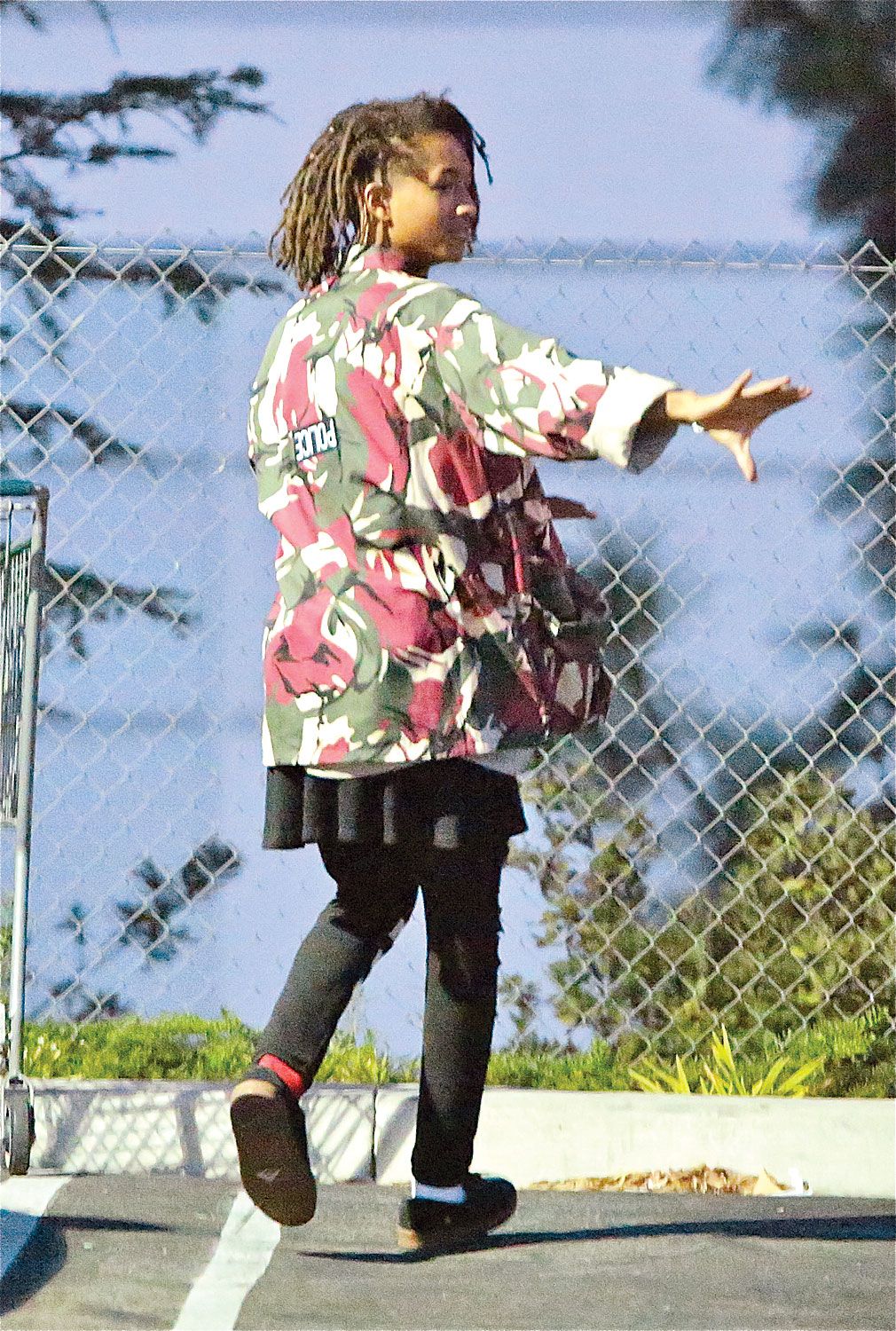


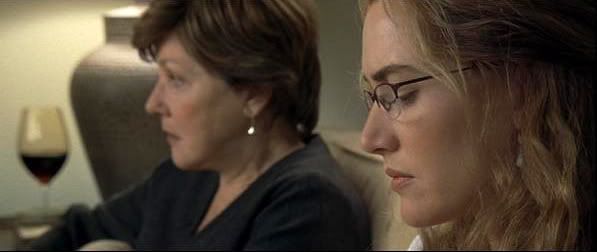


 Truth be told, when one searches for female representation in the entirety of modern Philippine literature, one does find significant names here and there, but in the overall, one may have to resort to a kind of grasping for bubbles. For the most part, Filipino women’s writings -- most especially those texts that give voice to the experience of these writers as women -- come far and between. Edna Zapanta-Manlapaz, in her pathbreaking anthology titled Songs of Ourselves: Writings by Filipino Women in English, said as much when she wrote: “The relative absence of women’s writings in Philippine literature in English has not gone unnoticed nor unlamented.”
 Two of my favorite pre-colonial tales are the mythical accounts of creation of the Bagobo tribe. First, they tell the story of Tuglibong, the female leader of the mythical beings who first inhabited the earth before the coming of humans. In those olden days, the sky and the sun hovered so low to the ground that the earth was often scorched and could not produce much in terms of harvest and bounty. The mythical beings, too, had to hide in the dark caves and recesses of the earth in order to cool themselves. One day, Tuglibong came out to pound rice with her pestle, and while she went about her task, she scolded the sun and the sky with such eloquent vehemence -- so much so that the sun and the sky had to fly up and up to escape her beautiful nagging. According to the writer Rosario Cruz Lucero, one aspect we can gain from this myth is how “the inhabitable world was created by much scolding and chiding to the rhythm of pestle pounding on mortar.” Oral literature by a woman, in so many words, invented the universe.