Saturday, June 25, 2011
 5:32 PM |
A Decade of Sound and Dancing (and Zombie) on Hump Day
5:32 PM |
A Decade of Sound and Dancing (and Zombie) on Hump Day
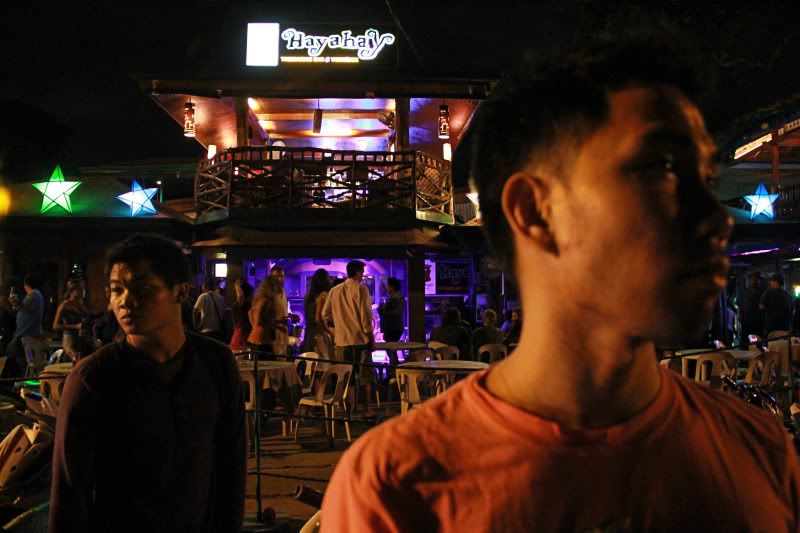
You could not escape the tenth anniversary of Reggae Wednesday at Hayahay last June 22.
Passing by Escaño, with a view of Tañon Strait dark as the night, you would not miss, for one thing, the beat and strum of local reggae bands carrying on from early evening what has become almost a tradition of this kind of sound. And for this special night, the bands were pledging their talent fees for a cause, the amount raised matched by Hayahay, with the proceeds going to various soup kitchens around town.
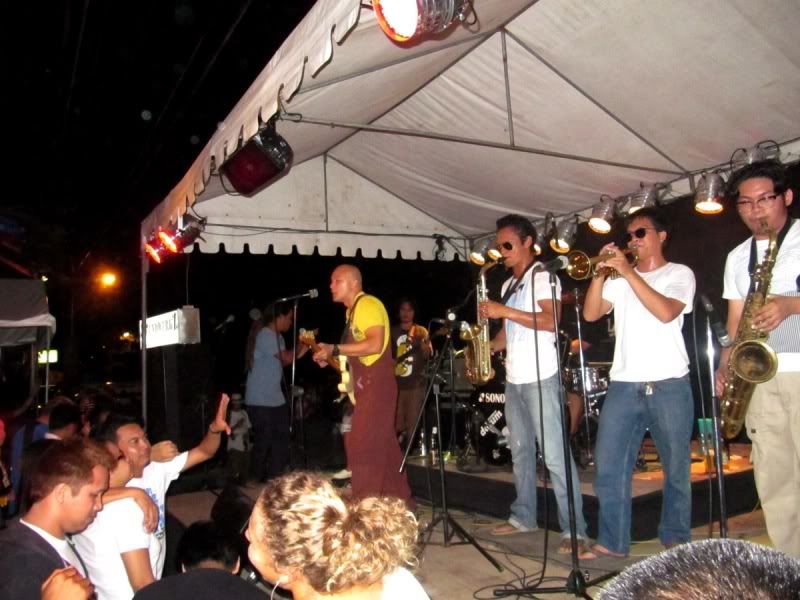
There was, for another thing, that sense of inevitability of a celebration. Already a regular party date on everyone’s weekly calendar (which jumpstarts, one might say, the young Dumaguete crowd’s love affair for a long weekend of surf, sound, and Zombie), celebrating Reggae Wednesday’s almost unbelievable turn a decade older was an excuse to even party harder. As Enchi’s lead singer Bembem Timtim remarked onstage before segueing to the band’s first number around midnight for the anniversary jam: “Who would have thought? Who would have thought that ten years would pass, and we’d still be here doing Reggae Wednesday?”
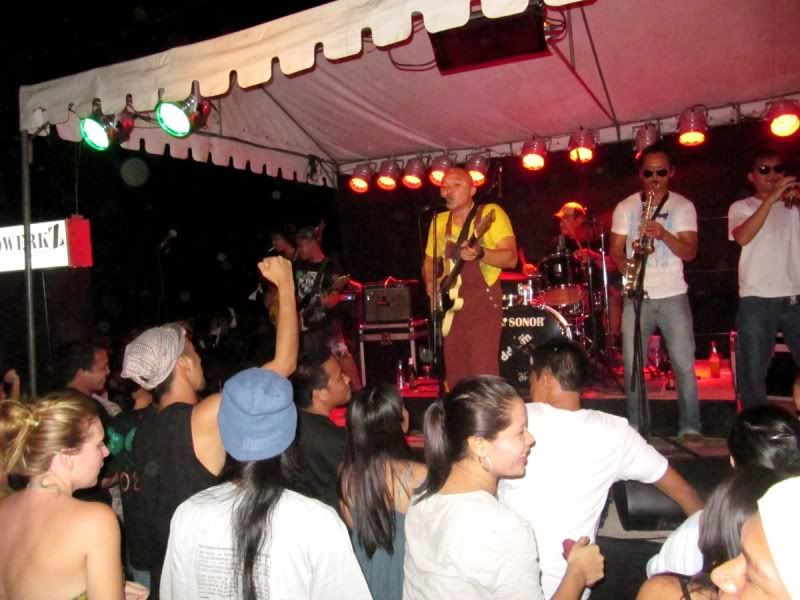
If you think about it, RW has indeed become an institution of sorts, and almost despite itself, too. Here is a perfect confluence of youthful rebellion, bohemian schtick, endless booze, alternative music, and frenetic dancing—and it has lasted this long. Ten years.
Who would have thought?Thus, a week before festivities even began on that stretch of party called Escaño Boulevard, the tongues were wagging in excitement around town, even as far as Facebook wall shoutouts: “Reggae Wednesday is ten years old!” And so we all went to celebrate. Enchi was playing after all, Bembem being in town from Singapore—and it has been quite a while since we last heard them play together.
You could not escape the RW anniversary anyway. Even when you chose to stay home that Wednesday night, or to stay away hostaged by faraway geography, the whole night was streaming live on video feed in the Internet. Reggae Wednesday has invaded the interwebs, and has indeed entered the digital age.
Who would have thought?But to flashback to 2001, when it all began.
There was no streaming video then. And no one thought it would last ten years. And the whole thing began, curiously enough, on a Monday.
Or at least, the first informal gig was planned for a Monday, with a bunch of friends fiddling with time, alcohol, and the search for an appropriate space to jam. All they wanted was that space—and the best time possible—for a bunch of friends to come together for a musical jam of sorts. “They” included Sande Fuentes and a bunch of his friends from both high school and college days: JM Abregana, Bembem Timtim, JJ Amparo, Gabby Flores, Oswald Singson, Kim Zerrudo, and some other buddies. “We just wanted a place to play music regularly, and back then,” Sande recalls, “the repertoire we used to play a lot consisted of Bob Marley, Sublime, 311… Mostly reggae, but with lot of punk and ska thrown in.”
One particular drinking weekend at Hayahay (which Sande now manages for the family), they all decided to give it a go. On a Monday.
“It was supposed to be Reggae Monday,” Sande says with a laugh, “but everybody was hung-over that Monday, and the easy excuse was: ‘Let’s do it mid-week.’ Do it during Hump Night Wednesday, and then we roll through towards the weekend.”
The plan was then set for Wednesday, certainly considering hangover recovery time. “We did a text brigade,” Sande recalls, “and I drew the announcement on paper napkins and we photocopied them and gave them away as flyers to a bunch to friends to distribute. A bunch of them helped. There were our El Amigo and Memento friends like Babu Wenceslao… The Cuernos de Negros boys… Micky Ybañez… There are too many to mention. A lot of friends helped us and supported us in the beginning.”
Enchi then played every other Wednesday, “and they played on the stage that is right next to the Hayahay restrooms now, beside the aquarium…,” Sande says. After the gig, the boys in the band would chip-in money for drinks, “or whatever else was the choice for the night.” The origin of RW was simply just a pursuit of fun and shared music among friends.
But the whole endeavor soon grew, bit by bit. Enchi and Reggae Wednesday veritably started the music scene for Hayahay, and they then added the Friday lineup with Kakay and the H Project playing jazz. Then there was Saturday Rock with Tracy Teves’ Last Train. And soon, San Miguel was sponsoring the Philippines’ top reggae bands to perform in Dumaguete, from Myra Ruaros-Brownbeat All Stars, Tropical Depression, Junior Kilat, Brownman Revival, and others.
“And thanks to our music friends from abroad,” Sande said, “we got our first international act with dancehall reggae phenomenon Lexie Lee from Los Angeles.” She was doing an Asian tour that included Vietnam and Thailand in 2009, and was more than happy to tuck Manila and Dumaguete in as stopovers. “Our second international act was Malaysia’s Pure Vibracion,” Sande said. “All these musicians and bands gracing our stage encouraged us to keep on playing uncompromised music—and hopefully bring to Dumagueteños even just a small sample of what’s out there musically. Recently, we have brought here some super bands from Manila, like Franco, Urban Dub, and veteran rockers Razorback.”
And what of the immediate future?
"We’re going to have Thursday Eargasm with With DJ Devnic,” Sande says, “and we will be have a peek at underground music scene for techno, house, and tribal beats.”
And Reggae Wednesday?
Easy enough to answer: it’s here to stay, as long as the take remains fresh. And Dumaguete is still willing to rock to the vibes of this sound. Perhaps for another ten years. Ten years.
Who would have thought?Photo of Hayahay by Hersley-Ven Casero. Photos of Enchi by Earnest Hope TinambacanLabels: dance, dumaguete, friends, music, negros, night life
[0] This is Where You Bite the Sandwich
Monday, October 25, 2010
12:24 PM |
Two Views, One Roscoe's
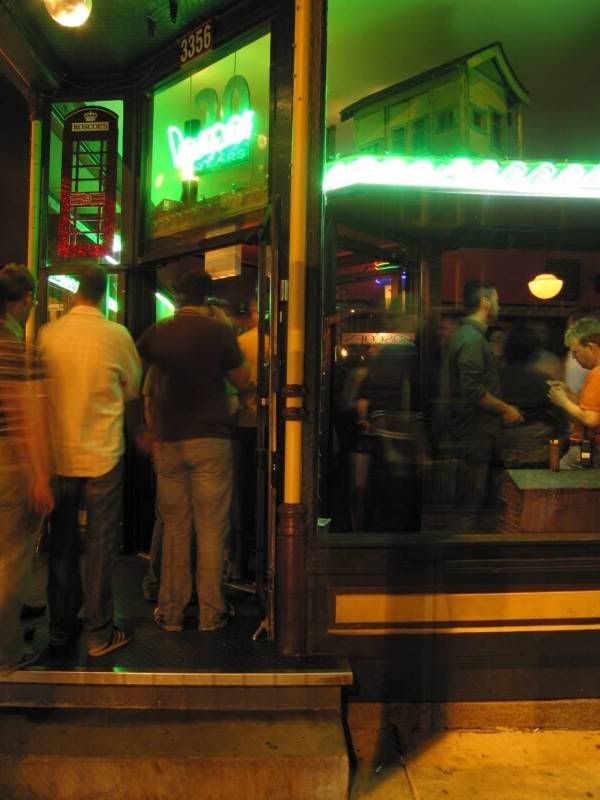
Here’s a funny thing in a note of perspective. In Chicago, one of my fellow writers in the International Writing Program referred to
Roscoe’s in Boystown as a “sleazy” dance bar with too much sexual tension. I couldn’t help but laugh inside and think: “That’s sleazy? You should see Why Not Disco in Dumaguete.” Because compared to that sleaze hall, Roscoe’s is a wholesome daycare center.
[photo by andrew collins from about.com]
Labels: friends, iowa international writers program, life, night life, queer, travel
[0] This is Where You Bite the Sandwich
Saturday, November 21, 2009
Part Five of a Series on Night Life in DumagueteRead Part 1 |
Read Part 2 |
Read Part 3 |
Read Part 4“It’s not easy being an event organizer. It’s all just flash, and more flash.”
—POL CADELIÑA,
local event organizerLet it be said that, as with any profession worth its salt, an excess of passion and the capacity for thinking out of the box very much define this strange new career called Eventology. It helps its dubious respectability, especially if the poster boy for that line of work bears the mug of Tim Yap, society magician, alleged ringleader of the notorious Gucci Gang—and favorite whipping boy for the commonplace complaint for First World excess in Third World reality.
Because it is a career entirely weaved out of the celebration of the “superficial,” it largely bears little respect the way a career in law or medicine would be—which is ironic since there is nothing like the promise of spotlight and glitter that can seduce even the high and the mighty. Like Oscar Wilde’s dictum that confers shallowness on those who do not get the importance of judging by appearance, it recognizes that the glitter of things is more often a barometer for the real.
In Dumaguete, event management—be it for club parties, concerts, or fashion shows that are slowly becoming ubiquitous in this city—is not entirely something new. People, after all, have been managing and putting up parties in Dumaguete forever. But as a full-time profession in a small city not exactly known for its partying ways, it is still largely something that falls below the radar. And yet it is increasingly lucrative.
A series on the Dumaguete night life can never be complete without the voices of those who conjure the magic of the events we go to. And so I gathered together three of Dumaguete’s current eventologists—Tomas Alvin Timbancaya (more popularly known as Dok), Kathleen Hynson Patacsil (more popularly known as Kleng), and Tyrone Oliver Tejam—all hardworking local organizers (and rivals) who work behind the scene of every dance party, corporate event, fashion show, and concert you have probably gone to in the last five or six years. All, they said, in an effort—too often quixotic—to try to enliven up the place and make it truly worth its “city” moniker.
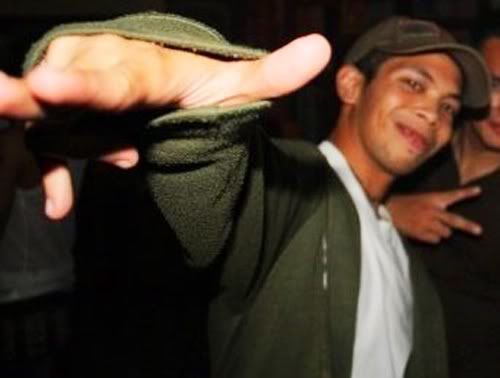
Dok is basically known as the guy in-charge of promoting the any-given-month’s KillerBee party, usually held at El Camino Blanco. “I make the best poster and tarpaulin designs around town—and some people actually collect them, and there is always anticipation for the next KillerBee poster model,” Dok says. He was president of the KamiZeta fraternity and sorority for three years, and was the chair of the Silliman University Council of Student Organizations twice.
“I am into advertising and promos,” he continues. “I suck with anything that has to do with academics, unless I find the subject remotely interesting. I also enjoy movies and videogames a lot.”
What people don’t know about Dok is that he has
actually already graduated from college (although you won’t immediately deduce that just by looking at him) and is now taking up MBA at Silliman. (“Yes,” he says. “Finally. I know.
Hush.”) He does penciling and cartooning, too, and plays the piano. “I like liquiding and raving with glowsticks. I like thought-provoking readings, too,” he continues. “I listen to all kinds of music—except for J-Pop, diva RnBs, gangta rap, farty jeepney technos, noontime Pinoy music, and other sorts of
ka-jologan.” He used to rappel down Doltz Hall using bed sheets—“never-been-caught!”—to escape into the Brickhouse and party out at El Camino, but lately, he prefers Escaño with friends over any bar or club.

Kleng is a Mass Communication student in Silliman, and, like Dok, is also into the arts—especially cosmetic artistry, theater, and fashion.
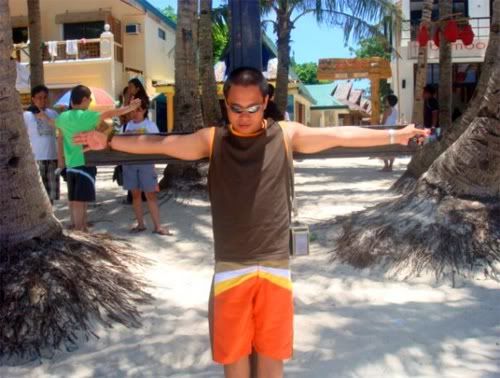
Tyrone, on the other hand, has already established an image of being the “life of the party.” He is the lead vocalist of the Koo Fellas, and he is the constant host of various events and parties around town. “I manage talents, and I produce and organize events,” he says. “What they probably do not know is that while doing all these, I mean business. I am strict at making sure everything I do is to the utmost satisfaction of my clients. My obsessive-compulsive traits always play a vital role in the success of all my events.”
What got them into events organizing in the first place?
For Kleng, her foray into a events organizing first started out as just a hobby. “I liked the idea of getting my hands into event organizing,” she recalled. “This immersion made me realize that this was something I loved doing. It gives me a sense of fulfillment every time I know I’ve been part of making a certain event successful.”
For Dok, it was a necessary, but completely unexpected, byproduct of his college partying years. “My buddies—Dindo Gatmaitan, Gigs Atega, Joel Canon, Mark Argote—and I partied hard on our first year in Dumaguete, between 2002 and 2003,” he remembered. “From El Camino to Escaño to Detour and finally to the Brickhouse, two to three times a week. In the process, we partied and got acquainted with the Zetans, the Amicitas, and the other party socialites of that time. I joined Zeta—or KamiZeta as it is now known in Silliman, a school organization infamously known for having socialites who drink and party every chance they get, till dawn. I became its president in 2003.”
As he recounts those days, one suddenly gets the feeling that with Dok comes a very specific chronicle of Dumaguete and its party scene in the late 1990s until the 2000s. “As 2003 went to a close, the trance era started going down,” Dok recounted. “Chicane’s
Love on the Run was the last hit trance track, and the RnB and hip hop generation was on the rise. But it wasn’t so fun anymore, at least for those who party out with ATB, Chicane, Happy, Safri Duo... Everyone was getting busy looking cute, sexy, and flashy in the club. People were a little less conscious before. El Camino went from free entrance, to getting in students with validated IDs, to P50 with two beer consumables, to P100 with no consumables. I think 2004 was a sad year for El Camino. In came 2005, with the advent of the more recent house tracks. I was comfortable at El Camino again.”
In his second term as president of Zeta in 2005, he thought of organizing a one-of-a-kind fashion show—a “clique” fashion show with Penshoppe and Leila’s Couture—during Founder Day, to feature the Miss Silliman candidates of that year and “all the other model-ly people in school.” A friend, Mike Figdor, suggested that an event as big as that needed more marketing time to maximize the mileage offers for Penshoppe—and that was when KillerBee came into the picture. “This was how I got acquainted with Roy Bustillo, the KillerBee manager,” said Dok.
Three days after the event, with Roy and Mike as backers (and with help from Zeta, Rodecans, Hermanas, and Amicitas), he gunned for another show featuring the SMBee Girls/KillerBee Girls composed Tanya Beatingo, Francine Arrieta, Sheena Santiago, Raissa Jalandoni, Ruth Libarnes, Sunshine Sarne, Aleen Diago, and others. “It was our first El Camino Event,” Dok remembered. “We called it
POW—Party on Weekends. San Miguel saw this and contracted me to organize the
Sarap Mag-Buglasan Bar Tour with the SMBee Girls.”
What they had, Dok said, was a vision to enhance the Dumaguete lifestyle and social leisure scene and to promote it as “a hotspot for culture, tourism, and investment by featuring a spending market that has a penchant for fashion, dining, spa-ing, networking, and partying.” They wanted to revive the party scene in Dumaguete, particularly in El Camino.
That was when they conscripted Banda Mangga to be their featured band for the first
Sandurot Rhythm that November. After that, there was
Sinulog at El Camino in January the next year,
Love Sucks in February,
Bar Exams in March, and
Freshmen Nights in June. These were their “mainstay” parties, but there were also “filler” parties for the months of July, August, September, and October. The party name and the “gimmick” that colored each one varied from year to year—but the rule was to jump on what was “hot” for the moment. Fitting that bill would be the white parties, the black parties, the fashion parties that came and went, featuring assorted motifs of bikes, bartenders, fire dancers, just to name a few. “We have a party every month—sometimes even twice a month,” Dok said.
Of course, it did not take long for Dumagute to start partying again. “The only time there would be people in El Camino in huge numbers would be when KillerBee holds a party,” Dok observed. “After that, going to El Camino became part of the people’s lifestyle again—at least on the weekends when we normally hold our parties.” The other pieces of the partying puzzle started falling into place as well, and other organizing groups—such as those by Toto Marquez, Jaysun Penales, and Tyrone Tejam—soon came into their own and became more visible in 2008.
In many ways, Tyrone shares the same story as Dok. At 16, fresh from high school and gunning for a degree in Physical Therapy, he already acknowledged that partying was going to be his one major “vice”—and is now mightily surprised to find himself now making a business out of “this seemingly age-inappropriate habit of constant partying.”
He recalls, “My craving for new, unique, and unusual events, I think, prompted me to try organizing some minor activities.” Minor that is until, through and because of time, experience, and the large network that he has established through constant events organizing, things soon inevitably led him to building a local events agency that, accordingly, does not just aim to provide fun and excitement to his audience, but also strategies and solutions to clients. His agency—E-SOLUTIONS Events & Entertainment—would soon take Dumaguete by storm, and remains, to date, the most sophisticated in a city that is just beginning to realize that all shimmer may not be gold, but it sure does grab attention.
And shimmering attention, most of all, is the prize that all parties strive to get.
(To be continued…)
Labels: dumaguete, negros, night life, party
[0] This is Where You Bite the Sandwich
Tuesday, November 10, 2009
4:23 PM |
Party Pooper
Saturday night ended all too abruptly when the club we went to for the weekend’s respite exploded with the sudden brawl led by one ugly white man—a Dutch guy with a history of explosive tantrums. There were broken bottles in the air. Chairs crashing down. A chase through a cramped space that had the rest of El Camino’s habitués scampering to one side, booing the white man, and booing the utter laxity by the management for its feeble attempt to put back everything to order. When the music finally came back on, the place was a virtual desert—strange for 1:30 A.M. on a Sunday dawn. It quickly dawned on me that El Camino Blanco is party central only for the fact that it is the only place to go to on a weekend in Dumaguete that resembles, in a very haphazard manner, the party life of more cosmopolitan cities. The resemblance ends in only ambition; in reality, the place is a huge disappointment. The most demanding partygoer from Cebu or Manila, descending on Dumaguete’s premier party place, will be quick to relegate the entire establishment to kabaduyan—the interior design is bad and confused, the lights are ridiculous, the security laughable, the ventilation is non-existent, and the dancing area too cramped to contain the gyrating bodies that try to dance to the bad music—repetitive RnB hits that are laughed at by people attending Embassy or Encore as falling below contemporary sophistication. And who would put tables and chairs at the sides of a dance floor? Tables and chairs—a no-no for a nightlife that should encourage mingling and dancing—will be the death of the Dumaguete scene.
Labels: dumaguete, night life
[0] This is Where You Bite the Sandwich
GO TO OLDER POSTS


