Monday, August 27, 2012
 4:54 PM |
Checking to See If I'm Still Alive
4:54 PM |
Checking to See If I'm Still Alive
Labels: life, photography
[0] This is Where You Bite the Sandwich
Sunday, August 26, 2012
4:42 PM |
How We Use Pain
This is how some of us love. In Northanger Abbey, Jane Austen wrote: “I have no notion of loving people by halves, it is not my nature. My attachments are always excessively strong.” Excessively strong. That makes sense to me. I know a visual artist who made installation art of everything his ex-boyfriend left him with -- clothes, books, pictures, letters, unopened condoms. Art as a chronicle, art as biography. All that heap of a shattered life, all that remembrance fodder for creation. Because how else to transcend pain except use it for art?Labels: art and culture, life, love, quotes, writers
[0] This is Where You Bite the Sandwich
3:25 PM |
Silliman is in the Heart
There is a strange predilection among all alumni of Silliman University to think of something specific every time they are confronted with the question bearing the concept of “home.” Regardless of their primary roots—whether they are from Manila or Morocco, Davao or Dubai, Laguna or Los Angeles—whenever you ask them, “
Kanus-a man ka mo-pauli? (When are you coming home?),” they invariably know “home” means Dumaguete. I have always found this fascinating.
Then again, it is a strange thing, being a Sillimanian. It is even stranger to consider the loyalty the university seems to demand of us, without protest at our end: we give in to the demand wholeheartedly, like a lover returning to a familiar embrace. Thing is, one learns to love Dumaguete (and Silliman) like the place is second skin.

I asked around what this exactly means, and the following students and alumni tried to help define it. My question was, “What is that one, specific, and tangible thing you love about being a Sillimanian?”
The writer F. Jordan Carnice wrote: “Everyone seems to know everyone, regardless of age, course, or batch.” BPO honcho Ian Sobong Malayang stresses out what that means by saying it is about “the sense of kinship and instant connection that you feel when you meet perfect strangers somewhere on the other side of the world and you find out that they’re Sillimanians, too.”
Francis Salvador gives it a name: “I know it’s a bit of cliche, but it’s the Silliman Spirit. It surpasses both time and place. Wherever you go, whatever you do, you feel like you’ve known each other for so long. It brings warmth and an unknown feeling of belongingness. I’ve experienced it countless of times.”
Student Tommy Villegas continues: “Silliman has this culture where people from different backgrounds can just hangout—or
tambay—together. It doesn’t matter whether they’re rich, highly academic, a local or foreign student…. Everyone can be friends, add to that the fact that even
ang mga sosyal sa Silliman
kay mo-try
og mga tosinohan or other cheaper places to eat, just to have a good time with friends. Somehow I find it all amazing.”
My cousin from Australia, Louella Moncal-Pineda, weighs in: “I love the amphitheatre, the dorms where I once stayed whilst there, the cafeteria, the T-rooms—now gone, I suppose, the Silliman Church. Also the friends, the classmates, the colleagues I once knew. My diploma, and of course my husband whom I met in Silliman. All these gave me the right to be called a Sillimanian and I take pride in that. Outside of these tangible stuff, it is the spirit that no matter who you have become and no matter where you are, make us stand equal with fellow Sillimanians.”
Emmanuel Fiel Dela Cruz thinks hard about it: “Maybe I’m not that rich or famous. Maybe I’m not the handsomest guy in the crowd—but I’m a
Sillimanian. The coolest term I know.”
That Silliman Spirit, for Mae Anne Yee, can translate to something useful in the real world: “One specific and tangible thing I love about being a Sillimanian is my diploma. I remember how wonderful the feeling was, when I was still applying for jobs, and I held out my diploma—and when they see ‘Silliman University’ on it, they give you that grin of admiration and say, ‘So you are a Sillimanian, huh?’ Wonderful!’ I always got hired.”
For Guam-based marine biologist Laurie Raymundo, that whole thing is the sense of being part of a community. From Hong Kong, writer Heda Bayron writes: “It’s the lasting personal connections. I spent only four years in Silliman. I don’t see my high school batch mates often, but when we do, it’s like we just pick up where we left. It’s amazing. You just belong.” Marvin Luther Tan agrees: “I love the fellowship with Sillimanians as you meet them anywhere.
Bisan first time pa mo nagka-meet, you can share lots of common things.”
Perhaps that sense of community is shaped for the most part by the environment in campus, and Zara Dy muses: “I guess it has something to do with the rich history that permeates through the Silliman air that we breathe on campus. It could be illustrious, notorious, undocumented, forgotten (to all but one)—the magic lies in the fact that anyone who has spent time in the campus can claim such history because, not only does Silliman willingly indulge the searcher with great stories, the environment allows you to weave beautiful ones of your own. Silliman becomes, not just a school, it’s a lifestyle.”
Lifestyle. Being a Sillimanian is a kind of culture—and often that translates to the magnificence of the arts and culture scene on campus. The whole thing, for Paula Bastareche, is a careful balance of culture, academic excellence—and decadence par excellence.
For student and bike enthusiast Emmanuel Rotea Tecson, that means “the countless activities—talks, plays, and other performances, often open and free to the public!” For photographer Darrell Bryan Rosales from Bohol, that means “a chance to perform at the prestigious Claire Isabel Luce Auditorium.” For actor Earnest Hope Tinambacan, it is “the freedom to wear slippers and shorts—and the colorful cultural life.” For Giselle Iris Alano, it is “the freedom that allows us to be whoever we want to be: artists, free-thinkers, bohemians, drunks. Silliman is a breeding ground for cool people because here, we let people
be.”
For ABS-CBN regional news anchor Primy Joy Cane, what she loved were the season passes to all the cultural shows. “Man, I wish I could turn back time and attend every show at the Luce. Looking at students from other universities makes me realize how culture-starved most of them are. The infusion of theater, dance and song into a Sillimanian’s university life is what makes us whole.
Makasabay sa hinubog nga inom, pero kabalo gihapon mo-appreciate sa music nila Jay Cayuca, Michael Dadap... I miss that so much.”
Divah David-Sabordo sums it up: “Being a Sillimanian makes me feel not any less nor any better than anyone else. The whole experience reminds me to always walk with my feet on the ground but my head in the clouds. Looking back when my parents chose Silliman for me, they could not have any better choice. And I couldn’t be more thankful.” And Jascer Merced agrees: “When I walk around the campus or drive around on my motorcycle everything seems to slow down. There’s something about Silliman that makes you pause for a while and just hear the trees sway.”
I want to end with what songwriter Anna Katrina Espino has to say about what she loves about being a Sillimanian. “The acacia trees. No joke. Walking around the campus at four or five p.m., this gives you that feeling of serenity.
Like you’re exactly where you’re supposed to be.”
Exactly.
Labels: dumaguete, life, silliman
[0] This is Where You Bite the Sandwich
Sunday, August 19, 2012
3:32 PM |
The Fiction in English Finalists for the 31st National Book Award for the Novel and for the Short Story

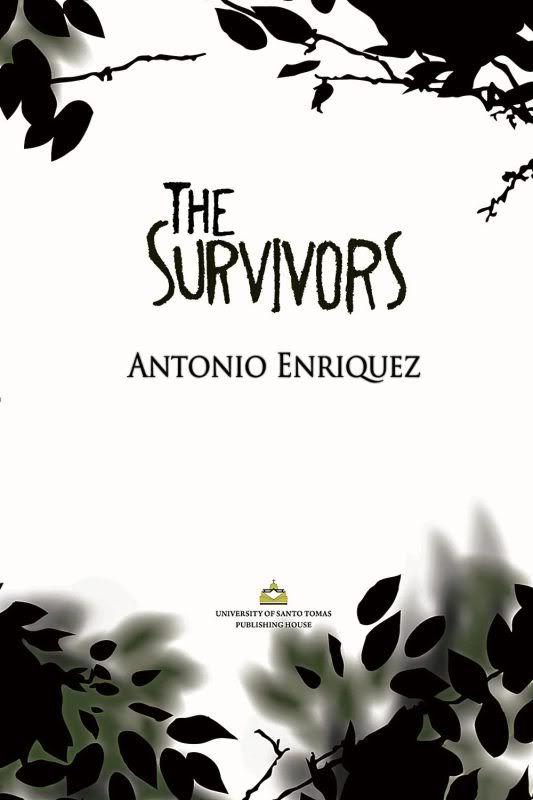
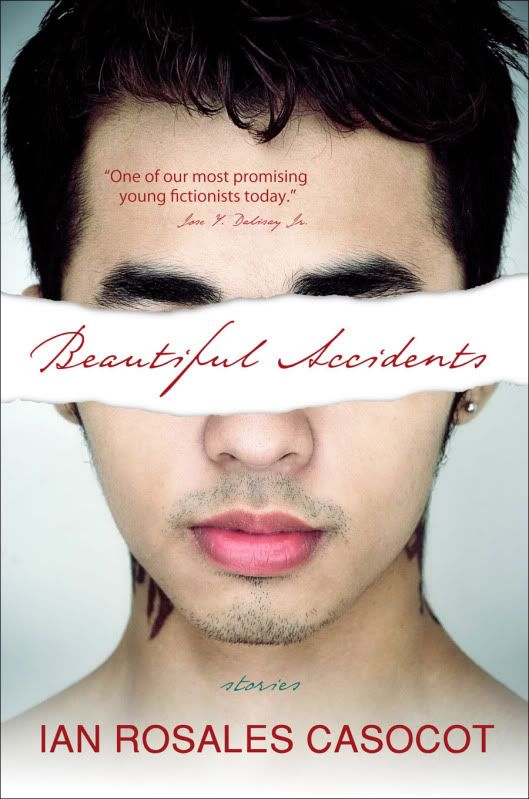
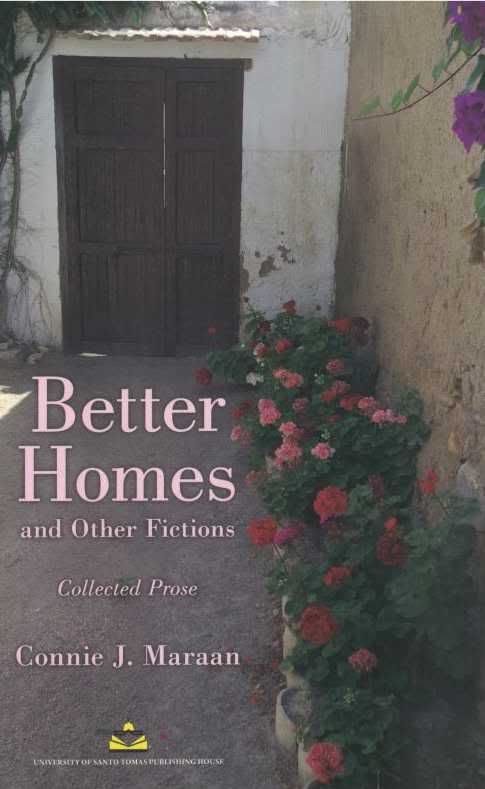
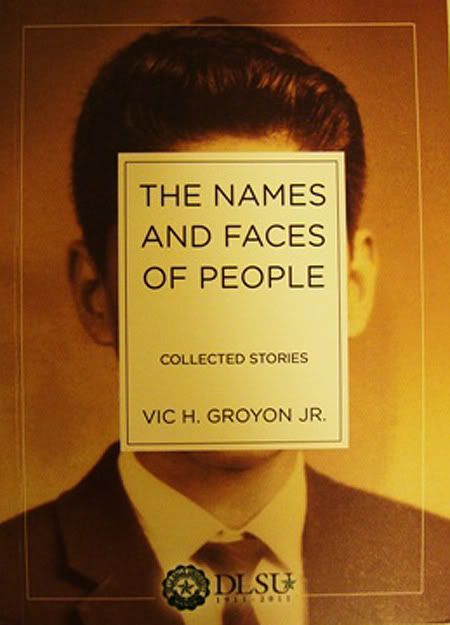
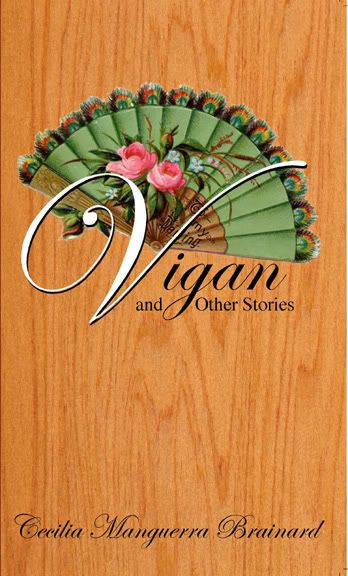
The Manila Critics Circle and the Nartional Book Development Board just announced the finalists for the 31st National Book Award. The above are the fiction in English finalists for the shorty story collection and the novel. Get the rest of the finalists
here.
Labels: awards, books, philippine literature, writers, writing
[1] This is Where You Bite the Sandwich
Friday, August 17, 2012
9:49 AM |
Some of What I’ve Learned
In the tradition of recent years, I would have said, “Today is the ninth anniversary of my 28th birthday.” But no more. I’m 37 years old as of this writing, plain and simple. There’s a good life behind that awesome number—especially coming from somebody who once dramatically thought he wouldn’t live past his 33rd birthday. Each day thereafter has always felt like an extension of a blessing, even taking note of all the hardships and the heartbreaks.
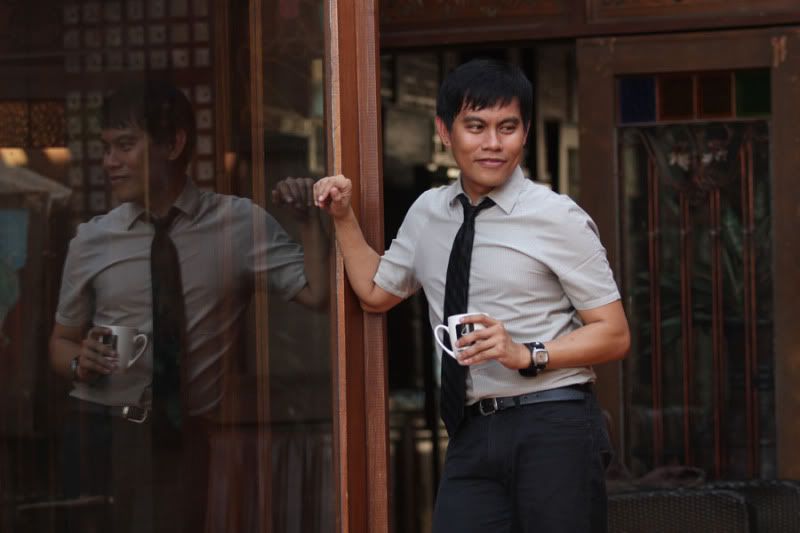
Edging past the mid-thirties is perhaps a time fraught with some of the most dramatic changes in a life—all of them internal, all of them requiring a bemused, if slightly alarmed, change of perspectives nobody really warns you about.
Because you still have some vivid memories of being very young and all that it entails: the casual if misplaced feeling of a limitless future; the late nights spent in pursuit of hedonistic bliss; the energy that seems incapable of running out. But what you soon learn is this: you’re young, and suddenly you’re not so young anymore. Forty is suddenly not too far away.
But you learn to live with that acknowledgment, the way you learn to accommodate your autobiography of mistakes. You learn to pace yourself as your body slowly betrays you, often in subtler ways than you can imagine. You learn to deal with broken dreams and too many compromises. You learn to harden up just a bit more into the realization that you can’t really please everybody. You learn there’s a sudden finiteness to the future, and you must indeed plan for it. You learn that you really are your parents’ child, after all, after years and years of denial and rebellion.
You also learn to accept, with some bewilderment, that you have become The Man. Somehow now a part of the “establishment”—that shadowy distinction in the adult world which the very young instinctively flails against. Ten years ago, for example, I edited an anthology titled
FutureShock Prose: An Anthology of Young Writers and New Literatures, with all the conceit of generational writing (and anthologizing). I made a young man’s claim that this was “us,” that this was “now”—that we were a generation of writers markedly different from those that came before. And perhaps that was so. We were
the “young writers.” We were, in the borrowed words straight from Alvin Toffler and modified by Cesar Ruiz Aquino, “future shock.”
But last year, also during my birthday, Carljoe Javier—who comes from my generation of writers—came all the way from Manila to help with the launch of my books
Beautiful Accidents and
Heartbreak & Magic in Dumaguete. In the middle of a bite of pizza in Hayahay, he confessed to me this astonishment: “I was with some younger writers the other day, Ian—and it suddenly occurred to me that to them, we were already old fogeys. And there I was still thinking, ‘I am a young writer!’” Apparently, we no longer are. None of us know when that happened, or when the tectonic plates shifted—but we were the new establishment.
Ouch.
But you learn to live with that.
What I’ve learned the most, however, is the appreciation of my own mistakes. In many ways, my mistakes make more sense to me than my triumphs because they seem to be the very molders of character. I am, shall we say this then, the fruit of my mistakes, and what I’ve accomplished thus far seem very much only the icing of lessons learned from them.

The Japanese have a way of putting this metaphor for life in their art. They call the process of mending broken things—broken vases, broken cups, broken teapots—with gold molding “kintsugi.” As the artist Barbara Bloom once described it: “…They aggrandize the damage by filling the cracks with gold, because they believe that when something’s suffered damage and has a history it becomes more beautiful.”
Makes sense to me.
This way, my heart—and my life—is all history and glitter. And I like the very idea of that.
Labels: life, love
[1] This is Where You Bite the Sandwich
Sunday, August 05, 2012
10:07 PM |
The Architect of Dreams
Part 10 of the Dumaguete Design Upstarts Series
The first time I met Ray Villanueva, he was part of a singing group of brothers performing at the Luce Auditorium. This was many years ago, most details have been forgotten, and I didn’t really know him. The second time I met him, it was at Gabby’s Bistro and he was with his lovely American wife Amy. They were a vision on bicycles, and upon inquiry, I was told that they were in Dumaguete City “to try to give something back to the country.” One learns to instantly adore people with such dreams. It is such a rarity, especially for a country with rabid immigration dreams.
I wouldn’t remember anything about the singing past until last Christmas when, around the sumptuous holiday banquet prepared by our host Arlene Delloso-Uypitching, Ray played the piano “for his supper”—a superb rendition of “Claire de Lune”—and we were quickly told by Moses Atega of his musical past. “Now I remember you,” I told him. The answer I got was a sheepish smile.
But this article is not about his singing, nor his piano-playing, nor his sheepish smile. This will be about Mr. Villanueva as an architect, and his vision for building, with a thrust for community and sustainability. Let’s call it “developmental architecture.”
“My calling to architecture started while I was in George Washington University,” he told me. “I was taking up pre-med studies then. And one of the general education requirements was an art class. I have always loved drawing, but did not have the opportunity to take a drawing class before. I fell in love with it. From then on, I decided that being creative would be a part of my life.”
That decision led him to the University of Maryland to pursue architecture. While in the program, he was exposed to a Beaux Arts-rooted program and learned from distinguished professors—and soon he graduated with the second highest GPA in class. Ray would soon continue on to the University of Washington in Seattle, to focus on sustainable architecture. For his degree, he presented a thesis he titled “Architecture for People Who Need It”—which provided the blueprint for how he wanted his architecture to be about: as a model for sustainable development in developing nations.
Among his works that best define that aesthetics are Yakama Design-Build at the University of Washington and the Neighborcare Health Rainier Beach Medical and Dental Clinic.

And now, he’s here in Dumaguete as part of Foundation University’s architecture program. What does he hope to achieve with his work in the coming years?
“In the short term, starting with the current school year at Foundation, I am trying to help establish the first Design+Build Program in the Philippines called Estudio Damgo,” he said. “This is similar to the program I participated in at the University of Washington where the students will be responsible for the design and construction of a structure in the local community. The project will involve community-based design in the form of a series of open forum community meetings and students will be in charge of everything—from design, construction drawings, and materials research, to the actual swinging of hammers, pouring of concrete, and installing fixtures.”

Estudio Damgo, according to Rey, will be a “learn-by-doing” program that will provide lessons that will last well beyond the classroom and will increase the students’ marketability post-graduation. “In the process,” Ray continued, “the local community gains a structure that showcases cultural relevance and innovation, while serving as an example that design and Architecture can make a positive impact by creating places everybody can enjoy.”
Somehow, all this is part of a dynamic life plan. “I am excited at the chance to work with the students and faculty to cultivate new ideas in architecture,” Ray muses. “And also to discover more about my heritage, and to pass on my experiences in design-build, construction, and community service. I feel that I have the potential to make a positive impact in local Filipino communities.”
Truly, Ray may have been born in Wheeling, West Virginia, to parents Dr. Romulo and Kathy Villanueva. His heart, however, has always been connected to his place of roots—Dumaguete. (His father is an Outstanding Sillimanian Awardee recognized for his medical mission work in the Philippines and abroad.) “My parents are my biggest influence,” Ray said, “Despite my upbringing in the U.S., they were clear about exposing my brothers and I to Filipino culture. Being in Dumaguete and the Philippines for the past months, I’ve discovered so much about my parents and myself. I am much more Filipino than I thought I was.”
For Ray, one of the greatest lessons his parents have imparted to him and his brothers was the “responsibility to give back.” Which is why he has come back to the Philippines, with Amy. “The importance of service—to the environment, to one another, to country—has always been a part of my life,” he said. “Service has led me to unique experiences like volunteering in National Parks, helping in medical missions in the Philippines and Peru, and reaching out to victims of natural disasters like Hurricane Katrina. The lessons I’ve learned from these volunteer opportunities formed central ideas of my graduate school thesis project based in Mindanao, and led me to work for Miller Hayashi Architects in Seattle to experience community involvement in design. This was ultimately the reason why my wife and I decided to quit our jobs in the U.S. and come to the Philippines.”
That’s one man going against the flow. Here’s to Ray, and may there be more people like him, especially from among us.
Labels: activism, architecture, art and culture, dumaguete, people
[1] This is Where You Bite the Sandwich
Monday, July 16, 2012
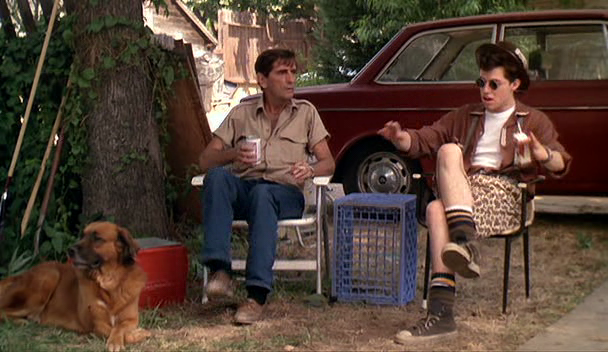 "You can love Andie, but that does't mean she will love you back. I mean, that doesn't mean she won't. But ... what I'm trying to say is, you can't make it happen, you know. It either will, or it won't... It's all in the heart."
~ Mr. Walsh to Duckie in John Hughes' Pretty in Pink [1986]Labels: film, life, love, quotes
[0] This is Where You Bite the Sandwich
Tuesday, June 19, 2012
5:29 AM |
You've Been Warned
"You own everything that happened to you. Tell your stories. If people wanted you to write warmly about them, they should have behaved better."
~ Anne LamottLabels: life, quotes, writers, writing
[0] This is Where You Bite the Sandwich
One of the most awkward things one does, in a struggle for sheer survival after breaking-up with someone, is the unliking of the many things he has taught you to,
well, like. These are things beyond your usual orbits of interests, which suddenly take on some paramount importance simply because they are things -- songs, films, books, quirks -- that your Beloved loves. You figure,
how else to show one's love for this Beloved, except in learning to love the things he loves? Because when the heart is at stake, it is too easy to develop an interest. You feign when you have to, and it is all too easy to fool oneself. Gardening, for example. I have no green thumb. All the potted plants I've bought died within days of purchase. But there I was, trying to learn about the design of leaves, the cultivation of herbs, the intricacies of flowers, the many kinds of begonias. My first boyfriend taught me all these. I was a sponge, and for two years, all I thought about were plants. I knew how to make him happy. On special days, I'd go to a special shop, and buy him packets of seeds. I lived for the delight on his face every time he would get those seeds. It was uncanny, and I was in love. Everyday, after school, we would walk all the way to the makeshift "greenhouse" near City Hall, where we would spend hours upon hours looking at plants, trying to decide what to buy. And then, all that was gone. And I went back to knowing nothing about botany. Pageants and plastic surgery, my second boyfriend taught me these. (Pets, too. Fish, hamsters, mice.) I had to learn all the names of the states of Venezuela --
and their capitals -- simply because Venezuela churned out Miss Universe winners like a beauty factory.
What is the capital of Carabobo? Valencia. Not everybody knows who Osmel Sousa is.
I do. I know this pageant magician's life story like the back of my hand. Almost six years later, when it all ended, I couldn't bring myself to watch another Bb. Pilipinas telecast. I simply didn't care. Then there's Keane and BritRock and the intricacies of biology, which the third person I loved taught me. The fourth person I loved taught me genealogy. I began to read about the intricacies of family trees.
And then when the love went away, or when the heart has been blasted to pieces once and again, I learned that the first bars of an India Arie song chilled me like a hateful tune. I learned I couldn't care less with the trivia that the first Miss Universe married a Filipino. I learned I couldn't care less about the proper ways of planting a begonia. And was life any better because I knew how one family connected with another through marriage? No, life remained the same: a chronicle of hurt and hurting. I still loved Keane. But to listen to
Hopes & Fears was to invite demons and remembered pain. So I don't.
So you learn to unlike.
You force yourself to.
And it breaks you nonetheless. Makes you question who you are. Were you simply an empty vessel that took in the passions of someone else? Was that life you led with each one of them even an authentic one, or was it a mask you felt you had to wear, simply because
you loved? Does love eradicate who you truly are? I don't know.
Then you tell yourself they learned from you, too. They learned to like certain things, too. And perhaps those same things also give them pause and pain.
But no matter. Nothing matters. You learn that nothing matters at all. And perhaps, of all things in the world, this is a shattering truth you like the most.
Labels: life, love
[0] This is Where You Bite the Sandwich
Sunday, June 17, 2012
3:32 PM |
In the Name of the Father
My father, who died when I was 21, made many sacrifices in his life in the name of integrity. When I was young, and quite stupid, I never understood that, and I think he died a sad, misunderstood man. And now it’s too late for me to tell him I love him. (Love. In the present tense, as it should always be.)Labels: family, life, memories
[0] This is Where You Bite the Sandwich
2:13 PM |
When Dumaguete Saw Daniel Day-Lewis Kiss Gordon Warnecke
I remember when, in the days before cable and HBO, People’s Television (PTV), now the National Broadcasting Network, first came to town when I was a boy. The whole of Dumaguete City would wait for the young Alex Rey Pal to deliver and finish the evening news, and then the movies began, two movies every night. I remember the excited rush ripping through the city when one night they showed
The Sound of Music, everybody’s favorite musical. A year or so earlier, they had showed the film in Park Theater for its 25th anniversary, and the whole theater was packed during the film’s entire run. This film is perfectly reflective of the city’s outward show of character, especially in the 1980s: genteel, unruffled, with a penchant for the conservative this side of
Peyton’s Place. One night, they showed Stephen Frears’
My Beautiful Laundrette [1985]. I’m not sure PTV-10 knew what film it was showing, but that certainly shocked everybody.
Labels: dumaguete, film, life, memories, negros, queer, television
[0] This is Where You Bite the Sandwich
Tuesday, June 12, 2012
12:06 AM |
Truth be told...
I miss you.Labels: life, love
[0] This is Where You Bite the Sandwich
Wednesday, May 30, 2012
11:13 PM |
The Romantic Pessimist
Truth to tell, I might be a romantic pessimist. I think my worldview basically springs from two metaphors I've read about: (1) from Buddhism, we learn that from the moment we are born, we start dying; (2) and from physics, we learn that we are all made of atoms, and since atoms consist mostly of empty space, we are essentially nothingness on two legs. Fascinating, right? We are emptiness that start dying out the moment life happens. What lovely paradox.
Life is fundamentally sad, I think. But it's what makes the happy moments really happy. :)Labels: life
[0] This is Where You Bite the Sandwich
Tuesday, May 22, 2012
5:07 AM |
The Visualist of Common Sense
Part 9 of the Dumaguete Design Upstarts Series
Looking at the paintings of Paul Benzi Florendo, one immediately recalls the raw power of the works of the young Jutze Pamate or Mark Valenzuela or Razceljan Salvarita—all of earnestness and strangeness and sureness of vision that mark what may be the beginning of a fantastic career in the visual arts, right at its rawness, without strings or politics or life’s hard bargains. To look at Benzi’s paintings and see how they pulsate is to quicken once more life from the tired old critical bones, slaying the old pronouncements that “visual art in Dumaguete is dead.”
It’s certainly not.
That it is in some sort of doldrums may be something that cannot denied. But there are others like Benzi springing from an increasingly bustling art scene in Dumaguete. (That is, if “bustling” is the word.) Collectively, they constitute some hope, enough for the city to recall its prime as Visayan capital of art. The most exciting among them include Stephen Abanto, Nabil Padilla, Jess Andrew Abode, Sabrina Skye Benito, Kristine Jul Oliva, Ramon Adonis Catacutan, and Hans de Barras—and in their last group show together, for the
Third Horace B. Silliman Art Exhibit held last March, some showed a brilliant command of the artistic that went beyond the pale of the expected and the humdrum: I remember a guitar stripped, dismantled, reset, and transformed into a kind of Rorschach test; a series of still lives and what-not—a snake with a gun among them—that seemed to put some strange edginess into the representational; a set of skulls from different sorts of material that put a hint of danger to the domestic; an installation of clay and wire figures “at play” with kites that married wit with the whimsical. These were fantastic pieces by some of the city’s young artists, and one could only wish to see more of what they could do beyond plates made for classroom exercises, beyond the requisite demands of academic exhibitions. That most have not entirely burst out of their confines and rocked the city beyond the comforts of campus life is a little beyond my ken—but perhaps they are only cocooning?
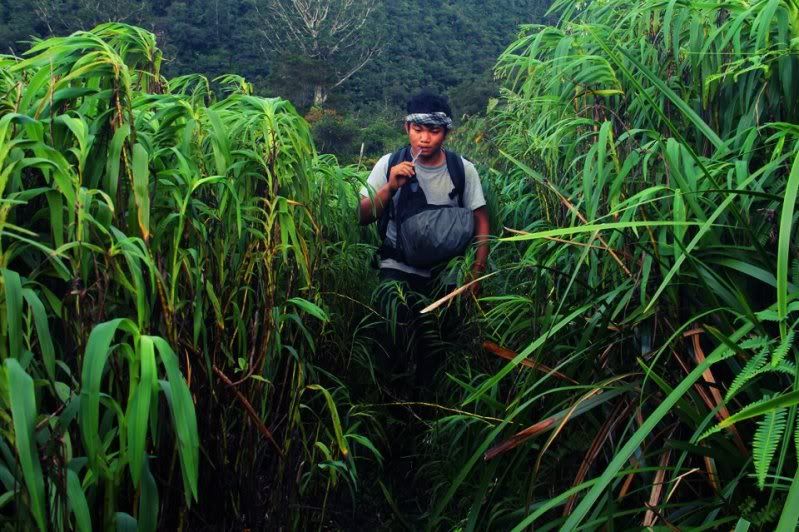
Paul Benzi Florendo
Enter Paul Benzi Florendo. A few months ago, in the makeshift exhibition walls of Canto Fresco, which is owned by the visual artist Babu Wenceslao, he debuted with his first solo exhibition—something he called
What Ya Think? The show, small though it was, featured ambitious art with a nod to the soft, strangely tender (if also unsettling) surrealism of René Magritte—but with wit completely Mr. Florendo’s own. There’s the blue teddy bear with the old man’s face, dragging a toy cart with square wheels, in diagram; there’s the masked boy astride a snail, bullhorn in hand; there’s the similarly bullhorned girl, eyes masked or pixelized, riding a giant rabbit; there is the army of boxy androids with human faces, minus the eyes, deep in empty thought-balloons; there’s the strapping youth with the baseball cap, looking up into the rainbowed sky, boxed in by some invisible diagram that include a hovering satellite… It is all very strange, and all made to make you ask—“What do you think?” The question is subtly provocative, and asks much of the viewer in terms of what they put
into the pictures.
It is the painting “Egghead” that strikes me the most though. It shows a gigantic egg hovering in an emptiness of azure, cracked in places, and through the bigger holes punched by the cracks, we see various parts of a human face—nose, lips, ears, eyes—asymmetrical, disembodied, and whole at the same. And all that, afloat, like a beautiful threat.
What do you think?
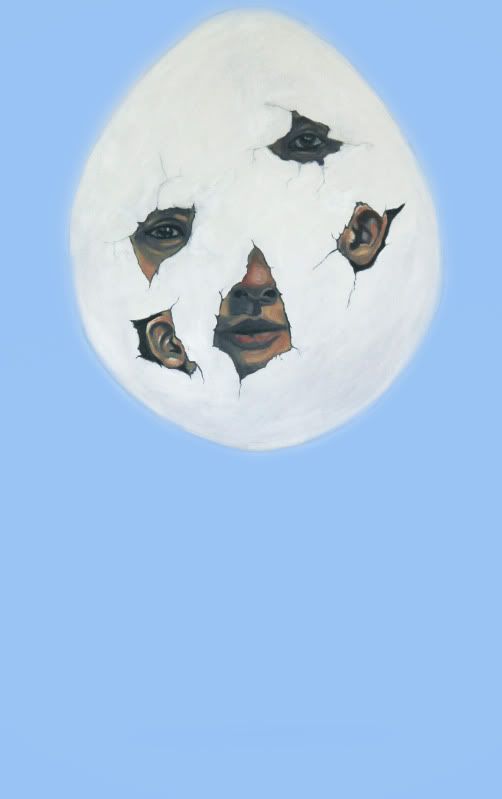
Egghead by Paul Benzi Florendo
“I always want to make people think hard when viewing my works,” Mr. Florendo explained. “I do not want the audience to just see my painting and think, ‘Oh, it’s nice,’ or conversely, ‘Oh, that’s stupid’—and just stop there. I want them to recognize something beyond what is obvious. I want them to perceive how I see life or how I tell a story of moments through my paintings—and perhaps relate these to their own lives.”
But what he also wants is a workout of sorts for his potential viewers. “I want them to feel as if their brains are going to burn up trying to think too much,” he said, “or perhaps even ultimately explode, especially when they realize that too much thinking did not have to done in the first place. I want people to be able to also use plain common sense, which is rare these days. I want to spark creativity in my viewer’s minds, and perhaps cause them to be artistic in their own ways.”
Which is perhaps putting too many eggs of expectations in one basket, but one admires that ambitious reach in the young artist: to seize that fabled opportunity to reach into the minutiae of a viewer’s head, and transform thinking through art.
What do you think?
But regardless of my mention of Magritte, Mr. Florendo does not claim to have influences in the way he marks his art. He reaches out, instead, to the common “influence” of what surrounds him: “My influences are the people around me doing what they normally do,” he said. “May it be wiping the table, playing in an orchestra, taking photos, typing on a keyboard, chewing gum, snoring, running, giving a sermon—you name it, these simple things give me a lots of ideas that can certainly be turned into something artistically complex. It’s like a simple cycle: I take ideas from what I see around me, then I give it back to the world through my paintings.”
And if this indeed is a start of something bigger, artistically speaking, what does the future entail for him? “I always wanted to do work which many people can relate to, or at least that they will be blessed by my work. But something I have always wanted to do is make people interact with my art in certain ways.” But it is that first wish for relatability that he wants the most. “I hope to achieve something big which people around me can recognize and be able to relate to. Even the simplest of people.”
Which makes common sense.
Labels: art and culture, dumaguete
[0] This is Where You Bite the Sandwich
3:29 AM |
The Three Virtuosos of the Photographic Eye
Part 8 of the Dumaguete Design Upstarts Series
Is there a glut of photographers in Dumaguete? Without batting an eyelash, my answer is yes—and not just in Dumaguete. The delusion of photographic skill is everywhere, and the evidence is flooding the feeds of our Facebook, Twitter, Instagram, Tumblr, Flickr… I’ve said it before. The exploding number of shutterbugs is a phenomenon directly proportional to the increasing democracy of digital photography, and it has become a joke in photography circles that these days anyone with an SLR seems to think he can saunter into the world and proclaim himself a “photographer.” That the vast majority do not call themselves thus is an act of mercy by the universe—amateurs thankfully in acknowledgment of their limitations. For a few that do, their sheer number often threatens to overwhelm the integrity (and asking price) of the profession, leaving the serious professionals in ridiculous competition with wannabes who invariably take commissions with a grain of salt, but don’t often deliver. As a result, the price for photographic talent may be bottoming out.
Of late, we get waves upon waves of photographic blahness—ad infinitum and ad nauseum—of leaves and flowers, sunrises and sunsets, women in bikinis, men in briefs. Most of these are slyly tweaked in Photoshop (or, heavens, Instagram) to approximate some glossy finish. Truth to tell, one or two of these pictures are beautiful all right, an accident of timing and angle; but in the context of body of work, the eye—the crucial eye—sans Photoshop is missing. Nothing draws you in beyond the initial “hmmm.” There’s no magic.
In the ocean of photographers in Dumaguete, a few do stand out. There’s Kat Banay and Hersley Ven Casero, whom I have featured in this series separately. In the front ranks, you will find Mikko Lim, DX Lapid, Clee Andro Villasor, Kim Cuevas, David Jules Mamhot, Zon Lee, Alma Zosan Alcoran, Paul Benzi Florendo, Darrell Bryan Rosales, Jerick Hernani, Aris Ramiro, Charlie Sindiong, Jaysie Tayko, Phil Calumpang—and I may be missing others, but this is by no means an exhaustive list.
Yet I keep turning to the works of three young men whose technical proficiency and hard-earned professional integrity seem to coincide with the gift of the elusive eye: the photographs of Luigi Anton Borromeo, Brian Arbas Rimer, and Urich Calumpang seem to me to be the prime examples of budding artistry in overarching mastery of medium. Whether with a regular still camera, a video, or an iPod, these three have exhibited an uncanny understanding of photographic language. They have demonstrated that it is not enough to own the proper expensive gadgets and certainly not enough to know the tweak buttons of post-processing applications. Great photography is the telling of an evocative story—and the best of them, for the lack of a better word, move you. The works of these three have moved countless people—and they know how to tell a story.
For all three, a childhood brush with the camera proved to be the push to a life-long drive to perfectly capture something of life. For Mr. Borromeo specifically, the interest had childhood roots, but it was also a late-blooming love affair. “Film was expensive,” was his explanation. He was already all of 20 years old when he really started taking photography seriously, digital this time. But the fascination had always been there; and the motivation, too. “I’m always motivated to shoot,” he said. “I get that from Ansel Adams who once said, ‘The single most important component of a camera is the twelve inches behind it.’”
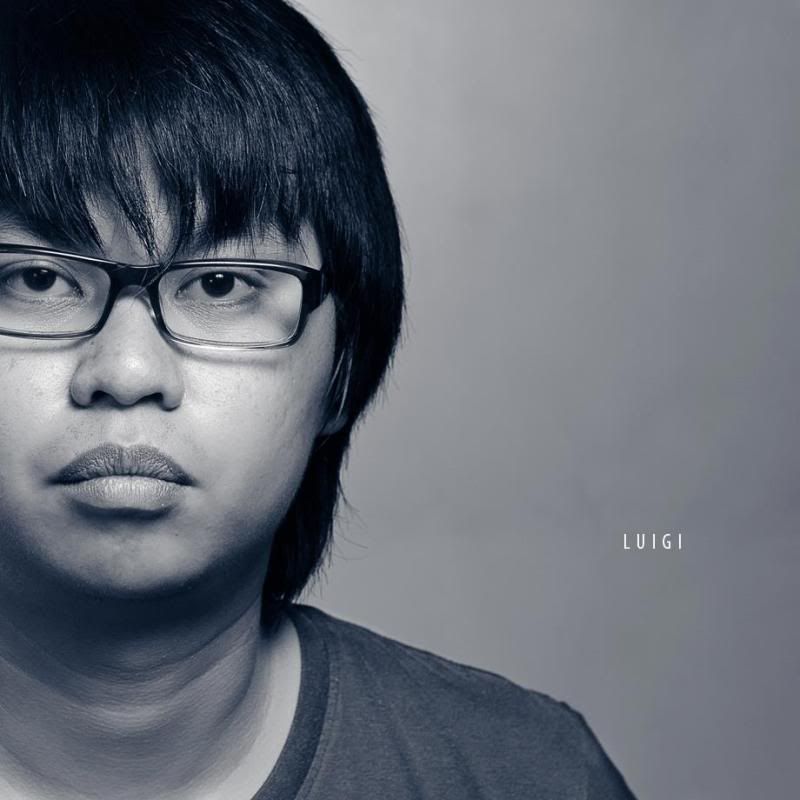
Luigi Anton Borromeo
And shoot he does, although the whole seriousness of the craft was something he had to get used to. “Intimidation is my weakness,” Mr. Borromeo said. “I easily get intimidated when I’m in a crowd of photographers who have greater experiences and have better equipment than I do. I own an entry-level digital reflex camera. So the only way I can compensate is to do my best to make a picture seem like it was shot on an expensive camera.” Which is perhaps the perfect retort to anyone who believes gadget trumps over talent. (And there are certainly a lot of them.)

Portrait of Kylie Montebon by Luigi Anton Borromeo
Mr. Borromeo’s forte is environmental portraiture. “I was inspired by Joe McNally,” he said, “especially in how he lights his subjects. He does this in very creative ways. He utilizes ambient and artificial lights very well, making the picture interesting. His technique gives his subject more dynamism and depth, without exactly going overboard.” His portrait of Kylie Montebon is a good example of that influence—lighting and depth and texture and subject’s beauty in a great mix, it cannot help but tell a story. This is not merely a girl posing. This is a girl with a story captured well—a hesitation in full make-up, wary and unfeeling at the same time. That she caresses a tree, its texture barely there, adds to an effect of obliqueness.
Brian Arbas Rimer, on the other hand, seems to have found firm footing in both still photography and video—and his own love affair with capturing image also has its roots in childhood. “My dad used to bring his camera everywhere we went, and we kind of got used to the idea of photographing every detail of our family vacations,” he said. “I got my first film camera when I was 7, and since then, I’ve fallen in love with photography.” He started devouring the pictures of Scott Kelby and the photographs he saw in National Geographic. He started aiming for what he saw in them: “a perfect shot, where one image perfectly captures an entire event.” That calls, of course, for an instinctive feel for the grand moment that is often fleeting, which is something that will inform his future work.
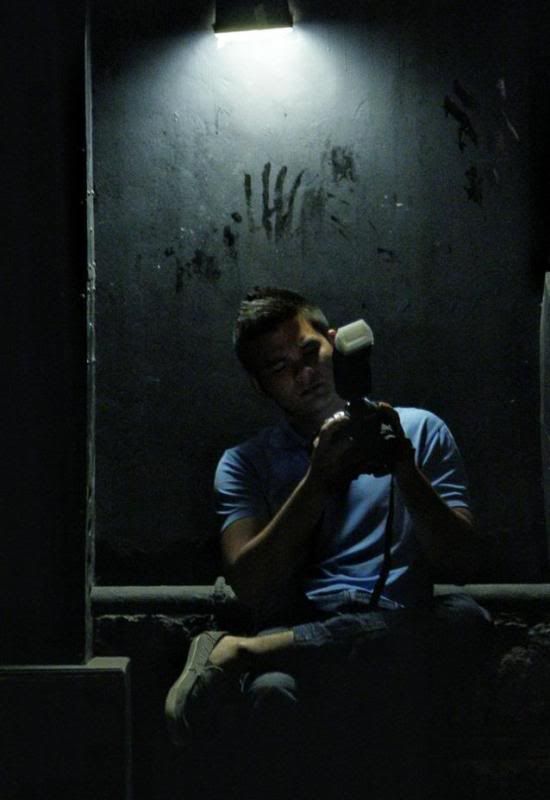
Brian Arbas Rimer
But Mr. Rimer’s real education sprang from encounters with local wedding photographers—Dino Lara, Rock Paper Scissors, Paul Vincent, and Nelwin Uy. “I noticed that they concentrated more on people’s expressions rather than on technicalities,” he said. The technicalities, for him, can often prove to be cumbersome if allowed to overwhelm the shoot. Mr. Rimer prefers instinct above all, especially the instinct to capture emotion in people that, in his own words, “can be universally understood.” “Photography,” he once said, “is the language I use to translate other cultures.”
One sees all these in his collective work that seems to celebrate the candid. “I like to take a step back and let things happen on their own rather than setting up or posing a picture,” he said.
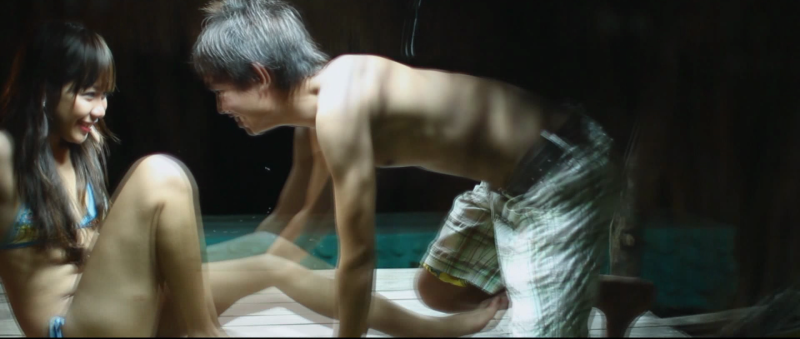
Scene from Amor y Sangre by Luigi Anton Borromeo and Kim Cuevas
With Mr. Cuevas, Mr. Rimer has also done cinematography for some local short films, notably a NORSU-produced film titled Amor y Sangre. There is a sequence in the film—of two lovers being amorous in a beach-side cottage at night—that jumps at me for the inventiveness of its tracking shot which at once relays playfulness and illicitness requisite in the scene. “I started to get interested into cinematography not that long ago since HD movie recording came out,” Mr. Rimer said. “Bringing movement to pictures was something totally new for me, a still photographer. First it started out as something I did for fun, until I began learning more techniques. It soon required new equipment, and once again it became another passion.” Of Mr. Rimer’s forays into film, he cites as influences the documentaries of Jason Magbanua, Threelogy, Mayad Studios, Chase Jarvis, and Vincent Laforet.
For Urich Calumpang, photography began as a holiday gift when he was younger. “I got my first camera from my mom as a Christmas gift,” he said. “It was a Casio point-and-shoot camera, and I started taking pictures of the usual flowers ands sunrises and sunsets. The usual macros. What was just there, I shot. I was 17. I had that camera for around a year, and soon it broke. So I got another camera, which was still a point-and-shoot one, a Kodak. But I wasn’t satisfied with my pictures, and so I worked abroad, in California, for two months, and saved up for a better camera. Which was a Canon 550D, which I use until now.”

Urich Calumpang by Francis Silva
That was when he started shooting for real: people and streets and assorted events. “It was mostly just everything I saw that interested me,” he said. “I’ve learned a lot from the photographs of Ansel Adams. And locally, the works of Hersley-Ven Casero. I soon met the most awesome photographers who mentored me and taught me a lot of things, and helped me. I learned the ethics, I learned how to take solid shots, how to cover events, how to dress appropriately. There’s Greg Morales. He’s like my second dad. And I’m most thankful that we got to know each other.”
For Mr. Calumpang, the process of taking good photographs is just letting the creative juices flow. “I have learned not to suppress it. It’s there, within you. That flows in you,” he said. And so, every single day, he brings with him anything that has a camera—a phone, an iPod, whatever. “Wherever I go, I’m always ready to take pictures of things, everyday things that people often take for granted. Some of the most wonderful photographs I’ve gotten come from the most common things usually taken for granted. But my process is quite simple: I feel it, the potential photograph. When you look at something, and you picture it in your mind…when you are able to think of that something, you can actually take that very picture.”
His regular commissioned photos, always without Photoshop, have a sparkling crispness to them that belie an instinctive feel for moment and light and angle. But when he goes for a stylistic bent, he bends color to a 70s Polaroid feel. “These photos give me that nostalgic feeling,” he said, “and a sense of euphoria.” Which may be understandable for somebody who is fond, musically, of standards and the whole Beatles repertoire. “I’ve always wondered what it must have felt like, to live in that age, when my music idols were actually very much a part of the era,” he said. And in wonderment, he tries to recapture an era with photography.
And so we thus know that Mr. Calumpang has his own stylistic quirk, often best captured in his experiments with Instagram, using his iPod.
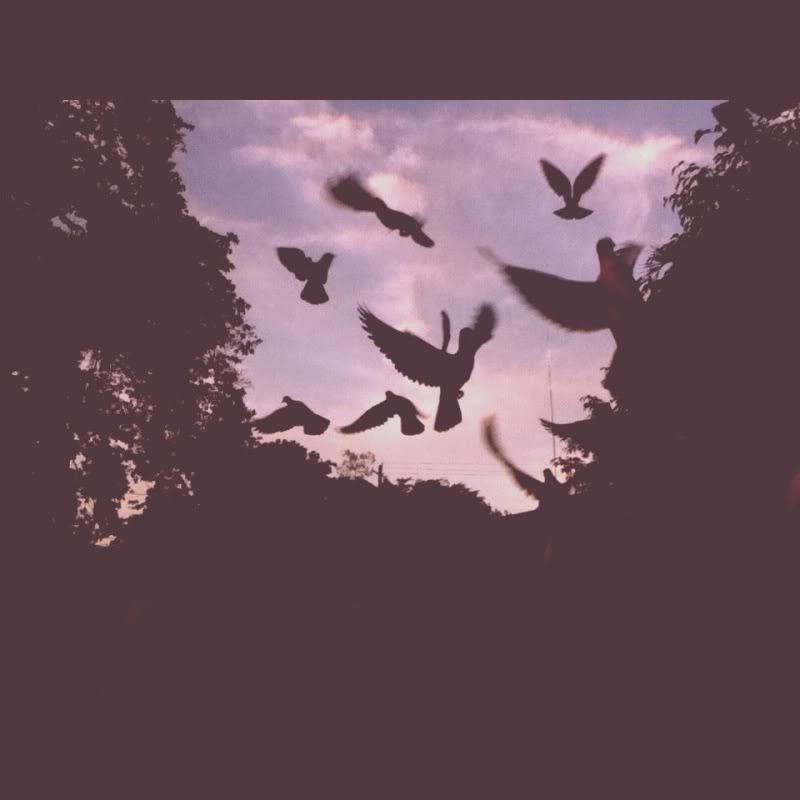
Pigeons 2, taken with Instagram, by Urich Calumpang
But his fascination for the extraordinary and the symmetrical in the common perhaps defines him best as a photographer—and you see that in his shots of architectural detail, of lines, of geometrical shapes. All these from everyday objects and scenes, of course. This appeals to the obsessive compulsive in him. “I love symmetry. I love it because it has balance, it creates a sense of completeness, which best describes my personality as an O.C. guy. I put more emphasis on balance, and seeing things that are in place makes me at ease,” he said.
A sense of balance, ease, and symmetry. A feel for light and ambience. An instinct for moments. Perhaps these are the very ingredients that define the photographic eye. In the works of these three men, we have an embodiment of the very same things.
Labels: dumaguete, film, negros, photography
[0] This is Where You Bite the Sandwich
12:46 AM |
The Designer of Film Sound
Part 7 of the Dumaguete Design Upstarts Series
Think of your favorite film, and you think of the images that compose the story. The best ones—a marriage of skillful direction and a deft cinematographic eye—give film an almost tactile heft. The best of film, after all, is sorcery in pictures in the service of story. Think of the films seared into your memory. There’s the little girl in the red dress in Steven Spielberg’s black and white
Schindler’s List. There’s Neo evading bullets in a space-bending ballet in The Wachoswki Brothers’
The Matrix. There’s the smoke billowing from the passing trains, to engulf the space of the illicit love affair of our lovers in David Lean’s
Brief Encounter…
You behold these choice mise en scenes, and you know, somehow, what their movies are specifically all about. Films are indeed constructed from a grammar of images. But sound—
and music—underlines their emotional tone.
Think about your favorite films again, and at the back of your heads, the refrains of their scores somehow become their anchors: consider John Williams’ shark-baity suspense in Spielberg’s
Jaws, Henry Mancini’s longing for a world that understands lost souls in Blake Edwards’
Breakfast at Tiffany’s, Bernard Herrman’s slashing sounds of terror in Alfred Hitchcock’s
Psycho, the Bee Gees’ disco beat underlining a dreamer’s hopes of getting away in John Badham’s
Saturday Night Fever, Michael Giacchino’s mournful limbo in J.J. Abram’s
Lost, or Gustavo Santaollala’s evocative lament for tragic cowboys in Ang Lee’s
Brokeback Mountain. Their music embody the films they are part of as a kind of emotional architecture. (Or if not “embody,” perhaps “underline”?) The quickest way to appreciate this is to watch a horror movie and have it unfold with one covering one’s ears. The result is strange: somehow, the scare is lesser, unless you are F.W. Murnau making
Nosferatu, and silence is not an impediment to a cinematic evocation of exquisite horror.
A great musical score is designed like an architecture of sound—each trill and melody composed to tease out something in us the moviegoer, and no one in Dumaguete knows this more than Ian Manuel Mercado.
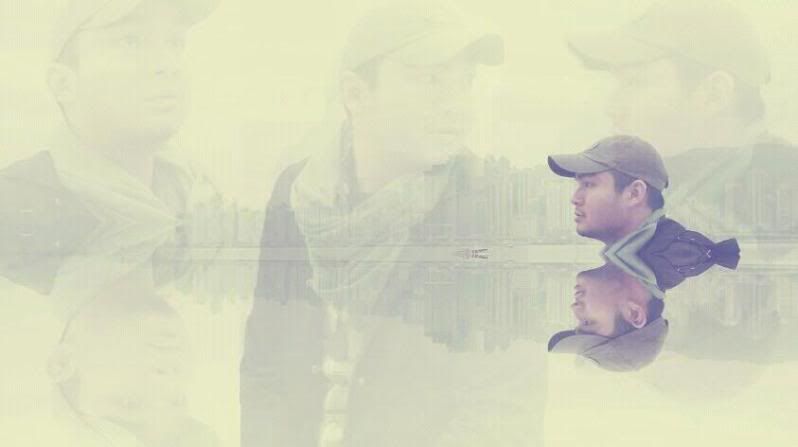
Still a music student in the College of Performing and Visual Arts in Silliman University, Mr. Mercado has somehow found a way of gaining some traction in the international world of film composing—thanks, in large part, to the Internet. And more specifically, Soundcloud, a popular music-sharing social networking site.
“Someone from UNESCO wrote to me to ask if I was interested to work for a recent project,” Mr. Mercardo said. “It was a World Heritage and Cultural Diversity promotional video, and I was to work as a film scorer together with some other amateur composers picked from around the web. The rest, as they say, is history.”
That stint led him to obtain a full merit-based membership in the Society of Composers and Lyricists, or the SCL, where he was able to meet with fellow musicians—mostly composers—notably some legends like James Newton Howard, Bryan Tyler, Steve Jablonsky, Christopher Lenertz, Bill Brown, Deane Ogdene, and many more. “I met them in one of the SCL’s composers’ symposia where we I got the chance to further develop my skills in film scoring,” Mr. Mercado said. “The SCL is also where composers get the chance to get their scores laid on some short or big films, advertising campaign and alike.”
Mr. Mercado—a talented pianist and also a member of Silliman’s Campus Choristers and Ating Pamana—has always been into music composition, but scoring for films has of late become the major focus in his early blooming career as a musician. And in that regard, he has managed to delineate the subtleties demanded by this particular craft—something leavened by the challenge of cinema: “What is it that separates a composer from a film scorer? I believe it’s the ability to look at a movie, not just from a musical perspective, but from a filmmaker’s as well,” he mused once to me in consideration of what he does. “An effective score must have the same kind of exposition and development and recapitulation that an effective script has. And if you take out elements along the way, or leave out exposition, then it doesn’t work quite as well. Moreover, there are some more other crucial viewpoints in film scoring that we should consider. Geography, for example. I always look for the geography of the film I’m working on, because I’ve found that if I can attach some cultural sensibilities to it, it’s easier for me to find my way through musically.
“Then there is theme, and there is character. I’ve also discovered that directors habitually have notions of musical themes to characterize individuals in a picture, but I’ve never really understood that, and I’ve never worked that way—unless I was really forced to. While a number of situations might combine to cause a motif to recur in situations involving the appearance of a particular character, I’d maintain that in my scores, this never has a conscious genesis for me.
“There’s also orchestration and instrumentation. For me, less can really be more in film scoring. I feel that that’s why so many short films are so impressive musically. They are often scored with just a few instruments. Although this may be the result of budgetary restrictions, personally I find that kind of thing terribly appealing. As long as you can make an effective counterpoint out of a two- or three-player ensemble in a score, it would still be as grand as an 80-piece orchestral score.”
A lot of these you can see in his score titled
Redemptionem Inter Racúndiæ, something of a favorite of mine. I like its slow build-up, announced by some bells pealing, and then a hazy percussion blend that eases into a thrilling rhythm. There is narrative movement to the music—harp, flute, and string soon ebbing and flowing to the sound of waves crashing, reminiscent of Trevor Jones or James Horner or Randy Edelman. You close your eyes, and with the music alone, your mind lends itself to a movie of your own making. Such is the power of film scoring. As complement to film, it is the element that pushes the image to a higher resonance. On its own, it creates its own narrative gravity and propulsion.
Mr. Mercado has come into his own, of course, as a study of influences. “I’d point out Gustav Mahler and John Williams if I really have to name names here,” he said. But his artistry, it seems, has enough wellspring that come from some secret personal source. “A lot of my inventiveness comes not from direct research of the various genres or people. More from my own innate feeling for a style—from medieval to modern-day music,” he said. “It’s an impressionistic kind of thing.”
That personal impressionistic feel for sound seems to work for him. The doors are certainly opening for Mr. Mercado. It won’t be too surprising to find a future movie with his name indelibly impressed on the celluloid projection with “music by” attached firmly to it.
Labels: dumaguete, film, music, silliman
[0] This is Where You Bite the Sandwich
Saturday, May 05, 2012
11:30 AM |
You Die for Stories. They are Important in Our Lives.
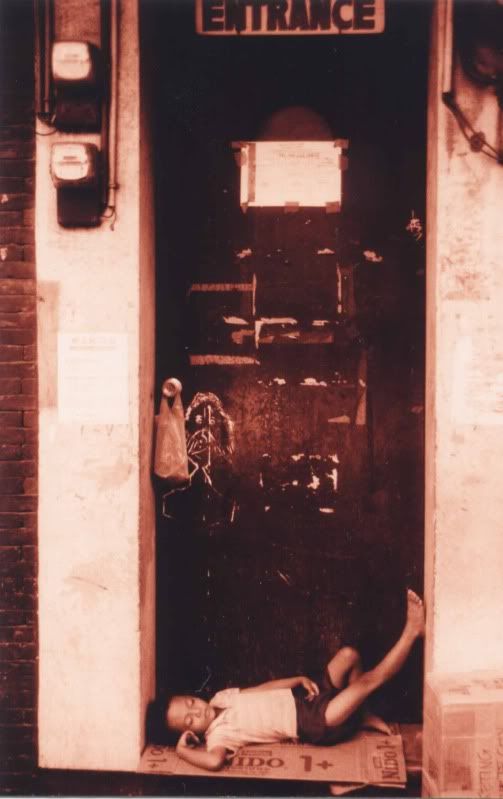 “My cousin Helen, who is in her 90s now, was in the Warsaw ghetto during World War II. She and a bunch of the girls in the ghetto had to do sewing each day. And if you were found with a book, it was an automatic death penalty. She had gotten hold of a copy of ‘Gone With the Wind’, and she would take three or four hours out of her sleeping time each night to read. And then, during the hour or so when they were sewing the next day, she would tell them all the story. These girls were risking certain death for a story. And when she told me that story herself, it actually made what I do feel more important. Because giving people stories is not a luxury. It’s actually one of the things that you live and die for.”
~ Neil Gaiman
[Art: The Guardian Post by Razceljan Salvarita]Labels: photography, writers, writing
[0] This is Where You Bite the Sandwich
Friday, May 04, 2012
12:36 AM |
The Vintage Stylist
Part 6 of the Dumaguete Design Upstarts Series
No one argues with Coco Chanel. The legendary fashion designer once said: “Dress shabbily, and they remember the dress. Dress impeccably, and they remember the woman.”
This declaration defined, with the same stylish precision of a Chanel suit, the importance of dressing well. And perhaps, rallying to this call, the truly stylish among us—and not merely the unfortunate fashion victim—aim for that impeccability of dress.
Why? To make a mark, to forge an identity, to express who we are. Fashion becomes emblematic in this regard—and perhaps this is why a particular species of enterprising people have evolved to answer that need. You know who they are. The stylists.
Stylists, especially the best ones, are avid readers of fashion. They are the able conjurers of sartorial language, which marries personality with cut fabric. On television, we get Rachel Zoe—although one might make the argument she does not exactly typify the best of such strange occupation. So forget Rachel Zoe. There’s somebody in Dumaguete who does exactly the same thing as the reality TV fixture does, but with decidedly less mugging for the camera. And decidedly with more creativity. Her name is Veronica Valente-Vicuña, and one can say she has made a life and career over her uncanny sense of what works for you, fashion-wise.
“I have always enjoyed going to flea markets and
ukay-ukay, ever since college,” Rona told me. “Being a bargain hunter, I get a rush when I find pretty items which would cost triple or more if sold in department stores. Even if the clothing item would be too big for me, I would still get it because my thinking is, I could just have it altered down to my size.”
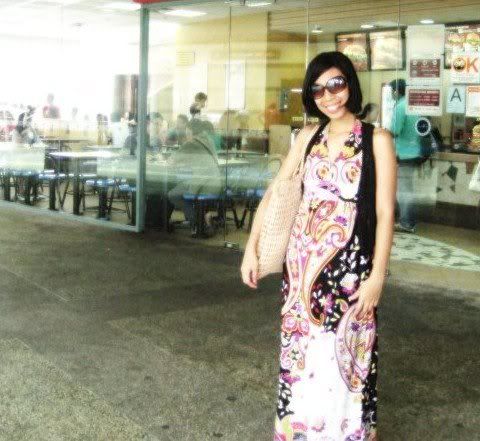
Stylist and designer Rona Valente-Vicuna
Eventually that nose for bargain and style led to a kind of fashionable hording. “Soon I had bags and bags full of dresses,” Rona remembered, “So I thought, why not sell some?”
She started toying with that idea of commercializing her sense of fashion in 2006, but it took her until February of 2007 to get things really going. She opened her online store
Veronica’s Closet, initially listing only just six choice items.
To her delighted surprise, the dresses sold out within hours. “That encouraged me more,” Rona said, “And soon, with a good client list growing, I had to make a weekly upload schedule to keep up with the customer demand.”
A few of summers ago, she found herself participating in a program for fashion designing in Cebu. “I learned quite a lot from some of Cebu’s top fashion designers,” she said. That summer program ended with a fashion show at the Waterfront, which featured the participants’ new designs, things they created for class.
This soon paved the way for better things. “Subsequently, I was invited by Anya Lim of Anthill Fabric Gallery in Cebu to display some items from my website,” Rona said. “She had been buying regularly from my site, and she wanted me to sell my re-made dresses in her fabric gallery. She encouraged me to come up with a line, where altered and reconstructed vintage dresses are showcased.” Rona chose the name
Re/Dress for the line, which meant, simply, “to re-do the dress.”
She explained the concept behind the project: “Some dresses may have beautiful fabrics, but the dress may not be worn again due to tiny rips, runs, and others. This is where I come in. I totally revamp the dress. Using what fabric can be salvaged from it, I then add new fabrics and restyle the old design.” Clearly, what had began as a hobby—transforming old dresses and making them different and more fashionably current—soon became one of her sources of income. “And relaxation, too,” Rona admitted.
What is the underlying philosophy of her work? “To provide unique dresses, which are extra-special because of the history behind it, them being vintage,” Rona said. “As a member of Anthill Fabric Gallery and Stylissimo Sessions of Cebu, I believe in thinking green. By using old materials, I can do my part in saving the environment.” This philosophy led her to become part of a fashion show in Cebu called
Greenology, where designers made dresses using
retaso and recyclable materials. “I used old neckties for the headpiece, as well as men’s blazers and pieces from an old computer keyboard,” she recalled with a smile.
But her sense of style is not without study. For Rona, her influences consist of the style icons of past, which include Audrey Hepburn. “It is because of her femininity and how she carried men’s inspired clothing,” Rona said. “Her style was never fussy. She kept it neat and clean. You can’t go wrong with that.” There is also 1960s model Twiggy, whose slender figure—being both boyish and also ultra-girlie—was an inspiration for great designers of the time. “She rocked the mod look!” Rona said. “I love mod. Floral and geometrical patterns make me happy as well as solid-colored dresses decorated with bows and ribbons, buttons and zippers!”
From such confessions, one readily sees that for Rona, the love of vintage and everything related to it is what defines her sense of style.
Take her first collection
Lavender Fields with Anthill Fabric Gallery, for example. The whole look of the series foregrounds her aesthetics, which is essentially a worship of a laid-back vibe, hippie luxe and classic vintage all at the same time. There are the flowy dresses in paisley or floral prints, dresses with gauzy or silk fabrics, dresses with billowy white peasant shirts complete with embroidery—a style that defines what for Rona is soft, fun and young. There is the dress with the printed bib and belt from a vintage 70’s blouse, to which she added a gaze faconne fabric, which is like chiffon but is a bit stretchable. “I also re-used the original buttons from the blouse,” Rona said. “This dress is BoHo-inspired.” There are more of the kind in her inventory.

Gesta Gamo models one of Rona's creations
And what does she hope the future can bring for her? “I’m taking things in stride,” she said. “For
Veronica’s Closet, I hope to have a name for myself in the local Internet market as the shop to go for vintage and vintage-inspired dresses. For
Re/Dress, I am currently laying out the beginnings of what will be my spring/summer collection. And maybe one fine day, I can get featured in Preview, my favorite magazine. I can dream right?”
Yes, Rona, you can. And fabulously, too.
Labels: design, dumaguete, fashion
[0] This is Where You Bite the Sandwich
Monday, April 30, 2012
10:43 PM |
From Nick Joaquin's May Day Eve

“And I will not lie down!” cried the rebellious Agueda, leaping to the floor. “Stay, old woman. Tell me what I have to do.”
“Tell her! Tell her!” chimed the other girls.
The old woman dropped the clothes she had gathered and approached and fixed her eyes on the girl. “You must take a candle,” she instructed, “and go into a room that is dark and that has a mirror in it and you must be alone in the room. Go up to the mirror and close your eyes and say:
Mirror, mirror,
show to me him
whose woman
I will be.
If all goes right, just above your left shoulder will appear the face of the man you will marry.”
A silence. Then: “And what if all does not go right?” asked Agueda.
“Ah, then the Lord have mercy on you!”
“Why.”
“Because you may see—the Devil!”
The girls screamed and clutched one another, shivering.
“But what nonsense!” cried Agueda. “This is the year 1847. There are no devil anymore!”
[Art from the poster for the play by Juan Ekis. Read the rest of the short story here.]Labels: fiction, philippine literature, writers
[0] This is Where You Bite the Sandwich
Tuesday, April 10, 2012
1:31 AM |
The Muscovado Documentarian
Part 5 of the Dumaguete Design Upstarts SeriesCarmen del Prado’s energy is sweet and infectious. That was my first impression of her. And time and again, every time we meet, it is that personality that strikes the most. Formidable, stealthy stuff for a documentarian, if you come to think about it.
Then again, her entire family—the Del Prados, who have made formidable business of being, all of them, artists—is largely cut from the same cloth. The fruit, so they say, never falls far from the tree. When I first got to know her, it was a Carmen still embarking on the possibilities of being a filmmaker. She was still unsure about what she wanted to do with life, considering what surrounded her in her immediate family—Dad Noy was a businessman; Mom Wing was an artist; and then there were the brothers—Miguel was already a gifted
hilot, Ramon an animator of increasing renown, and Gabriel a chef.
For Carmen perhaps, the idea of doing a documentary on Dumaguete’s artists was a way of weighing things, of seeing what was there, and finding out what could click within her. I remember that she had emailed me at the start of her project, asking for pointers and leads about whom to contact from the disparate community of artists in Dumaguete.
She began with that list, went off to work, and then a year later, she came out with the finished product—
Dumaguete: An Artists’ Haven. And for a first work by a budding documentarian, it was something else entirely: a cohesive narrative about artists in a small city, colorful by all accounts, and threaded all throughout with a confidence that proved exciting. In 2010, the film became Dumaguete’s representative to the annual CineRehiyon, the national film festival of cinematic works from around the region (except Manila). That film proved to be some kind of bellwether for her.

Which is good news because being a documentarian filmmaker is quite a rare breed in the Philippines. Almost all budding filmmakers in the country dream of doing it the fictional route, which is the usual, with their eyes firmly set on Cannes or Berlin. Or a career with StarCinema. What documentarians we do have spring mostly from the news outlets in media organizations: at the forefront of a young generation of documentarians, we have Paolo Villaluna and Patricia Evangelista at the helm of ANC’s
Storyline. Sure, there are also Ramona Diaz (
Imelda), Monster Jimenez (
Kano: An American and His Harem), and Marty Syjuco (who produced
Give Up Tomorrow)—but their number still pale considerably in comparison to the hordes of film fictionists. In Dumaguete, the only other person who has made some foray into documentary filmmaking is Anthony Gerard Odtohan, who made
Papa Mike and the Rainbow Orphanage in 2008, but Odie is now, alas Tokyo-based. (Disclosure: I’ve produced the 2011 documentary
City of Literature with Chinese filmmaker Zhao Lewis Liu, but I don’t really consider myself a full-fledged documentarian. A dabbler, at most.)
Enter Carmen into that rarified rank. That Carmen has considerably gone far at this stage of her career is beyond doubt, and already, together with her filmmaking partners Juls Rodriguez and brother Ramon, she is putting together a commissioned work for an international body, filming in different areas of the country to tell different a story about the Philippines.
“My love for art started when I was very young,” Carmen told me. “A lot of it came from my mom who taught us how to color and paint. It was only recently—in the past three years or so—that I’ve become interested in film.”
She started her film work with a few narratives made for her classes in the College of Saint Benilde—with some fun on the side making music videos with friends and family. She had no inkling then that it was going to be her consuming passion.
But passion it has since become. Her filmmaking, however, is something that she does with an underlying philosophy she compares to sugar, which is apt, since her family—part of Negros’ sugar society—owns a hacienda in Bais City. “My work is like muscovado sugar,” Carmen said, “Raw, not refined, but still sweet. In my first film, for example, I didn’t want it to be too refined or too commercial. I wanted it to be more natural and real. Instead of having the typical narration we find in documentaries, I wanted the film to narrate itself, told from the point of views directly from the local artists themselves. And I think that’s what made it interesting.”
That whirlwind of artistic points of view is something that speaks of her as a sponge for artistic ideas. “I get a lot inspiration from different cultures,” she said. “I like working in new places, meeting different artists and learning new things from them, and getting inspirations from what they do—which is exactly what I’ve done in creating my. That is why this film is something that best describes me as an artist.”
It is her brother Ramon, however, who remains her biggest influence. She said: “The biggest influences in my work are the members of my family, but especially my brother Ramon, who is also interested in film and animation. He has taught me to be the best in what I do, and we always try to team up together when we brainstorm for new projects. He’s one of the best persons whom I can really turn to since we have similar interests.”
And what of her work in the coming years? “What I would really hope to achieve with my work in the future is to become an even better filmmaker,” she said. “To travel more, and to create more films as well as promote the city where I grew up in. Hopefully, my films will become a tool for inspiration to others.”
Photo by Artu NepomucenoNext: Veronica Valente-Vicuña as the Vintage StylistLabels: art and culture, documentaries, dumaguete, film, negros
[0] This is Where You Bite the Sandwich
GO TO OLDER POSTS
GO TO NEWER POSTS


