Tuesday, October 29, 2013
 8:10 PM |
The Math in You
8:10 PM |
The Math in You
The Atlantic just published an article that declares "being bad at Math" to be a myth.
This is interesting because I grew up believing I was never a Math person. In grade school, I somehow refused to memorize the multiplication table, for example, because I kept finding myself asking things like, "Why is 2 x 2 = 4?" Always the
why.
So every time we'd get these competition quizzes in class, like pitting two classmates together in a two-lane race -- where every correct answer to flashcard mathematical problems gave you a chance to step forward where the teacher (and the finish line) was -- I'd lose. The winner got to sit down, and the loser had to go over the race once more. One time in Grade III, I lost to the ENTIRE class.
(But, whatever, I graduated valedictorian anyway,
ha.)
I was always bad in Math, except when they gave us those "window" exams, and for some reason, I'd always rate high. Not until junior high in Silliman University did I learn to love Math. I loved the intense concentration every exam demanded. I loved it, and all because of Prof. Alice Mamhot. She was a patient teacher. She knew the value of listening, and so she refused to have us write down notes while she was lecturing, always intoning to us a sentence in mock Spanish: "No puede calabang en grande de baha." And after we were done understanding everything she'd written on the board, she'd throw up her hands and say, "Copy break!" And then we'd write everything down. I learned to love Math with her. And during one periodical exam, I astounded everybody by getting a 99/100. I got a grade in the 90s that year.
So yes, we all have good Math in us. We just need good teachers.
Labels: education, life, mathematics, memories, teaching
[0] This is Where You Bite the Sandwich
Monday, October 28, 2013
11:21 PM |
The Art of the Teenage Wasteland
Maybe it’s because I’m reading Jon Savage’s groundbreaking exploration of the formation of the culture of adolescence in
Teenage. Or maybe because I just finished watching Sofia Coppola’s
The Bling Ring (2012). But sometimes, the art of Terry Richardson, Larry Clark, Harmony Korine, Brett Easton Ellis, and often Steven Meisel (especially in 1995) clumped together — distinctive for their almost salacious eye on teenage white-trashy abandon, which celebrates and condemns it at the same time — frankly scares me. Or at least unsettles me.



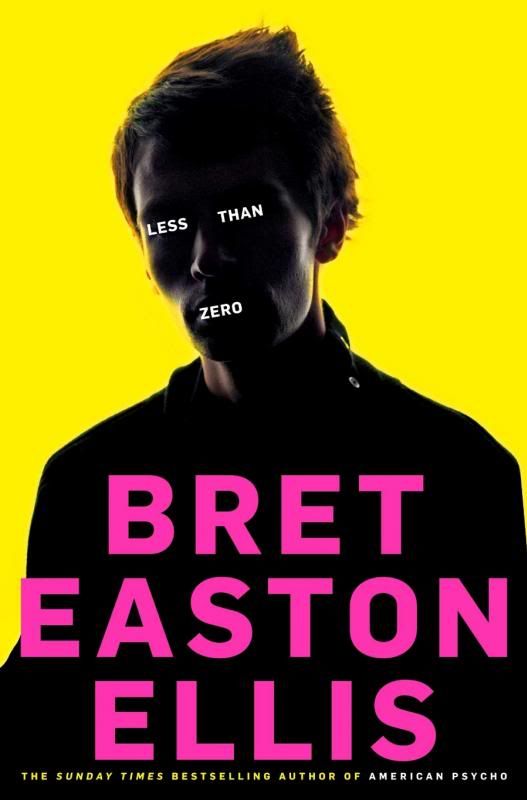

But maybe to unsettle is the point.
Or maybe I’m just getting old, hahaha.
Labels: advertising, books, criticism, film, life, photography, pop culture
[0] This is Where You Bite the Sandwich
9:55 PM |
A Mountain of Dreams
“It is easy, when you are young, to believe that what you desire is no less than what you deserve, to assume that if you want something badly enough, it is your God-given right to have it. When I decided to go to Alaska that April, like Chris McCandless, I was a raw youth who mistook passion for insight and acted according to an obscure, gap-ridden logic. I thought climbing the Devils Thumb would fix all that was wrong with my life. In the end, of course, it changed almost nothing. But I came to appreciate that mountains make poor receptacles for dreams.”
~
John Krakauer,
Into the WildLabels: books, life, quotes
[0] This is Where You Bite the Sandwich
7:34 PM |
Questions and Interferences
What’s often frustrating about Dumaguete is how—for a place that is supposedly steeped with a fine sense of culture and the arts—it lacks two basic things that would make this claim more truthful than usual: (1) it sorely lacks museums, and (2) there are barely any galleries.
Where is a museum that should be showcasing the best and the most original of Oriental Negrense culture and artistry, ran with professional curators who know how to do their jobs? Bacolod has one from what I’m told, which denies Dumagueteños any sort of excuse except a lack of imagination. From my readings of local history, there have been some attempts to found exactly this in Dumaguete, but there always seems to be a lack of political will, or the wherewithal to slay goliaths that usually spring from such enterprise. How I wish one of the elegant sugar mansions along the Boulevard have been converted to house exactly this collection—but even the mansions themselves are dissolving away into commercial plastic surgery in a city that has not yet learned to appreciate its cultural heritage.
One significant landmark in Dumaguete, for example, is old Silliman Hall. It is the first building in campus, designed by founder David Hibbard himself in the American colonial stick-style architecture. Silliman Hall and the old Bell Tower bookend the very definition of the Dumaguete landscape. But in 1972, there was a proposal for Silliman’s Hall demolition—in the name of progress, of course. (Why is it that “progress” is always evoked to justify the building of ugly new buildings?) But the plan was strongly opposed by one Commodore Jose Andrada. His vehemence was such that he gave a generous donation instead to restore the building’s tower room. The plan was ultimately scrapped, and thank God for that.
Can you imagine Dumaguete without Silliman Hall? I can’t. I don’t think anybody can. Its eventual restoration in the 1990s finally paved the way for many of us to think that an appreciation for heritage can in fact be fruitful in the long term. But think about how the loss almost happened. And look at how our Rizal Boulevard is changing, and how much of our cultural heritage is being erased—without any of us voicing out a hint of complaint.
What museums we do have are of the anthropological and the biological sort in Silliman University—important institutions, of course. But the lack of a city museum focusing on the arts is jarring. We have become a city that has become ridiculously unaware of our artistic heritage.
Nobody knows about Jose Las Piñas, for example—the prime portraitist from Dumaguete in the 1950s. Nobody knows about Francisco Verano. Nobody knows about the rich period in the life of National Artist for Painting Fernando Amorsolo when he used to frequent the city to chase its light and rustic beauty, which eventually informed many of the paintings he did here. (One Amorsolo now hangs in the Office of the President of Silliman.) Nobody knows about groundbreaking work by some of our contemporary artists, from Paul Pfeiffer to Karl Aguila, from Kitty Taniguchi to Amihan Jumalon, from Mariyah Taniguchi to Jana Jumalon, from Razceljan Salvarita to Kristoffer Ardeña, from Jutze Pamate to Mark Valenzuela, from Hersley-Ven Casero to Paul Benzi Florendo, and so on and so forth. Nobody knows what part Dumaguete art has contributed in the shaping of national art. And that’s sad.
There are barely any galleries either, only Mariyah Gallery off Bogo Junction and the one at Sidlakang Negros. The Cultural Affairs Committee at Silliman does put up several exhibitions at the Claire Isabel McGill Luce Auditorium Foyer Gallery, which sometimes spill over to the greatly unused exhibition space at Silliman Hall. Beyond these, there’s absolutely nothing.
Except for the restaurants.
For some reason, the restaurants are the ones taking up the slack. Perhaps in Dumaguete we admire our art alongside our food? Or perhaps, our culinary entrepreneurs just have a more refined sense of the visually artistic. The regular foot traffic that food brings makes the set-up ideal, too. When Jutze Pamate ran the now-defunct Jutz’s Café, it operated a gallery on its restaurant walls, and offered good art alongside its Tuscan pork chop and garlic fish fillet. Wing del Prado used to showcase artists she loved in a revolving exhibition at Gabby’s Bistro. Mike Butler—who owns an extensive collection of local art, which is housed at CocoGrande Hotel—used to make available the walls of Coco Amigos for local artists. Sanda Fuentes does the same thing in Lab-as, and Babbu Wenceslao in El Amigo. New to the ranks is Iris Armogenia, who has been active of late to use the walls of KRI to exhibitions of artist-friends.
The latest from KRI is
Interference, a small exhibition that gathers together four artists of uncommon brilliance: Elle Divine, Razceljan Salvarita, Jana Jumalon-Alano, and Rianne Dawn Salvarita. It’s interesting to note that they make up exactly the kind of artists who usually thrive in Dumaguete—the beautiful
langyaw, two coming from Bacolod, one from Australia, and another one from Zamboanga. Their disparate roots coupled with distinct visions inform an exhibition that varies in mediums and artistic expressions—and perhaps it is that variety that they truly celebrate. For them, after all,
Interference means “a surge of ecstatic creativity,” a “raw[ness] of infinite possibilities.”
“[It] is a radical frequency,” their collective statement continues. “Taken from a higher realm, it is a positive deviant. It triggers inclusion towards a diversified perspective that caters to a change from monotony… [It] projects a new vision of maturity in understanding the scope of sundry forms of art expressions in the borderless creative playground. It is a virtual ripple that touches the edge of the monotonic zone as it makes a subtle invitation to take bolder exploration in the spirit of creativity.”

In other words, at least in my reading of it, it is a collection by four artists who are breaking new grounds from the kind of art they have always been associated with. And that is evident enough. Rianne Salvarita, whom I have known to do representational art but pushing it into the eerie regions of the visceral, is here experimenting with a sort of cubism that runs away from the old embrace of abstract expressionism. Here, the geometric shapes have shadows; they have an undulating sense of physicality that courts his old representational mode. This is most apparent in “Iceberg,” which is a whitish-blue landscape that echoes its title, but fixed in that geometric rendition that makes it both solid and fluid.


Rianne’s brother, Razceljan Salvarita, on the other hand, has gone away from the mandalas and circles and fiery vulvas of his Bali phase—he had been a fixture in the Indonesian art scene for some time—to experiment in a kind of found art that isn’t. Because there’s still a painterly quality to his assemblage of wood and linen cloth and rope and what-not. Take a look at his “Tapestry in Symphony (in A Minor).” The pieces of repurposed wood he has gathered are wrapped in cloth and placed in a haphazard manner, approximating picket fences, on top of a painted board. The result is both rough and elegant—and together with his other works in the collection, they surprisingly resemble the spirit of abstract expressionism, like a Kandinsky with the flavor of eco-art.

The surprise for me in this exhibition is the revelation of Elle Divine as artist. One of the loveliest women I know, she takes my breath away with “Map of HerStory,” a study in red broad strokes and drippings that I would have described as a marriage of Pollock and Rothko—but with none of their masculine rages. Her painting pulsates with feminine power, her reds carefully textured out with painstakingly placed acrylic dots that give shape to the swallowing hue. All in all, her paintings come off as almost portraiture in nature—but not of the human face, but of the human aura.

Jana Jumalon-Alano, however, takes the biggest leap in her artistic evolution, and lands beautifully. I remember her paintings of pastel-colored nudes before, which imported a sense of feminist didacticism that I admired greatly but wasn’t particularly moved by. But what she does in “Wonder Years,” a portrait of two children peeking out of what seemed like broken wooden panels of a wall, to reveal their nondescript expressions, a gallery of family pictures behind them—is a wonderfully composed work that combines a sureness of craft, a tone of earthiness, and a narrative of the strikingly autobiographical, varnished with a singular warmth that pervades the painting’s affect. Her mixed media piece “Bira Cara Series” is of the same import.
Interference feels like an introduction to four great—but surely separate—exhibitions. Which is understandable, given the capacity of KRI as exhibition space. If only for this wonderful glimpse it offers, KRI is to be highly commended for taking up a cause Dumaguete City itself seems reluctant to.
Interference runs until 28 October 2013. KRI opens from 8 AM to 9 PM.Labels: art and culture, dumaguete, negros, painting
[0] This is Where You Bite the Sandwich
Friday, October 25, 2013
7:02 PM |
I Already Know Her Name

I kept thinking, while watching Kimberly Peirce's remake of
Carrie (2013): "Where are the boobs? Where are the boobs?" Not because I'm an asshole, but because Brian de Palma perfectly mined the metaphorical relationship between a girl's newfound telekinetic powers with burgeoning female sexuality. There are no boobs in this new version. There is no bite, either, although the film mistakes visceral CGI for dreadful terror. I love the humanity of the new Tommy though; Ansel Elgort is a far cry from William Katt's Ken-doll marionette in the original, and I love that Peirce tries to check the flaws in the narrative logic of the original. But in the original, the malevolence sprang from Piper Laurie's Christian fundamentalist monster-mother -- but Julianne Moore telephones in the role of Margaret White instead, and it is a disappointment to discover that her greatest depravity is the ability to cut herself. But the greatest flaw in this movie is the casting of Chloe Moretz, whose mien suggests plucky rather than bullied-upon. Because of that physical unbelievability, Ms. Moretz hides behind physical acting instead, going about the school with her shoulders haunched to suggest vulnerability. Sissy Spacek never had to do that. You look at her, and she embodies frailty. You look at her again during the beginning of the prom scene, and she embodies girlish delight, the transformation to swan a magnificent surprise for us. You look at her again covered with pig's blood, and she is a fiery fiend whose stare curdles your blood. Moretz tries to do the same thing, and you think, "This girl is cosplaying."
Labels: film
[0] This is Where You Bite the Sandwich
Thursday, October 24, 2013
1:34 PM |
So, Would This Guy Brighten Up Your Life?

Say hello to Andrew McCarthy from John Hughes's
Pretty in Pink (1986). He keeps breaking into grins in this movie.
Labels: film, memories
[0] This is Where You Bite the Sandwich
Monday, October 21, 2013
10:27 PM |
Life Quake (Expanded Version)

I finally went home last Tuesday, October 15, at around 7:30 AM, after having grappled with writing an article about Siquijor witches for
Smile Magazine and editing a friend’s short story for an anthology, all of Monday night till the early hours of Tuesday morning, at Qyosko. I have always been a night owl; I work best around the quiet dictates of the midnight candle. And I like how it is when I alone am wide-awake while the rest of the world becomes quiet in sleep. It makes me think of how fragile the world really is, and how beautiful it can be in that fragility. The night reminds me there is an end to all things, and what makes us human is our furious pursuit of loving something that will never last. As the poet J. Neil C. Garcia once said, “It is finitude that makes beauty possible. I guess the beloved is beautiful precisely because he cannot be possessed, or because he can easily be lost.”
And so I was tired that Tuesday morning, and I was more than ready to sleep till noon. That was the plan.
I was beginning to slumber away when the earthquake hit at 8:12 AM. I bolted out of bed, every instinct telling me this was no dream, and the shaking of the floors—a quick dizzying spell that lasted forever—was no nightmare. I could hear people shouting outside.
I live on the first floor of a bulky house, and I could easily imagine myself flattened by all the concrete above me. We have been educated well by the Hollywood School of Disasters—that cinematic language of adversity where we see our movie heroes come to grips with being trapped in a collapsed building, or faced with the yawning knowledge of mortality as natural disasters vent their rage. I did not want to become like one of those movie heroes.
Every human instinct gets boiled down to one imperative:
live.
Getting up, I saw my MacAir by my bedside. For a split second, my heart weighed the consequence of saving possession—but I found there was quiet pride and surprising dignity in instantly letting go of materials things when I found myself thinking: “F*ck the laptop.”
I wanted to live.
I grabbed my keys, rushed to my padlocked gate—only to find the whole thing jammed as the earth quaked some more, and I remember thinking as my fingers fumbled with panicked key and stubborn lock: “Why do I have to die this way, dressed only in my shirt and blue underpants, trapped by this steel gate, with a full view of sky and street?” It seemed comedic, almost—but the quaking did not allow me to laugh.
I wanted to live.
I jimmied away at the lock, turning it this way and that way, until it finally did give way. But by then, the earthquake—which did not seem to wane—was over.
How do you describe the dizziness that comes after an earthquake? And I don’t just mean the physical kind, as your inner sense of balance grapples with the unexpected rattling to your system. Your body, you realize, is perfectly attuned to the earth where it comes from. Your skin senses now the slightest shake. Or perhaps, you tell yourself, those are just your nerves talking. There are aftershocks, yes, but you get to realize your mind creates their own aftershocks as your body settles down to the knowledge it has survived a potential disaster.
My senses were alert—but ultimately my body demanded sleep. Still, it took a while to go back to a slumbering state. It was easier though with the knowledge that my gate was now fully opened, unlocked. Never mind the potential thieves. There was only potential earthquakes still to come to deal with.
The aftershocks rocked. And I did not wake up at 12 noon as planned. My body woke up to the dimness of late afternoon, knowing I have slept away the entire day—and perhaps for the better. For how to deal with a day that had began with dizzying fear? The bed proved to be a comfortable companion. Later on, I would learn the day had darkened with rain clouds, and then it had rained hard. Later on, I would learn from my feed in Facebook and Twitter that people had talked of a possible Apocalypse.
If I weren’t hungry, I wouldn’t have gone outside after waking, but I needed dinner. I had already missed out on lunch. And food was what I needed as a kind of confirmation of life after the news of destruction somewhere else. The death toll was rising by the hour. And my heart bled for Bohol. I scroll down my social network feed, and see the damage of the old churches in Loon, in Loboc, in Dauis, in Baclyaon. All that history and beauty gone in an instant.
When I went downtown, the lights were off—a blackout, I was told. Later, safe in the bright lights of a café, life went on as I booted up the same MacAir I had readily abandoned to the welcome feed of the wifi. There was food before me, there were people I knew around me as well.
And all the while I thought of how life could be so random, so fragile, like the night. I thought of how things could meet their end in an instant even after centuries of having braved everything else.
I thought of how important it finally was to start living in the now. These are not life lessons from an earthquake, just an underscoring of what we already know but often forget.
Labels: life
[0] This is Where You Bite the Sandwich
Sunday, October 20, 2013
2:38 AM |
A Special Literary Issue of the Silliman Journal
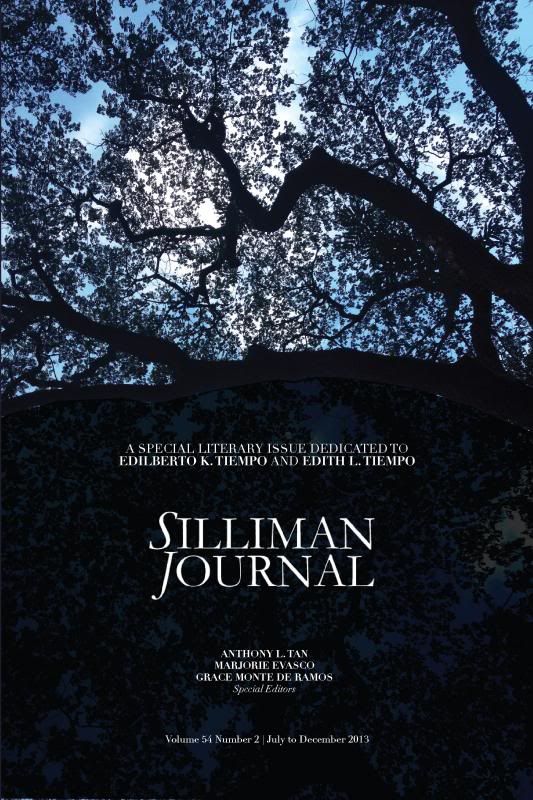 The special literary issue of the Silliman Journal launches on December 6!
 This special issue of the Silliman Journal -- edited by
Anthony L. Tan,
Marjorie Evasco, and
Grace Monte de Ramos -- honors the legacy of two giants in Philippine letters: S.E.A. Write Awardee Edilberto K. Tiempo, in honor of his birth centenary in 2013, and National Artist for Literature Edith L. Tiempo, in honor of her second death anniversary.
The issue includes a preface by Rowena Tiempo-Torrevillas, with contributions by Anne Carly Abad, Gémino S. Abad, Ceres Y.C. Abanil, Merlie Alunan, Adlai Amor, Ronn Andrew Angeles, César Ruìz Aquino, Corin Arenas, Cirilo F. Bautista, Randy Bustamante, Erin Cabanawan, F. Jordan Carnice, Ian Rosales Casocot, Albert Casuga, Thomas David F. Chavez, Elsa Martinez-Coscolluela, Jhoanna Lynne B. Cruz, Vida Cruz, Alice Sun-Cua, Zaldy Dandan, N. Adrian de Pedro, Ricardo M. de Ungria, V.I.S. de Veyra, Simeon M. Dumdum Jr., Felix Fojas, Armand Gloriosa, Michael Aaron Gomez, Asterio Enrico N. Gutierrez, Antonio Hernandez, Cristina Pantoja Hidalgo, Susan S. Lara, Francis B. Macansantos, Priscilla Supnet-Macansantos, Lorna Peña-Reyes Makil, Hansel B. Mapayo, Peter Zaragoza Mayshle, Timothy R. Montes, Homer Novicio, Corinna Arcellana Nuqui, Carla Pacis, Allan Pastrana, Myrna Peña-Reyes, Victor Peñaranda, Mary Ann E. Pernia, Noel P. Pingoy, M. Protacio-De Guzman, Deedle Rodriguez-Tomlinson, Dinah Roma, Melissa Salva, Allen Samsuya, Nadine L. Sarreal, Trish Shishikura, Jojo G. Silvestre, Cherrie Sing, Joshua Lim So, Victor N. Sugbo, Brylle Tabora, Michelle T. Tan, Seann Tan-Mansukhani, Roberto Klemente Timonera, Joel M. Toledo, Tim Tomlinson, Denver Ejem Torres, Renz Christian Torres, John Jack Wigley, Januar Yap, Anna Yin, and Alfred A. Yuson. The photo art is by May Tobias-Papa.
Labels: dumaguete, silliman, silliman journal, writers
[0] This is Where You Bite the Sandwich
Tuesday, October 15, 2013
I went home today at around 7:30 AM, after having grappled with editing a story and writing an article all of last night till the early hours of the morning at Qyosko. I was tired, and I was more than ready to sleep till noon. That was the plan. I was beginning to slumber away when the earthquake hit at 8:12 AM. I bolted out of bed fast, every instinct telling me this was no dream, and the shaking of the floors -- a quick dizzying spell that lasted forever -- was no nightmare. I could hear people shouting outside. I live on the first floor of a bulky house, and I could imagine myself flattened away by all the concrete above me. Getting up, I saw my MacAir by my bedside, and I was actually quite proud of myself when I found myself thinking: "Fuck the laptop." I grabbed my keys, rushed to my gate -- only to find the whole thing jammed as the earth quaked some more, and I remember thinking: "Why do I have to die this way, dressed only in my underpants, trapped by a steel gate, with a full view of sky and street?" I jimmied away at the lock, until it finally gave way. By then, the earthquake was over. It took a while to go back to sleep, my gate fully opened, unlocked. The aftershocks rocked. I did not wake up at 12 noon. I woke up to the dimness of late afternoon, knowing I have slept away the entire day. If I weren't hungry, I wouldn't have gone outside. But I needed dinner. I needed a confirmation of life after the news of destruction somewhere else. My heart bled for Bohol. Downtown, the lights were off -- a blackout, I'm told. But here I am in a cafe with wifi, food before me, and all the while I am thinking of how life is so random, how things can end even after centuries of having braved everything else, and how important it is to start living in the now.
Labels: life
[1] This is Where You Bite the Sandwich
Thursday, October 10, 2013
8:07 PM |
"Let Lips Do What Hands Do"
I couldn't sleep last night, again. Insomnia is a terrible thing, but it makes for a good prompt to do cinematic excursions. And so I decided, for reasons unknown to me, to make a tour of some of my favorite adaptations of William Shakespeare's
Romeo and Juliet, focusing on one of my favorite scenes, this one from Act I Scene 5, when our two young tragic lovers meet for the first time. I've always found the scene's playful use of hands and lips and kiss and sin terribly romantic, rich in playful metaphor. The original goes this way:
ROMEO [To JULIET.]
If I profane with my unworthiest hand
This holy shrine, the gentle sin is this:
My lips, two blushing pilgrims, ready stand
To smooth that rough touch with a tender kiss.
JULIET
Good pilgrim, you do wrong your hand too much,
Which mannerly devotion shows in this;
For saints have hands that pilgrims' hands do touch,
And palm to palm is holy palmers' kiss.
ROMEO
Have not saints lips, and holy palmers too?
JULIET
Ay, pilgrim, lips that they must use in prayer.
ROMEO
O, then, dear saint, let lips do what hands do;
They pray — grant thou, lest faith turn to despair.
JULIET
Saints do not move, though grant for prayers' sake.
ROMEO
Then move not, while my prayer's effect I take.
[Kisses her.]
Thus from my lips, by yours, my sin is purged.
JULIET
Then have my lips the sin that they have took.
ROMEO
Sin from thy lips? O trespass sweetly urged!
Give me my sin again.
I thought about it, and then asked myself: How did some of our filmmakers render this scene? Because it's a crucial scene, and when it's handled poorly, it will certainly come off trite and corny. Much depends on the tone set by the filmmaker and the chemistry between the actors. And so I ventured into the various renditions of this scene, from Franco Zeffireli's seminal
Romeo and Juliet (1969), to Baz Luhrmann's manic and music-laded
William Shakespeare's Romeo + Juliet (1996), and finally to Alan Brown's magically sweet gay version in
Private Romeo (2011).
So who's the best Romeo and who's the best Juliet of the three?
Labels: film, life, literature, love, queer, theater
[2] This is Where You Bite the Sandwich
Sunday, October 06, 2013
5:55 PM |
Recalibration
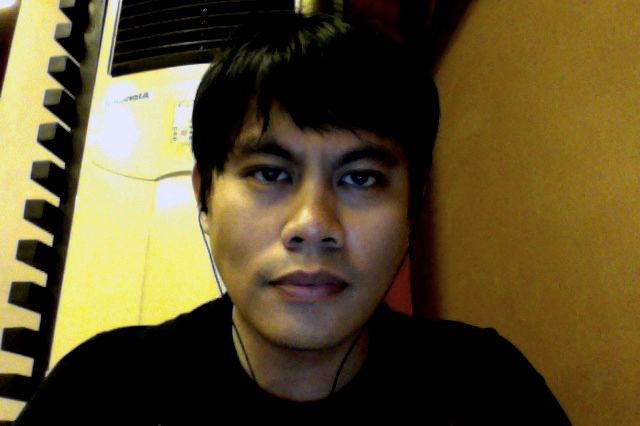 This is me. 5:45 PM, Sunday, 6 October 2013, The Bean Connection.
This rainy day has been an introspective sort. I have to admit I have been of a mildly depressive funk the past few months — ever since 22 December 2012, actually. Since that time, I’ve felt like I’ve already done all I could to make my life beautiful and fulfilling, and there was nothing else before me except heartbreaks and disappointments. I have no idea why I thought that way: but it has been the subtle negative force behind my feelings of utter helplessness since the beginning of this year. It’s a feeling that I have done nothing worthwhile since then, although good friends have quickly pointed out to me that I’ve done so much more than I have given myself credit for. Today, I’m done with giving myself short shrift. I thought about it, and I’m done wallowing. I love life, I love discovering things and making adventures. I love helping people. I love the feeling of endless possibilities.
I will learn to live again, and that starts now.Labels: life
[0] This is Where You Bite the Sandwich
Wednesday, October 02, 2013
6:54 PM |
The Past Tense of This is Officially Me

Labels: life
[0] This is Where You Bite the Sandwich
Saturday, September 14, 2013
6:15 PM |
What Do You See?
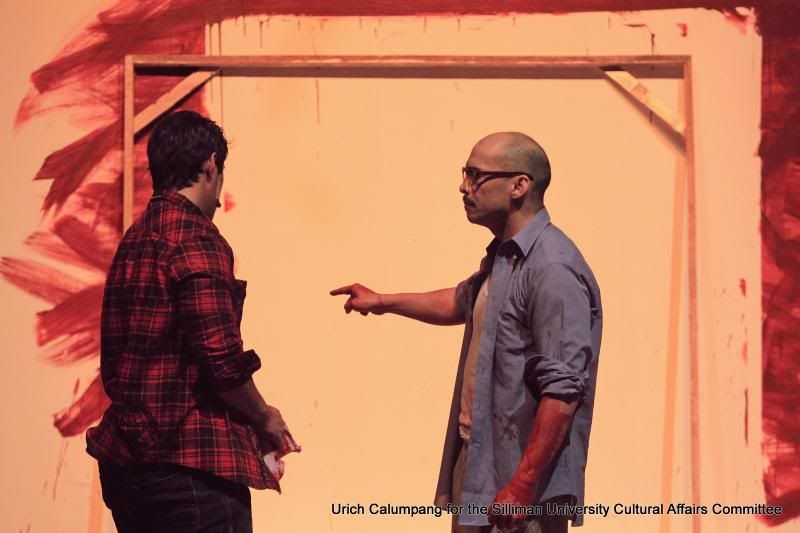
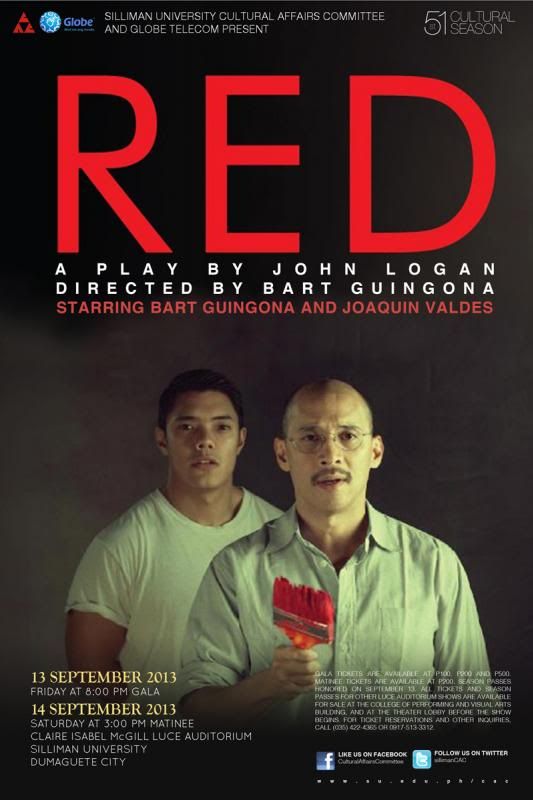
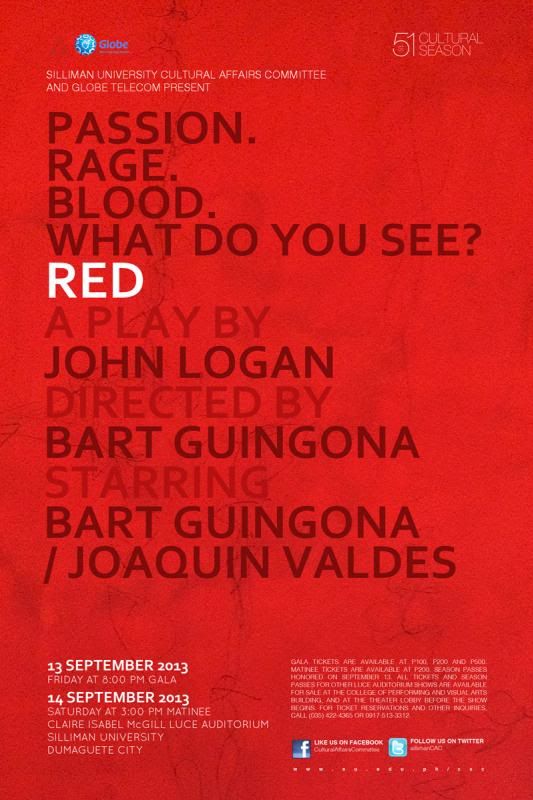
There is a line uttered by Mark Rothko (played by Bart Guingona) near the end of John Logan’s
Red that gets me every time. A decisive moment has passed, and Rothko suddenly spins on his assistant Ken (played by Joaquin Valdez), points vehemently to the outside, and shouts at him: “Because your life is out there!” After a beat, he goes on to explain in a softer note what he means precisely. It is a shocking moment, because it is a mirror. Every time I see that scene, I tear up, because I think it speaks to me and my life right now, and I think to every one’s life even, especially if you’re one to pause to consider your place in the world and what it means to pursue your art or your dream.
Why am I here? Why am I doing this? What exactly do I see? are all our unanswered questions this play so brazenly strips down to confront us all.
Labels: art and culture, dumaguete, life, silliman, theater
[0] This is Where You Bite the Sandwich
Monday, September 02, 2013
5:57 PM |
Gritty Magnificence
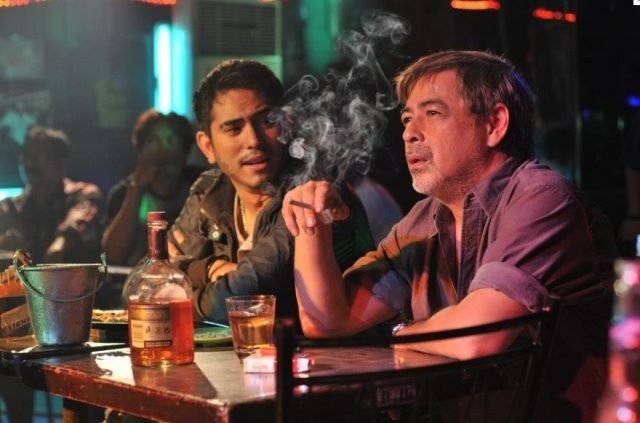
One simply has to watch Erik Matti's
On the Job to believe the hype, and to take it as nothing at all like hot air: this is a very good film, and in many ways it constitutes a restoration of faith in Philippine cinema.
That's not to say we have not had any good Filipino films coming out the past few years. On the contrary, we have had a glorious surfeit of these, many of them independent efforts that by virtue of their being untethered to any studio have managed to bring something unformulaic to the table. (Although the argument can also be made, with some validity, that there is now in place a kind of formula to independent filmmaking, one trope of which was gloriously lambasted in Marlon Rivera's seminal
Ang Babae sa Septic Tank.) Nonetheless, the independent film movement has been a kind of exorcism that has shaken the turgid studio system lorded over by the specter of Mother Lily and her cohorts. The past few years have seen a Filipino film industry -- perhaps very much like the rest of world cinema -- existing in a kind of schizophrenia: the commercial and the popular versus the blatantly uncommercial, although recent dialogue has risen that seeks to obliterate the divide between the two. I don't want to add to the noise of ceaseless arguments, but I would like to note only one thing: there is a different mentality of filmmaking that exists in producing fares like
Sisteraka, and fares like
Zombadings, no matter the temptation to blur the divide ("
Zombadings is an independent comedy wanting to be mainstream!") To deny that would be foolish and myopic. The difference lies in guts, in the willingness to try the untried ("Gay zombies?"), in bloody chutzpah to carry on a production where the financial stakes are personal, in the hopefulness that audiences would find favor in watching a narrative that does not tickle their all-too-human need to see a familiar story, and with familiar faces to boot.
I am saying these because
On the Job is a studio film -- a Star Cinema production -- and it's quite rare for me to be taken aback by something, enough to have me reconsider many things I thought I knew about the realities of Filipino cinema. And yet I am of an age where I still remember a Star Cinema imprint to be a signal for innovative filmmaking for the rabid moviegoer: in its earlier days, the studio had churned out the likes of
Separada,
Ika-11 Utos: Mahalin Mo ang Asawa Mo, Ikaw Lamang, the remake of
Patayin sa Sindak si Barbara, Eskapo, Bata Bata Paano Ka Ginawa?, Dekada '70, Ligaya ang Itawag Mo sa Akin, Abot Kamay ang Pangarap, and
Ang Lalake sa Buhay ni Selya, and even its more popular titles like
Radio Romance, Pare Ko, and
Jologs were films of some grounded genius, sort of like distillations of the best commercial sensibilities of a Regal Films picture but given the classy distinction of having been made by filmmakers with surer cinematic sensibilities. Somewhere along the way -- did things start falling apart in 1998? -- perhaps enticed by the prospects of bigger box office, or perhaps needing an assembly line of titles to satisfy a growing stable of good-looking (but often incredibly talentless) Star Circle names, Star Cinema succumbed to doling out different incarnations of
Notting Hill, as Jessica Zafra once brilliantly pointed out. Sometimes, out from the dreck of titles that sounded similar to each other (
Don't Give Up on Us, All About Love, Close to You, One More Try, It Takes a Man and a Woman -- what's the difference really, and can you tell which from which?), there were brilliant misfires from the formula like
Bagong Buwan, Kailangan Kita, Nine Mornings, and
One More Chance, but I've always suspected that these films were the cinematic equivalents of that proverbial bunch of monkeys randomly being able to type out a Shakespearean tome.
I do hope that
On the Job is a game-changer -- that it makes oodles of money for the studio, if only to underline the fact that money can be made with brilliant filmmaking. Truly, this Star Cinema film, which debuted internationally at the Cannes Film Festival earlier in the year, has made good its promise to be a rollicking piece of entertainment, and it looks gorgeous, and it's gripping, and it has twists you won't see coming like a hidden balisong.
But I've always suspected Erik Matti was capable of making films like these. A visual director of the top rank, his Achilles' heel has always been story. His debut in
Scorpio Nights 2 was a worthy successor to the Peque Gallaga original, but after that, it has been mostly hit or miss: he was invariably churning out films that were great to look at, but felt like nothing. I remember, for example, having such an intense love/hate stance for
Sa Huling Paghihintay (2001). What a gorgeous film that was -- but what a disappointment of a story. I had loved
Mano Po 2 (perhaps the best of the entire wretched franchise), and
Prosti and
Gagamboy were titles that reminded us that his talent was no fluke.
Prosti, for one, was Matti's best excursion into Wong Kar-Wai territory, complete with the saturated shots and the slow motion set to sensuous music -- but perhaps he borrowed too much from the Chinese filmmaker's playbook, including the predilection for unshaped narrative. I've always thought that what Matti needed most was someone who knew how to write a screenplay -- and I guess he finally found that in Michiko Yamamoto, who has for so long exhibited a bewitching genius for the cinematic story, starting with
Magnifico and on to
Ang Pagdadalaga ni Maximo Oliveros. She has become Matti's go-to screenwriter for his latest efforts, beginning with
Tiktik: The Aswang Chronicles and the short film
Vesuvius, a horror film of sumptuously crafted dread.
On the Job -- the immersive story of two jailed assassins and two police officers navigating the perplexing, often bloody, and treacherous maze of Filipino politics and law enforcement -- is where their collaboration has flowered the most so far.
This is the way to do a Filipino action film. (Seriously, I still need to erase the rancid memory of
Manila Kingpin: The Asiong Salonga Story...)
On the Job has demonstrated that good Filipino action filmmaking can be done with the intelligent intricacies of a Martin Scorsese with the Filipino sensibilities of a Gerardo de Leon, complete with homages that feel inspired rather than derivative: consider for example that small Hitchcockian blocking in the hospital sequence as police and assassin play cat and mouse with each other. One shot reminded me of a scene from
Psycho, and it amazed me.
Everything about this film amazed me. It is not perfect, but
On the Job is close to that.
Labels: art and culture, film
[0] This is Where You Bite the Sandwich
Saturday, August 31, 2013
2:55 AM |
Kindness Will Always Be Remembered
Like how most children know the friends of their fathers and mothers, I didn’t know much about Tito Proc, but I have known of him since childhood—and from my earliest memories of him, he has always struck me as a just man, one of the kindest I would ever know in this life.
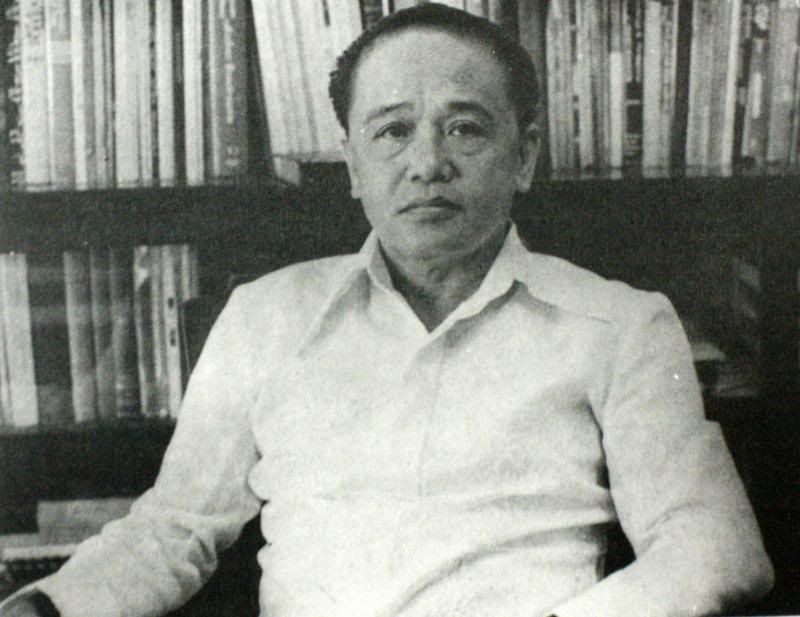
I would learn later on that he was a close friend of the family because he had spent some time in the same Agusan del Norte town my father originated from, and from the stories he would tell me, they were fast friends. When my family finally came back to Negros Oriental to settle for good, first in Bayawan and later on in Dumaguete where I was born, Tito Proc—he was Cesing to many—had already become an important academic, and soon a major force in Silliman University. He would eventually serve the school for more than fifty years, the perfect picture of a true and loyal Sillimanian.
He was there in the audience, for some reason, when I had won some kind of contest in grade school, and I remember him taking me aside in one of those old classrooms in West City Elementary School, telling me that he was a good friend of my father’s, and that I should continue doing well with my studies, and that he expected me to matriculate in Silliman by the time I entered high school. He had said these things without a single trace of being patronizing. And from that day forward, I would think of him as a sincere man whose currency were kindness and a quiet kind of encouragement.
It didn’t sink in to me then that he was a man of importance: that he was a holder of Bachelor of Theology and Bachelor of Arts degrees from Silliman University and Central Methodist University, as well as graduate degrees from Union Seminary in New York, from Harvard University, and from San Francisco Seminary; that he was Acting President of Silliman during the first two years of Martial Law; or that he was its longest-serving University Pastor, from 1986 to 1999. I was a kid, and he was just “Tito Proc” to me.
In those days, when my family’s finances were particularly full of challenges, he insisted that everybody in my family should finish college in Silliman University, and wrote endless promisory notes in behalf of my brothers just in time for them to take their midterm or final exams. We were nomads then, making do of rented houses that were the very picture of humble living. We were quite poor, but we all eventually finished college in Silliman University, overcoming much in the process, and proving truly that education elevates the individual. I was luckier because I went through college when the family finally sailed through its darker days—but I’m not sure my elder brothers could have gotten the education they received were it not for good people like Tito Proc. And he was just “Tito Proc” all those years, somebody whose hands I made “mano” every time we’d visit his house in Amigo Subdivision.
When I finally came of age, it was with profound new respect that learned much of the man and his life. There are two stories I’ve come to know and made me admire Tito Proc more. One is of his tumultuous tenure as Acting President of Silliman University at a time when the entire country plunged into the darkness of Ferdinand Marcos’ martial rule. What a leader he must have been to be able to carry well, and with dignity and commanding presence, the concerns of Silliman and its students, faculty, and staff—even as the university got padlocked, and remained so for a stretch of time due to some notoriety as a hotbed of “radicals”—exactly the “scourge of society” Marcos was eager to root out and incarcerate.
Tito Proc negotiated for Silliman’s eventual reopening, while at the same time taking care to see to the needs of the faculty and students the military had picked up for interrogation and what-not. As Joel Tabada—the first Sillimanian faculty to be picked up by the military—once recounted to me, “Classes at the university were ‘suspended’ for the rest of the first semester. Dr. Udarbe became the acting president. But the experience made a man out of him as he faced the Martial Law people concerning the University. He ordered that double-deck beds from the Silliman dormitories be brought over and provided to the Provincial Jail for all the detainees, even if only about a third of the detainees were Sillimanians.”
Another story is something I learned from recent research we’ve done into the history of culture and the arts in Silliman, which we are doing for the Handulantaw coffee table book. (I am editor-in-chief, with the Tao Foundation and the Silliman University Cultural Affairs Committee as publishers.) When Tito Proc became Acting President, he inherited many of the projects that his predecessor, Dr. Cicero Calderon, was hoping to accomplish for the university.
One of these was Calderon’s grand ambition to build a Cultural Center in campus. Zara Marie Dy, writing about the Luce Auditorium for Handulantaw, wrote: “President Calderon recommended that a caretaker president be appointed for Silliman when he stepped down from the presidency. This president ad interim came in the person of Dr. Proceso U. Udarbe, whose term officially started on 1 June 1971. Acting President Udarbe was kept busy inaugurating and implementing the unfinished projects Dr. Calderon left behind. He raced to see the projects push through quickly in view of the inflationary trend of the times.
“One of his very first worries in 1971 was the delay in the construction of the Cultural Center. The funds had been promised back in 1968 by the Henry Luce Foundation of New York but the Cultural Center Planning Committee, composed mainly of the units which had their own interests in the Cultural Center, could not easily agree on space allocations, design and location of the Center, much less on the architect. The School of Music and Fine Arts, the Speech and Theatre Arts Department, the English Department, and Audio-Visual Department comprised the Committee, together with the Campus Planning Committee, chaired by the [dean] of the College of Engineering. This mix made for long meetings and stalemates.
“With financial exigencies weighing heavily against time, Dr. Udarbe decided to come to the helm and reorganize the Cultural Center Planning Committee. He became its chairman and steered it into agreement and action… By 28 August 1972, the groundbreaking ceremony for the Auditorium was held.”
These stories tell us what a strong leader Tito Proc was—a decisive visionary who knew when to act, and how to act.
As I write this, the news of his death has just broken out, right at the tail-end of Silliman University’s 112th Founders Day. May you rest in peace, Dr. Proceso U. Udarbe. Your kindness and your brand of leadership will always be remembered.
Labels: people, silliman
[0] This is Where You Bite the Sandwich
Saturday, August 17, 2013
So we did it again. Last August 12, we showed ten short films of varied appreciative levels—but nonetheless, together, they spoke volumes about how much we are trying to do to create a grassroots community of filmmakers in Dumaguete. Regardless of the challenges, of the risks, of the continuous possibility of being branded by others as “hopeless dreamers” without anywhere to go.

The roster that constituted
Dumaguete Shorts 2: A Festival of Short Films By New Dumaguete Filmmakers included
Ramon del Prado’s
I Am the Superhero from Tuldok Animation,
Melfred Casquite’s
Kalooy Man and
Francis James Kho and Carl Ivan Caballero’s
Asa from Foundation University,
Antonio Dago-oc’s
Josephine from Negros Oriental State University,
Mel Bermas Pal’s
Jeepney,
Jo Simone Vale’s
Ugma na Lang, and
Stephen Abanto’s
Have You Got Time for a Story? from Silliman University,
Razceljan Salvarita’s
Confession from Indie*Go ArtHub Films, and
Theodore Boborol’s
Ang Asawa Kong si Nikulet from Star Cinema ABS-CBN.
We began
Dumaguete Shorts two years ago to answer a challenge posed to us by the Cultural Center of the Philippines, when Teddy Co—the spirit behind
Cinema Rehiyon, the annual festival of films made from the regions—asked me during the Cinemalaya Congress in 2008: “Are there any films being produced in Dumaguete?” And my answer was a sad “No. Not really.” Of course, there were the rare efforts of Jonah Lim, but that was it: there was no such thing as a grassroots effort. Which is why we were in Audio-Visual Theater 1 in Silliman University last Monday night, to answer that question once with a a final and a resounding “Yes.”
Let me be clear, however. A few months ago,
some turk of a critic decried in a Mindanao website that what we are producing in Dumaguete are “failures” of cinema—which just shows how shortsighted he was about the efforts we are trying to do here. I’ve always understood something fundamental about the making of art: to get to the brilliance of the diamond, you have to contend with the cuts you have to make to tease out its luster, its brilliance.
And that’s what we have been doing in
Dumaguete Shorts 2—encouraging local efforts of filmmaking, just to make a start. It is always better to start with something than with nothing. And soon enough, we will have filmmakers who are more daring in their themes, and brilliant in their uses of their language of cinema. Many of the films we have seen are the efforts of students from the universities of Dumaguete—from NORSU, Silliman, and Foundation, each of which has its own short film contests, and last Monday we saw many of the products of those competitions held during the past year, augmented by titles by independent filmmakers. All of these truly make this short film festival a melting pot of our local cinematic efforts.
Labels: dumaguete, film, foundation, indiehub, negros, norsu, silliman, star cinema, tuldok
[0] This is Where You Bite the Sandwich
5:48 PM |
The Birds of Julia, The Flowers of Susan
Last Friday afternoon, we saw the opening of a twin painting exhibit by two members of the otherwise musical Vista family. The exhibit, titled
Birds & Flowers, is exactly that—a show of paintings in acrylic and in watercolor of birds and flowers, the favorite subjects of our two visual artists.
Elizabeth Susan Vista-Suarez has always been known for the music that she makes, be it as director of the Silliman University Campus Choristers in one of its heydays in the 1990s, or as current director of Ating Pamana and the Silliman University Gratitude and Goodwill Ambassadors, or as dean of the College of Performing and Visual Arts.
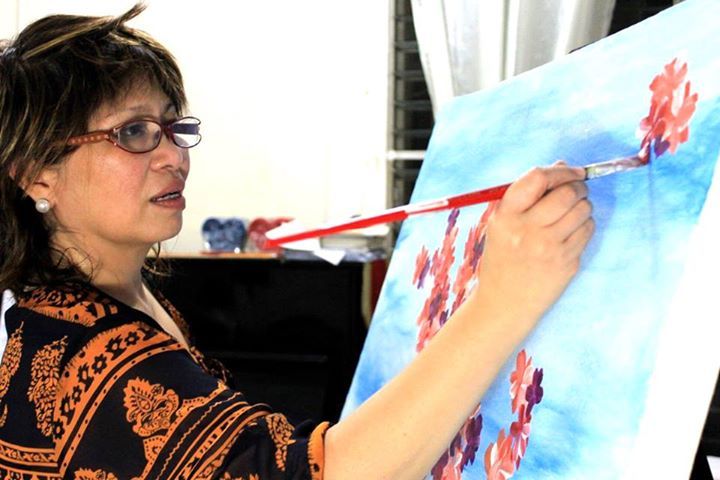
A few years ago, however, she started dabbling in an art form completely different from her usual discipline—painting. But it was also something that has much in resonance with her musical personality: to daub colors, to select texture, to blend light and dark, to compose the visual—all of that is familiar to the best of musicians, if only done in a different terrain. She started painting in oil, and later changed to acrylic when her painting mentor told her the medium was healthier for her.
It was a surprising turn of interest, given that she has had no influences in painting—only that she liked the works of the Impressionists, and has always had a love for the gracefulness of Asian art. But perhaps that proclivity for the visual has already some stirrings in childhood. “In high school, I’ve already been making flowers in that Chinese painting method, which I’d do on stationery, with watercolor. I did it to sell to my aunties,” she says. “But I became more interested in painting when I went a bit blind at the age of forty. I needed to see color again, afraid that I might not be able to see anything at all. But painting has helped me be in my own world, where I can turn my ears off amidst everyone and everything.”
But what is it about flowers that attracts her most as subject for her paintings? “Flowers are the easiest to paint,” she says. “And flowers also symbolize strength and beauty. They are just like women—they’re often abused, and kicked around in a very patriarchal world. I remember the lyrics of this song that goes: ‘Little flowers never worry when the rain begins to blow, and they never cry when the rain begins to pour… Though it’s wet and cold, soon the sun will shine again, and they’ll smile unto the world for their beauty to behold!’”
Her underlying aesthetic philosophy for her paintings is simple enough: it is an expression of a personal joy. “And joy equals no expectation,” she says. “When we do our best, God will do the rest.”
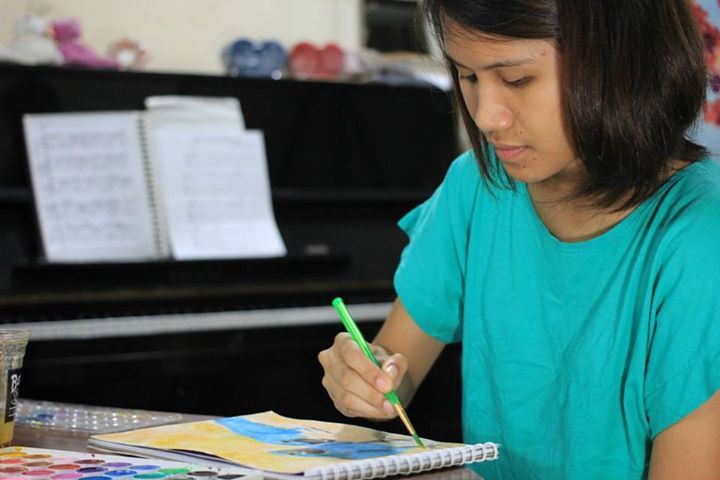
Julia Christine Vista Zamar—Justine to friends, and Tatin for those us who watched grow up in Vista Cottage in Silliman campus—on the other hand, have always known that there was enormous power in the act of taking up the brush and rendering the world through painting.
That realization began to sink into her consciousness when she would watch her mother work on her flower paintings. “My mom has always been my influence,” she says. “She has been painting for some time now, and often when she paints, I’d get to sit around and hang with her and watch her do her painting. In those times, I’d always see that she finds joy in painting. It also calms her—it was more like a stress-buster soothing system for her. And having seen that many times in my life, I thought that maybe some day I’d like to try what she’s doing.”
But there was no definite start for her when it came to finally doing painting. One thing she could remember growing up, however, was borrowing her mother’s fabric paint and doing little doodles on katcha—and give them as gifts to friends. “I didn’t really imagine myself doing a whole painting but when a good friend of mine asked me to join Hersley-Ven Casero’s Collaborative Project, I took it as a challenge to finally paint a whole picture,” she says. “After that, I was starting to explore more about painting, and finding out how interesting and fun it can be. This is an entirely new sense of self-discovery.” She began to use watercolor. It was the medium she was the most comfortable with.
But what is it about birds that has attracted her as subject for her paintings? “Birds are one of the most interesting creatures,” she says. “They are among the smartest animals ever created, even smarter than dogs. But the one thing about birds which I love the most is how symbolic these animals are. They remind me of hope.”
She sees her watercolor paintings as a statement she is making about never limiting oneself. “Sometimes we think that mixing different colors would give a horrible effect on a painting,” she explains, “but when you actually try different things without fear, you’ll realize that something beautiful will come out of it.”
“Still, I don’t really know what’s going to happen in the future with my paintings,” she continues. “But I do hope that somewhere in the future, they’d be hanging on walls in different places of the country. But birds will always be my main subjects, although it would be interesting to try to paint people and use acrylic as medium.”
Labels: art and culture, cultural affairs committee, dumaguete, negros, painting, silliman
[0] This is Where You Bite the Sandwich
Saturday, August 03, 2013
7:38 PM |
Throwing Off the Philistines
“Without culture, and the relative freedom it implies, society, even when perfect, is but a jungle. This is why any authentic creation is a gift to the future.”
~
Albert Camus
To understand the passions of the artist, one needs only to take a look at Dessa Quesada-Palm. Consummate theater actress and tireless community activist—as founder of Youth Advocates Through Theater Arts or YATTA, she uses community theater as instrument to further causes such as gender sensitivity and the environment—she has epitomized for me, and for the longest time, the selflessness of a person who believes in cultural work and its importance in community life.
Since May, we had worked together to fulfill director Amiel Leonardia’s vision for Elsa Martinez Coscolluela’s
In My Father’s House. She played my mother Amanda, and in the course of six weeks devoted to the strictest of rehearsals, I saw firsthand how she worked to get her part right. What she showed me and the rest of the cast was a master class in acting. Part of that revelation was a model for professionalism that went into it, and a dedication that necessitated sweat and sacrifice.
In the end she did command the Luce stage like the strong actress that she was—but we also knew how generous she was in sharing the stage with us amateur actors: how she reminded us of our cues with the slightest of glances that she gave us, the subtlest gestures that she made in our direction, enough for us to be prompted when necessary. And yet, all throughout those intense months of rehearsals, she still managed to go about her work as a cultural worker, giving workshops everywhere in Negros, and teaching her Directing class at the theater department of the College of Performing and Visual Arts in Silliman University…
Earnest Hope Tinambacan, who played my brother Franco, is also the same: he, too, had workshops to do—his bread and butter—aside from the fact that he also had his music to take care of, being the front man and composer for HOPIA, a local band that is increasingly making waves in local music. Two weeks before we had to debut at the Luce Auditorium, he also had to stage a huge concert that blocked off the whole stretch of Silliman Avenue from Rizal Boulevard to Hibbard Avenue, an event he pulled off with other Dumaguete bands—to showcase, of course, the release of their compilation CD, The
Bell Tower Project. In his spare moments, tucked in the wild schedule that was the bane of our existence, he’d squirrel away to memorize his kilometric lines for the play. In the end, he embodied Franco with a finesse that was startling—sending many in the audiences we had to tear up. In the 3 PM matinee of our last day of performances, the high school students who were our audience for that show went en masse to the side entrance of the Luce, demanding to see their “new idol.” The shouts of “Franco! Franco!” was a heartening sound to listen to.
In Dumaguete, you can find many other people exactly like Dessa and Hope—extremely gifted artists with extremely busy schedules, and yet they are still able to do something concrete for the community just for the sake of elevating culture and the arts. There’s Razceljan Salvarita. There’s Hersley Ven Casero and Anna Koosman. There’s Whitney Fleming. There’s Arlene Delloso-Uypitching and Annabelle Lee-Adriano. There’s Virginia Stack and her Valencia troop that would include Larissa Gutch, Jaruvic Rafols, RV Escatron, and Aaron Jalalon. There’s Joseph Basa. There’s Ramon del Prado. There’s Moses Joshua Atega. There’s Leo Mamicpic. There’s Diomar Abrio. There’s Elizabeth Susan Vista-Suarez, and so many more.
But they all know, like I do, that the work of culture is often both frustrating and rewarding. And sometimes, the frustration can start to break our spirits—if only temporarily. Once, while doing an Arts Month event with Dessa a few years ago, I turned to her and with such despair in my voice: “Why do we do this? Cultural work can be such a thankless job.” She turned to me and said, “Because despite everything else, we love what we do—and we cannot help but share it with everybody else.”
She was right. Theater producer Hendrison Go said as much to me last month when he said, “You may say you’re stressed out—but you do this anyway because you know it makes you happy.” He’s also right.
I am particularly happy that I work with kindred spirits in the Cultural Affairs Committee of Silliman University. Under Diomar Abrio’s savvy leadership, and with keen support from our university president, the CAC has worked hard for so many years to put a semblance of structure and balance to the cultural life of the university and the city. The committee turns 51 years old this year, and already it has brought in so many significant cultural milestones to Dumaguete—so much so that we can verily call this city as the real cultural center of Southern Philippines.
But like most things, it has its highs and it has its lows. When we decided to reboot how culture was being done about six years ago, we took in something that was more or less shapeless, and gave it structure. This is how our “cultural seasons” came into being: to give the university a workable cultural calendar, which at the same affirms culture and informs people about the things we are doing in the university. We are still learning how to promote culture and the arts properly, but at least we have made a start.
I always tell my students that they are lucky to be in Silliman because they get this cultural programming during their entire college stay, which will certainly inform their education, and finally the way they will conduct things in the real world. (And under a subsidy, too! Which means they get culture in an affordable way. No other university in the Philippines does this—and so they get the best of culture, locally, nationally, and internationally, for a pittance almost.)
But students being students, they do think this comes under the thankless maneuver of things “required,” which is something they are loathe to do because…I don’t know, it takes time away from their DOTA and their Internet surfing? But many of us persevere anyway. And then I do get many emails from former students, finally thanking me for “forcing” them to watch all those shows when they were younger. I guess the impact of cultural education in their real lives only get manifested much later on. (They say, for example, how many of their co-workers in the Real World are basically culture-deprived, ignorant. “Thank God I went to Silliman,” they’d tell me.)
We’ve been doing well at the CAC, more or less. Things could always be better, of course, but alas most people—even the best and brightest of the city—think culture is something to be largely ignored because it is “unimportant.” It is the least in their hierarchy of “necessary things.” It becomes a constant struggle every year to convince people of the otherwise. Every year, the CAC tries to balance all the arts—literature, music, dance, theater, the visual arts—in our programming, and most of the time, we do get the best for our efforts. And people have indeed been responding more positively to our efforts year after year.
Culture’s a hard job, but somebody’s got to do it.
Labels: art and culture, dumaguete, life, music, silliman, theater
[0] This is Where You Bite the Sandwich
Saturday, July 27, 2013
Faithful readers of the newspapers I write for may have noticed that, save for the rare occasions when I could bring myself up to the task of column-writing, I have not published anything for the longest time since January.
The official reason that I have given my editors is one that seems quite understandable. After many years of churning content for this space week after week without fail, I had claimed “burn out,” which happens to the best of them. “I have nothing more to say,” was my excuse—which is, of course, easily discounted given the many and sundry posts I make in Facebook or Twitter: all those short observations and rants and what-not that betray a life constantly reflecting on one thing or other. I do have a lot of things to say. I just didn’t want to write them down in a column anymore.
Perhaps I got tired of being a cultural critic, especially for something aimed for the permanency of journalism. Anything on newsprint smacks of the heavy responsibility of the legitimacy we attach to print media. (“Big words,” Sarah Geronimo’s Laida Magtalas would have quipped at this.) Social media postings, however, seemed to me more ephemeral yet also more direct, eliciting instant feedback, which is also easily drowned in the constant deluge of information the Internet is capable of making. I think of social media as a kind of “hit-and-run” writing. I reveled in it.
The life of a critic who is also a creative writer and a sometime cultural advocate is an existence etched in schizophrenia: you have two hats to wear, but only one head. Having both hats often confused me. I know it is often quite delicious to dish out as a critic, but always with the knowledge that with such snark, one must also be able to take in, as an artist, what is dished out to you.
But I have always considered myself a fair receiver of bad notices—and God knows I have received many of them, in withering workshops, in less-than-stellar reviews, in apologetic rejection letters, in painful negotiations with an editor over a manuscript. I have always considered these things as necessary wrangling to achieve a semblance of good craftsmanship in my work—and such a perspective has helped me achieve some of the triumphs I’ve had. In 2002, I was told there wasn’t much of me as a young writer—and so I went ahead and penned a story that won me my first Palanca, and edited an anthology that garnered my first nomination in the National Book Awards. In 2008, I was told that my best stories were behind me—and so I went ahead and wrote one that won for me a first place finish in the same contest, and later secured long-list honors in the Man Asian Literary Prize. You cannot please everybody, I’ve learned—but that doesn’t mean what they say becomes the ultimate statement of what you can do. And sometimes people write bad notices because they have an axe to grind: those qualify for the lowest forms of opinions. Being able to distinguish useless snark from helpful negative notices takes time and maturity.
I have been writing criticism since I was a Mass Communication student in Silliman University, starting with a column I named “Cynosure for Attila”—which belied the arrogance typical of one so young. I thought that what I had to say could be sword or wand, depending on my mood, and it was directed to what I considered to be a small world populated by philistines, for which I must have thought of myself as a kind of messiah. (How arrogant I was, and how young.) In the mid-1990s, I wrote a review of a local production of
West Side Story, directed by Evelyn Aldecoa, in
The Weekly Sillimanian. It did a perfect demolition job calculated to hurt—but not a day that had passed since then have I not regretted the poison of those words I penned. It severed a professional relationship, which also had repercussions on so many people that lasted for years. Only very recently were many of those broken bridges healed. In time, Ma’am Evelyn forgave me.
In time. A few short years before she died, she cast me in an unstaged production of
South Pacific, and I also worked with her on the program and marketing of 2010’s
Godspell. In time.
I’ve thought about that episode often—and whenever I’d write a scathing review in this space, I’d think about the matter for a few days, and I eventually ask myself:
What for? To wield words with such bludgeoning effect is power given only to a privileged few. I should have a perfectly good reason for snark. When my columns evolved to spaces that reviewed not only shows and music and film but also food, I realized just how unbearable the responsibility was. Everywhere I went, people expected me to say something—about their show, about their food, whatever—but what if I did not like any of these?
The late film critic Alexis Tioseco grappled with this question once and came to a conclusion, which formed the core of his kind of criticism. He realized he could use his words to champion what he loved—and if he didn’t like something, he wouldn’t write anything at all. His silence was the ultimate arbitration of a work done badly. And I did that for a while, and even championed in my columns the many artists I felt deserved the spotlight, no matter how briefly it shone on them. I wrote about them because I loved their works, and I believed in what they could do.
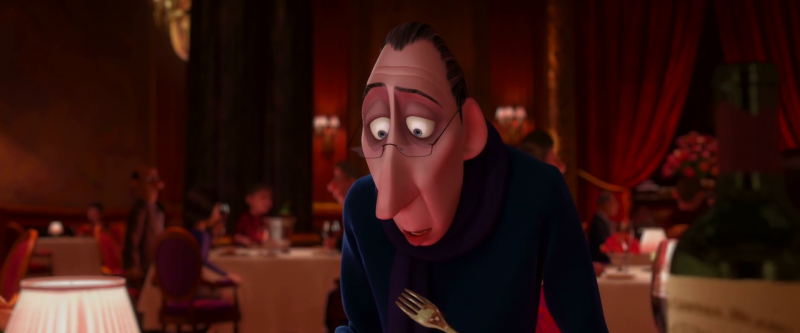
This bit of monologue from food critic Anton Ego in Brad Bird’s brilliant
Ratatouille (2007) is still the best approximation of what criticism is and should be about: “In many ways, the work of a critic is easy. We risk very little, yet enjoy a position over those who offer up their work and their selves to our judgment. We thrive on negative criticism, which is fun to write and to read. But the bitter truth we critics must face, is that in the grand scheme of things, the average piece of junk is probably more meaningful than our criticism designating it so. But there are times when a critic truly risks something, and that is in the discovery and defense of the ‘new.’ The world is often unkind to new talent, new creations. The new needs friends…” That last bit rings true, and I shall strive to always remember this.
I’m going back to regular column-writing, because there are many new things that deserve friendlier pens.
Labels: criticism, life, writing
[0] This is Where You Bite the Sandwich
Sunday, June 02, 2013
12:52 AM |
The Passionate Strangers
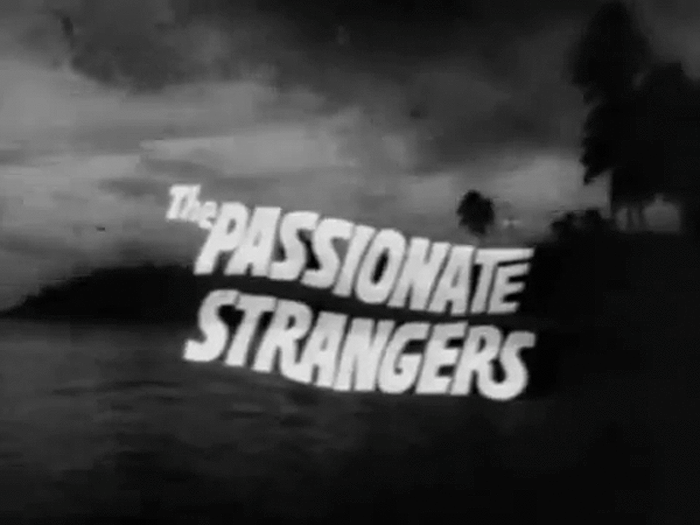
I've heard of
The Passionate Strangers (1966) since I first began taking an interest in the works of the later director and National Artist for Film Eddie Romero -- and especially after being told that the director of such Filipino classics as
Ganito Kami Noon, Paano Kayo Ngayon and
Aguila was not only from Dumaguete, but was also, like myself, a Sillimanian. To be told that as a young cineaste was quite galvanizing: it suddenly the dream of being a filmmaker myself a possibility, its remoteness once or twice removed. I began to ask: if he was from Dumaguete, had he ever shot a film in Dumaguete? He did, with
Kamakalawa, I was told.
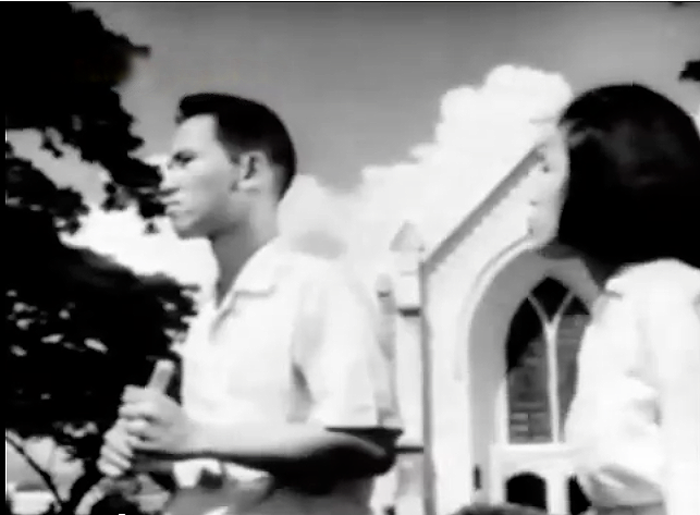
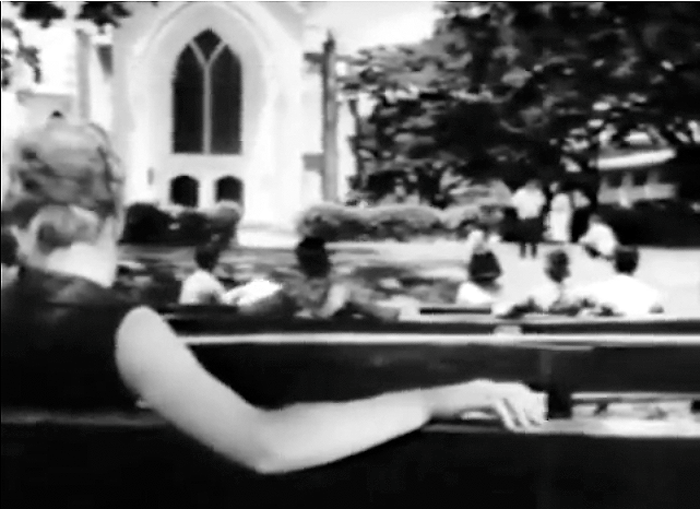
Later on, I also stumbled on the fact that Mr. Romero had shot an even earlier film in the city as well as nearby Bais. That was the film noir
The Passionate Strangers, which starred American actors Michael Parsons and Valora Noland, alongside a Filipino cast that included Celia Rodriguez, Vic Diaz, Butz Aquino, and Mario Montenegro. (Oh, to behold the naughty lines and flirtations between Ms. Rodriguez's femme fatale and Mr. Aquino's straight-arrow public attorney, and to see Mr. Diaz's magnificent star-turn as a snaky politician who who does his dirty maneuverings with such finesse...)

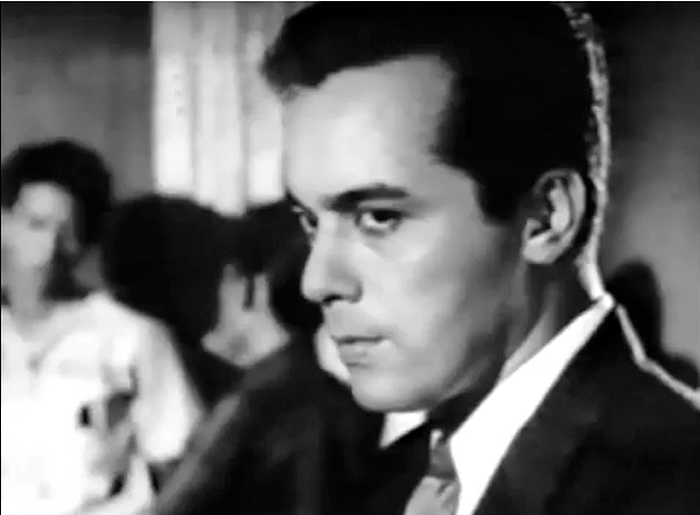

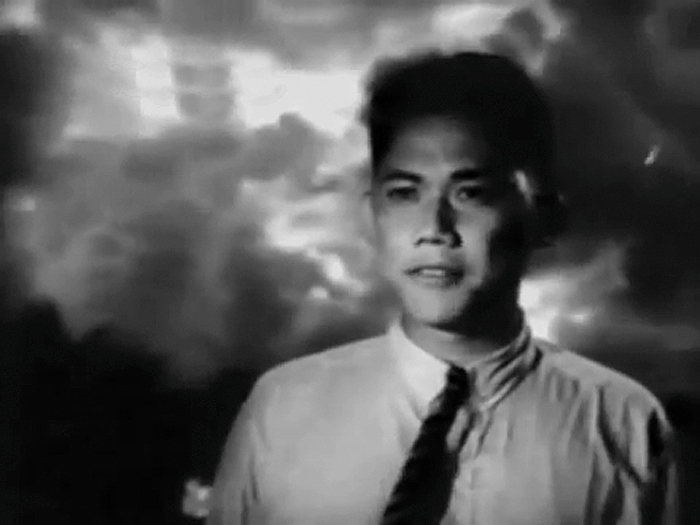
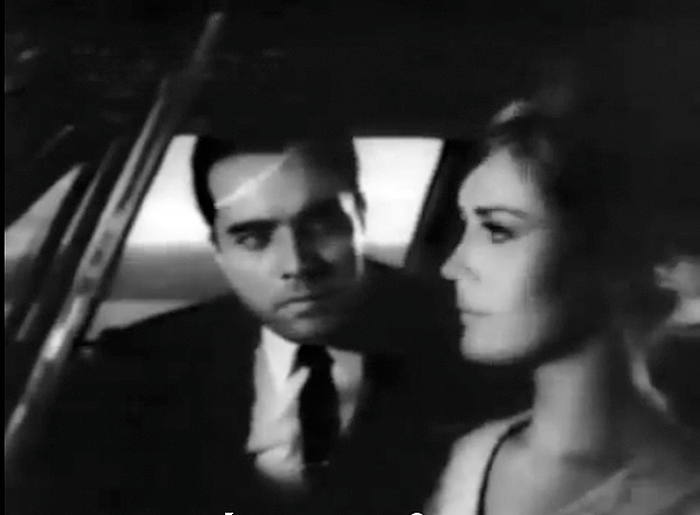

Naturally, I was intrigued. But a viewing copy of the film proved elusive for so long, until now:
somehow one found its way recently to YouTube, and now I can finally say I've seen this early Eddie Romero classic, not exactly in quality form -- but for now, this will do.
And what can I say about it? Only this: the film is one of Mr. Romero's best and deserves restoration effort, if only for the gorgeous photography by Justo Paulino that renders beautifully the peculiarities of Dumaguete in the 1960s. There is also the taut story by Cesar Amigo, Reuben Canoy, and Eddie Romero (Sillimanians all), and the topnotch acting -- mostly in English -- by the cast, who seemed to improve on the iconic performances from Hollywood movies of this kind. (It reminded me of a mishmash of
From Here to Eternity and
Touch of Evil...)
The story goes: an accidental murder of a labor leader has been committed in a town dominated by an American-owned mill, and labor riots follows, ending in a court case that seems to corner the American CEO of that company into a sure guilty verdict. But that makes it sound like a socio-political thriller, which is far from the case. What you really have here is a tense domestic melodrama peopled by characters of such remarkable complexity: the murderer, for example, may be the only man in the film who has any integrity, and the crusading investigator is, in this case, a congressman smelling a political opportunity and is only too willing to admit it. We see thrown into the mix the issues of marital betrayals, the politics of labor negotiations, as well as racism and nationalism in a small town -- but those big ideas almost seem incidental in an involving story about people who are only trying to do what's right, but do it in absolutely wrong ways.
The Passionate Strangers is a masterpiece, and I wish all of Dumaguete could see it in its full glory.
Labels: art and culture, directors, dumaguete, film, negros, silliman
[0] This is Where You Bite the Sandwich
GO TO OLDER POSTS
GO TO NEWER POSTS


