Saturday, December 26, 2009
I have only one, perfectly doable resolution for the coming New Year: that I will be able to appreciate more and more the things that I am capable of and passionate about -- writing, designing, teaching, among other things -- and learn to value my place in this world. It's the first step to a happy life.
Labels: life
[0] This is Where You Bite the Sandwich
Wednesday, December 23, 2009
Ang daming maarte sa
world.
Pretentious freaks na walang utak. Well, may utak naman -- pero ang kapal ng mukha,
I just want to hurl. Sana kunin mo na sila, Lord.
Labels: life, rants
[0] This is Where You Bite the Sandwich
 4:37 PM |
Recycled Posts
4:37 PM |
Recycled Posts
Honestly, there should be a name or a word for Facebook users -- perhaps newbies, eh? -- who are just
now posting the funny videos, links, pictures, etc. we were laughing at months
and months before. The Regurgitators? The Late Comers? The Oh-My-God-They're-Only-Laughing-At-That-Nows?
Yes, I'm a snob that way.
Naay mo palag?Labels: facebook, rants, web and tech
[0] This is Where You Bite the Sandwich
This is what I'm always wary about. The pause life takes after I finish a certain something. For example, I've just finished writing my column for this weekend's issue of
StarLife, and now I'm trying to relax just a little bit, just to slow down my thoughts before moving on to the next task or appointment. But sometimes "relaxing" turns into a major occupation -- and I don't do anything for hours on end, and I always, always regret the down time. Must. Stop. That. Stupid. Tendency. In the meantime, here's my quandary: lunch, gym, or a power nap?
Decisions...In the meantime, I'm glad I'm back blogging. Staying off Facebook for a while. The relative obscurity of blogging in the Age of Instant Tweets and Status Updates is kinda comforting.
Labels: life
[0] This is Where You Bite the Sandwich
12:07 PM |
Notes From the Christ Year
There was a period of my life, shortly after I turned 33, that I was utterly convinced that I was not going to live through to my next birthday.
That inexplicable sureness for finite mortality was like being encased in an iron-clad grip, or like clutching the sharp edge of a knife. It was all over my heart, all over my head—like an existential Damocles’ sword. The profound certainty cut so deep that there were moments (which broke through little things, such as walking to school or riding at the back with the driver of a tricycle) that I would just secretly break down and cry. The whole thing did not end up in wailing, thank God. It was all done in furtiveness, the tears—its onset already surprising—quickly wiped away by the sleeve of my shirt. And then there would be that strange ringing deep within that spoke volumes, but in a language that I could not quite get…
I frankly did not know what I was crying for, except perhaps this: a terrible knowledge that all of my life was ending soon, and I felt as if I had nothing to show for it.
Nothing. Absolutely nothing.
Nobody, of course, knew this, not even my closest friends. Growing older, one learns sometimes to don a mask of normalcy to counterbalance the surging vertigo of questions that race through our heads. Outwardly, I was the same fellow with the old sureness in his gait. I looked normal. I did normal things. I went about from day to day in the most normal of motions—or at least I tried. Life can easily become a performance, and when you believe enough that you are doing the proper gestures just right, no one questions anything. I would say “Good morning, So-and-so!” with the usual bright smile, and I would get the same greeting in return, engage in harmless small talk, and move on.
And so on. And so forth.
Then again, growing older, one also learns this surprising fact: nobody else really cares that much for drama except their very own. We are our own rapt audience. Life is thus the perfect closet in which to unfurl the
teleserye madness of all our existences. (Unless, of course, you’re in Facebook, and the concentrated awareness of your status updates make your drama a little bit more accessible to the rest of the world.)
I did not know, of course, how I was going to die, although I certainly entertained (
what a strange word to use) various possibilities of the end, which I will not even attempt to enumerate or mention, at the risk of making this whole essay sound too morbid for Christmas time. This essay is supposed to be about life-affirming resurrection, anyway.
I thought there might be Notes from this turbulent, beautiful thirty-third year, to explain all these. Scanning quickly through my blog, I chance upon this entry from one of those days that perfectly captured the dark aspects of the experience: “I don’t wish for anyone the dark days. But they happen. For me they’re constant visitors. Sometimes I fly right through them like a plane would through turbulence, but sometimes they linger like a dark lover. I pinch myself endlessly to break free from its ugly embrace, but it doesn’t of course leave at my bidding, and all I have left really is skin pinched to raw redness. I always find my dark days after especially hectic—or joyful—episodes in my life. They come without fail. I’d be particularly busy working on some projects for days on end, and when I’d be finally done, there would be that huge sense of relief, followed immediately by a sudden, screaming panic.
What now? I’d ask myself. And then the dark would come to consume me. So, of course, after those beautiful early summer days spent in Baguio and Sagada, and then after that hectic week trying to complete those stories for a certain contest, I sensed myself withdrawing from the world, suddenly feeling very sick (
really, really sick), suddenly feeling very helpless. And sad. So I took my meds. I deposited my cellphone in a secret place. I watched old Audrey Hepburn movies. I caught all the episodes of the last season of
Lost, watching everything from first to last, nonstop. I commiserated with the wishy-washy weather. I Facebooked endlessly, until it, too, became a blur. I surfed all the cable channels—my television was on 24 hours a day for several days straight—and sank deeper into my bed. I sang John Barrowman songs. I tried reading, but couldn’t finish anything. I had my meals delivered to my pad. I watched my hamsters go round and round in their wheels. I slept for the most part, endlessly praying that the pain, both physical and emotional, would go away. It’s a Friday, and there are some glimmers in the distance, so here’s wishing me... something. God? Luck? Happy days? A great cup of coffee?”
But it wasn’t, of course, always that grim. There were long periods of glimmer as well.
From another entry, I wrote this: “I just came off a wonderful lunch with my mother in Royal Suites Inn, together with my brother Dennis Carmelo and his lovely family for Mother’s Day—and now I’m having a cup of the best coffee in Negros Oriental, in La Residencia’s Don Atilano, enjoying free wifi while listening to the violin music of Itzhak Perlman playing his series on evocative film scores. I’m staring out the bay windows of the cafe onto the blue of Tañon Strait. It’s a beautiful and sunny Sunday, and I am feeling that all is right in the world. And why wouldn’t it be? I think of yesterday, which I spent in Antulang Beach Resort, with writers from the National Writers Workshop (courtesy of the wonderful Annabelle Lee-Adriano). After a cruise around Tambobo Bay and a great lunch, I retired to my own private villa (complete with its own swimming pool) on the cliffside that has a commanding view of the blue waters—a sight that practically lures you into going buff without a care in the world. (And I, ehem, did.) After napping and swimming, I was listening to easy music while staring out into the blue in Villa Alamanda, and the thought came to me: ‘This is really a wonderful life I’m having. I really can’t complain about anything anymore.’ If you ask the universe nicely enough, it does give you what your heart desires. I remember exactly a year ago when, on top of a sacred Sagada hill, the view of the Cordillera mountains and the gravity of the blue infinity beyond them unexpectedly made me weep in prayer—and that was when I had first asked the universe for a different reality. I felt I needed change—but of what kind, I had no definite idea then. Still, I remember praying hard on top of that hill. Only lately have I realized that most of what I prayed for in Sagada have actually been answered in the past few months…. I have a new bond with my family that is warm and full of comedy. I have the company of great friends, old and new—and our times together, spent in intimate hours in cafes and dance floors and beaches, are deeper and more heartfelt. I have found a new reservoir of energy, and physically, I have never felt or looked better. I have a life that is a whirlwind of marvelous things. I can taste a future that I can almost bite into for sheer deliciousness. Most of all, I feel I am making the right decisions, and I am definitely bolder, and less hesitant to call a spade a spade, and to call out bullshit when needed. It’s a completely different life—and one I am actually still adjusting into. And I am genuinely,
genuinely happy.”
Dark and light. In those hues life becomes. One might notice of course that I mention Sagada both times. There is a reason for that: that sacred quiet spot in the northern mountains became the focal point—the fountainhead, if one must say—of the whole internal journey. Because once, in the summer of my 33rd year, I sought out the solitude of that place, and prayed for direction, just as I described above.
I am still living through those directions, taking each bump as a challenge and each smooth stretch a delight. What a year it has been, beautiful in its inconstancy.

Still, I must deny it was some form of manic depression. Then again, maybe it was.
(Who knows these things, anyway… I am not a psychologist.) But its irregularities were what made it a fascinating period, because underneath all that uncharted paroxysm of existentialism and vague notions of the end, I knew there was a positive churning somewhere. Let’s call it birthing pangs—understandably painful to go through, but ultimately yielding creation. Let me give you a metaphor. It was like being a caterpillar in a cocoon. Picture that. There is death and struggle in that tango of a creature in restless sleep, its biology changing in the ticking hours, until finally, changed at the appropriate time, it makes one final and desperate struggle to get through the matting that contains it, to become something else, something entirely new—with wings. The struggle through the confines of the cocoon, of course, is what gives the butterfly’s wings its beautiful sheen.
(See? I told you it won’t be that morbid.)It was a fertile period full of stories. And growing up.
A friend of mine—an accomplished visual artist by the name of Ces Uhing—first gave the turbulence a name. We were in Sugar Beach last summer, and during the lull of a lazy afternoon in a hut within Driftwood Resort, we talked about how our year has been. And I finally told someone about my fixation with mortality, and how life has been, on the whole, such a wild ride.
“How old are you?” she asked.
“I’m 33,” I replied, not quite knowing what she was getting at.
“My dear,” she said, “you’re living through your Christ year.*”
“My what?”
“Remember, Jesus died at the age of 33.”
“What has that got to do with my life?”
She laughed. “Silly you. Only the most discerning feels through this—this turbulence—when they turn 33. Think of it as a gift. That’s when you start feeling the touches of mortality. It’s dreadful at first, but then that’s when you start really feeling how it is to be alive in this world.”
“Is this true?”
“I remember my own Christ year…,” Ces said. “What a year that was.”
So chaotic, so strangely sad, she continued,
and yet so brilliantly beautiful. And when you finally get through it, it’s like being born again—like you have a new lease on life. Things become clearer. But of course they seem murky at first, and dark, and forbidding, and confusing. But then they start making sense. And when they do, it becomes such a huge sigh of relief. And life becomes new again.It is safe to believe that every man is born twice in his life: once when his mother gives birth to him, and once more when he starts taking his place in the order of things in the universe. My thirty-third year was all of that.
Here’s wishing you will have the same dreadful and beautiful reckoning, and finally become.
* The Amateur Scribe describes it as thus: "Apparently this is an important benchmark in a man’s life—presumably because it highlights the moment he stops believing he can walk on water, and realises he is destined to spend the rest of his life nailed to a piece of wood while people chuck stones at him and his mother wails in abject despair at all that unfulfilled promise." Of course, he meant this as comedy. (I hope.)Labels: life
[0] This is Where You Bite the Sandwich
10:11 AM |
Like It or Not
"This is who I am
You can
Like it or not
You can
Love me or leave me
'Cause I'm never gonna stop
No no..."
Madonna
Confessions on a Dance FloorLabels: music, quotes
[0] This is Where You Bite the Sandwich
So this is how it feels like.
There is a slight chill to this December morning, although I can sense the sun trying to break through the clouds. I hope it does not succeed too much. I like it this way: a day, not cast in grey, but in the sheen of nippiness that makes startling colors of ordinary hues. I can see, for example, a purple flower outside my window as I write this. I can almost smell its purpleness, or feel it in my tongue like fireworks. Of course, the frosted glass jalousies that make up my window and the concrete balcony that the owners of this apartment has installed right above it, can only give me a shadowed, slanted, and obscured view of the outside. Nevertheless. I still can see that everything is green outside in the verdant way that chill brings.
A while ago, I was dancing to Madonna's "Like It or Not" in the solitariness of this place. It struck me, in the middle of gyration, that it has been a while since I danced like that, in solo, like a bird in happy flight.
And so the rest of the morning unfurls. Soon, it will be the afternoon. There are plans, of course. I will do them in due course. But first, there is coffee. Then there is dancing. Then there is praying. Then there is writing. Then there is breathing in and out, mindful that there is still the quagmire of the year to deal with. But it is all perfectly fine.
So this is how it feels like. Beginning again. It's like learning how to walk after a paralysis. It's all so beautiful.
Labels: life
[0] This is Where You Bite the Sandwich
Tuesday, December 22, 2009
10:27 PM |
Finding the Right Punctuation Mark
Sometimes you have to refuse to be the court jester with the bag of tricks. Everyone's laughing, but you keep the privacy of the tears nobody else sees. Sometimes you have to refuse to be forever the fool for love. Sometimes you will have to strike out on that unknown road leading to God-knows-where, and see where the rest of the days will take you. Sometimes you have to accept that chapters end, and poetry often comes to a full stop, with no enjambment to take you to the next line. Sometimes life is not all about commas, or ellipses, or exclamation marks. Often, there are the questions marks as well. But when all that you are feels the finite appropriateness of a period, embrace it. There is beauty in stopping, and in letting go of all that finally does not matter.
Labels: life
[0] This is Where You Bite the Sandwich
Monday, December 21, 2009
1:19 PM |
Brittany Murphy, 32

"You're a virgin who can't drive."
Labels: celebrity, obituary
[0] This is Where You Bite the Sandwich
Friday, December 18, 2009
5:46 PM |
The Search for Christmas in a Small City
Because Christmas is a season whose very heart lies in the fond memories of all brilliant and shining Christmasses in our childhoods, and because our adult lives are simply a more chaotic attempt to recapture much of that long-lost innocence in gifts and Santa Claus and delicious
noche buenas, the search for the Christmas Spirit is something we tango with every single year—sometimes with delirious success, and sometimes with unmet expectations that feel like existential train wrecks.
By Baby Jesus in his
lampin, it is one evasive spirit, indeed.
Have you heard that pedestrian observation about Christmas being a holiday tailor-made for children? That’s mostly right. Because it simply becomes more and more difficult to celebrate Christmas as one gets older and older. Perhaps this is because we have suffered through too much pain already, and have surfed through too many disappointments—enough to cloud our capacity for pure joy. Our grownup jadedness sadly soon becomes us, and when we are finally asked to “be of good cheer” one more time, always at the end of a year we are always so eager to put behind us (and 2009 seems to be one of those grotesque years), we do so out of routine, out of a kind of cultural brainwashing. And if you are married and with children, you do so finally because you don’t want your young family to be deprived of the holiday magic you, too, once felt when you still believed in Santa Claus.
Sometimes, though, we get a break—and Christmas becomes happy once more by some strange twist of fate. Often, though, we expect too much out of it that nothing comes of it except another pained resolve not to get too much into the season anymore. “It’s too commercial!” we begin to grumble like this. Or: “There is no longer any Christ in Christmas!”
Or, as Scrooge properly put it: “Bah, humbug.”
Let me put this bluntly: there is a reason why such a naturally “happy” season—or so we are led to believe—also packs in the numbers for the highest suicide rates, especially in countries like the United States. That expectation for happiness has been hardwired into all of us.
Loneliness becomes even lonelier in Christmas time. That’s just the way it is. As we spy other people go about their Christmas lives in the company of partying friends and boisterous family, we cannot help but judge ourselves in the light of that impossible picture of a seemingly lived life.
Why don’t I have that life? some of us might ask themselves.
Why am I so alone?Don’t think you cannot be touched by such holiday melancholy. It can come. I truly felt the terror of that kind of loneliness once, when I lived in Japan and spent the Christmas break in snowy Hokkaido, with a Japanese family who spoke no English, in a country that was not Christian. The Japanese only celebrate Christmas in the most superficial ways—and when you are out of Tokyo and living in the minor cities outside that megalopolis, Christmas Day becomes just another ordinary day. And so, on the 24th of December of that year of endless travel in my life, when I was 22, I went to bed early. Before sleeping, I spied out the window of my bedroom and saw Christmas Eve descending on the town of Kitami with the heavy snow, everything else dark as coal, and cold. The tears flowed through me that year—and I suddenly had painful visions of family back in the Philippines, gathering around the table for
noche buena, enjoying Christmas songs and lechon and chicken salad and fireworks while I cried myself to lonely sleep.
That was my saddest Christmas.
No other season pushes you so hard to treasure what’s close, what’s intimate.
“Have you fount it yet?” we ask each of ourselves silly the moment the ber months start coming in.
“Found what?”
“The Christmas spirit.”
This is the answer (or challenge?) we get from everyone else, and it is something so immediately silly
and serious at the same time that for most of us, it is enough to send us panicking—some only subtly so, or at least they pretend not care too much—to try to find the personal holiday bug that will keep us cheerful through the rest of the season.
The bug bite, of course, is a kind of emotional merry zone where we’re readily hypnotized to sing carols at the drop of the hat and buy gifts and what-not despite the monster crowds every which way we go. In the end, it is a lightness of spirit, a communion with the zeal that drives brightly colored Christmas trees and Simbang Gabi and another viewing of
It’s a Wonderful Life. It is the hint of the smile we feel breaking on our faces when we see the white-lit parols strewn with such beautiful randomness all over the Rizal Boulevard acacias. It is the ease of feeling for friends, the way we are suddenly so generous with our embraces and our
beso-besos. It is the sigh from deep within when we hear “Have Yourself a Merry Little Christmas” over the radio. It is the nippiness in the air that drives us completely nuts thinking of wintry fantasies of snow. It is the reunions with family. It is the
queso bola. The fruit cake. The cheap red wine.
And so I began looking for it in the usual avenues that have proven successful in past years: (1) a barrage of holiday songs from The Carpenters’ two Christmas albums with its gorgeous mix of sentimental melancholy and hopeful longing, (2) a faithful re-screening of Chris Columbus’s
Home Alone with its escapist childish frenzy set to tinsels and carols, and (3) a meticulous Sunday morning spent decorating the Christmas tree in my mother’s house.
Yet nothing worked.
The holiday season, for me, simply flowed in with the weeks and meshed with the ordinariness of the days of the rest of the year. I worked so hard on it, too, I got a headache. Was I becoming too old for Christmas finally? Where was that old giddiness? Where was that pure, unexplained joy from the exercise of wrapping boxed gifts in red and gold paper and ribbons?
Dumaguete as it is now certainly does not make it easy anymore. Over the years, there seems to be a declining tendency to put out the merry best among many establishments around town, the way they used to do in the 1990s. In that decade, there was a virtual contest among many in sprucing up homes and buildings in bright lights and what-not, each one with a holiday theme that sought to outrival others. That decorating spirit is largely gone—and perhaps the bad economy has gobbled that tendency, and perhaps it is also not to wise to be so profligate with energy wastage in the Age of Global Warming and the Worldwide Recession. I get that. But I also do miss the easy way the abundance of Christmas lights around town pushed the I-am-ready-for-Christmas button in all of us back in the days. In the end, Dumagueteños are now left to their own devices—and for the most part, Dumagueteños merely mope and complain.
I tried hard. I tried Simbang Gabi. I tried manito/manita. I tried smiling a lot and greeting everybody Merry Christmas. Nothing.
And that was when I just decided to let go. Yesterday, I hitched a ride with a friend to the mall, with only one mission: to just let go, to act like a kid. Like a kid, I tell you. And so I did. I followed my feet, I played games, I ate ice cream in a cone, I devoured a brownie, I bought books, I had dinner of Japanese food, I watched James Cameron’s
Avatar… I made myself get lost in the hours, and just … be. I thoroughly forgot the melancholy attempts at Christmas cheer, which paradoxically led to the very cheerfulness I was looking for. I was finally going home when I heard the song “I’ll Be Home for Christmas” wafting in from a store—and I felt it: that quiet, beautiful tugging at the heart that I recognized as a kind of simple joy. Something marked by candy and mistletoe.
Christmas is indeed for children. I am in my thirties—but what the heck, I was 12 that day.
And I was—am—happy.
And here’s a Merry Christmas to one and all.
Labels: dumaguete, holidays, life
[0] This is Where You Bite the Sandwich
Friday, December 11, 2009
4:49 PM |
A Christmas Conversation in Oxen Time
We—a scribe with a broken heart, a butterfly in a lingering emotional standoff, a dentist in tired repose, and the glue that is Moses Joshua Atega—gather in a restaurant called Casablanca, off Real Street, somewhere near the bowels of the city. It is almost late at night. Ten-ish. But there we are around a table near the window, which looks out into the darkening streets as the December night deepens. Around us, the creaking sounds of the long year keep sighing into our consciousness.
The evening is extraordinary only in the sense that we have not done this exercise in a long while, each of us having been too busy surfing and surviving the tumult of our every day. None of that you will see, however, in the surface of things, in the fabulous impeccability of the company.
Still, there is the performance of fine dining and good conversation to accomplish. And there is the bottle of red wine to loosen ourselves up. And the four of us are nothing but experts in this kind of social traffic. This is what you finally call a civilization: people of a perfectly honed skill of treading and tackling the cracks of lives through graceful chit-chat, angst and everything else, channeled through artful deflection, vaguely worded but precisely observed admissions, and mango crepe.
“I have eaten better steak—“ one of us says.
“And better mango crepe—“
“—But given the days, I pronounce the entire thing delicious.”
“It has been a while since we’ve done this, no?”
“
Ako, I’m always doing these. There’s another dinner I’ve been invited to tomorrow, but I can’t go. I have to leave.”
“Again?”
“You’re always leaving.”
“That’s his job, to wander the earth till he makes everybody a Sillimanian.”
“
Haha. No,
uy. I’m going with the Silliman Band, on their concert tour.”
“They’re having another tour?”
“They’re always on tour. You’re always on tour. But sometimes I think that’s how you try to escape Dumaguete.”
“Escape is the perfect antidote to standing still.”
“I wish I could escape. I can’t bear another minute in this stupid city full of memories.”
“Do you want more wine? I don’t want to hear another word of that affair.”
“I’m so sorry. Not too much, please. There, enough. Is it me just me, or is this house wine a little too … sour?”
“I love the house wine in Italiana.”
“And then, what happens after the tour?”
“And then there’s Davao. I have to be with family for the 25th. It’s to celebrate Christmas, and everybody else’s wedding anniversaries.”
“On the 25th?”
“My mom always believed in Christmas weddings
kasi.”
“How convenient for everybody.”
“It has been a while since we’ve done this, no?”
“You’ve been busy.”
“We’ve all been busy.”
“We only meet each other in Facebook these days.”
“You have not posted your travel pictures in Facebook yet.”
“It takes too long to upload.”
“It must be a Java problem.”
“I don’t think it’s a Java problem.”
“Your connection then?”
“Where did you go
ba?”
“How do you not know anything?”
“I don’t know. You haven’t accepted my friend request is what I think.”
“Your status updates scare me.”
“I’m a reality show in Facebook. Only more fabulous. I heard you were in Europe?”
“In the U.S.”
“Did you see my brother?”
“I was too busy shopping to see anybody else’s brother.”
“You went shopping with Al de las Armas.”
“Honestly, dearest, you can’t be in L.A. and not shop with Al de las Armas.”
“Which reminds me, there’s something almost mercenary about Christmas shopping this year. I can’t put my fingers on it but—“
“You just like receiving gifts, that’s all.”
“What can I say? I’m cheap.”
“Will you be in Manila for good very soon?”
“That boat has sailed, dearie.”
“What does it mean?”
“It means that you should try stocking up on fruit cake soon.”
“But fruit cakes are so … pedestrian. It’s the Christmas equivalent of
jologs.”
“I have a new kind of dessert you might want to try. It’s my version of Food for the Gods. Only more sinful.”
“Food for the Devil, then.”
“I think you’re drinking too much wine.”
“Here, here’s more.”
“I miss my better Christmasses.”
“There’re still a few days left till Christmas, you must know.”
“But I can feel it in my bones. I dread it.”
“That’s sad.”
“You choose to be happy or unhappy every day, sweetie.”
“Sometimes though, unhappiness just chooses me, for sport.”
“That’s sad.”
“And Santa should know. I’ve been a good boy all year. Well, sometimes anyway. Effort should count, right?”
“Dearest, there’s no Santa Claus.”
“You have got to be kidding me.”
“I feel this: it takes more than Herculean effort to feel Christmas this year. I need divine intervention just to feel it.”
“All I need is Karen Carpenter singing ‘Have Yourself a Merry Little Christmas.’”
“But this year has been so hard, no?”
“Is it the year of the oxen?”
“Yes.”
“The year of the oxen was hard on everybody.”
“It was grueling.”
“And punishing.”
“And challenging.”
“And yet, also profoundly illuminating.”
“What do you mean by that?”
“Well, I think it taught us a lot about ourselves. That despite its many tragedies, it was strangely a good year.”
We all fall silent.
And then somebody asks: “So how was your year?”
“We need another bottle of wine.”
Labels: friends, life
[0] This is Where You Bite the Sandwich
Monday, November 30, 2009
12:29 AM |
A Beautiful Detachment
"Detachment for me doesn’t mean indifference. It means being able to be passionate about something and yet at the same time, having the ability to peacefully accept whatever it is that happens in the end. It’s about having the humility to accept that there are so many variables in the equation, and not everything can be achieved just by working hard on it, or by thinking that you are entitled to it because you are this and that. Life is full of these complex things. Being able to detach one’s self from the fruits of our labor, our pseudo-urgent wants, even from those we feel so much for, is an act of humility."
~
Manila Gay GuyLabels: blogging, life, love, queer, quotes
[0] This is Where You Bite the Sandwich
Thursday, November 26, 2009
10:13 PM |
In Memory of Connie Jayme-Brizuela and the Other Victims of the Ampatuan Massacre
The massacre was spawned by a culture of impunity that has long been kept unchecked by a government that is now widely perceived by the international community to be tolerant or approving of extrajudicial killings, enforced disappearances and other human rights violations.
This culture of impunity imperils the exercise of the legal and media profession in the country and the defense of human rights and fundamental freedoms including the right to suffrage.

We can only surmise that, as a lawyer, Connie must have asserted herself as part of the negotiating panel to ease the tension or to remind their would-be attackers of the rule of law, if any such dialogue could have occurred at all. We are certain as well that Connie, having been a broadcaster herself, and her companions, had thought that a horde of media practitioners and the presence of women would deter any act of violence against their party.
But because of the culture of impunity in this country, these have become mere notions.
The unchecked rule of political warlords like the Ampatuans, army and police units like those controlled by President Arroyo’s mistahs, and warmongers in government like General Hermogenes Esperon and National Security Adviser Norberto Gonzales, make up a culture of tolerance for killings and contempt for the rule of law. Thus, this culture of impunity traces itself right back at the doorstep of Malacañang.
Atty. Connie Jayme-Brizuela had been at the forefront of the campaign against impunity. We are outraged that it has caught up with her through this tragic and gruesome death. We will miss her. She was a gentle but firm and determined human rights advocate. In her diminutive frame loomed large a feisty peoples’ lawyer and human rights defender undeterred by the rich and the powerful in Mindanao.
Labels: issues, murder, politics, rants
[0] This is Where You Bite the Sandwich
Saturday, November 21, 2009
Part Five of a Series on Night Life in DumagueteRead Part 1 |
Read Part 2 |
Read Part 3 |
Read Part 4“It’s not easy being an event organizer. It’s all just flash, and more flash.”
—POL CADELIÑA,
local event organizerLet it be said that, as with any profession worth its salt, an excess of passion and the capacity for thinking out of the box very much define this strange new career called Eventology. It helps its dubious respectability, especially if the poster boy for that line of work bears the mug of Tim Yap, society magician, alleged ringleader of the notorious Gucci Gang—and favorite whipping boy for the commonplace complaint for First World excess in Third World reality.
Because it is a career entirely weaved out of the celebration of the “superficial,” it largely bears little respect the way a career in law or medicine would be—which is ironic since there is nothing like the promise of spotlight and glitter that can seduce even the high and the mighty. Like Oscar Wilde’s dictum that confers shallowness on those who do not get the importance of judging by appearance, it recognizes that the glitter of things is more often a barometer for the real.
In Dumaguete, event management—be it for club parties, concerts, or fashion shows that are slowly becoming ubiquitous in this city—is not entirely something new. People, after all, have been managing and putting up parties in Dumaguete forever. But as a full-time profession in a small city not exactly known for its partying ways, it is still largely something that falls below the radar. And yet it is increasingly lucrative.
A series on the Dumaguete night life can never be complete without the voices of those who conjure the magic of the events we go to. And so I gathered together three of Dumaguete’s current eventologists—Tomas Alvin Timbancaya (more popularly known as Dok), Kathleen Hynson Patacsil (more popularly known as Kleng), and Tyrone Oliver Tejam—all hardworking local organizers (and rivals) who work behind the scene of every dance party, corporate event, fashion show, and concert you have probably gone to in the last five or six years. All, they said, in an effort—too often quixotic—to try to enliven up the place and make it truly worth its “city” moniker.
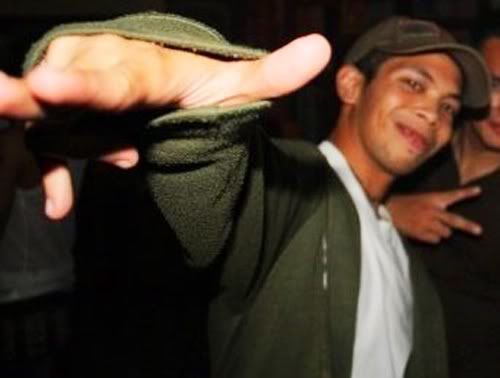
Dok is basically known as the guy in-charge of promoting the any-given-month’s KillerBee party, usually held at El Camino Blanco. “I make the best poster and tarpaulin designs around town—and some people actually collect them, and there is always anticipation for the next KillerBee poster model,” Dok says. He was president of the KamiZeta fraternity and sorority for three years, and was the chair of the Silliman University Council of Student Organizations twice.
“I am into advertising and promos,” he continues. “I suck with anything that has to do with academics, unless I find the subject remotely interesting. I also enjoy movies and videogames a lot.”
What people don’t know about Dok is that he has
actually already graduated from college (although you won’t immediately deduce that just by looking at him) and is now taking up MBA at Silliman. (“Yes,” he says. “Finally. I know.
Hush.”) He does penciling and cartooning, too, and plays the piano. “I like liquiding and raving with glowsticks. I like thought-provoking readings, too,” he continues. “I listen to all kinds of music—except for J-Pop, diva RnBs, gangta rap, farty jeepney technos, noontime Pinoy music, and other sorts of
ka-jologan.” He used to rappel down Doltz Hall using bed sheets—“never-been-caught!”—to escape into the Brickhouse and party out at El Camino, but lately, he prefers Escaño with friends over any bar or club.

Kleng is a Mass Communication student in Silliman, and, like Dok, is also into the arts—especially cosmetic artistry, theater, and fashion.

Tyrone, on the other hand, has already established an image of being the “life of the party.” He is the lead vocalist of the Koo Fellas, and he is the constant host of various events and parties around town. “I manage talents, and I produce and organize events,” he says. “What they probably do not know is that while doing all these, I mean business. I am strict at making sure everything I do is to the utmost satisfaction of my clients. My obsessive-compulsive traits always play a vital role in the success of all my events.”
What got them into events organizing in the first place?
For Kleng, her foray into a events organizing first started out as just a hobby. “I liked the idea of getting my hands into event organizing,” she recalled. “This immersion made me realize that this was something I loved doing. It gives me a sense of fulfillment every time I know I’ve been part of making a certain event successful.”
For Dok, it was a necessary, but completely unexpected, byproduct of his college partying years. “My buddies—Dindo Gatmaitan, Gigs Atega, Joel Canon, Mark Argote—and I partied hard on our first year in Dumaguete, between 2002 and 2003,” he remembered. “From El Camino to Escaño to Detour and finally to the Brickhouse, two to three times a week. In the process, we partied and got acquainted with the Zetans, the Amicitas, and the other party socialites of that time. I joined Zeta—or KamiZeta as it is now known in Silliman, a school organization infamously known for having socialites who drink and party every chance they get, till dawn. I became its president in 2003.”
As he recounts those days, one suddenly gets the feeling that with Dok comes a very specific chronicle of Dumaguete and its party scene in the late 1990s until the 2000s. “As 2003 went to a close, the trance era started going down,” Dok recounted. “Chicane’s
Love on the Run was the last hit trance track, and the RnB and hip hop generation was on the rise. But it wasn’t so fun anymore, at least for those who party out with ATB, Chicane, Happy, Safri Duo... Everyone was getting busy looking cute, sexy, and flashy in the club. People were a little less conscious before. El Camino went from free entrance, to getting in students with validated IDs, to P50 with two beer consumables, to P100 with no consumables. I think 2004 was a sad year for El Camino. In came 2005, with the advent of the more recent house tracks. I was comfortable at El Camino again.”
In his second term as president of Zeta in 2005, he thought of organizing a one-of-a-kind fashion show—a “clique” fashion show with Penshoppe and Leila’s Couture—during Founder Day, to feature the Miss Silliman candidates of that year and “all the other model-ly people in school.” A friend, Mike Figdor, suggested that an event as big as that needed more marketing time to maximize the mileage offers for Penshoppe—and that was when KillerBee came into the picture. “This was how I got acquainted with Roy Bustillo, the KillerBee manager,” said Dok.
Three days after the event, with Roy and Mike as backers (and with help from Zeta, Rodecans, Hermanas, and Amicitas), he gunned for another show featuring the SMBee Girls/KillerBee Girls composed Tanya Beatingo, Francine Arrieta, Sheena Santiago, Raissa Jalandoni, Ruth Libarnes, Sunshine Sarne, Aleen Diago, and others. “It was our first El Camino Event,” Dok remembered. “We called it
POW—Party on Weekends. San Miguel saw this and contracted me to organize the
Sarap Mag-Buglasan Bar Tour with the SMBee Girls.”
What they had, Dok said, was a vision to enhance the Dumaguete lifestyle and social leisure scene and to promote it as “a hotspot for culture, tourism, and investment by featuring a spending market that has a penchant for fashion, dining, spa-ing, networking, and partying.” They wanted to revive the party scene in Dumaguete, particularly in El Camino.
That was when they conscripted Banda Mangga to be their featured band for the first
Sandurot Rhythm that November. After that, there was
Sinulog at El Camino in January the next year,
Love Sucks in February,
Bar Exams in March, and
Freshmen Nights in June. These were their “mainstay” parties, but there were also “filler” parties for the months of July, August, September, and October. The party name and the “gimmick” that colored each one varied from year to year—but the rule was to jump on what was “hot” for the moment. Fitting that bill would be the white parties, the black parties, the fashion parties that came and went, featuring assorted motifs of bikes, bartenders, fire dancers, just to name a few. “We have a party every month—sometimes even twice a month,” Dok said.
Of course, it did not take long for Dumagute to start partying again. “The only time there would be people in El Camino in huge numbers would be when KillerBee holds a party,” Dok observed. “After that, going to El Camino became part of the people’s lifestyle again—at least on the weekends when we normally hold our parties.” The other pieces of the partying puzzle started falling into place as well, and other organizing groups—such as those by Toto Marquez, Jaysun Penales, and Tyrone Tejam—soon came into their own and became more visible in 2008.
In many ways, Tyrone shares the same story as Dok. At 16, fresh from high school and gunning for a degree in Physical Therapy, he already acknowledged that partying was going to be his one major “vice”—and is now mightily surprised to find himself now making a business out of “this seemingly age-inappropriate habit of constant partying.”
He recalls, “My craving for new, unique, and unusual events, I think, prompted me to try organizing some minor activities.” Minor that is until, through and because of time, experience, and the large network that he has established through constant events organizing, things soon inevitably led him to building a local events agency that, accordingly, does not just aim to provide fun and excitement to his audience, but also strategies and solutions to clients. His agency—E-SOLUTIONS Events & Entertainment—would soon take Dumaguete by storm, and remains, to date, the most sophisticated in a city that is just beginning to realize that all shimmer may not be gold, but it sure does grab attention.
And shimmering attention, most of all, is the prize that all parties strive to get.
(To be continued…)
Labels: dumaguete, negros, night life, party
[0] This is Where You Bite the Sandwich
Wednesday, November 18, 2009
6:31 PM |
Seeing Clearly
It's a rare day when the sum of the hours permits you to ponder, so clearly, on the often suffocating vastness of our lives and see how each piece fits with another. What you see are the fine details wrought only from the most sustained and careful pain. And while there are still no clear instructions on how to begin the process of putting together the rest of the puzzle, there is only a kind of calmness that fills your senses, something that gives you
not the overwhelming and treacherous high of stupid hopefulness, but the sigh of having settled on the firm first step that would lead to a way home.
The creeping fog of months is gone. You stir to begin, again.
Labels: life
[0] This is Where You Bite the Sandwich
Saturday, November 14, 2009
I need time to think. To breathe. To pause and consider why people do the things they do. But I haven't been thinking clearly lately, for months now. Yesterday, I tried to understand the cloud -- the fog? -- that exists in my head. It is almost a formless thing, grey-tinged, and it floats right in front of my neocortex in a sluggard funk.
There are too many distractions.
[Pause.]
Labels: life
[0] This is Where You Bite the Sandwich
Wednesday, November 11, 2009
How can I be so in love this way? It doesn't make sense.
Labels: life, love
[0] This is Where You Bite the Sandwich
Tuesday, November 10, 2009
4:23 PM |
Party Pooper
Saturday night ended all too abruptly when the club we went to for the weekend’s respite exploded with the sudden brawl led by one ugly white man—a Dutch guy with a history of explosive tantrums. There were broken bottles in the air. Chairs crashing down. A chase through a cramped space that had the rest of El Camino’s habitués scampering to one side, booing the white man, and booing the utter laxity by the management for its feeble attempt to put back everything to order. When the music finally came back on, the place was a virtual desert—strange for 1:30 A.M. on a Sunday dawn. It quickly dawned on me that El Camino Blanco is party central only for the fact that it is the only place to go to on a weekend in Dumaguete that resembles, in a very haphazard manner, the party life of more cosmopolitan cities. The resemblance ends in only ambition; in reality, the place is a huge disappointment. The most demanding partygoer from Cebu or Manila, descending on Dumaguete’s premier party place, will be quick to relegate the entire establishment to kabaduyan—the interior design is bad and confused, the lights are ridiculous, the security laughable, the ventilation is non-existent, and the dancing area too cramped to contain the gyrating bodies that try to dance to the bad music—repetitive RnB hits that are laughed at by people attending Embassy or Encore as falling below contemporary sophistication. And who would put tables and chairs at the sides of a dance floor? Tables and chairs—a no-no for a nightlife that should encourage mingling and dancing—will be the death of the Dumaguete scene.
Labels: dumaguete, night life
[0] This is Where You Bite the Sandwich
Friday, November 06, 2009
3:30 AM |
From Project Downtown

[photography by
clee andro villasor]
Labels: life, photography
[0] This is Where You Bite the Sandwich
Thursday, November 05, 2009
1:40 PM |
On Gripes and Criticism
The renowned film critic Roger Ebert once wrote:
When Patrick Goldstein of the Los Angeles Times was critical of Rob Schnieder's Deuce Bigelow, European Gigolo, Schneider took out a full-page ads in the paper informing Goldstein was not qualified to review it--what prizes had he won? In my review, I wrote: "As chance would have it, I have won the Pulitzer Prize, and so I am qualified. Speaking in my official capacity as a Pulitzer Prize winner, Mr. Schneider, your movie sucks." Set and match.
I find this quite fascinating, given that
a review of mine regarding a local photography exhibit has been garnering boiling commentary from some of the subjects of my criticism, and has basically echoed Mr. Schneider's words for Mr. Goldstein. To wit:
Whew and I thought I am the only one who felt violated by this so called "critic!" He has no credentials to speak of to be considered a credible critic period! He does not know an iota of photogrpahy so he should just stick to where he is good at (writting "fiction")!
I take that in stride.
But what credentials must one have to be an "art critic"? Must one be a full-time artist or photographer or writer or a filmmaker or dancer to be allowed to critique a painting, a photograph, a book, a film, or a dance? Mr. Ebert has won the Pulitzer for film criticism -- but has not made a single movie in his life, save for the screenplay of Russ Meyer's
Beyond the Valley of the Dolls. Is he not a film critic still?
I have had photography exhibitions in Dumaguete and Cebu, although it is an art form I have chosen not to pursue full time simply because I want to devote myself to writing. I've also written about photography countless times in many publications. I write art reviews for national newspapers (including the Philippine Daily
Inquirer) as well as local ones. I am the program coordinator of the Silliman University Cultural Affairs Committee. I have curated many exhibits, including ones for photography.
Credentials, anyone?To quote an artist friend who's currently doing media studies as a Ford scholar in New York (credentials
man kaha!):
Those who question critics are so parochial. They think they can be better being alone or in the company of their exclusive group of photographers patting themselves in the back. But a photograph according to Susan Sontag needs an interpreter because it is a trace of a subject framed by an eye and will be seen through another's eyes.
Ah, Susan Sontag. Wait, do they
know Susan Sontag? I bet not. (Come to think of it, Sontag has written the best criticism on photography -- the brilliant
On Photography -- and she's not even a photographer!)
Artists, of course, must be allowed to whine about bad notices. I'd gripe, too, if somebody finds my fiction incomprehensible. Or downright bad. But the ones who move on to greatness do two things: (1) ignore the criticism and continue to do their own stuff; or (2) make the critique challenge them more, to make their art, for the lack of a better word, "better."
In the summer of 2008, a renowned fictionist critiqued my stories during a workshop, and described the ones I've written after the Palanca-winning "Old Movies" as a "disappointment." I got picqued, naturally, but was ultimately curious about his assessment.
So, learning all that I knew about good fiction, I wrote a short story shortly after that workshop, submitted it to the Palanca -- and won first place. What was ironic was that he was the chair of the board of judges for the short story.
Criticism. Take it, or leave it. But make it make you grow.
Labels: criticism, photography
[0] This is Where You Bite the Sandwich
GO TO OLDER POSTS
GO TO NEWER POSTS


