Wednesday, December 26, 2012
 4:02 PM |
It's Your Fault
4:02 PM |
It's Your Fault
It has got to be said: if you're lining up to buy a ticket to watch Si Enteng, Si Agimat, at Ako, then you're part of the problem, and you don't even know it. Stop whining about the state our country is in -- the execrable pop pieces that masquerade as culture, the bloated egos of actors ruining our politics, the continued dumbing down of a people in the name of escapist entertainment. All of these, it's your fault.Labels: film, life, politics
[0] This is Where You Bite the Sandwich
Tuesday, December 25, 2012
3:39 PM |
Boorstin, Check.
 I'm finally done reading all of Daniel Boorstin's The Discoverers. It took almost seventeen years -- seriously! -- but I'm finished with its finely printed 716 pages. (When I realized I had one more page to go, I screamed like a schoolgirl.) I stumbled onto this book in Krevo's old bookshelf back in college, read a few of its tantalizing pages, and swore to have my own copy. Three years later, I received mine from Amazon. And it has been a pleasurable, albeit long, read since then. I couldn't finish it for a long time simply because it was dense and was filled with so much information, it demanded to be devoured slowly. (And, of course, life happened.) But now I'm done with one major unfinished business in my life, and it feels good.
Labels: books, life
[0] This is Where You Bite the Sandwich
Monday, December 24, 2012
4:41 PM |
Afternoon of Christmas Eve
I waited until the early afternoon to do my noche buena shopping. I couldn't resist the idea of becoming lost in the surge of people, and I was not disappointed. The day was crowded. That didn't faze me. On the contrary. I waited patiently in line with my basket of groceries, reading a few paragraphs of Daniel Boorstin's
The Discoverers while listening to Yo-Yo Ma playing Pyotr Illich Tchaikovsky's
Andante Cantabile for Cello Solo and String Orchestra. The music did it for me: set to it, the crowd looked almost cinematic, the hubbub reduced to a kind of slow motion that was amusing. I love how I manage to entertain myself.
Labels: dumaguete, holidays, life, music
[1] This is Where You Bite the Sandwich
Thursday, December 20, 2012
7:56 PM |
It Has Been Swell Knowing You
“’Begin at the beginning,’ the King said, very gravely, ‘and go on till you come to the end: then stop.’” ~ LEWIS CARROLL, Alice’s Adventures in Wonderland
If you are reading this on a Sunday morning, hot coffee on hand, the birds chirping outside your window on what is hopefully a gloriously chilly December day, that will mean only one thing: the world never ended, the days go on in an unapocalyptic torpor, and we were wrong about what the Mayans were trying to say with their calendar.
If this is the case, consider me happy: we get to live, and life must always be celebrated. Which does not deny also the tiny fact of disappointment. The hype of 2012 has been with us for much too long, and if only for morbid reasons, a lot of us were quite eager to get a first-row view of universal cataclysm. We thought: it would be extremely painful—
we die!—but what a show that would be. (Some of us have Hollywood disaster movies in our brains.)
For personal reasons only I understand, I’ve been more than excited all throughout the year to see December 21st come to light. Perhaps it is the sense of a fictionist imagining a fantasy playing out: the world ending in a bang and a blaze of light, grander and more terrible than any novel can ever describe. It is also the sense of a man coming to selfish terms with the increasing ravages of the middle years: I believe I have lived a fantastic life—I have lived and I have loved fabulously—and for this, I am more than ready to accept an end that has been, in a way, “foreseen.” I like the romance of the inevitable. And lastly, it is the sense of a record-keeper with a bucket list, pegging a certain finish to all things undone, and keeping score as a way to measure life.
In a final note, I must say I remain unsuccessful in that last consideration. More than a year ago, I had sat down one night with a good friend, in Qyosko, and both of us started contemplating the mortal predictions of the Mayans. We were drinking coffee, eating
arroz balao, listening to the music of Adele, and trying to determine in uncertain terms the vagaries of life and love, given the business of heartbreaks and all sorts of foolish things.
“Do you really think the world will end in December 21 next year?” Anna Espino asked me—she of the rational debater’s mind.
“It is not that I believe that it will happen,” I slowly replied, balancing out rationality and my romantic need to believe in magic and foolish things. “Nobody can know for sure, and for all we know the world will end any time, any day now, and not necessarily on 21 December 2012. Or perhaps the world will last forever until our sun burns out. But I do like that the tail end of 2012 beckons to me like a deadline. So I will believe in December 21 only in that consideration: as a finish line of sorts by which I can measure out the efforts of my days, my life. The thing is, not all of us know how to live. We dole out a semblance of living and comfort ourselves with the illusion that someday our dreams will come true without exactly doing anything about it. We are tied down by the comforts of our uneventful, unrealized existences. So I might as well use this ‘end of the world’ nonsense to start living the life I want before it’s too late.”
Or something of that sort.
I believe my rhetoric on paper sounds so much grander than the speech I must have stammered out that night in Qyosko. But the spirit of the conversation remains the same. And from what I remember, Anna had nodded her agreement, and off we went to our corners of the table in Qyosko—if round tables had corners—trying to come up with a list of ten “doable” things we must promise to accomplish before 21 December 2012. By “doable” we meant something that could, with some certainty, be accomplished given the context of our lives and our fervent wishes. No items listing down “flying to the moon,” for example, or “marrying Joseph Gordon-Levitt.” The list was meant for fulfillment, an end to the common nightmares of pipe dreams.
I’ve since lost my bucket list—I’m not sure if that itself is a sign—but I remember most of the things I wrote down that night the way our hearts keep the etchings of things it refuses to forget: to learn to drive a car, to publish a book of stories and finish my novel, to spend vacation time in Bukidnon and Batanes, to finally finish my MA, to travel to Europe or Argentina, to go back to Sagada to give thanksgiving to the spirits who carried me at the most crucial time in my life, to build a house, to spend more time with Mother. And this, I remember most: to tell the person that I love that I love him without regrets, hopes, or recrimination.
I have not been entirely successful with many of the things on that list. Travel has eluded me because of responsibilities suddenly thrust on me. Life, as the cliché goes, happened. And I don’t have my own house yet, nor a car—forever deluding myself in the belief that I was born a pedestrian. But I have two books of stories out, and I have an MA diploma. For these, I am indeed grateful. Life has a way of making us thankful for things we have somehow accomplished, barring the noisy reminders of those we have yet to claim. But in the final analysis, I can’t consider the list as a definition for my life: fulfillment has its own language undictated by stupid lists. And I believe I have lived truly, even if I have missed out on some markers of accomplishments.
It will be Christmas soon—and I do hope there will be Christmas. But the last thing on that list winks at me with the perversion of a thing wanting fulfillment.
And so, to you whom I love, by the grace of a world ending, I’ll take this chance to tell you what you must have always known anyway: “I love you.” And that’s it. Just three words, and nothing more—those words contain universes anyway.
That, and merry Christmas and a happy new year, if there will be a new year, to one and all.
Labels: disasters, end of the world, life, love
[0] This is Where You Bite the Sandwich
Monday, December 10, 2012
2:04 PM |
Call for Manuscripts to the 52nd Silliman University National Writers Workshop
The Silliman University National Writers Workshop is now accepting applications for the 52nd National Writers Workshop to be held 6—24 May 2013 at the Silliman University Rose Lamb Sobrepeña Writers Village. This Writers Workshop is offering twelve fellowships to promising writers in the Philippines who want to have a chance to hone their craft and refine their style. Fellows will be provided housing, a modest stipend, and a subsidy to partially defray costs of their transportation.

To be considered, applicants should submit manuscripts in English on or before 15 January 2013. All manuscripts should comply with the instructions stated below. (Failure to do so will automatically eliminate their entries).
Applicants for Fiction and Creative Nonfiction fellowships should submit three to four (3-4) entries. Applicants for Poetry fellowships should submit a suite of seven to ten (7-10) poems. Applicants for Drama fellowship should submit at least a One-Act Play. For plays beyond the one-act length, a scene accompanied by a synopsis of the entire work should be included.
Each fiction, creative nonfiction, or drama manuscript should not be more than 50 pages, double spaced. We encourage you to stay well below the 50 pages, since a submission half that length is more than sufficient as a critical gauge.
Manuscripts should be submitted in five (5) hard copies. They should be computerized in MS Word, double-spaced, on 8.5 x 11 inches bond paper, with approximately one-inch margin on all sides. The page number must be typed consecutively (e.g., 1 of 30, 2 of 30, and so on) at the center of the bottom margin of each page. The font should be Book Antiqua or Palatino, and the font size should be 12.
The applicant’s real name and address must appear only in the official application form and the certification of originality of works, and must not appear on the manuscripts.
Manuscripts should be accompanied by the official application form, a notarized certification of originality of works, and at least one letter of recommendation from a literature professor or an established writer. All requirements must be complete at the time of submission.
Send all applications or requests for information to Department of English and Literature, attention Prof. Ian Rosales Casocot, Workshop Coordinator, 1/F Katipunan Hall, Silliman University, 6200 Dumaguete City. For inquiries, email us at silliman.cwc@gmail.com or call 035-422-6002 loc. 350.
DOWNLOAD FILES:
Official Application Form (in PDF)
Certificate of Originality of Works (in PDF)
Call for Submission (in PDF)
Labels: art and culture, dumaguete writers workshop, silliman, writers, writing
[0] This is Where You Bite the Sandwich
Friday, December 07, 2012
12:14 PM |
Missives From Pablo
It was late Monday and Signal No. 2 had just been declared over most of southern Negros Oriental, and elsewhere. But what made it scarier than usual was the perfect ordinariness of the day. There was no rain, there was no wind. The sun was up, though—at the time the knowledge of Pablo first came to me like the inevitability of a flying fist—it was about to set, and dreaded Tuesday was suddenly looming around the corner.
And yet we were deep in “disaster prep” mode in Dumaguete, Monday night. I was earnestly thinking of the supplies (candles, batteries...) and the groceries I needed to buy before the storm hit. I was thinking of the relief efforts we needed to coordinate with Rock Ed Dumaguete—if the worst occurred and Sendong happened again. Pablo was supposedly three times more furious than the last storm that ravaged my part of the world.
Monday felt like the dread of knowing there is a bogeyman lurking right behind a dark corner, and yet you nevertheless feel yourself moving forward, knowing full well you are about to face a monster. It all seemed inescapable, inevitable.
By Monday night, the dogs stopped barking. It was so quiet outside, it was almost creepy. But the night air felt unbearably muggy, which was enough to make you doubt whether a storm was indeed coming. Monday night, I found myself in Qyosko, a 24-hour diner, which became a respite of house music and air-conditioning. My skin was feeling the storm coming.
Tuesday afternoon, the storm crept up on Dumaguete—a sudden fury that seemed surprising, even with all our preparations considered. For some reason, this storm was making me think of the typhoon that ravages Palawan in the beginning of Dean Francis Alfar’s novel Salamanca—when not even the fictional storm’s fury could sway the novel’s hero Gaudencio from writing with such obsession for the beautiful Jacinta. And yet, novelistic comparisons aside, I knew there was no romanticizing the rain that preceded the eye of Pablo’s storm.
Ensconced in the relative comfort of The Bean, I waited out the rain. I was in the café to do my social media updates for the typhoon, releasing relevant information in behalf of Rock Ed Dumaguete. For some reason, I also couldn’t bring myself to go my wifi-less home, to the safety of the familiar. (As Warlito quipped to me that Monday: “Home is where the wifi is.”) I felt drawn to downtown, even when one by one the establishments in the stretch along Perdices Street were closing down for the afternoon’s expected onslaught—save for the fastfood chains. Soon, the café where I was in was about to close, too. “We’re closing at 4 PM,” a busgirl intoned. And so those of us inside slowly picked up our things, and made preparations to transfer to nearby McDonald’s Café. In the knowledge of the impending blackout, I hoped there was electricity somewhere else so I could keep up with the updates for Pablo. I wished then that I could just curl up in bed and read a book or watch a movie and romanticize the rain—but not while there were families out there devastated over their houses being pulled apart by the floods. In Twitter, I chastised a good friend for a tasteless Pablo joke. He apologized, and deleted the tweet. The impending storm was doing something to our heads.
“Whoa. The wind is strong. This is crazy. And I’m stuck inside a McDonald’s Café,” I tweeted when the worst finally hit around 5 PM, Tuesday. Outside, the wind howled like madness itself, and you could hear the bangs and scrapings of flying debris. I posted again: “Whoa. The frontage of Ever Mall is coming down like peeled onion skin...” And it was. It looked scary, this building right across the street from McDonald’s looking like it was being shredded by invisible hands.
It seemed like an eternity, being inside McDonald’s while the storm raged. But soon, a few hours later, I was safely back in my apartment. I had texted the family driver in a kind of panic to pick me up from McDonald’s—there were no more tricycles to be had, and I thought myself foolish for not having gone home when I could have.
On the way home, Dumaguete was all of darkness itself. The lights were out. They had closed down Hibbard Avenue because of the fallen trees. Rizal Boulevard was also closed because of the surging waves. The road had become a part of the sea. The glass windows of Bo’s Café had reportedly fallen in, and the trees along that stretch were falling one by one. The streets of the city were littered with flying debris and broken things.
And the wind. I’d never heard the wind howl with such high frequency before. I thought this sound only existed in movies. I thought the sight I’d see on the road only existed in movies: families from the shanties along the shoreline staggering together in the rain towards the Capitol Area, where relief workers were on standby. While we drove, I saw a crying child being carried by his father on his shoulders as sirens of emergency vehicles blazed by. It felt like a scene from War of the Worlds. I thought: “This storm is serious. There is no romanticizing this rain.”
At home, finally, I waited out the rain. There is something strange in the unfolding of a disaster: interspersed in those scary moments are episodes of utter boredom. But the juice of my laptop and my iPod was out, and my phone was running low as well. So this is what I did while waiting out the storm in the middle of a blackout: Fruit Ninja in the iPad, which was also running low. Then, also bored with that, I cleaned the apartment. While the storm raged outside, I thought: “Amazing what one can do fast without the distraction of Facebook and Twitter.”
And then, around 10 PM, a pervasive quiet. I slept. Kuya Moe’s text came around 3 AM, announcing he was walking around Silliman Farm, beholding the devastation. I, too, decided to get up. Outside, after the storm, the stars were out. They shone with such fierce brilliance. And the dark streets were bathed in an eerie moonshine. The outlines of the city at 4:30 AM looked ravaged.

And just like that, soon it was a sun-kissed Wednesday. It was golden. From my sleepless corner of my office in Silliman University, where I began the painful process of charging all my dead gadgets, I thought I liked the way the soft morning light glistened off the fallen green leaves that blanketed everything else. Even in devastation, a terrible kind of beauty.
Later, in the rolling blackouts that followed, I thought I’d check in some hotel for the night as power was still out in Dumaguete. But the rest of the city apparently had the same idea. All hotels in the city were booked. Except the new Essentia, which couldn’t check in anybody because they lacked generators. I thought: “They missed out on a rare goldmine. And all those wasted rooms!” I sighed.
Soon the city was a mob of electricity-hungry population. The endless search for juice for our gadgets felt exceedingly strange. I was back in another cafe, together with everybody else in the city, looking for space among the busy demands for an outlet. In the blackout that Wednesday night, Dumaguete was a dark ocean with scattered bright islands of generator havens of cafes and restaurants. They were all packed, like the hotels everywhere else.
And I thought:
What kind of society have we become where our lives simply can’t unfold anymore without our fully-charged gizmos?
Elsewhere, people were dead and dying.
Labels: disasters, dumaguete, life, negros
[0] This is Where You Bite the Sandwich
Saturday, December 01, 2012
3:43 PM |
Thoughts on Worldling
Fantasy stories almost always involve young protagonists being transported from the familiar world and being dropped into an uncanny one, where they ultimately come to terms with their reasons for being. Note the lottery-winning children in the Chocolate Factory, Harry Potter in Hogwarts, Alice in Wonderland, Dorothy in Oz, the Pevensie children in Narnia, September in Fairyland. With them, the familiar is something to escape from, the wonderland beckoning like a prize -- even when they do get tested eventually by strange circumstances and evil creatures. I find Chihiro Ogino's adventures in the fantastical bath house of the gods in Hayao Miyazaki's
Spirited Away a little different, and I like it. Chihiro finds herself literally being dragged into Yubaba's world by her hapless parents who soon turn into pigs. Because a fantasy world is not always some place we dream of entering into. Because dropping into it can be the outcome of a whole set of accidents we wished we never made. Because fantasy worlds should not be an excuse for shallow escapism from the ordinary. If I were to write a fantasy novel, I'd write it in this vein.
Labels: fiction, speculative fiction, writing
[0] This is Where You Bite the Sandwich
Saturday, October 27, 2012
7:37 PM |
The Power of Purple Campaign

The deadline for voter’s registration is this Wednesday, October 31! The Dumaguete COMELEC office is at the HITC Building at the Public Market. You can call 035-422-1736 for more information. The Dumaguete COMELEC EO is Carmencita B. Cañares. Register now, and vote for better leaders. No more excuses, Philippines!
Labels: politics, rocked, society
[0] This is Where You Bite the Sandwich
Thursday, October 18, 2012
5:46 PM |
The No Social Media Week Commences
Let me try this experiment, for a week at least. There shall be no heavy social media involvement from me. Will use Facebook only for posting links and for business correspondence. No Twitter except to reply to friends. No FourSquare check-ins. No Instagrams. But a lot of blogging -- because, lo and behold, blogging is
actually writing. Let's do this from October 18, Thursday at 5:45 PM to October 25, Thursday at 5:45 PM. Let me see if I can live without my usual heavy Internet rotation. Because I have got to start living a life offline.
Labels: blogging, life, social media, web and tech
[1] This is Where You Bite the Sandwich
Tuesday, October 02, 2012
6:33 AM |
What Took You So Long?
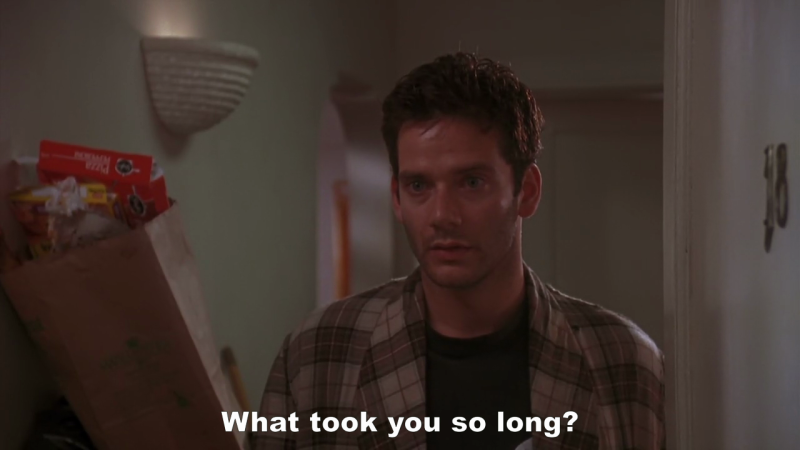
Lately, I've been going through some of the seminal films that shaped my GenX young adulthood. And "shaped" they did. I never realized until now that some of "my" philosophies were lifted off these films, including cherished lines that underline my own drama, too. (Josh Charles' speech about "equipment" in Andrew Fleming's
Threesome is a particular favorite.) I had no idea that Cameron Crowe's
Singles, released in 1992 (when I was still in high school), predicted so much of how I would live now as an adult -- sans Seattle. Sans the video dating thing. Sans the flower delivery/rock thing. Otherwise, I am Campbell Scott. And there are days and nights when I mumble things like, "Work. Work has never been better," to soothe another broken heart -- when all along all I want to do is hope for a miracle to be able to say something like, "What took you so long?
Labels: film, life, love
[0] This is Where You Bite the Sandwich
Wednesday, September 19, 2012

Labels: life, photography
[0] This is Where You Bite the Sandwich
Saturday, September 15, 2012
4:32 PM |
Semester's End
It's almost the end of another semester here in Silliman University, and I have to say I enjoyed most, if not all, of my classes this term. The kids in my classes have been quite responsive, to some degree; and I think I have somehow managed to give them all the full range of my dream syllabus -- miracle of miracles -- with some creative manipulation of time in my part. (Given the busy semester I have, this was a feat.) In the end, it boils down to this: I think equal to the knowledge we impart as teachers is the enthusiasm we teach our students over the things we teach about. A bored teacher is an ineffective teacher. I had fun this term, and thank God for that.
Labels: life, silliman, teaching
[2] This is Where You Bite the Sandwich
Wednesday, September 12, 2012
10:35 AM |
The World Will Open
"Don’t wait for it. Create a world, your world. Alone. Stand alone. And then the love will come to you, then it comes to you. It was only when I wrote my first book that the world I wanted to live in opened to me."
~ Anais NinLabels: love, quotes
[0] This is Where You Bite the Sandwich
10:30 AM |
Before and After
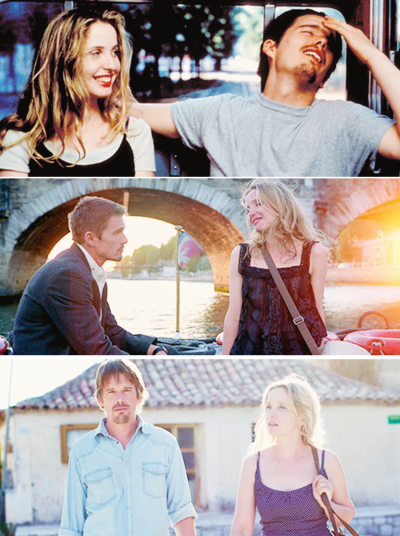
When I was in college -- coming off the angst-ridden books by Alex Garland, Brett Easton Ellis, Douglas Coupland, and Jay McInerney -- I thought the movie that best described my generation was Ben Stiller's
Reality Bites [1994]. But it turned out to be Richard Linklater's series of conversation movies with Ethan Hawke and Julien Delpy. I saw
Before Sunrise [1995] and
Before Sunset [2004] again recently, and I'm both amused (and reflective) at how arrogant about our youth and what we "know" about the world we were in the first film (and in our late teens and early twenties); then how resigned yet still hopeful we were in the second film (and in our late twenties and early thirties). I wonder where
Before Midnight [2013] will take us. I wonder what kind of mirror that will be.
Labels: film, life, love
[2] This is Where You Bite the Sandwich
Monday, August 27, 2012
4:54 PM |
Checking to See If I'm Still Alive
Labels: life, photography
[0] This is Where You Bite the Sandwich
Sunday, August 26, 2012
4:42 PM |
How We Use Pain
This is how some of us love. In Northanger Abbey, Jane Austen wrote: “I have no notion of loving people by halves, it is not my nature. My attachments are always excessively strong.” Excessively strong. That makes sense to me. I know a visual artist who made installation art of everything his ex-boyfriend left him with -- clothes, books, pictures, letters, unopened condoms. Art as a chronicle, art as biography. All that heap of a shattered life, all that remembrance fodder for creation. Because how else to transcend pain except use it for art?Labels: art and culture, life, love, quotes, writers
[0] This is Where You Bite the Sandwich
3:25 PM |
Silliman is in the Heart
There is a strange predilection among all alumni of Silliman University to think of something specific every time they are confronted with the question bearing the concept of “home.” Regardless of their primary roots—whether they are from Manila or Morocco, Davao or Dubai, Laguna or Los Angeles—whenever you ask them, “
Kanus-a man ka mo-pauli? (When are you coming home?),” they invariably know “home” means Dumaguete. I have always found this fascinating.
Then again, it is a strange thing, being a Sillimanian. It is even stranger to consider the loyalty the university seems to demand of us, without protest at our end: we give in to the demand wholeheartedly, like a lover returning to a familiar embrace. Thing is, one learns to love Dumaguete (and Silliman) like the place is second skin.

I asked around what this exactly means, and the following students and alumni tried to help define it. My question was, “What is that one, specific, and tangible thing you love about being a Sillimanian?”
The writer F. Jordan Carnice wrote: “Everyone seems to know everyone, regardless of age, course, or batch.” BPO honcho Ian Sobong Malayang stresses out what that means by saying it is about “the sense of kinship and instant connection that you feel when you meet perfect strangers somewhere on the other side of the world and you find out that they’re Sillimanians, too.”
Francis Salvador gives it a name: “I know it’s a bit of cliche, but it’s the Silliman Spirit. It surpasses both time and place. Wherever you go, whatever you do, you feel like you’ve known each other for so long. It brings warmth and an unknown feeling of belongingness. I’ve experienced it countless of times.”
Student Tommy Villegas continues: “Silliman has this culture where people from different backgrounds can just hangout—or
tambay—together. It doesn’t matter whether they’re rich, highly academic, a local or foreign student…. Everyone can be friends, add to that the fact that even
ang mga sosyal sa Silliman
kay mo-try
og mga tosinohan or other cheaper places to eat, just to have a good time with friends. Somehow I find it all amazing.”
My cousin from Australia, Louella Moncal-Pineda, weighs in: “I love the amphitheatre, the dorms where I once stayed whilst there, the cafeteria, the T-rooms—now gone, I suppose, the Silliman Church. Also the friends, the classmates, the colleagues I once knew. My diploma, and of course my husband whom I met in Silliman. All these gave me the right to be called a Sillimanian and I take pride in that. Outside of these tangible stuff, it is the spirit that no matter who you have become and no matter where you are, make us stand equal with fellow Sillimanians.”
Emmanuel Fiel Dela Cruz thinks hard about it: “Maybe I’m not that rich or famous. Maybe I’m not the handsomest guy in the crowd—but I’m a
Sillimanian. The coolest term I know.”
That Silliman Spirit, for Mae Anne Yee, can translate to something useful in the real world: “One specific and tangible thing I love about being a Sillimanian is my diploma. I remember how wonderful the feeling was, when I was still applying for jobs, and I held out my diploma—and when they see ‘Silliman University’ on it, they give you that grin of admiration and say, ‘So you are a Sillimanian, huh?’ Wonderful!’ I always got hired.”
For Guam-based marine biologist Laurie Raymundo, that whole thing is the sense of being part of a community. From Hong Kong, writer Heda Bayron writes: “It’s the lasting personal connections. I spent only four years in Silliman. I don’t see my high school batch mates often, but when we do, it’s like we just pick up where we left. It’s amazing. You just belong.” Marvin Luther Tan agrees: “I love the fellowship with Sillimanians as you meet them anywhere.
Bisan first time pa mo nagka-meet, you can share lots of common things.”
Perhaps that sense of community is shaped for the most part by the environment in campus, and Zara Dy muses: “I guess it has something to do with the rich history that permeates through the Silliman air that we breathe on campus. It could be illustrious, notorious, undocumented, forgotten (to all but one)—the magic lies in the fact that anyone who has spent time in the campus can claim such history because, not only does Silliman willingly indulge the searcher with great stories, the environment allows you to weave beautiful ones of your own. Silliman becomes, not just a school, it’s a lifestyle.”
Lifestyle. Being a Sillimanian is a kind of culture—and often that translates to the magnificence of the arts and culture scene on campus. The whole thing, for Paula Bastareche, is a careful balance of culture, academic excellence—and decadence par excellence.
For student and bike enthusiast Emmanuel Rotea Tecson, that means “the countless activities—talks, plays, and other performances, often open and free to the public!” For photographer Darrell Bryan Rosales from Bohol, that means “a chance to perform at the prestigious Claire Isabel Luce Auditorium.” For actor Earnest Hope Tinambacan, it is “the freedom to wear slippers and shorts—and the colorful cultural life.” For Giselle Iris Alano, it is “the freedom that allows us to be whoever we want to be: artists, free-thinkers, bohemians, drunks. Silliman is a breeding ground for cool people because here, we let people
be.”
For ABS-CBN regional news anchor Primy Joy Cane, what she loved were the season passes to all the cultural shows. “Man, I wish I could turn back time and attend every show at the Luce. Looking at students from other universities makes me realize how culture-starved most of them are. The infusion of theater, dance and song into a Sillimanian’s university life is what makes us whole.
Makasabay sa hinubog nga inom, pero kabalo gihapon mo-appreciate sa music nila Jay Cayuca, Michael Dadap... I miss that so much.”
Divah David-Sabordo sums it up: “Being a Sillimanian makes me feel not any less nor any better than anyone else. The whole experience reminds me to always walk with my feet on the ground but my head in the clouds. Looking back when my parents chose Silliman for me, they could not have any better choice. And I couldn’t be more thankful.” And Jascer Merced agrees: “When I walk around the campus or drive around on my motorcycle everything seems to slow down. There’s something about Silliman that makes you pause for a while and just hear the trees sway.”
I want to end with what songwriter Anna Katrina Espino has to say about what she loves about being a Sillimanian. “The acacia trees. No joke. Walking around the campus at four or five p.m., this gives you that feeling of serenity.
Like you’re exactly where you’re supposed to be.”
Exactly.
Labels: dumaguete, life, silliman
[0] This is Where You Bite the Sandwich
Sunday, August 19, 2012
3:32 PM |
The Fiction in English Finalists for the 31st National Book Award for the Novel and for the Short Story

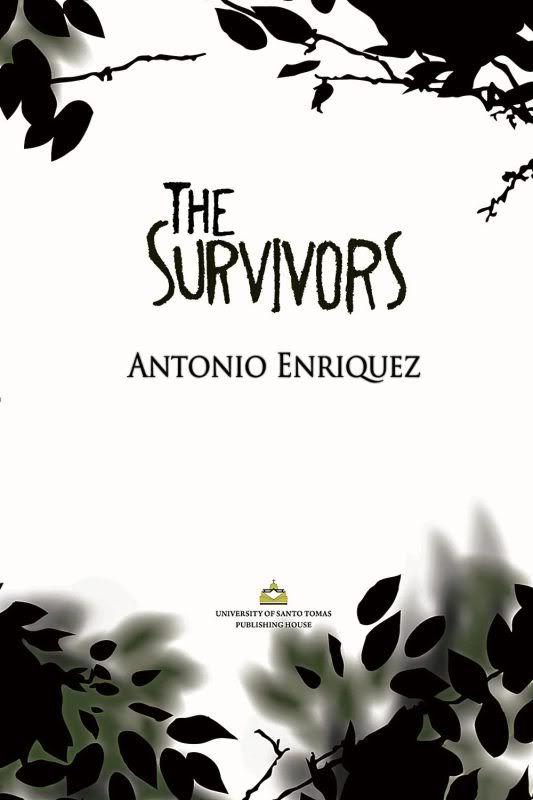
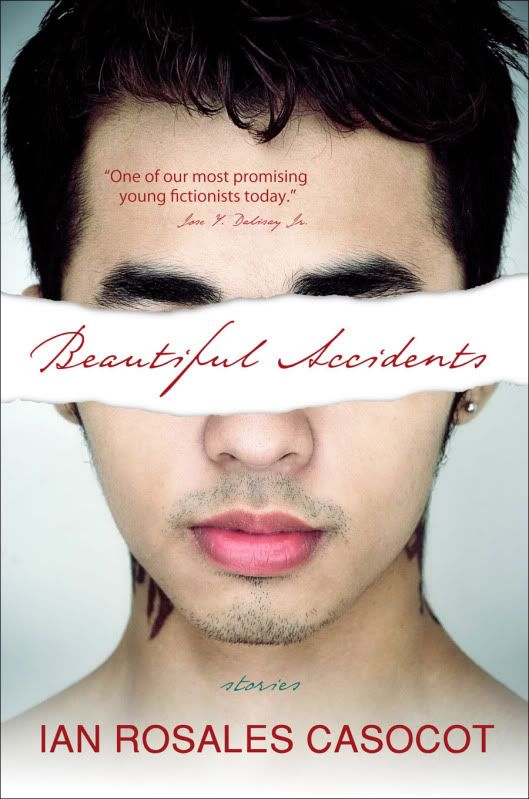
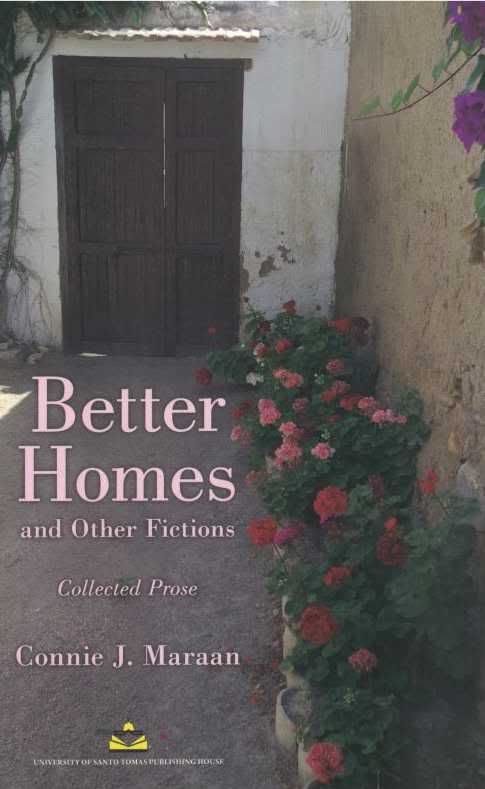
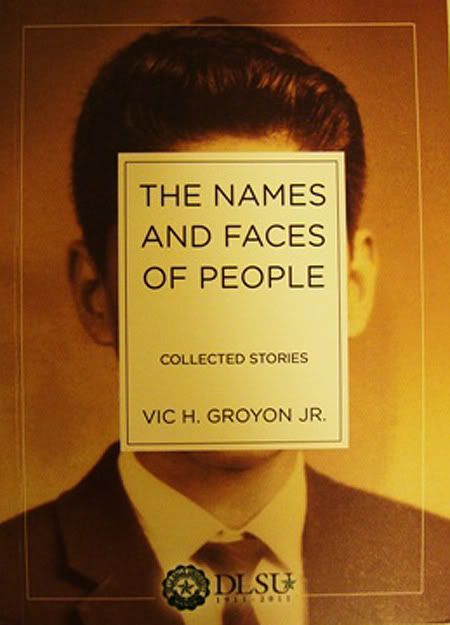
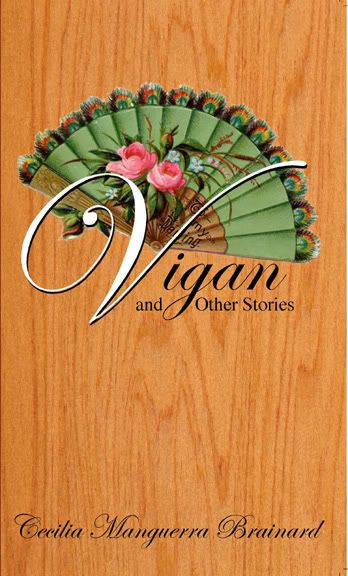
The Manila Critics Circle and the Nartional Book Development Board just announced the finalists for the 31st National Book Award. The above are the fiction in English finalists for the shorty story collection and the novel. Get the rest of the finalists
here.
Labels: awards, books, philippine literature, writers, writing
[1] This is Where You Bite the Sandwich
Friday, August 17, 2012
9:49 AM |
Some of What I’ve Learned
In the tradition of recent years, I would have said, “Today is the ninth anniversary of my 28th birthday.” But no more. I’m 37 years old as of this writing, plain and simple. There’s a good life behind that awesome number—especially coming from somebody who once dramatically thought he wouldn’t live past his 33rd birthday. Each day thereafter has always felt like an extension of a blessing, even taking note of all the hardships and the heartbreaks.
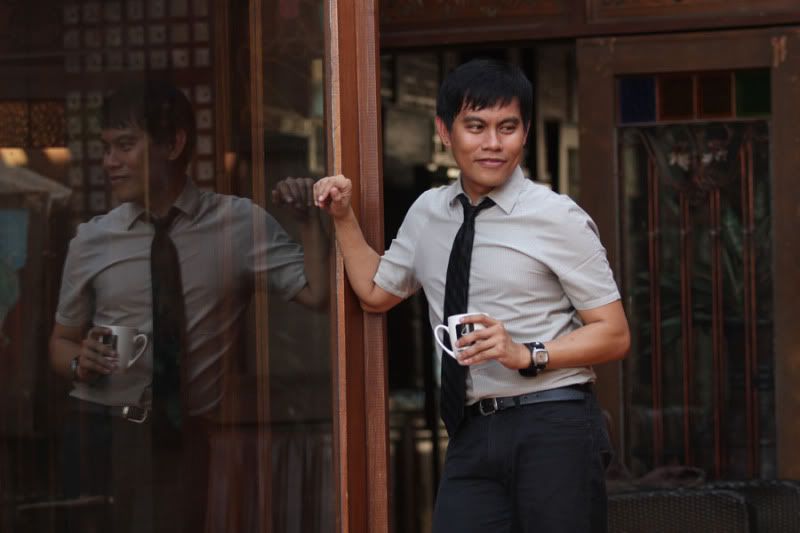
Edging past the mid-thirties is perhaps a time fraught with some of the most dramatic changes in a life—all of them internal, all of them requiring a bemused, if slightly alarmed, change of perspectives nobody really warns you about.
Because you still have some vivid memories of being very young and all that it entails: the casual if misplaced feeling of a limitless future; the late nights spent in pursuit of hedonistic bliss; the energy that seems incapable of running out. But what you soon learn is this: you’re young, and suddenly you’re not so young anymore. Forty is suddenly not too far away.
But you learn to live with that acknowledgment, the way you learn to accommodate your autobiography of mistakes. You learn to pace yourself as your body slowly betrays you, often in subtler ways than you can imagine. You learn to deal with broken dreams and too many compromises. You learn to harden up just a bit more into the realization that you can’t really please everybody. You learn there’s a sudden finiteness to the future, and you must indeed plan for it. You learn that you really are your parents’ child, after all, after years and years of denial and rebellion.
You also learn to accept, with some bewilderment, that you have become The Man. Somehow now a part of the “establishment”—that shadowy distinction in the adult world which the very young instinctively flails against. Ten years ago, for example, I edited an anthology titled
FutureShock Prose: An Anthology of Young Writers and New Literatures, with all the conceit of generational writing (and anthologizing). I made a young man’s claim that this was “us,” that this was “now”—that we were a generation of writers markedly different from those that came before. And perhaps that was so. We were
the “young writers.” We were, in the borrowed words straight from Alvin Toffler and modified by Cesar Ruiz Aquino, “future shock.”
But last year, also during my birthday, Carljoe Javier—who comes from my generation of writers—came all the way from Manila to help with the launch of my books
Beautiful Accidents and
Heartbreak & Magic in Dumaguete. In the middle of a bite of pizza in Hayahay, he confessed to me this astonishment: “I was with some younger writers the other day, Ian—and it suddenly occurred to me that to them, we were already old fogeys. And there I was still thinking, ‘I am a young writer!’” Apparently, we no longer are. None of us know when that happened, or when the tectonic plates shifted—but we were the new establishment.
Ouch.
But you learn to live with that.
What I’ve learned the most, however, is the appreciation of my own mistakes. In many ways, my mistakes make more sense to me than my triumphs because they seem to be the very molders of character. I am, shall we say this then, the fruit of my mistakes, and what I’ve accomplished thus far seem very much only the icing of lessons learned from them.

The Japanese have a way of putting this metaphor for life in their art. They call the process of mending broken things—broken vases, broken cups, broken teapots—with gold molding “kintsugi.” As the artist Barbara Bloom once described it: “…They aggrandize the damage by filling the cracks with gold, because they believe that when something’s suffered damage and has a history it becomes more beautiful.”
Makes sense to me.
This way, my heart—and my life—is all history and glitter. And I like the very idea of that.
Labels: life, love
[1] This is Where You Bite the Sandwich
Sunday, August 05, 2012
10:07 PM |
The Architect of Dreams
Part 10 of the Dumaguete Design Upstarts Series
The first time I met Ray Villanueva, he was part of a singing group of brothers performing at the Luce Auditorium. This was many years ago, most details have been forgotten, and I didn’t really know him. The second time I met him, it was at Gabby’s Bistro and he was with his lovely American wife Amy. They were a vision on bicycles, and upon inquiry, I was told that they were in Dumaguete City “to try to give something back to the country.” One learns to instantly adore people with such dreams. It is such a rarity, especially for a country with rabid immigration dreams.
I wouldn’t remember anything about the singing past until last Christmas when, around the sumptuous holiday banquet prepared by our host Arlene Delloso-Uypitching, Ray played the piano “for his supper”—a superb rendition of “Claire de Lune”—and we were quickly told by Moses Atega of his musical past. “Now I remember you,” I told him. The answer I got was a sheepish smile.
But this article is not about his singing, nor his piano-playing, nor his sheepish smile. This will be about Mr. Villanueva as an architect, and his vision for building, with a thrust for community and sustainability. Let’s call it “developmental architecture.”
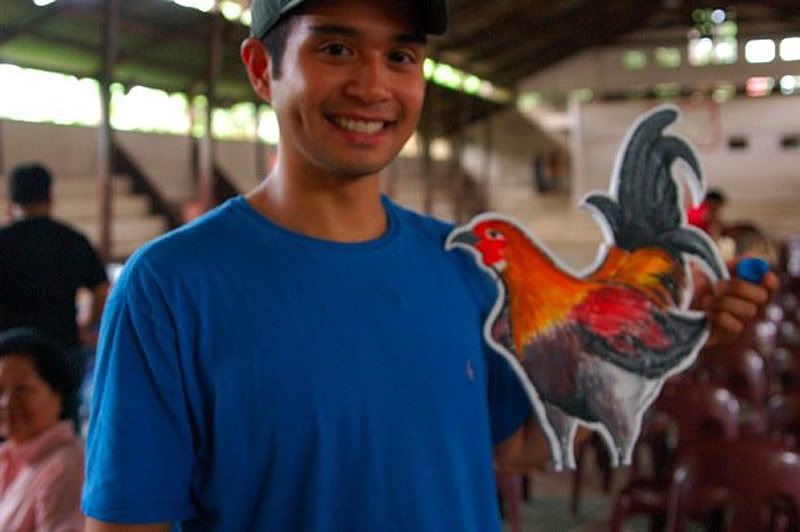
“My calling to architecture started while I was in George Washington University,” he told me. “I was taking up pre-med studies then. And one of the general education requirements was an art class. I have always loved drawing, but did not have the opportunity to take a drawing class before. I fell in love with it. From then on, I decided that being creative would be a part of my life.”
That decision led him to the University of Maryland to pursue architecture. While in the program, he was exposed to a Beaux Arts-rooted program and learned from distinguished professors—and soon he graduated with the second highest GPA in class. Ray would soon continue on to the University of Washington in Seattle, to focus on sustainable architecture. For his degree, he presented a thesis he titled “Architecture for People Who Need It”—which provided the blueprint for how he wanted his architecture to be about: as a model for sustainable development in developing nations.
Among his works that best define that aesthetics are Yakama Design-Build at the University of Washington and the Neighborcare Health Rainier Beach Medical and Dental Clinic.
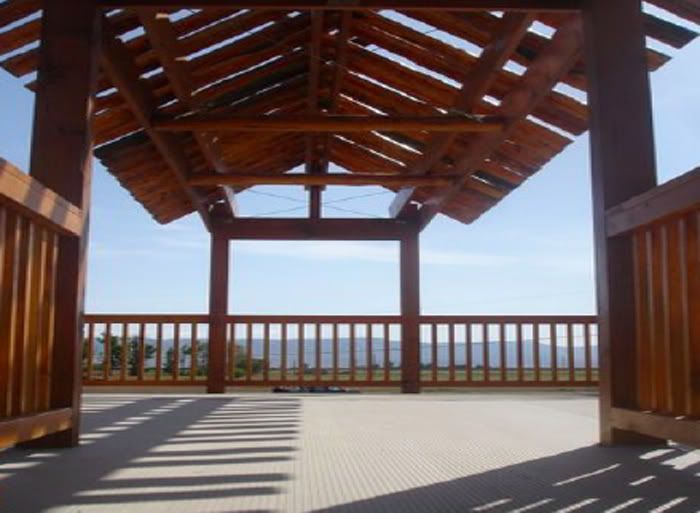
And now, he’s here in Dumaguete as part of Foundation University’s architecture program. What does he hope to achieve with his work in the coming years?
“In the short term, starting with the current school year at Foundation, I am trying to help establish the first Design+Build Program in the Philippines called Estudio Damgo,” he said. “This is similar to the program I participated in at the University of Washington where the students will be responsible for the design and construction of a structure in the local community. The project will involve community-based design in the form of a series of open forum community meetings and students will be in charge of everything—from design, construction drawings, and materials research, to the actual swinging of hammers, pouring of concrete, and installing fixtures.”
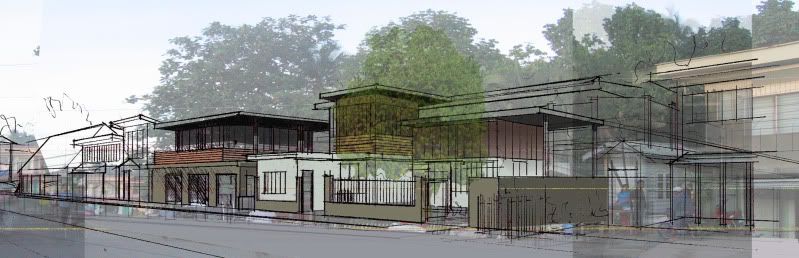
Estudio Damgo, according to Rey, will be a “learn-by-doing” program that will provide lessons that will last well beyond the classroom and will increase the students’ marketability post-graduation. “In the process,” Ray continued, “the local community gains a structure that showcases cultural relevance and innovation, while serving as an example that design and Architecture can make a positive impact by creating places everybody can enjoy.”
Somehow, all this is part of a dynamic life plan. “I am excited at the chance to work with the students and faculty to cultivate new ideas in architecture,” Ray muses. “And also to discover more about my heritage, and to pass on my experiences in design-build, construction, and community service. I feel that I have the potential to make a positive impact in local Filipino communities.”
Truly, Ray may have been born in Wheeling, West Virginia, to parents Dr. Romulo and Kathy Villanueva. His heart, however, has always been connected to his place of roots—Dumaguete. (His father is an Outstanding Sillimanian Awardee recognized for his medical mission work in the Philippines and abroad.) “My parents are my biggest influence,” Ray said, “Despite my upbringing in the U.S., they were clear about exposing my brothers and I to Filipino culture. Being in Dumaguete and the Philippines for the past months, I’ve discovered so much about my parents and myself. I am much more Filipino than I thought I was.”
For Ray, one of the greatest lessons his parents have imparted to him and his brothers was the “responsibility to give back.” Which is why he has come back to the Philippines, with Amy. “The importance of service—to the environment, to one another, to country—has always been a part of my life,” he said. “Service has led me to unique experiences like volunteering in National Parks, helping in medical missions in the Philippines and Peru, and reaching out to victims of natural disasters like Hurricane Katrina. The lessons I’ve learned from these volunteer opportunities formed central ideas of my graduate school thesis project based in Mindanao, and led me to work for Miller Hayashi Architects in Seattle to experience community involvement in design. This was ultimately the reason why my wife and I decided to quit our jobs in the U.S. and come to the Philippines.”
That’s one man going against the flow. Here’s to Ray, and may there be more people like him, especially from among us.
Labels: activism, architecture, art and culture, dumaguete, people
[1] This is Where You Bite the Sandwich
GO TO OLDER POSTS
GO TO NEWER POSTS


