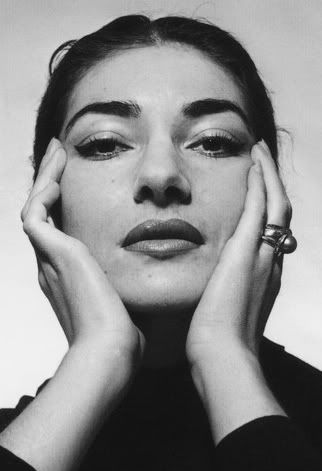
Celebration: An Anthology to Commemorate the 50th Anniversary of the Silliman University National Writers Workshop Sands and Coral, 2011-2013
Silliman University, 2013
2:29 AM |
Excerpt From "There Are Other Things Beside Brightness and Light"
[a short story]
For Dev
“Sunt lacrimae rerum et mentem mortalia tangun.” —Virgil, The Aeneid
Detachment takes practice.
I once cared about a dog named Tibby. It was a white Pomeranian—one of those frivolous types of dogs that are easy to love because the busy brilliance of their thick hair reduces even adults to squealing children. Tibby—if I try to recall correctly—was a gentle soul, and he had eyes that seemed to see through me. I was a young boy, and he was my world—a yapping mass of cuteness that required devotion. I fed him, I bathed him. Tibby slept at the foot of my bed. Once, in a boring drunken episode, my father shot Tibby with his gun, because the dog barked too loudly and made him spill his beer on his shirt which barely contained his swollen gut.
After mother buried the animal in the backyard, near the garbage cans, which was shaded by a hollowed out acacia tree in the dark subdivision where we lived, I mustered some courage to ask father: “Why did you kill the dog?”
He didn’t seem to get that there was rage swelling in my little body. My father snorted, and then said, “Because I can.” He guffawed. His breath reeked of beer. Hell, I quickly knew, stank like this.
I remember that was the first time I’d ever felt pain; perhaps this was also the last. I was nine. Pain throbbed like an ancient truth, coming to the fore from the gut, ending as a strange tingling between my legs that surprised me, just for a moment. There was pain, and there was father looking at me like I was a mouse, a small, talking insignificance of a mouse. All I could see in the feverish anger that swelled my imagination was Tibby’s shattered head heaped upon my father’s decapitated body, blood dripping down its jaws and into the soiled beer-stained wifebeater my father wore that night—five years, eight months, and thirteen days before he died.
I had a hard-on. I remembered that most of all. At nine, I had a fucking hard-on.
Later on, in my quiet days, my imagination tries to spring on me the sound of a dog yelping, in that frightened drawn-out cadence that signals knowledge of pain. But I have learned to drown that out with the white noise of nothingness—a gathering blob of pure vacuum that settles in my head and sits in it like a strange dark dream.
And all I will ever learn to see from then on is the dark side to everything. In the end, I must confess this: I never loved Sarah. She was just my Saturday well spent. I told her that. “I can never love you,” I told her in the very beginning. She took that as an invitation to redeem me. It was her first mistake.
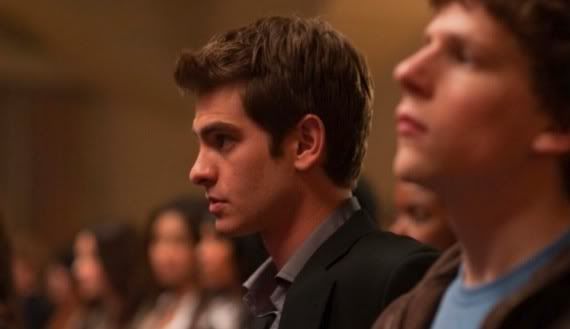
I honestly thought David Fincher's The Social Network [2010] was a little underwhelming, given the rave reviews and the hype that was heaped on it even before opening day. When the lights came on in the movie theater at the Metreon, I stood up and walked home to my room in The Drake in San Francisco. It was very late, and it was off to bed I went, my only concern sleep. But I knew it was a well-made movie -- the direction was that of a master at the top of his game, the editing was taut and spellbinding, the writing was scintillating, the score understated but effective, the cinematography sly and somehow expansive in intimate ways, the acting superb -- but I found myself somehow underwhelmed, and maybe because I expected it to bludgeon me with its greatness. (But then again, like most great art, it's really all about subtlety.) It does not have the gimmicky and overscored finish of the top spinning in Inception, just a soft petering off of an unfinished life, a subtle ending that brings in a reverse "asshole" bookend reference that began the movie, and a lonely Mark Zuckerberg repeatedly hitting refresh on someone's Facebook page, just to see if that someone will accept his friend request.
I expected the usual Hollywood fireworks. I forgot I was watching a David Fincher movie. Then again, maybe it was also because I watched it in a midnight screening, and my body was a little tired from all the walking I had been doing all over San Francisco. Which should not sound like such a big deal, but remember, the city is all about hills -- up, down, then up again, in boots I was trying to break in.
But God, this film has such staying power in your head. Because for many hours later, I kept thinking and thinking about it. I kept replaying certain scenes in my head. I kept going back, for example, to that lingering long shot of Mark walking across Harvard campus near the beginning of the film, after he got dumped and before spending an entire drunken night hacking and making code that would soon become his Internet revenge against all Harvard women. And I kept telling myself, it's all there, in that lonely walk across campus. And I kept remembering certain snappy lines of dialogue, all of Aaron Sorkin's zing like lightning in a bottle. And I kept hopping from one Internet article to the next, hoping for more insight into this film. And people like me are legions online.
Even when I don’t admit it, I miss things here, but always in the light airy acceptance of circumstance cousin to denial. I miss an abundance of tropical light and warmth, for example. There are days when my mouth gets a phantom taste of kinilaw or lechon paksiw, and out comes a surging of so much want, that I would venture out into the cold, hoping for the chill to still whatever it is that constituted longing. I miss Jared. I miss sunrises unobscured by tall buildings.
It is easy to miss a September sunset in Chicago. The overcast of skyscrapers downtown and the artificial light that make the city glow like birthday candles embrace the late afternoon. They dominate it. In my spot at this Starbucks at a small corner of Macy’s in this intersection of State and Randolph Streets, the shadow of the elevated railway keeps away what strays of sunlight come. The constant stream of people—mostly shoppers bearing with busy hands the department store’s oversized bags—lends what surrounds me the energy of daylight. The roar of the L train above adds to the sharp take of air. Everything is tricky. And so, when the fullness of evening comes, I am not able to tell with certainty the demarcating turn of light of the hours, the boundaries between daytime and nighttime having become blurry in my preoccupation with both reading and waiting. One minute, I am reading page 67 of the book I carry around as antidote for small emergencies like queues and waiting and I see the sidewalk still gleaming in the sun’s late afternoon glow; the next thing I know, in the middle of a difficult passage on page 77, I look up and there is suddenly the palpable feel of evening and the sluggishness of street traffic that it brings. Chicago at night becomes a different city.
And I’m a stranger here.
It is a thought that slips uneasily as I sip my second cup of my latte, with a double shot of espresso, knowing there will probably be one or two more. Palpitation is easy to take, I think, easier than damnable waiting.
I look at my watch, and see that it is only six o’clock.
Ramon has promised he is going to come by fifteen minutes after seven. This is two hours ago. “On the dot,” he swore in that tinkling voice I remember most about him—and I believe him. The suburb he is driving from is roughly an hour and thirty minutes away in light traffic. I have not seen Ramon in seven years, and so I have willed myself to wait. I surprise myself that I am still capable of such manifestations of patience. Back home in the Philippines, where the sun stretches the hours and tardiness is the rule, I am quite the aberration.
“Okay. But you must remember I have no way of reaching you,” I had told him earlier that afternoon after lunch in Cumin, a Nepalese restaurant, after we parted in Viagra Triangle and I made my way, on sheer instinct, to this spot just a block away from The Oriental where the play we will see is going to be performed. “I have no cellphone, nothing,” I had told him this with a note of trepidation. “And I don’t know anybody else in Chicago.”
But Ramon had to go and meet someone in Palatine. Someone he had been dating, someone newly arrived from Paris. Someone named Walid. There was some urgency in Ramon’s voice. He promised to make it quick.
“I’ll be there to pick you up,” he said.
I smiled nervously at him. “You better.”
“On the dot.”
“I don’t want to miss the show, Mon.”
“I’ll be there.”
By my fourth cup, Felicia, the chatty black girl behind the cash register, has become familiar with me. She now knows I have only been in Chicago two days, O’Hare’s smell still on my skin. She knows that I am staying with a friend in Skokie, in the suburbs of Chicago, for the meantime. She knows I am watching a play tonight in the theater district. She knows I am from the Philippines. She has already given the comment I have come to treat in America with a shrug: “Your English is quite good.” I say thank you, and I murmur something about having studied in an American university—which for me was a quick and easy answer than a protracted lecture on American colonial adventures back where I come from.
I have ordered bagels by then. Five minutes after seven o’clock, I look up from the book I am reading as the train comes to a roaring full stop at the station above me—and the worst kind of knowing suddenly washes over me. Ramon will not come on time.
But I am still hopeful, even when I find myself slowly succumbing to a restlessness that was fiercer than usual. I am a stranger here, the thought comes to me again. It irritates me, and I want it to stop, but it sticks to my head like a ghost.
“Are you all right?” Felicia asks. I nod, and say that I am. Soon I am the only customer left. In one corner of the café, a boy who looks Mexican is wiping tables clean with a purple washcloth.
At 7:10, I finish off what remains of my coffee. The doses of caffeine have made me a little jumpy, and when I make an effort to steady my hands, I find that they jitter in small quakes. That amuses me a bit, but it is tamed by a nervousness that encroaches in the margins of my night. I put the book that I am reading in my duffel bag, and I tell Felicia thank you. “It was nice to meet you,” she says in a loud voice, in that overwhelming Midwestern friendliness. Outside, I linger by the sidewalk as another train stops and roars away. I don’t see it from where I am. It is hidden away by the platform that covers this length of Wabash Street; the platform itself is a mass of steel and wood painted in rusty red, and from my angle on the ground, it looks both forbidding and fascinating. Minutes later, the roar of another train signals its arrival and then its departure. It seems strange to me that some things in life we comprehend only by the faith on the sounds that they make, and nothing else.
The sounds of my own palpitating heart become relentless as my watch tells me seven minutes have already passed after my appointment with Ramon. Still, there is no sign of him anywhere.
To kill time and to massage away the pricking concerns of my solicitude, I decide to circle the entire block—all of Macy’s in what used to be the commercial fortress known as Marshall Fields—down part of Randolph Street, then turning the corner for Wabash Avenue, then on to Washington, then State. The excursion proves nothing except the commonness of the sight of the homeless huddled in their quiet corners here and there, and the occasional lost tourist that comes up to me asking for directions. “Do you know the way to Washington Station?” a burly blonde man asks. Do I look like a native? I think with certain weariness. I shake my head. Near Borders, a group of students also stop me, “Is this the way to Dearborn Street?” I shake my head again, and walk on. Their questions have only managed to unnerve me—which magnifies the fact that I may know this particular block, but way past my precarious rendezvous with Ramon, Chicago looms above me as a strange sprawling city where I have no map, no direction.
I am a stranger here.
Fifteen minutes later, I find myself back in my old, familiar Starbucks. I decide to stand by the State Street side of the corner, angled just so so that Felicia will not see me. She has gone outside to the fenced-in part of the sidewalk, gathering around her the café’s outdoor chairs and tables, which she then set together in an elaborate heap, which she then chains for the night.
A police car passes by. Another train arrives and departs. A black couple strolls by, and I pay no heed to the woman’s unusually long blonde extensions. Two or three trains arrive and depart. I soon learn not to count them out. A boisterous group of gay men shatters the gathering city quiet. An Indian girl in a sari wanders near, stops to take a call in her cellphone, and in an urgent voice tells the someone at the other end of the line where she is. Eight minutes later, a blue car pulls up, and she gets in. I wait. The night descends into the beginning of chilliness.
I am a stranger here, I think.
I suddenly think of Jared. In Cebu, in the tropical sun. It starts to rain, just a little, and I back up and press myself harder against Macy’s walls. I have already given up on the play, which has started forty minutes ago. I only want to go home to something familiar. As the minutes creep by, my mind races for alternatives, for explanations. What if Ramon got stuck in some emergency? What if… The speculations flood like a rash, and the considerations for what to do fill me with both dread and adrenaline. There must be a way to call. There must be other friends I may know in Chicago. There must be a way to get home to Ramon’s apartment in Skokie. I feel my stomach turning.
He turns the corner when I least expect it, Ramon with a harried look on his face, a jacket in his hand, which he quickly wraps around me.
“I am so sorry,” he says, a note of utmost worry dripping in his voice.
But I don’t say anything.
I just close my eyes, and bowing my head, I start to cry.
I don't know what it is, but always when I am at my happiest, I think of you. That moment, for example, when I touched what passed for sky in that glass ledge in the tallest building in America. Or that satisfying musical finish I felt when I heard the last note ringing out from this Broadway show at the Oriental. Between those notes of utter glee, when everything seems good in the world, how I wished you were there with me sharing those moments. Your face flashes quickly in my memory, and I remember that tender change that comes over your face when you are feeling most happy: that secret smile, for example, that you unknowingly let glow when you're eating a pint of ice cream or when you're talking about the wilds of Africa. In those brief moments when I remember you, my happiness bows to this seed of beautiful, tender melancholy. I don't mind it. It is quick, after all, and does not hurt, although it does come from some deep well of pain. No ocean that separates, it seems, can contain my memory of you. I don't mind. It is a habit, I think, that's worth keeping.
Sometimes the right things we do in the name of love is so relentlessly heartbreaking we tread the borders of sainthood. I'm not a saint, but I know I did the right thing, and even though it had to mean parting, it makes me happy seeing you happy and living the dream. This is better. I will always love you.
Maybe this is simply a failure of the individual imagination. But do we need to live in a particular place in order to get the nuances of the fiction written about it? I never did get Jonathan Franzen before, even thought "The Corrections" a little too alienating, a book that I could not finish because it was rife with too many cultural references to American living that I, a Filipino living in a tropical island, could only fathom to a certain degree. Its objects, its angst, its diction simply went over my head. But now that I'm breathing the air of the American Midwest and seeing American culture up close, I think I'm getting him now. I read a bit of "Freedom," and suddenly it felt familiar. Last week, I also finished reading David Leavitt's tale of family secrets and lies in an American university town in "The Body of Jonah Boyd," and I got the subtleties, too. Which brings me to an uneasy question: how does one exactly transmit a sense of place in fiction to a reader whose vocabulary of imagination simply limits the degree of comprehension for what is presented on the page just because it is too foreign, too unfamiliar?
I will begin with two stories, both of them myths from the Philippines, plucked from an ancient tradition of oral tales largely unknown, and untold, to the rest of the world. One is a creation story and the other is a kind of adventure story. The reason why I am sharing them to you is that I believe they will help explain, the way mythology often elucidates, why “a sense of place” is often necessary in our writings. They will also illumine why I happen to write in the first place.
But let me put forth my thesis first: the idea of “a sense of place” for me goes beyond the expected catalogue of sensory details, rendered in literary magic-making, that evokes home. While a travelogue through geography-specific nostalgia is a big part of the process, a writer’s “sense of place” ultimately contributes to a bigger project—that of laying the geography of imagination for one’s country. In my stories, I concoct an embracing image of the city where I come from—Dumaguete, in the heart of sugar land that is Negros Island—knowing full well that it is part of a project to flesh out an idea of the country. I shall try to explain this later on.
According to the Bagobo, the world came into being with the cosmos in chaos. All the heavenly bodies—the sun, the moon, the stars—were in such close contact with the earth that the world proved inhabitable: it was scorching, and the mythic beings that came before men had no choice but to scatter into the shadows of the earth’s caves and crevices to cool themselves from the steady broiling. One day, Tuglibong, the female leader of this band of mythic beings, went out of her abode to pound rice with her mortar and pestle. And while she went deep into the rhythm of her pounding, Tuglibong looked up and began to scold in a sing-song the nearby sky and the heavenly bodies. She chided them in song, and called them names—and in response, perhaps to get away from Tuglibong’s tirade, the sky (the sun, the moon, and the stars with it) began to rise higher and higher, up into the appropriate distance where they could still give light without making French fries out of everybody else.
If one thinks about it, Tuglibong’s angry song—which can stand for my native tradition of literature—put order to the universe, and gave her people a sense of habitable home, a kind of a sense of place.
Here is another story. According to the Manobo, there was once a prince who went by the name of Baybayan. The prince, who abhorred war and loved to only sing and dance, was soon sent on a peculiar exile by his grandfather the king. He was given the specific instructions to circle the world seven times, and en route was told to sing and tell the stories of his kingdom’s greatness. Prince Baybayan did as he was told, and circled the world seven times, where he prospered in his long journey by singing the old stories about his ancient land—and I am overstretching this now—to the peoples of Bhârat, Uyashima, Ur, Egypt, Nubia, the Middle Kingdom of Ch’in, Hellas, Vinland, and Mesoamerica.
In his travels, Baybayan sang perhaps of the hero Lam-ang, who was swallowed by the giant fish berkahan, which perhaps became the Hebrew story of Jonah and the whale. He sang of the kidnapping of the sea maiden Humitao by Lord Aponi-to-lau, a depraved act which unleashed the wrath of the sea god Tau-mari-u who proceeded to let loose a great deluge on all the land, which perhaps became the story of Noah and the Great Flood. He sang of the virgin birthing of gigantic heroes, which perhaps became the Babylonian story of Semiramis and her son Nimrod. (Or Mary and Jesus.)
If one thinks about it, the Manobo could very well be the origin of world literature—and explains why, all over the world, we share similar motifs and tropes in our stories.
I like how I see these two ancient stories as metaphors for how I understand the workings—at least some of it anyway—of literature, and more specifically, of creative writing. In this particular context, these are the best stories I can begin with to understand, in my terms, what “a sense of place” means for me, especially in my writing.
In Tuglibong’s story of singing away the chaos of the universe to put order to things, I see writing as that magical song that carves out a definition of home—we make sense of where we live, of where we come from, by rendering the chaos of the details that surround us—the texture of geography, its smell, its sounds, its tastes—into the realm of the familiar that can be accessed only by the exquisite rendition in literature.
In Baybayan’s story of seven journeys in song, I see this literature of evoking home as having two meanings: that writers become architects of how where we come from can be imagined by the rest of the world, and that the exercise of telling about home can best be done as an exilic endeavor.
This exilic mode is interesting because we know of so many writers who seem to subscribe to it, believing that we often need to go away, to seek a little distance, in order to obtain some sort of objectivity. The Philippine novelist and national hero Jose Rizal had to leave the Philippines to write his masterpiece about it, Noli Me Tangere. James Joyce, too, with Ireland, and so it was with V.S. Naipaul and Milan Kundera and Salman Rushdie and Jessica Hagedorn. It surprised me little that before arriving in Iowa City, I had come up with the fervent resolution to begin here the draft of my second novel—which I meant to be a paean to the loveliness and sinfulness of where I come from. I honestly thought that the distance provided by Iowa City would enable me to see beyond the ghosts I wanted to escape, these phantom obstacles that proximity often brings. I thought it completely impossible to write about Dumaguete if I were still in the middle of all that familiarity. Like Baybayan, I had to go far to be able to sing about the place I call home.
This urge to do a fictional rendering of the story of one’s own place has always been the silent project for many writers, whether they admit it or not. There are easy examples to highlight. Alice Munro’s Ontario, Canada. Gabriel Garcia Marquez’s Macondo. John Updike’s Olinger, Pennsylvania. William Faulkner’s Yoknapatawpha. Sherwood Anderson’s Winesburg, Ohio. Edith Wharton’s New York. When we think of these writers and many more like them, what immediately comes to us is a sense of a specific world that they conjure in their works. With story after story, they essentially give us the bricks and the seeds and the atmosphere to make up this specific sense of place, which becomes an embracing stage upon which their diverse characters play out their conflict and their drama. The Filipino fictionist Timothy Montes once wrote that a “sense of place” is linked to, but is not necessarily the same as, “setting,” which itself is an often “overlooked as an active element” in the creation of stories, always secondary to plot and character, and often scaled down to a “cosmetic role.” But he noticed that many writers return again and again to a particular setting that in the end what they have created is a believable world whose “air” blends so well with the characters and their stories that we begin to feel they could only have existed in the very place they occupy. He goes on:
I think most writers, especially those writing short stories, operate from this single-minded creation of a sense of place. They take great pains to make each story complete or self-enclosed, but the sense of place can only be formed by an accretion of stories, the building of worlds that will be more subtle than the alien worlds of science fiction, and sooner or later they will see that the sense of place will loom larger than the individual stories that make them. The impulse may be conscious or unconscious, and one has to drink deep from the well of memory to be able to tap into it.
Needless to say, Dumaguete is my mythical place of roots. In Dumaguete lay the secrets of my blood, my history. Also here is the setting of my mother’s bedside stories, of those moments when I was a young child and she’d tuck me to bed and gamely recall a life when she was a young woman and World War II was brewing, or much later when she had returned to Bayawan town as a married woman in the sugar boom of the late 1960s and became, for a while, one of its fairer society hostesses. Those were the heady days, when sugar cane oiled the pockets of young hacenderos on the make, and everybody was rich… Dumaguete means memory—and this word alone means so much in the ways it must mean: as a threshold of recollections both happy and tragic.
In the final analysis, however, the sense of place that I try to cultivate in my fiction eventually comes sidled with a higher agenda—to help create a sense of nation, a sense of the Philippines, with my stories. I apparently am not alone in this “endeavor,” as the poet and anthologist Gemino Abad once deftly observed in his exhausting survey of Filipino short stories in English that were published between 1956 to 1972.
But Timothy Montes says it better:
For me, the Ilocanos are fixed in a small town called Nagrebcan in La Union because of the stories of Manuel Arguilla, [the island of] Mindoro in the works of N.V.M. Gonzalez, [the province of] Tarlac in the Camiling stories of Gregorio Brillantes, and the old Manila in the works of Nick Joaquin. I never believed in a monolithic National Literature because my impression of Philippine literature was that of the variety of particular worlds created by writers I admired, worlds that felt as concrete as the jutting stones in the unpaved streets of my town as well as the smoothness of the streets of the poblacion [downtown] under my chinelas [flipflops]. So the Philippines would be an act of the imagination as different writers so rooted in their regional origins would reveal to me…
I believe that we are forming our literature in the story-telling projects that our writers have made of their particular towns, their particular cities. We are not creating a Nation from an abstract perspective; we are building it town by town, city by city, house by house, character by character. The imagined community is not only formed by a daily newspaper with a national headline informing us what happened in the national center; it is also brought forth by ordinary sights, smells and sounds that a ten-year-old boy in a small, obscure town in Samar would try to convey through stories.
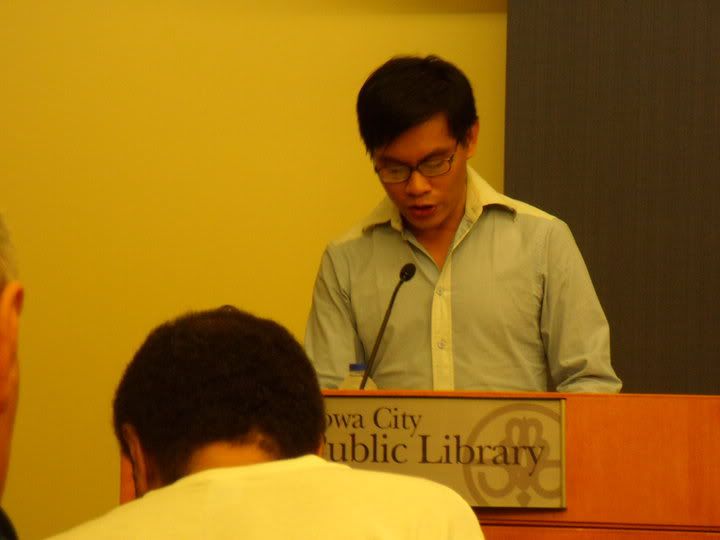
* From the Iowa Public Library Panel Series, 10 September 2010, Iowa City, Iowa. Photo by Edgar Samar.
This is the now-famous short film by Jerrold Tarog, part of the omnibus anthology of short films, labeled AmBisyon 2010, geared towards specific Philippine issues for the recent presidential elections. This is a powerful film about the role of education in our lives. What kind of education must we give our children? Should we care?
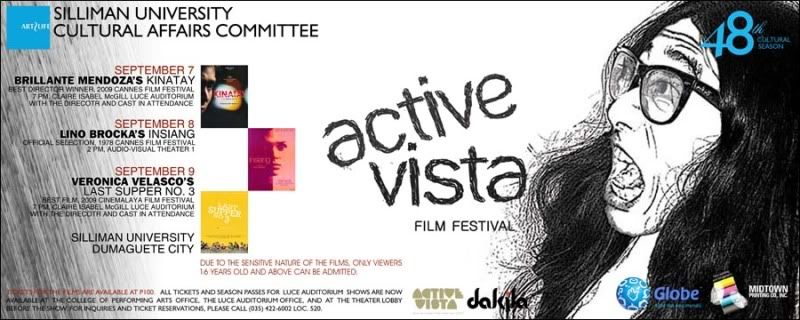
The films from AmBisyon 2010 will be screened in the Active Vista Film Festival in Silliman University, Dumaguete City, from September 7-9.
11:09 AM |
Three Days of Cinema That Will Make You Cringe, Laugh, Think.
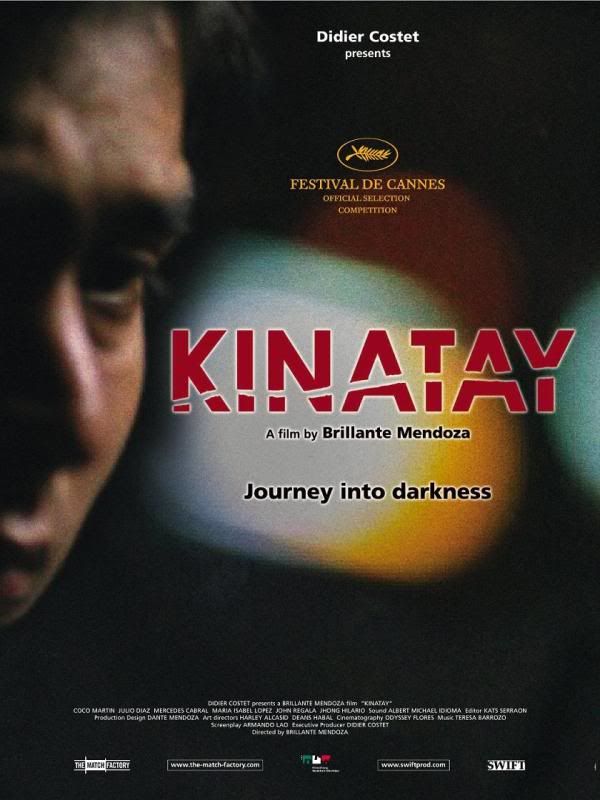
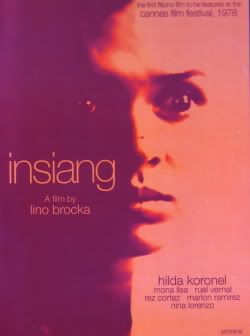
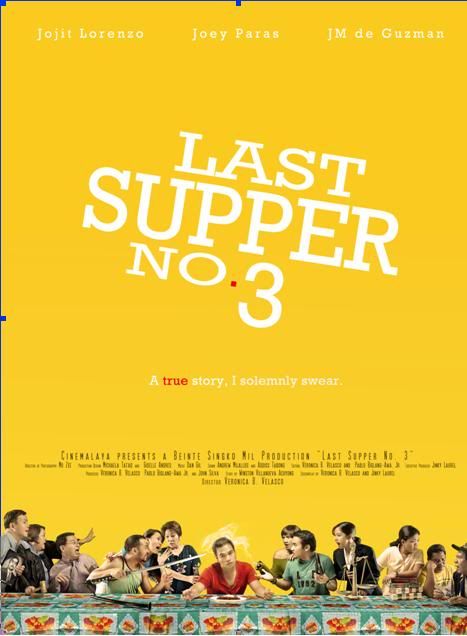
The Silliman University Cultural Affairs Committee, in cooperation with the College of Mass Communication, brings you three days of contemporary Filipino cinema's most dazzling voices in the Active Vista Film Festival, set to begin on September 7. The film festival showcases the controversial Cannes Film Festival award-winner, Brillante Mendoza's Kinatay as the opening film, to be followed by Lino Brocka's classic "immorality tale" Insiang (also a Cannes Film Festival favorite) on September 8, and Veronica Velasco's Last Supper No. 3, the Best Picture winner of the 2009 Cinemalaya Film Festival.
All films, except for Insiang, will have screenings at the Luce Auditorium at 7 PM. The Brocka film will screen at the Audio-Visual Theater 1 of the Multimedia Center at 2 PM of September 8. A program of short films -- ANC and Storyline's omnibus AmBisyon 2010 by such directors as Ditsi Carolino, Emmanuel Dela Cruz, Kiri Dalena, Henry Frejas, Jeffrey Jeturian, Jade Castro, Jim Libiran, Erik Matti, Brillante Mendoza, Ellen Ramos, John Red, Raymond Red, Jerrold Tarog, John Torres, and Paolo Villaluna -- will also be screened.
The Active Vista Film Festival is organized by DAKILA: Philippine Collective for Modern Heroism. It is an avenue to promote a vision of society that respects, upholds and values the dignity, rights and freedom of its people.
The Active Vista Film Festival challenges to define a spectrum in the use of cinema as a powerful tool in shaping the consciousness of a new generation into the importance of knowing and understanding human rights as an integral foundation of responsible citizenship and nation building.
Active Vista encourages critical thinking and dynamism in views as fundamental requirements in addressing methods and directions of social transformation. It allows an opportunity to debate, discuss and shape society as we arrive at a collective understanding of human rights as the backbone of the development of our nation.
While Active Vista recognizes that no film, no song, no painting, no novel or no poem has ever stopped a tank, prevented a bullet, fed a hungry child or overthrown a corrupt government, the power of every art form cannot be rivaled. While art may not change the world, it can change the way we view the world. True revolution begins in the imagination.
The Active Vista Film Festival is not your ordinary film festival. It presents a dynamic vision that empowers its public towards relevant social change.
SCREENING SCHEDULE:
SEPTEMBER 7
Kinatay by Brillante Mendoza 7 PM Claire Isabel McGill Luce Auditorium Mr. Mendoza and some of the cast will be in attendance to present the film.
A young cop descends into Manila's dark underworld as he accompanies rogue colleagues in a harrowing night that involves butchering a prostitute who has crossed her drug lords.
"I understand the hatred for the film (when it premiered in Cannes where notwithstanding Mendoza’s winning the Best Director prize, the film was met with harsh critical receptionc) but I don’t necessarily subscribe to it. In Mendoza’s quest to depict reality, he tramples upon established concepts of what it is to be human. He relentlessly maps the transition of man to monster, and given the straight-line matter-of-factly process that the film explores, the transition is as easy and automatic as night turning into day. Unlike in Mendoza’s other films where poverty is a blatant motivation and a nagging visual motif, in Kinatay, while we know that Peping is poor, poverty remains a subtle omnipresent force. What is explored in the film is not how poverty destroys us, but how humanity is too fragile, that by a mere twist of fate where we succumb to merely surviving notwithstanding the repercussions of our minor and major delinquencies, we are forced to relax it and inevitably decide to lose it." (From Francis Cruz's Lessons From the School of Inattention)
SEPTEMBER 8
Insiang by Lino Brocka 2 PM Audio-Visual Theater 1, Multimedia Center
This classic from the late National Artist for Film is a tragedy involving an abusive mother, her predatory lover, and her innocent daughter -- who is slowly losing her innocence in the teaming poverty of Manila's slums.
"The first Filipino picture to show at Cannes, Insiang enjoyed a warm reception, and Positif’s Alain Garsault wrote a three-page review that attempted to preempt the dismissal of the film as exotica or art naïf by expounding on the film’s leitmotifs, noting the director’s skillful appropriation of melodrama and Greek tragedy. Brocka’s work continued to be well received by French cinéphiles in the years that followed but in the U.S. had no such luck. Only with Macho Dancer (1988) did he find a sizeable American audience. Even then the appraisal of his artistry continued to be marred by two persistent factors: a curious disdain among American critics for his melodramatic predilections; and the faulty (and contradictory) premise that his work aspires toward either neorealism or cinéma vérité. Insiang demonstrates that Brocka’s handling of melodrama is nothing short of virtuoso and that the trappings of documentary, neorealism, and Third World exotica only obscure more fundamental affinities to the Hollywood pictures that Brocka saw as a youth in the former American colony and regarded as a formative influence on his cinematic sensibility." (From José B. Capino's The Damned in the Film Society of the Lincoln Center website)
SEPTEMBER 9
Last Supper No. 3 by Veronica Velasco 7 PM Claire Isabel McGill Luce Auditorium Ms. Velasco and some of the cast will be in attendance to present the film.
A furious comedy based on a true story, it tells the unbelievable story of a gay man who works in advertising, who finds himself in an increasingly Kafka-esque legal battle involving the loss of a Last Supper and various other crimes.
"This is Velasco's outstanding feat. She decides to expose a rotten system through humor yet instead of completely fabricating the story, she allows the case to speak for itself, making the absurdity several notches more alarming. In an inspired decision, she made use (surprisingly with the permission of the Supreme Court) of Manila's Hall of Justice, a building ripe for condemnation that houses the fiscal's offices and trial courts that service an ever-expanding population. The architecture of the building, several floors (connected by stairs because the elevator is usually out of service) of spaces that encircle a useless and unkempt courtyard, further emphasize the system that has been rendered inutile by red tape and bureaucratic complications. Thus, Last Supper No. 3 is funny not only because it centers on a man who was showered with a downpour of misfortune but also because we know it is very real, and the only plausible thing we can do about it is laugh." (From Francis Cruz's Lessons From the School of Inattention)
Due to the sensitive nature of the films, only viewers aged 16 years old and above can be admitted.
I've been guilty of this. But no longer. Starting this semester, I've been telling my students to buy the original copies of books I'm requiring them to read. Absolutely no photocopies. Because I think, as teachers, we have somehow helped create a culture of disregard for books and reading by allowing our students to photocopy pages upon pages of text, with utter disregard for copyright and the authors' bottomline. It has also reduced written works produced with so much sweat and blood and research to the level of the cheap and disposable. No wonder there is a diminished regard for the writing profession in general to the level of the impractical. No wonder people keep going up to me, always asking for free copies of my book, as if they can do the same with an engineer, or a doctor, or a lawyer. Living in a third world country is no excuse. So yes books can be expensive sometimes. But that's paying premium for knowledge gained and a sense of literature found. You're already paying almost P400 a month to cable television that gives you nothing but the WoWoWee kind of stupidity. Why can't you do the same to something that can actually make you think and ponder and learn?
1:03 AM |
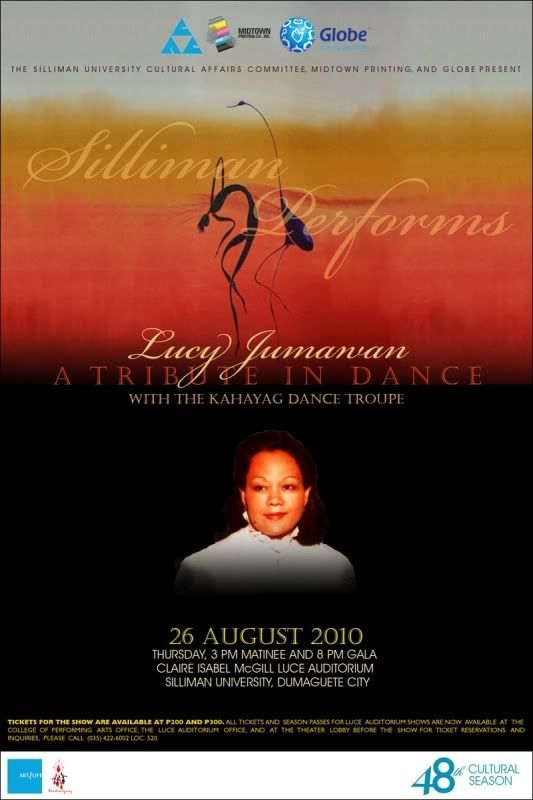
Lucy Patrimonio Jumawan-Sauer: A Lifetime in Dance
For more than five decades, Mrs. Lucy Patromonio Jumawan Sauer has been an innovator and catalyst for dance development in both the Philippines and Australia. “I hope that someday, people will understand where I am coming from,” she has said. “That dance is very important because it comes from the soul, and that there is a division between performance and entertainment. It’s nice to do the traditional. If you are learned, trained, and you have the ability to incorporate, then do it. There is no limitation. Through time, you find your skill and you become wiser and always aspire for a higher standard.”
Mrs. Sauer was a student of Silliman University, a graduate of its grade school and high school. She discovered an affinity for dance at an early age. By the time she was 17, she had already established her own dance studio—the Lucy Patrimonio Dance School. She studied classical ballet with the Anita Kane School in Manila from 1954-1957, and soon she was making her graceful way to the heart of the country’s dance scene. She grabbed the sought-after role as a soloist dancer in Swan Lake and The Nutcracker, dancing with Alexandra Danilova, then one of only four of the world’s most renowned prima ballerinas, at the Araneta Coliseum in 1957.
Later, she honed her classical ballet with Margaret Craske at Jacobs Pillow Dance University in Lee, Massachussetts from 1968-1969, where she also studied mime and movement, stage craft, and dance composition. She later studied modern dance with Norman Walker in New York, and between 1972 and 1974, she took up contemporary dance and jazz at the Bodenweiser Dance Center in New South Wales in Australia.
Back in 1959, she was director and choreographer of the Foundation University Dance Company. She also soon became the founder and directress of the Dance Department of the School of Music at Silliman University, where she worked from 1962 to 1972, and founded the group that is now known as the Kahayag Dance Troupe. A Ford Foundation scholarship in 1962 gave her an opportunity to do research on the tribal dances of Datu Tangkilan, the Royal Sultan of Zamboanga del Norte. She focused on the unseen dance traditions of the Suban-on Muslims in Mindanao, with special permission from the Datu. She collaborated on the project with other Sillimanian dance and music luminaries such as Bobbie Vista, Albert Faurot, Miriam Palmore, and Zoe Lopez. This enabled Mrs. Sauer to discover other forms of dances, which she later incorporated in her teachings. One distinguishing mark of her career as a dance teacher is that most of her outstanding ballet students soon became members and soloists of the Philippine Bayanihan Dance Company.
In 1972, she was guest performer of the Philippine House Consulate at Canberra in honor of Australian Prime Minister Gough Whitlam. That year, she was choreographer and director of the Philippine Dance Performance in the First Folkloric Festival at the Sydney Opera House. In 1976, then First Lady Imelda Romualdez Marcos presented the Department, under her directorship, a plaque of appreciation for its involvement in pioneering classical ballet in the Visayas and all over the Philippines.
When she soon moved to Australia, she involved herself in various socio-cultural projects, appearing as guest for a variety of TV shows in Sydney and in New Zealand. She became a teacher for Black Theater in Red Fern, New South Wales, and for the Sydney Dance Concert Group and the Bodenweiser Dance Center. She became actively involved with Australia’s Aboriginal people because of her love for Aboriginal arts and ethnic dances. She considered herself an “Aboriginal woman,” and worked closely with aboriginal elders to record their dance traditions. For thirty years, the aboriginal people gave her permission to come to their sacred places prohibited to the rest of the world. As part of her study of Aboriginal dances, she was allowed to go to Mornington Island, a very remote part of Australia where there is no talking, only strong eye contact.
In 1977, she was choreographer for Australia’s participation in the World Indigenous Dance Festival in Nigeria. In 1979, she was artistic director of the Aboriginal participation by the National Aboriginal and Islander Dance Theater in the International Dance Festival in Africa. She was featured in 1979 as the Migrant of the Year in a documentary presented on SBS Televison. She is also the founding director of Bodenweiser Dance Center’s Dances of Asia, the Philippine Arts and Cultural Society of Australia, and the Cultural Arts International and Association of Asian Artists of Australia. She is the managing director of the Contemporary Dance Association in Umina Beach, New South Wales. Throughout her years of influencing people with her art, one of the various recognitions she received was being selected as one of the Great Women of the 21st Century by the American Biographical Institute.
Mrs. Sauer believes that her education at Silliman has instilled in her a form of discipline, which she considers as “the rock that knocked off the stumbling blocks in my professional life.” From the words of Manny Diel in his “Who’s Who?” column, Mrs. Sauer, indeed, is an “icon of the Philippine performing arts—very intelligent, highly spiritual, and an inspiring woman that Filipinos should be proud of.” (Jeahan Virda De Barras with Ian Rosales Casocot)
Crossroads in one's life often force us to take stock of the things around us. Tomorrow, I leave Dumaguete for a long-sojourn in a foreign place. I know I will be back very soon -- time flies, after all -- but already the immediate future seems to me to be all a merry mix of sweet uncertainty, unmapped adventures, and possible turning points that can lead me to a different path altogether. I don't know. And yet, that unknowingness feels all right.
So now, in the spirit of turning points, I look back at everything in my life until this moment, and I see with a kind of clarity -- perhaps you can call that maturity? wisdom by way of hard experience? -- the many instances of utter confusion and exquisite heartaches that dot my past. As these things had unfolded then, they had held no sense, no reason. They begat only questions, recriminations. I clearly had no patience. Because now, I see them suddenly as key moments -- vital and necessary the way the heart violently throbs and pumps blood to keep us all alive -- that would in fact lead to something better, or at least hopeful, in time. I guess it is only too human of us to never really be able to recognize the future that began, as a seed, shrouded in pain and being lost.
There is a reason why God has given me this and that, and all in His time. I will not question it. I will just hurl myself into the graciousness that is His plan and delight, when he can, in the revelations.
I quickly realize that for the most part we are really clueless with many things in life. This is especially true with things we frankly have no emotional connection with. We cannot know everything. But with some things, we are like sniffing dogs, our senses acute to things not readily perceptible. We are all idiot savants that way. We have trained our hearts to seek out the tiny ebbs and flows of things we love. And having said that, I must say this: yes, dear, I know. I was listening to that conversation that night when the universe turned on one particular topic. And, without meaning to, I could tell what you were not telling anyone. I could tell it by just the slight change in your voice, the slightest urgency for deflection by your words, and by your impassive face that tried to say nothing but betrayed everything.
For a moment, everything came to a stand still for me.
Do you know the funny thing about the heart breaking? It does so without thunder and lightning. It just wilts.
11:47 AM |
Cherie Gil Brings Maria Callas to the Luce Stage in Master Class
The Silliman University Cultural Affairs Committee and the Philippine Opera Company, in cooperation with Globe and Midtown Printing Company, are proud to present the Tony Award-winning play, Master Class, about the legendary opera diva Maria Callas. It will have its Visayan premiere and Dumaguete run on 20 and 21 August 2010, Friday and Saturday, at 8 P.M., Claire Isabel McGill Luce Auditorium in Silliman University.
Terrence McNally’s play was first produced by the Philadelphia Theatre Company in March 1995; it opened at the Golden Theatre in New York City in November of the same year. The play is based on a series of master classes given by the renowned opera singer Maria Callas at the Juilliard School of Music in New York in 1971 and 1972. Callas (1923–77), was the greatest dramatic soprano of her generation and also a controversial figure. Her restless and tempestuous personality often led her into disputes with opera managements and feuds with rival singers. However, she was adored by her fans and was the subject of constant media attention, including gossip about her jet-set life with the wealthy Greek shipowner Aristotle Onassis.
Although Master Class does delve into the triumphs and tragedies of Callas’s life, its primary focus is the art of dramatic singing. As McNally’s fictional version of Callas teaches her class, she explains to her students, two sopranos and a tenor, just what it takes to invest the music with real feeling, revealing as she does so how demanding the profession of opera singing is. She also reveals her own contradictory personality—proud and egotistical yet also vulnerable and self-pitying. In spite of all the flaws of its main character, however, Master Class, written by a man who has been a Callas fan since he was a teenager in high school, is a tribute to the dedication of a great singer and actress to her chosen art.
Although the play touches on many of the main events of Maria Callas’ life, it is not in essence a biographical portrait. Rather, it is an exploration of the nature of artistic creation, as applied to operatic singing and acting. Maria makes clear that art is serious business that cannot be done by half measures; it demands total commitment on the part of the singer/actress. Being an opera singer can never be an easy career; the singer must give everything to the demands of her craft. This means intense discipline over a lifetime.
Witness one of Philippine cinema’s living legends Cherie Gil in a very rare performance as the opera icon Maria Callas.
Playing the students in her master class are Juan Alberto Gaerlan as Anthony Candolino, Florence Aguilar as Sophie de Palma, Ana Feleo as Sharon Graham, Francis Amora as the pianist Manny.
Juan Alberto Gaerlan completed his Professional Diploma Studies in Western Opera at the Hong Kong Academy for Performing Arts where he graduated with distinction. He has made numerous performances here and abroad and was last seen as Rodolfo in POC’s and CCP’s production of Giacomo Puccini’s La Boheme.
Ana Guillen Feleo is an Aliw Awardee for Best Actress in a Musical for 2007. She received her music education at the College of Music, University of the Philippines under the tutelage of Professor Emeritus Fides Cuyugan- Asensio. She pursued further coaching with W. Stephen Smith in Juilliard last 2008 when she prepared for her biggest break in her operatic career when she played the role of Musetta in La Boheme.
Florence Aguilar graduated magna cum laude in voice from the University of Santo Tomas Conservatory of Music. She was part of the Singapore Lyric Opera’s twin bill production of Cavalleria Rusticana and I Pagliacci and of the Philharmonic Chamber of Choir of Singapore’s Bach’s Mass in B minor and I Love My Love concerts conducted by Maestro Lim Lau and Johannes Prinz respectively.
Francis Amora is a BM graduate in Piano Performance from Philippine Women’s University Conservatory of Music and is currently taking up his Masters in Piano Performance in UST Conservatory of Muic under Prof. Raul Sunico.
The play is directed by veteran stage actor Michael Williams.
Tickets are available at P300, P500, P800, and P1000. For inquiries, please call (035) 422-6002 loc. 520 or loc. 250, or 09173235953.
10:02 PM |
Manila's Best Improv Comedy Troupe to Hit Dumaguete
Silly People’s Improv Theater or SPIT, the premiere improvisational theater group in the Philippines, is set to conquer Dumaguete City on 15 August 2010 in an unscripted comedy showcase titled “SPIT Live in Dumaguete!” as part of the cultural season of the Silliman University Cultural Affairs Committee.
SPIT was founded in 2002 by entertainer Gabe Mercado and a group of friends after Mr. Mercado trained with legendary Second City founder Paul Sills, the acknowledged Father of Modern Improv, at the Wisconsin Theater Games Center. In 2004, SPIT spearheaded Spontaneous Combustion: The First Philippine Improv Festival at the Cultural Center of the Philippines, and then participated in the 3rd National Theater Festival where they premiered Sarskwela: Ang Sarswelang Kwela, a completely improvised twist on the traditional Filipino sarswela.
In 2009, they premiered two works at the CCP, including Cambiar!, an improvised educational environment themed show for the Earth Day Celebration, and Dingdong! Death is at the Door, an improvised long-form murder-mystery show for the 5th Virgin Labfest. SPIT also represented the Philippines in the prestigious Los Angeles Comedy Festival in Los Angeles in 2004.
Composed of thespians, teachers, and other professionals from varied fields, the group also does regular shows to packed audiences in some of the best entertainment spots throughout Manila and is a staple of corporate functions with their lap smart yet hilarious brand of comedy.With close to five hundred performances to date, SPIT has delighted local and international audiences with their unscripted unrehearsed and totally spontaneous shows.
The show is a co-production of Little Boy Productions. Tickets are available at P200 and P300 for both the matinee and gala shows. For inquiries, please call (035) 422-6002 loc. 520 or loc. 250, or 09173235953.
4:52 AM |
Float Like a Feather in a Beautiful World
I must learn to hold this thought, this memory of a Saturday night, sheathed as it was in the subtlest of pain. But what a word. I hesitate to call it "pain." Perhaps it was just selfishness, perhaps not. But it was the first full weekend of August, my birthday month, and I had felt so utterly abandoned.
The day had gone well, much to my surprise. But it was the night itself that made me teeter on some form of grieving, as if I had lost things, as if I had nothing to begin with and I was merely fooling myself. Was it that I watched a movie alone? Fine. I had planned it that way anyway. But later on, to text friends and to have no one answer back ... It felt ridiculous. As if I had become an interloper, an unwanted speck in the wind, synonymous with the void, and everybody else had lives of their own shielded from all my wants.
I went to a jazz concert later that night but could not get in. They had, so they said, no change for the bill I was waving to their face. I stood there for a long time in the entrance, unsure suddenly of what to do, where to go. A few feet away, the music was already wafting like some strange invitation -- and yet there I was, unable to get in.
And then of course I would see him there. Right near the entrance. Like some ghost. He was tall, he was easily seen. I thought, So he has arrived home finally from that place in Indochina. His sister beside him said hello like the twinkling universe. He didn't. He stood there like stone, and afterwards when he passed by me to seek something outside, it was as if I were the invisible air.
Was this how it was supposed to turn out? The nuances of an eight-month love affair's end turned to silence and unseeing?
It was more than I could take. I raced home. Yet I did not want to be home. I grabbed a book -- Alan Hollinghurst's The Line of Beauty -- and raced to a downtown restaurant, which was sure to be open for the rest of the night. I did not want to be alone, even if it meant being in the middle of complete strangers. When midnight came, only a scattering of us were left to the devices of our little worlds: some studied, I pretended to read. I felt myself drifting, floating.
And I thought, so suddenly, that it was some strange comfort to know that by the end of this month, I shall be somewhere else far away from this place, where people I know would not see me. It was the only kind of invisibility I craved.
I don't belong here. Not home. Not home when the sight of it bleeds the heart, and all that one has left is the aching breathing that stands for whatever remains of whatever life this is supposed to be.
It’s August. It’s the beginning of another season for writers and writerly fests. And a few days from now, parcels—traditionally via LBC—from a certain office in Fort Bonifacio in Taguig City will make their way to certain households in the country, and make their recipients, especially the first-timers, glow with unalloyed joy. Their joy will culminate in a certain ceremony on September 1 in the ballroom of a posh Makati hotel. It will be a grand night for many of them.
I envy those people that first brush with that kind of news they will be receiving.
But first, I must admit that this essay was occasioned by a simple question asked of me in Formspring, a social networking site where people who “follow” you get to ask you questions ranging from the silly to the profound to the thought-provoking.
What was your favorite birthday gift ever? a friend wanted to know. It made me think, but oh so briefly.
Because my response was immediate, which was both surprising and unsurprising—the former for the solid conviction I unknowingly had of the matter, and the latter for the context from which that conviction came from. And yet, that “birthday gift” came to me not even as a direct consequence of natal day traditions. And it came from no one in particular.
It was my first Palanca. The “gift” was the notification of my win from the Foundation. And the year was 2002.
I was depressed in 2002, in a cycle that would become familiar, given the temperament that I have, usually arising from some deep dance with artistic impulses. I had graduated from college in 1999, and I was stuck in some shitty job and was now making a transition from the world of journalism to that Graduate School and part-time teaching. I was doing something I honestly told friends I would never, ever do. In 2002, I found myself living again with my mother in our old house because I couldn’t even afford my own rent. I had no love life to speak of, and I didn’t really know what to do with the “writer” thing. It all seemed hopeless.
And to top it all off, somebody gave me the gossipy goods that a bunch of literary “friends” in campus were laughing behind my back because they never thought much of me as a writer. “Ian, a writer?” one of them was reported to have pondered the question. And that he answered his own musings by laughing so hard. That hurt, but I made that slur my impetus to write a story titled “Old Movies.” I wanted to try to submit it to the Palancas, just to see if my “friends” were indeed right. If I don’t win, I told myself, I’d stop writing for real.
I was lying in bed that whole morning one day in August—that season for writing awards. I didn’t want to get up. I thought I was the biggest loser in the world. I was turning 27 in a few days, and I felt old.
Then my mother came into my old bedroom. “You have something from LBC,” she said.
Who would send me a package? I thought as she handed the sealed envelope to me. It looked official. Then I saw the words “Carlos Palanca Foundation.” My hands began trembling. I quickly opened the envelope, and took out the letter.
I gave the loudest whoop ever in my entire life.
I still remember that overwhelming feeling of joy washing over me. It was the sweetest feeling in the world. It still remains one of the deepest, most satisfactory thing in my life.
This is why I don’t think highly of people (especially those who have never won the Palanca) who say with such conceited sincerity that it is all a lottery, a game of chance, a matter of knowing who the judges are.
Tell that to the 27-year-old guy who was depressed and was down on his luck, and who was despairing if anything would ever become of his writing. It meant something. It meant I could continue.
[3] This is Where You Bite the Sandwich


 2:29 AM |
Excerpt From "There Are Other Things Beside Brightness and Light"
2:29 AM |
Excerpt From "There Are Other Things Beside Brightness and Light"